
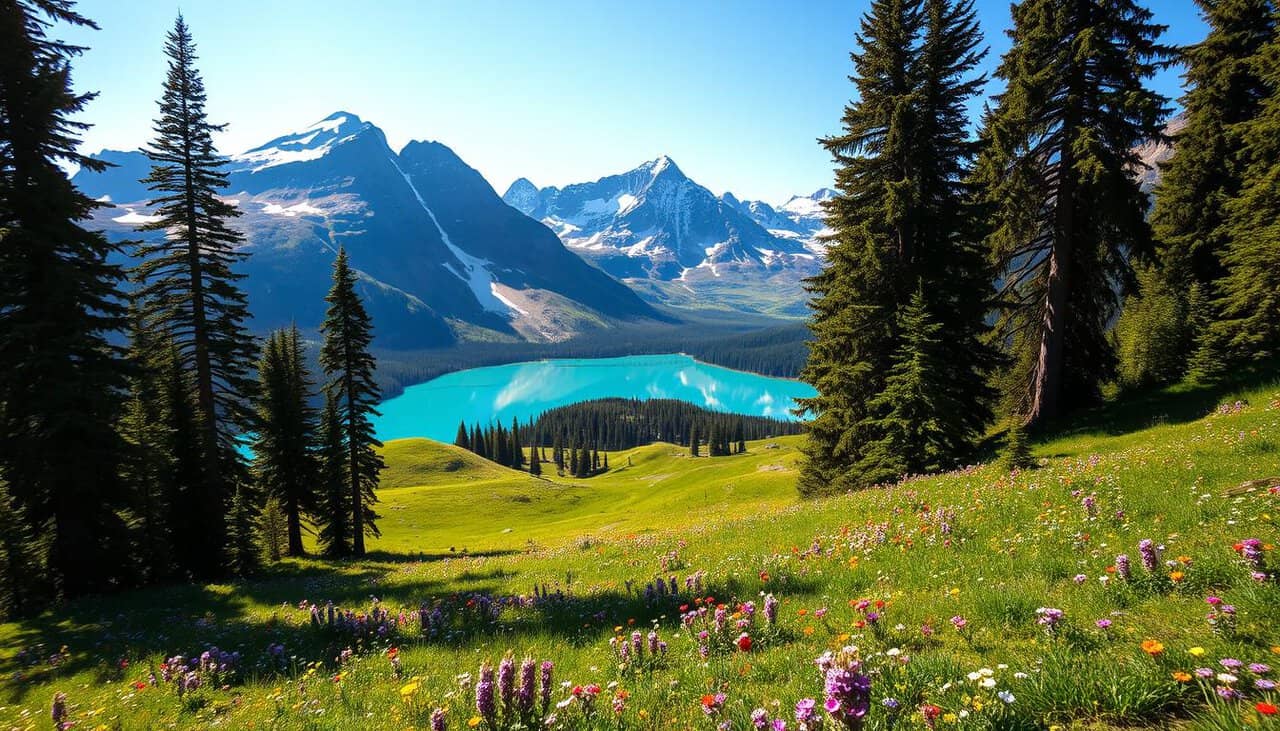
Did you know that Montana is home to over 3 million acres of protected wilderness? This vast expanse includes some of the most breathtaking landscapes in the country. From towering mountains to serene lakes, the state offers a unique blend of natural beauty and cultural heritage.
Starting your journey in Bozeman, you’ll quickly discover why Montana is often called Big Sky Country. The state’s pride in its rugged landscapes is evident in every corner. Whether you’re exploring the historic sites or hiking through pristine wilderness, there’s something for everyone.
Montana’s charm lies in its mix of state pride and natural wonders. The national parks here are not just places to visit; they are experiences to cherish. Each park tells a story, from the ancient glaciers to the historic battlefields.
Ready to dive into the beauty of Montana’s national park system? Let’s explore what makes this state a must-visit destination for adventurers and nature lovers alike.
Key Takeaways
- Montana boasts over 3 million acres of protected wilderness.
- Bozeman is a great starting point for exploring the state’s natural beauty.
- The state’s national parks offer a mix of history and stunning landscapes.
- Each park provides unique experiences for visitors.
- Montana’s charm lies in its rugged beauty and cultural heritage.
Discovering the Scenic Beauty of Big Sky Country
Step into a world where mountains, lakes, and rivers paint a breathtaking scene. Montana’s landscapes are a testament to nature’s grandeur, offering endless opportunities for exploration and wonder. From the towering peaks to the serene waters, every corner of this state tells a story of beauty and tranquility.
Montana’s Breathtaking Landscapes
The state’s big sky vistas are legendary, stretching as far as the eye can see. The towering mountains provide a dramatic backdrop, while the crystal-clear lakes reflect the beauty of the surrounding area. One of the most iconic spots is Glacier’s alpine lakes, where the water shimmers in shades of blue and green.
Flowing through the heart of the state, the Missouri river adds to the picturesque quality of the landscape. Its meandering path creates a sense of calm, inviting visitors to pause and take in the view. Whether you’re hiking along its banks or simply enjoying the scenery, this place is a true gem.
Why Natural Features Define Big Sky Country
Montana’s natural beauty is defined by its expansive areas and diverse ecosystems. The combination of rugged mountains and tranquil lakes creates an unmatched scenic backdrop. These features not only offer stunning photo opportunities but also provide peaceful spots for nature lovers to connect with the outdoors.
“The beauty of Montana lies in its untouched landscapes, where every turn reveals a new wonder.”
From the alpine lakes to the flowing rivers, the water features of Montana are as captivating as its big skies. These natural attributes make it a place where visitors can truly experience the essence of the great outdoors. So, pack your bags and get ready to explore the scenic beauty that defines Big Sky Country.
Exploring US National Parks In Montana
Montana’s wilderness offers a treasure trove of natural wonders waiting to be explored. From glacier-carved valleys to geothermal marvels, the state’s protected areas are a haven for adventurers and nature enthusiasts alike. Each park and historic site tells a unique story, blending natural splendor with cultural depth.
Glacier National Park Highlights
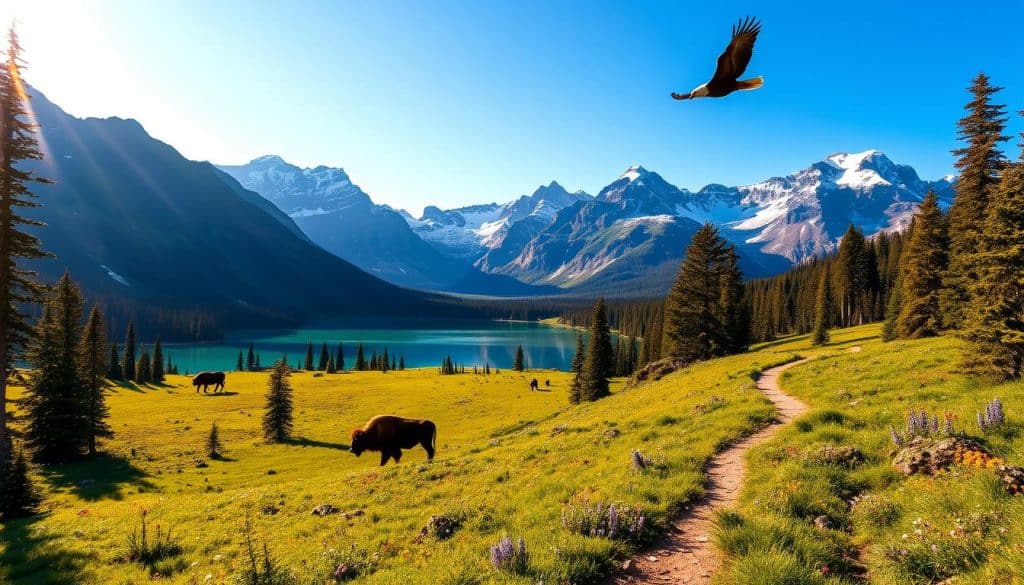
Known as the Crown of the Continent, Glacier National Park spans over 1 million acres. Its iconic Going-to-the-Sun Road offers breathtaking views of rugged peaks and alpine meadows. Don’t miss the Hidden Lake Trail, a moderate hike leading to a pristine lake surrounded by towering mountains.
For a more challenging adventure, the Grinnell Glacier Trail rewards hikers with panoramic views of glacier-fed waters. Wildlife sightings, from mountain goats to grizzly bears, add to the park’s allure. With over 700 miles of trails, there’s something for every level of explorer.
Yellowstone National Park Essentials
As the world’s first national park, Yellowstone is a geothermal wonderland. Old Faithful, the park’s most famous geyser, erupts predictably, drawing crowds year-round. The Grand Prismatic Spring, best viewed from the Fairy Falls Trail, dazzles with its vibrant colors.
Yellowstone’s vast wilderness includes over 900 miles of trails, leading to waterfalls, hot springs, and wildlife-rich valleys. Bison herds and elk are common sights, making it a paradise for photographers and nature lovers alike.
Other Must-Visit State Parks and Historic Sites
Beyond the national parks, Montana’s state parks and historic sites offer rich experiences. Bighorn Canyon National Recreation Area features dramatic cliffs and serene waters, perfect for boating and hiking. The Battle of the Little Bighorn site provides a poignant look into the region’s history.
Fort Union Trading Post and Grant-Kohrs Ranch offer glimpses into the state’s trading and cattle-ranching past. These sites complement the natural beauty of the parks, providing a well-rounded exploration of Montana’s heritage.
| Park/Site | Highlight | Activity |
|---|---|---|
| Glacier National Park | Going-to-the-Sun Road | Scenic Drive |
| Yellowstone National Park | Old Faithful | Geyser Viewing |
| Bighorn Canyon | Cliff Views | Boating |
| Little Bighorn Battlefield | Historic Site | Guided Tours |
Planning Your National Parks Road Trip in Montana
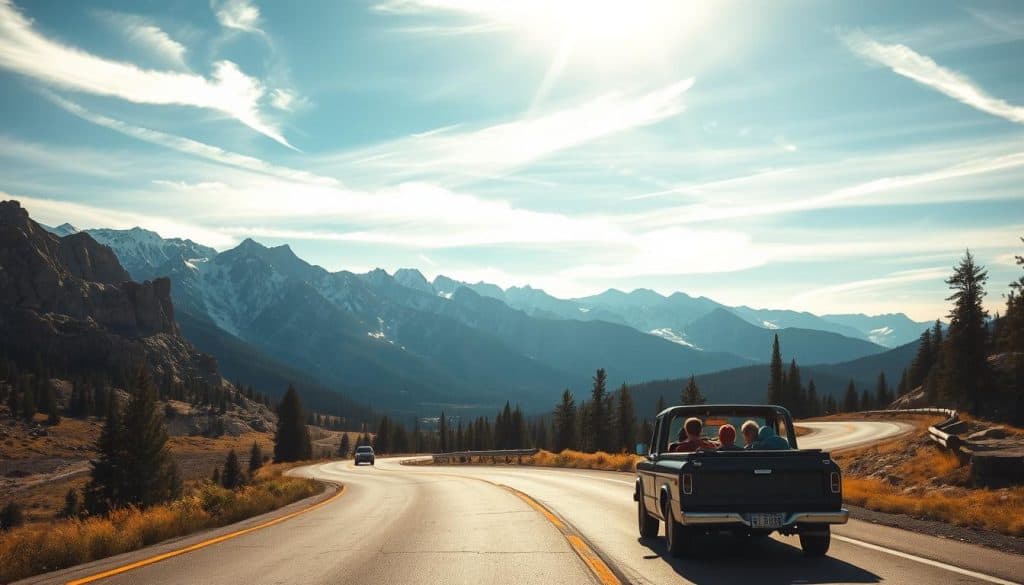
Embarking on a road trip through Montana’s protected areas is an adventure like no other. With its vast landscapes and diverse attractions, the state offers endless opportunities for exploration. Whether you’re starting in Bozeman or heading to Yellowstone, careful planning ensures a seamless and memorable journey.
Itinerary Insights from Bozeman to Yellowstone
Begin your trip in Bozeman, a gateway to Montana’s natural wonders. From here, the drive to Yellowstone takes about 1.5 hours, making it an ideal starting point. Along the way, stop at Helena and Great Falls for a mix of history and scenic beauty. These stops break up the drive and add depth to your tour.
Yellowstone’s geothermal attractions, like Old Faithful, are must-see highlights. Plan to spend at least two days exploring the park’s trails and wildlife-rich areas. For a more extended trip, include Glacier National Park, known for its stunning alpine lakes and rugged peaks.
Seasonal Considerations and Travel Duration
The best time to visit is from late spring to early fall when the weather is mild, and roads are fully accessible. Summer is peak season, so plan early to secure accommodations and avoid crowds. Spring and fall offer quieter experiences with fewer visitors.
For a comprehensive trip, allocate at least a week to explore the state’s key attractions. This allows time for hiking, sightseeing, and relaxing by scenic rivers. Remember, under-scheduling your days can help manage travel times and physical demands.
| Stop | Highlight | Travel Time |
|---|---|---|
| Bozeman | Gateway to Yellowstone | 1.5 hours to Yellowstone |
| Helena | Historic sites | 1 hour from Bozeman |
| Great Falls | Scenic river views | 2 hours from Helena |
| Yellowstone | Geothermal attractions | 1.5 hours from Bozeman |
With careful planning, your road trip through Montana’s protected areas will be an unforgettable experience. From scenic canyons to historic sites, every stop adds to the richness of your journey.
Must-See Attractions & Outdoor Adventures
Montana’s landscapes are a playground for adventurers and nature lovers alike. From rugged peaks to serene waters, the state offers unforgettable outdoor experiences. Whether you’re hiking, snapping photos, or savoring local flavors, there’s something for everyone.
Top Hiking Trails and Scenic Overlooks
Montana’s trails are a hiker’s paradise. The Grinnell Glacier Trail in Glacier National Park offers stunning views of glacier-fed lakes and towering mountains. For a shorter hike, the Hidden Lake Trail is perfect for families and casual adventurers.
Scenic overlooks like Lake Butte in Yellowstone provide breathtaking photo opportunities. The Lone Mountain Trail near Big Sky is another must-visit, with its panoramic views of the surrounding valleys.
Photo-Worthy Spots & Iconic Landmarks
Capture the essence of Montana at iconic spots like the Grand Prismatic Spring and Old Faithful. These geothermal wonders are as photogenic as they are unique. For a quieter experience, visit Flathead Lake, the largest natural freshwater lake west of the Mississippi.
Don’t miss the Lewis and Clark Caverns, a hidden gem with over 10 miles of hiking trails and fascinating rock formations. These landmarks are perfect for both history buffs and nature enthusiasts.
Local Food, Brews, and Unique Pit Stops
After a day of exploring, refuel at local favorites like KARMADILLOS for hearty meals or BLACKFOOT RIVER BREWING COMPANY for craft brews. These spots offer a taste of Montana’s vibrant food scene.
For a unique experience, visit the Fort Union Trading Post, where you can step back in time and learn about the region’s trading history. These pit stops add depth to your journey and connect you with the local culture.
| Attraction | Highlight | Activity |
|---|---|---|
| Grinnell Glacier Trail | Glacier-fed lakes | Hiking |
| Grand Prismatic Spring | Vibrant colors | Photography |
| KARMADILLOS | Local cuisine | Dining |
| Fort Union Trading Post | Historical site | Guided tours |
Cultural & Historical Landmarks in Montana’s Parks
Montana’s cultural and historical landmarks offer a window into the state’s storied past. From battlefields to trading posts, these places preserve the events and people that shaped the region. Exploring these sites provides a deeper understanding of Montana’s heritage and its role in American history.
Preserving History: Battlefields, Trading Posts, and Heritage Sites
Montana’s national landmarks are more than just tourist attractions; they are living testaments to the state’s history. The Big Hole National Battlefield, for example, marks the site of a pivotal conflict during the Nez Perce War. Visitors can walk the trails where history unfolded, gaining insight into the struggles and resilience of the past.
Another iconic place is the Fort Union Trading Post, established in 1828. This site was a hub for fur trading and cultural exchange between Native Americans and European settlers. Today, it offers interactive exhibits that bring the 19th-century trading era to life.
“Montana’s landmarks are not just relics of the past; they are stories waiting to be told.”
The Little Bighorn Battlefield is another must-visit site. Known as the site of Custer’s Last Stand, it commemorates the clash between the U.S. Army and Native American tribes. Interpretive programs and guided tours provide a comprehensive look at this significant event.
From Decades Past to Modern Interpretations
Over the decades, these landmarks have evolved from mere historical sites to educational centers. The Grant-Kohrs Ranch, for instance, tells the story of the cattle industry in the West. Visitors can explore the ranch’s preserved buildings and learn about the challenges of ranching in the 19th century.
Similarly, the Bannack Historic District, Montana’s first major gold discovery site, offers a glimpse into the gold rush era. Its well-preserved buildings and artifacts transport visitors back to the 1860s, showcasing the boom-and-bust cycles of mining towns.
| Landmark | Significance | Activity |
|---|---|---|
| Big Hole National Battlefield | Site of Nez Perce War conflict | Guided tours |
| Fort Union Trading Post | 19th-century fur trading hub | Interactive exhibits |
| Little Bighorn Battlefield | Commemorates Custer’s Last Stand | Interpretive programs |
| Grant-Kohrs Ranch | Western cattle industry history | Ranch exploration |
These places are not just about the past; they are about understanding how history has shaped the present. Whether you’re a history buff or a curious traveler, Montana’s landmarks offer a journey through time that’s both educational and inspiring.
Insider Tips for Your Montana National Parks Trip
Montana’s protected areas are a treasure trove of experiences, but knowing how to navigate them can make all the difference. Whether you’re a first-time visitor or a seasoned traveler, these insider tips will help you avoid crowds, discover hidden gems, and make the most of your adventure.
Travel Strategies to Beat the Crowds
Timing is everything when exploring Montana’s scenic spots. Visit popular areas like Glacier and Yellowstone early in the morning or late in the evening to avoid peak crowds. Weekdays are also less busy compared to weekends, offering a quieter experience.
For a more secluded adventure, consider lesser-known spots like the Bighorn Canyon or the Lewis and Clark Caverns. These hidden gems provide stunning views and unique activities without the hustle and bustle.
Must-Have Resources and Local Recommendations
Local visitor centers are a goldmine of updated information. Stop by for trail maps, weather updates, and insider tips on the best times to visit specific areas. Many centers also offer guided tours and educational programs.
Don’t forget to pack essentials like bear spray, extra water, and a reliable map. Wi-Fi can be spotty in remote areas, so traditional resources are invaluable.
| Tip | Benefit |
|---|---|
| Visit early or late | Avoid peak crowds |
| Explore hidden gems | Enjoy quieter spots |
| Use visitor centers | Access updated info |
| Pack essentials | Stay prepared |
By following these strategies, you’ll not only beat the crowds but also uncover the top experiences Montana has to offer. From serene river views to thrilling hikes, your trip will be both smooth and unforgettable.
Conclusion
Montana’s natural beauty and rich history make it a must-visit destination. From the towering peaks of Glacier to the geothermal wonders of Yellowstone, every corner of this state offers something unique. Whether you’re hiking scenic trails or exploring historic sites, the experiences here are unforgettable.
Planning a dedicated tour can help you make the most of your trip. With insider tips and essential travel strategies, you can avoid crowds and discover hidden gems. The blend of natural splendor and cultural significance makes Montana a place like no other.
Ready to explore? Pack your bags and set out on an adventure that promises breathtaking views and lasting memories. For more insights on the best times to visit, check out this guide.
FAQ
What are the top parks to visit in Montana?
Glacier and Yellowstone are the most iconic. Both offer stunning landscapes, from towering peaks to geothermal wonders.
When is the best time to visit these parks?
Summer and early fall are ideal. Roads and trails are fully accessible, and the weather is perfect for outdoor activities.
Are there family-friendly activities in these parks?
Absolutely! Both parks have easy trails, ranger-led programs, and scenic drives that are great for all ages.
Can I see wildlife in Montana’s parks?
Yes! Keep an eye out for bears, elk, bison, and more. Always maintain a safe distance and follow park guidelines.
What should I pack for a trip to these parks?
Bring layers, sturdy hiking shoes, sunscreen, and a reusable water bottle. Weather can change quickly, so be prepared.
Are there guided tours available?
Yes, both parks offer guided tours. From boat rides to hiking excursions, there’s something for every interest.
How do I avoid crowds during peak season?
Arrive early, visit lesser-known trails, or explore during weekdays. Planning ahead can help you enjoy a quieter experience.
What are some must-see landmarks in Yellowstone?
Don’t miss Old Faithful, the Grand Prismatic Spring, and the Grand Canyon of the Yellowstone. Each is a natural wonder worth seeing.
Are there any historic sites in these parks?
Yes! Explore places like the Lewis and Clark Expedition sites and historic trading posts to dive into Montana’s rich history.
Where can I find local food and brews near the parks?
Towns like West Yellowstone and Whitefish have great options. Try local breweries and restaurants for a taste of Montana’s flavors.