
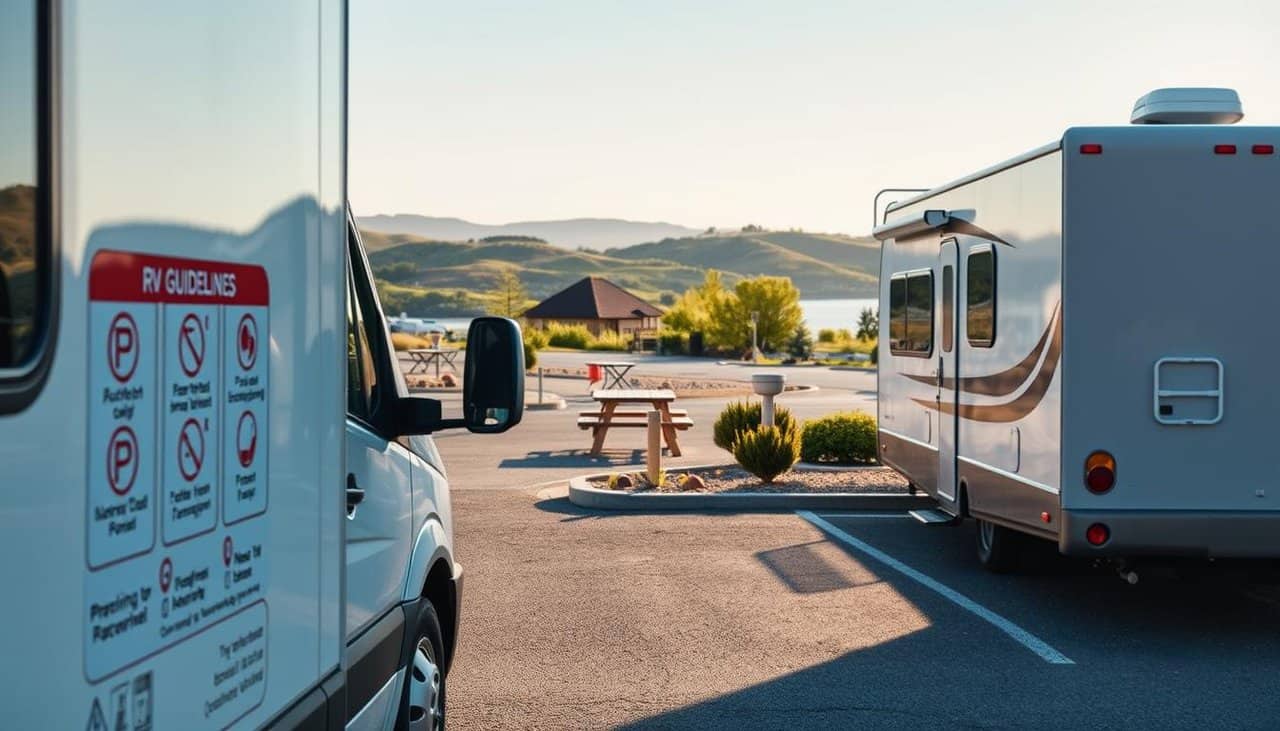
Imagine cruising down a scenic highway, the open road stretching out before you, and the thrill of adventure calling your name. But then, the sun begins to set, and the question arises: where can you park your RV for the night?
Did you know that over 11 million Americans own an RV, and the number is growing? With this surge in popularity comes a pressing concern: navigating the complex landscape of RV parking regulations.
As you plan your next trip, understanding the rules and regulations governing RV parking is crucial. From designated campgrounds to free overnight parking options, the choices can be overwhelming.
Key Takeaways
- Understanding local ordinances is key to avoiding parking fines.
- RV parking regulations vary significantly across states and localities.
- There are various RV parking options, including designated campgrounds and free overnight parking.
- Urban, suburban, and rural areas have different parking rules.
- Planning ahead is essential for a stress-free RV experience.
Understanding RV Parking Regulations in America
As an RV enthusiast, I’ve learned that parking regulations can make or break a trip. The fact is, RV parking laws vary significantly by state, city, and even neighborhood. The regulations put forth by the homeowners’ association in your area may differ from local ordinances.
General Parking Laws for Recreational Vehicles
When it comes to overnight parking, not all states have specific regulations regarding RVs at rest stops. Many states have lenient policies to encourage safe driving. For instance, some states permit RVs to stop for a certain time, typically up to 24 hours.
Here are some examples of overnight parking rules at rest stops in various states:
- Colorado: No overnight parking or camping allowed.
- Minnesota: Motorists can stop for up to four hours where posted.
- Utah: No overnight camping, but extended stays are monitored.
- Nebraska: Overnight camping or parking is prohibited, with a maximum stay of 10 hours.
- Texas: Staying longer than 24 hours or erecting structures is an offense.
How Regulations Vary by State and City
State regulations for RV parking can differ dramatically. Western states like Arizona and Nevada generally have more permissive policies than densely populated eastern states. Urban centers typically have strict RV parking restrictions, often prohibiting overnight parking on streets or limiting it to specific areas with time constraints.
For more detailed information on RV parking regulations by state, you can visit RV Parking Regulations by State.
Some key points to consider:
- Coastal communities, especially tourist destinations, have specialized RV ordinances.
- Some states have statewide policies for RV parking at rest areas and public lands.
- Time limitations are common, typically allowing short stays of 24-72 hours.
- Enforcement varies widely, with some communities actively patrolling for violations.
Can You Park an RV Anywhere in America?
As you plan your RV adventure across America, one of the first questions you might ask is whether you can park your RV anywhere you like. The answer isn’t straightforward, as RV parking regulations vary significantly across different states and cities.
Legal Restrictions and Limitations
RV parking laws are not uniform across the United States; they differ by state and even by city. In many cities, overnight parking of RVs on residential streets is prohibited. However, many areas allow you to park your RV on your property, provided it doesn’t obstruct the sidewalk or encroach on your neighbors’ property.
For instance, Billings, Montana, permits “open storage and off-street parking of licensed and operable recreational vehicles.” It’s essential to consult your local Department of Transportation parking guidelines to understand where you can legally park your RV in your neighborhood.
Residential Street Parking Rules
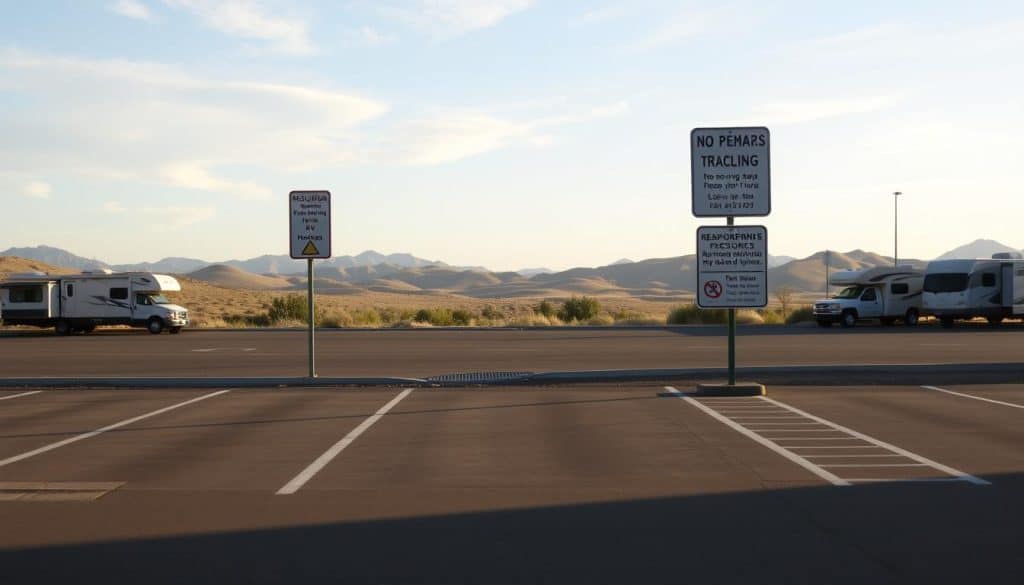
Residential street parking for RVs is highly regulated in most American communities. Many municipalities either prohibit overnight parking entirely or limit it to short durations. Even where street parking is allowed, there are often specific requirements, such as maintaining certain distances from driveways, fire hydrants, and intersections.
| City | Residential Street Parking Rules | Permit Required |
|---|---|---|
| Billings, MT | Allowed on private property | No |
| Some Cities | Limited time parking | Yes |
| Various | Prohibited on residential streets | N/A |
Understanding these regulations is crucial to avoid fines or having your RV towed. Always check the local parking rules and consider obtaining any necessary permission or permits before leaving your RV in a particular area for an extended time.
Free Overnight RV Parking Options
For many RV enthusiasts, the freedom to travel comes with the challenge of finding suitable overnight parking spots. Fortunately, there are numerous options available that won’t break the bank. From retail establishments to casinos, and truck stops to rest areas, RVers have a variety of choices to consider for a safe and convenient night’s stay.
Retail Establishments That Allow Overnight Parking
Many retail establishments welcome RVers to park overnight in their lots. One of the most well-known options is Walmart, with its RV-friendly overnight parking policy. While not all locations allow this, many do, making it a popular choice for travelers. To confirm, it’s best to call ahead or check with the store manager.
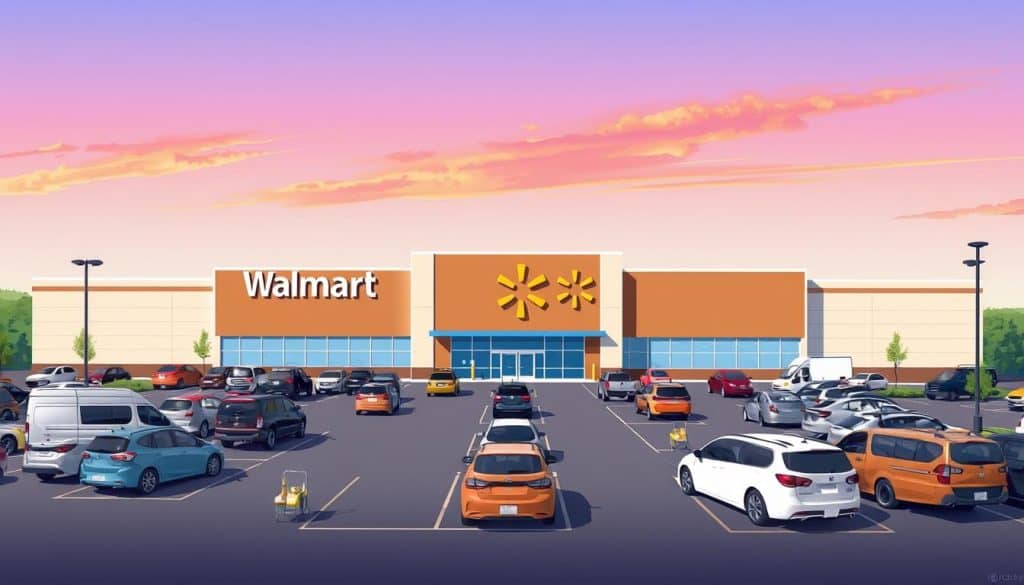
Other retailers that sometimes permit overnight RV parking include shopping malls, movie theaters, and 24-hour fitness centers. However, these options are less reliable and always require permission from management or staff.
Truck Stops and Rest Areas
Truck stops and rest areas are another viable option for RVers seeking a place to park overnight. These locations are designed for weary travelers and often provide basic amenities like restrooms and vending machines. Some truck stops even offer additional services such as fuel, food, and showers, making them a convenient stop for the night.
For more information on free RV parking options, you can visit RV Life, which provides a comprehensive guide on where to park your camper for free.
Casinos and Other Business Parking Lots
Casinos have become a popular destination for RVers looking for free or low-cost overnight parking. Many casinos, particularly those in western states, welcome RV travelers and offer dedicated parking areas with amenities like security patrols and level parking surfaces. The arrangement is mutually beneficial: casinos gain potential customers, while RVers get a safe place to park.
When staying at a casino or other business parking lot, it’s essential to follow proper etiquette: park where directed, avoid setting up camp outside your RV, patronize the business if possible, and limit your stay to one night unless otherwise specified.
Public Land Camping and Boondocking
The freedom of boondocking on America’s public lands is a draw for many RV travelers. It offers a chance to disconnect from the hustle and bustle and reconnect with nature.
Bureau of Land Management (BLM) Areas
The Bureau of Land Management (BLM) manages over 245 million acres of public land, much of which is open to camping. When camping on BLM land, you are generally allowed to stay for up to 14 days within a 30-day period. You must be at least 100-200 feet away from any road, trail, or water source.

BLM lands offer a dispersed camping experience, meaning you won’t find designated campsites or amenities. This freedom allows you to choose your campsite based on your preferences, but it also means you must be self-sufficient.
National Forests and Grasslands
National Forests and Grasslands offer another vast network of public lands for camping. The U.S. Forest Service manages these areas, and the rules can vary by forest. Generally, you can camp for up to 14 days within a 30-day period. Some forests may have more restrictive rules, so it’s essential to check ahead of time.
Time Limits and Regulations for Public Land Camping
While public land camping offers a lot of freedom, there are regulations in place to protect the environment and ensure that these areas remain available for future generations. Time limits are a key part of these regulations. For both BLM lands and National Forests, the typical stay limit is 14 days within a 30-day period.
- After reaching the time limit, campers must relocate a significant distance (typically 25-30 miles) before returning to the same area.
- Many public lands implement seasonal closures due to weather conditions, fire danger, or wildlife management needs.
- Group size limitations are common, with many areas restricting camping groups to no more than 8-12 people and 4-6 vehicles per site.
- Distance requirements from water sources, roads, and developed recreation sites are strictly enforced.
- Some high-use areas have implemented permit systems or designated dispersed camping sites.
- Fire restrictions are frequently implemented, especially during dry seasons.
Understanding and adhering to these regulations not only helps in preserving the natural beauty of these areas but also ensures a safe and enjoyable camping experience.
Conclusion: Responsible RV Parking Practices
The freedom to park your RV almost anywhere in America comes with the responsibility of being a considerate camper. As youplan your trip, it’s crucial to be aware of and adhere to localrulesand regulations regarding RVparkingandpark overnightoptions.
Tomake surethat RV travel remains a viable option for everyone, practices like proper waste disposal, respecting quiet hours, and not damaging the environment are essential. When you’re on theroad, being mindful of your surroundings and keeping noise levels down, especially when arriving late atnightor leaving early in the morning, is considerate of other campers.
By adopting these practices and being informed about local regulations, you contribute to a positiveexperiencefor yourself and others. This way, you help preserve the freedom and flexibility that make RV travel so rewarding. Alwaysmake sureto leave theareain the same condition as you found it, and respect thespaceandrulesthat allow us to enjoy these greatplaces.
FAQ
What are the general rules for parking my RV overnight?
Before parking your RV overnight, make sure to check local regulations and permission from the property owner. Some areas like truck stops, rest areas, and certain retail establishments allow overnight parking, but it’s not a universal rule.
Are there any free overnight RV parking options available?
Yes, there are several free overnight RV parking options. Some popular choices include certain Cracker Barrel locations, truck stops, and rest areas. Additionally, some casinos and retail establishments like Walmart allow overnight parking, but it’s always best to check with the management first.
What is boondocking, and where can I do it?
Boondocking refers to camping without hookups or amenities. You can boondock on Bureau of Land Management (BLM) land, national forests, and some other public lands. However, be sure to check the specific regulations and time limits for the area you plan to visit.
How do I find out if a particular area allows RV parking?
Research is key. Check the website of the Bureau of Land Management or the specific national forest you’re interested in visiting. You can also use online resources like Harvest Hosts to find RV-friendly locations.
Are there any specific regulations I should be aware of when parking my RV?
Yes, regulations vary by state and city. Some areas have specific laws governing RV parking, including time limits and permitted locations. Always check local regulations before parking your RV.
What are some popular options for RV camping on public land?
BLM land and national forests are popular options for RV camping. These areas often offer dispersed camping opportunities, but be sure to follow the rules and regulations for the area you choose.