

Camping is an exhilarating way to explore the great outdoors, but many wonder if it’s an expensive hobby. I’ve personally camped across the US and discovered that with the right planning, it can be quite affordable.
The costs associated with camping can vary greatly, from basic gear investments to nightly fees at different types of campgrounds. Whether you’re planning a weekend getaway or a cross-country road trip, understanding these costs is essential for a stress-free adventure.
In this guide, I’ll share my first-hand experience on budgeting for different camping scenarios and locations, helping you plan your outdoor escapades realistically.
Key Takeaways
- Understand the real costs of camping across America.
- Learn how to budget for basic gear investments and nightly fees.
- Discover how camping can range from ultra-budget-friendly to luxury experiences.
- Get insights into how inflation has affected camping costs in 2023.
- Plan your camping trip according to your financial comfort level.
Understanding the Cost of Camping in America
When planning a camping trip, it’s essential to consider the different costs that can impact your overall budget. Camping in the US offers a wide range of experiences, from basic tent camping to luxury RV vacations, each with its own set of expenses.
The initial step in managing your camping expenses is to understand the various categories of costs involved. These include one-time purchases like camping gear, recurring costs such as campsite fees, and consumables like food and fuel. For an affordable weekend of camping, consider booking a non-electric campsite for tents on public land. Some state parks may require an annual parks pass, so it’s wise to check the entry requirements beforehand.
Average Camping Expenses Overview
The average cost for a basic camping trip in the US typically falls between $150-200 for a weekend, factoring in campsite fees, basic gear, and food. However, your camping costs can vary significantly based on several factors: location, season, and the type of camping experience you’re seeking.
| Camping Type | Average Cost for a Weekend | Key Expenses |
|---|---|---|
| Basic Tent Camping | $150-200 | Campsite fees, basic gear, food |
| Luxury Camping/RV | $500-$1000 | RV rental, luxury campsite fees, high-end gear, food |
| State Park Camping | $40-$100 | Campsite fees, annual parks pass (if required), food |
For example, a basic tent campsite at Mount Pisgah Campground in North Carolina might cost $20/night for a non-holiday weekend, totaling $40 for 2 nights. According to ReserveAmerica, understanding these costs can help you plan a camping trip that fits your budget.
By making smart choices about when and where you camp, such as opting for midweek and off-season camping, you can significantly reduce your expenses. Camping remains a budget-friendly vacation option compared to hotel-based vacations, with average daily costs running 50-75% less.
Essential Camping Gear Costs
The cost of camping gear can vary widely, but there are ways to find affordable options without sacrificing quality. As someone who’s been camping for years, I’ve learned that investing in the right gear is crucial for a comfortable and enjoyable experience.
Tent Options and Prices
The most common type of tent is the dome tent, which is great for beginners because they’re easy to set up and relatively lightweight. Dome tents come in various sizes, ranging from two-person models to eight-person varieties, depending on your needs.
Prices for dome tents can vary greatly, but generally start around $80 and go up from there, depending on features like waterproofing, built-in groundsheets, and ventilation panels.
Popular brands like Coleman and Big Agnes offer quality products at competitive prices. For example, the Coleman Sundome is a budget-friendly option around $70, while premium models can exceed $400.
When shopping for a tent, it’s essential to match your equipment to your specific needs. A weekend camper doesn’t need the same tent as someone planning extended backcountry trips.
Key Considerations for Tent Purchases
- Tent prices represent one of the biggest variables in camping gear costs.
- Consider the size and features you need to ensure you’re not overspending.
- Look for brands that offer quality products at competitive prices.
Beyond tents, other essential gear includes sleeping bags, sleeping pads, headlamps, and basic cooking equipment. Sleeping bags, for instance, can range from $30 for basic synthetic models to $200+ for premium down-filled bags rated for colder temperatures.
When it comes to sleeping bags, it’s crucial to consider the temperature rating and the type of filling. Down-filled bags are generally warmer and more compressible, but they can be more expensive.
Other gear like sleeping pads ($16-$130), headlamps ($10-$50), and basic cooking equipment can add another $50-$200 to your initial investment.
To save money, consider starting with basic, affordable camping gear and upgrading specific pieces as you determine what features matter most to you.
I’ve found that many first-time campers make the mistake of overspending on gear they don’t need. By starting with the essentials and gradually adding more gear, you can enjoy camping without breaking the bank.
Campsite Fees Across the US
When planning a camping trip in the US, one of the key considerations is the cost associated with campsite fees. The cost of camping can vary greatly depending on the location, amenities offered, and the season. Generally, campgrounds in popular tourist areas tend to be more expensive than those in rural or less-traveled locations.
Camping fees in the US can range from as low as $10 to over $50 per night for basic sites without hookups or amenities like showers and toilets. It’s essential to research and understand these costs to plan your trip effectively.
National Park Camping Costs
National Park campgrounds typically charge between $20-35 per night. Iconic parks like Yosemite and Yellowstone often have fees at the higher end of this range. For more detailed information on camping rules and regulations in national parks, you can visit national park camping rules.
Campsite fees can vary dramatically based on the season. Peak summer rates can sometimes be double what you’d pay during the shoulder seasons (spring and fall). Here are some key points to consider:
- National Park campgrounds: $20-35 per night
- State park campgrounds: $15-30 per night, often with more amenities
- Private campgrounds and RV parks: $30-50+ per night, with amenities like showers, laundry, and sometimes WiFi and swimming pools
- Many campsites now require reservations months in advance, especially for weekend nights during summer
- Understanding different reservation systems is crucial for securing campsites at reasonable fees
By understanding these factors and planning ahead, you can make the most of your camping experience in the US while keeping costs under control.
How Much Does It Cost to Camp Around the US? Breaking Down the Numbers
Breaking down the costs of camping reveals that it’s possible to have a great outdoor experience on a budget. When planning a camping trip, understanding the various expenses involved can help you make informed decisions and stay within your budget.
Camping in the US can range from budget-friendly to luxurious, depending on your choices. For those looking to camp on a budget, it’s essential to consider the camping costs associated with campsites, gear, and activities.
Budget Camping Costs
Budget camping is absolutely possible, with a complete weekend trip costing between $150-200 if you’re strategic about your choices and willing to use basic equipment. I’ve managed many camping trips in this budget range by choosing free or low-cost campsites, bringing simple food options, and using entry-level gear that still gets the job done.
A breakdown of the costs for a budget camping trip can be seen in the example below, where the total cost came out to be $178.76. This included:
- A basic tent campsite for a non-holiday weekend ($40)
- The most affordable tent ($71.99)
- No cost for a sleeping bag (using sheets and blankets from home)
- A ground pad ($16.35)
- Campsite cooking supplies ($6 for firewood and matches)
- Illumination ($10 for a flashlight)
- A camp chair ($24.95)
- A cooler ($9.47)
- No cost for activities (hiking)
- No cost for meals (fishing)
The cost breakdown for budget camping typically includes $20-30 per night for campsites (or $0 if using free camping areas), $10-15 per day for food, and minimal additional expenses. First-time campers can save money by borrowing gear from friends, renting equipment, or starting with the bare essentials and building their camping kit over time.

Many people don’t realize how much they can save by camping during weekdays or off-season time when campsite fees are often reduced by 30-50%. With smart planning, you can have a great outdoor experience without spending a lot of money on fancy gear or premium campsites.
Luxury Camping Options and Their Costs
The great outdoors just got a whole lot fancier with the emergence of luxury camping options. As someone who’s explored various camping experiences, I can attest that luxury camping has exploded in popularity in recent years. Glamping experiences and high-end RV resorts now offer amenities that rival those of fine hotels, making them an attractive option for those seeking comfort in nature.
One of the most popular luxury camping options is RV rentals. Prices for a well-appointed motorhome or travel trailer can range from $150 to $300 per night. I’ve found that resort campgrounds with full hookups typically charge between $50-100 per night, but the experience is well worth the cost. These resorts often feature swimming pools, hot tubs, game rooms, and organized activities, elevating the camping experience to a new level of luxury.
RV Rentals and Resort Campgrounds
For those traveling without a car or preferring not to drive an RV, many glamping resorts now offer transportation services from nearby airports or train stations. This convenience is a game-changer for luxury campers. The total cost for a luxury camping experience can be substantial, with a recent trip costing $1,692.93. This included an RV weekend rental for $600, campsite fees of $186 for 2 nights, and various luxury amenities like a premium cooler ($349.99) and a recliner luxury chair ($219.95).
When planning a luxury camping trip, it’s essential to budget for additional expenses beyond the nightly rates. Premium locations often have higher-priced activities, dining options, and rental equipment available. For instance, zip lining cost $37 per person, and dining at a gourmet restaurant was $50 per person. By understanding these costs upfront, you can better plan your luxury camping adventure.
Food and Meal Planning Costs for Campers
One of the key aspects of a successful camping trip is planning your meals in advance. I’ve found that meal planning not only helps in saving money but also ensures that you have enough to eat throughout your trip.
When you’re out camping, it’s easy to get caught up in the excitement and forget about meal planning. However, food expenses can quickly add up if you don’t have a plan. To save money, consider buying groceries instead of eating out every night. Buying in bulk is usually cheaper and helps stretch your food budget further.
Budget-Friendly Camping Meals
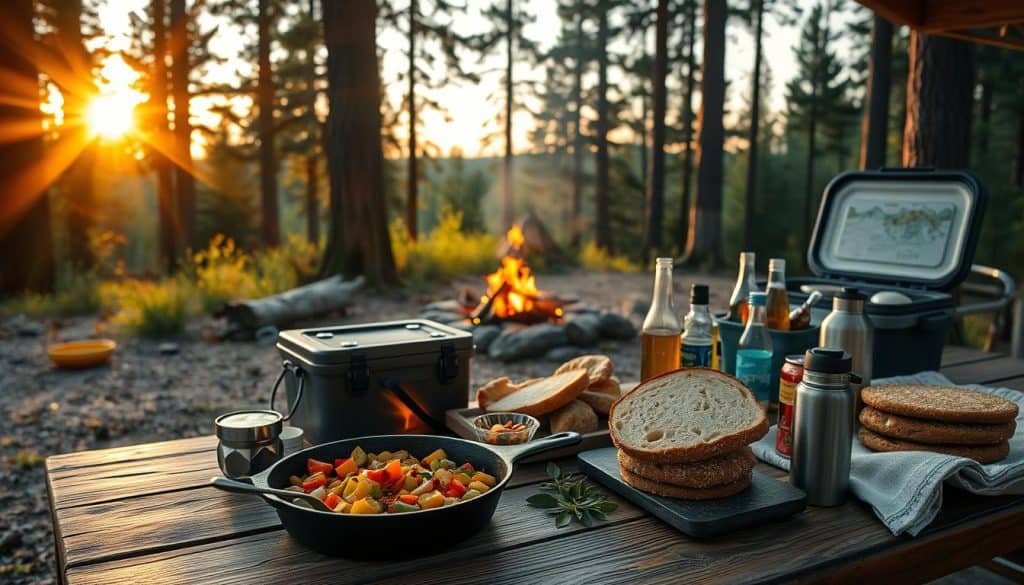
Budget-friendly camping meals can be both delicious and inexpensive. For example, oatmeal for breakfast costs around $0.25 per serving, sandwiches for lunch can be $2-3 per person, and one-pot meals like pasta or chili for dinner can cost $3-5 per person.
- Preparing simple meals at your campsite typically costs 50-75% less than dining out.
- Camping supplies for cooking don’t have to be expensive – a basic camp stove starts around $25.
- Food storage is an important consideration for safety and keeping perishables fresh.
By planning your meals and being mindful of your food expenses, you can enjoy a cost-effective camping trip without sacrificing flavor or convenience.
Transportation and Fuel Expenses
As I prepare for my next camping adventure, I’m always mindful of the transportation costs involved. Whether you’re driving a car or renting an RV for a road trip, fuel expenses can significantly impact your overall camping budget.
Transportation costs are often the largest expense for camping trips, especially if you’re planning a road trip to multiple destinations. I’ve found that for longer journeys, fuel expenses typically account for 30-40% of my total budget.
Gas Costs for Camping Road Trips
To estimate gas costs for a camping road trip, it’s essential to calculate your vehicle’s fuel efficiency and the approximate distances between destinations. For instance, a 1,000-mile round trip in a vehicle getting 25 mpg could cost between $120-160 on fuel at current prices.
The type of vehicle you use significantly impacts your transportation costs. A fuel-efficient car might use half the gas of an SUV or truck. However, the latter may provide more comfort and cargo space for longer camping trips.
- Consider the time vs. money equation when planning your camping transportation.
- Many campers overlook the wear and tear on their vehicles when budgeting for camping trips.
As a seasoned camper once said, “
The journey is just as important as the destination.
” This quote resonates with me because it highlights the need to balance the cost of transportation with the enjoyment of the trip.
Free Camping Options in the US
For those who love the outdoors, the US offers a surprising number of free camping options. Public lands managed by federal agencies like the US Forest Service and Bureau of Land Management (BLM) provide ample opportunities to camp without spending a dime.
I’ve personally benefited from these free camping options, saving thousands of dollars over the years by camping on public lands instead of developed campgrounds. The freedom to roam and camp in some of America’s most beautiful areas is a camper’s dream come true.
National Forest and BLM Land Camping
National Forests and lands managed by the BLM are treasure troves for campers looking for free or low-cost camping options. In most National Forests, dispersed camping is allowed, meaning you can camp outside of designated campsites as long as you follow certain guidelines, such as staying at least 100-200 feet away from water sources and adhering to Leave No Trace principles.
The Bureau of Land Management oversees vast areas of land, primarily in the western United States, offering numerous free camping opportunities. These areas are often less crowded than National Parks and offer a more secluded camping experience. Typically, you can camp for up to 14 days at a time, although this limit can be extended to 30 days during certain times of the year.
- Free camping options exist throughout the US, primarily on public lands managed by federal agencies.
- National Forests offer some of the best free camping opportunities with dispersed camping allowed in most areas.
- State parks occasionally offer free camping, though it’s less common than on federal lands.
- Most free camping areas have a 14-day limit for stays, requiring you to move to a different area after that time.
The western states, such as Arizona, Utah, Colorado, and Nevada, are particularly rich in free camping options due to the abundance of public lands. Whether you’re a seasoned camper or just looking to try something new, these free camping options can make your outdoor adventures more affordable and memorable.
Money-Saving Tips for Campers
The great outdoors is calling, and with a few savvy tips, you can enjoy camping without breaking the bank. As someone who’s spent a lot of time camping, I’ve learned that it’s not just about pitching a tent and enjoying nature; it’s also about being mindful of your expenses.
One of the best ways to save money on camping is to invest in quality gear that lasts rather than repeatedly replacing cheap equipment. I learned this lesson the hard way after going through three budget tents in two years. Renting camping gear is also an excellent option for beginners or those who camp infrequently.
Gear Rental vs. Purchasing
Many outdoor retailers like REI offer rental programs that let you try before you buy. This can be a great way to save money on gear, especially if you’re not sure what you need. For instance, renting a tent or camping stove can help you avoid the initial purchase cost and determine what works best for you.
- Camping during off-season periods can save you 30-50% on campsite rates, and you’ll enjoy fewer crowds and often more pleasant weather.
- Many people don’t realize that camping passes and memberships, such as the America the Beautiful Pass ($80/year), can offer significant savings on entrance fees and camping discounts at national parks and federal lands.
- Joining camping organizations or clubs can provide access to discounts – Good Sam, Passport America, and similar programs offer 10-50% off at participating campgrounds.
To save money, make sure to take advantage of first-timer discounts, military/senior/student discounts, and weekday special rates that many campgrounds offer. By being mindful of these tips and planning your trip accordingly, you can enjoy a budget-friendly camping experience.
Conclusion: Is Camping an Affordable Vacation Option?
After dissecting the costs of camping, it’s evident that this form of vacation can cater to a wide range of budgets. Camping remains one of the most affordable vacation options for most people. The flexibility of camping allows you to tailor your experience, from nearly free dispersed camping to luxury glamping.
A camping trip typically costs 50-75% less than hotel-based trips to the same destinations. With proper planning, you can enjoy a cost-effective trip that provides unique experiences. For more information on planning your trip, check out the best time to visit national parks. This will help you make the most of your camping costs and enjoy quality time with loved ones.
FAQ
What are the average costs associated with camping in state parks?
The average cost for camping in state parks can range from to per night, depending on the amenities and location.
Are there any additional fees for amenities like water and parking at campsites?
Yes, some campsites charge extra for amenities like water, parking, and electricity hookups, which can add to per day to your overall cost.
What’s the price range for camping gear, such as tents and sleeping bags?
You can find a decent tent for 0 to 0 and a sleeping bag for to 0, depending on the quality and brand.
Can I save money by renting camping gear instead of buying it?
Yes, renting gear can be a cost-effective option, especially for occasional campers. Rental prices vary, but you can expect to pay to per day for a tent or other equipment.
What’s the average cost of food for a camping trip?
The cost of food can vary greatly, but you can plan for to per day per person for basic camping meals.
Are there any free camping options available in the US?
Yes, you can camp for free on certain public lands, such as national forests and Bureau of Land Management (BLM) areas, although amenities may be limited.
How can I reduce my fuel expenses for a camping road trip?
Planning your route, combining errands, and maintaining your vehicle can help reduce fuel costs, which can range from to 0 or more for a camping trip, depending on the distance and fuel efficiency.
What’s the cost range for RV rentals and luxury camping options?
RV rental prices can range from 0 to 0 per day, depending on the size and amenities, while luxury camping resorts can cost to 0 per night or more.