
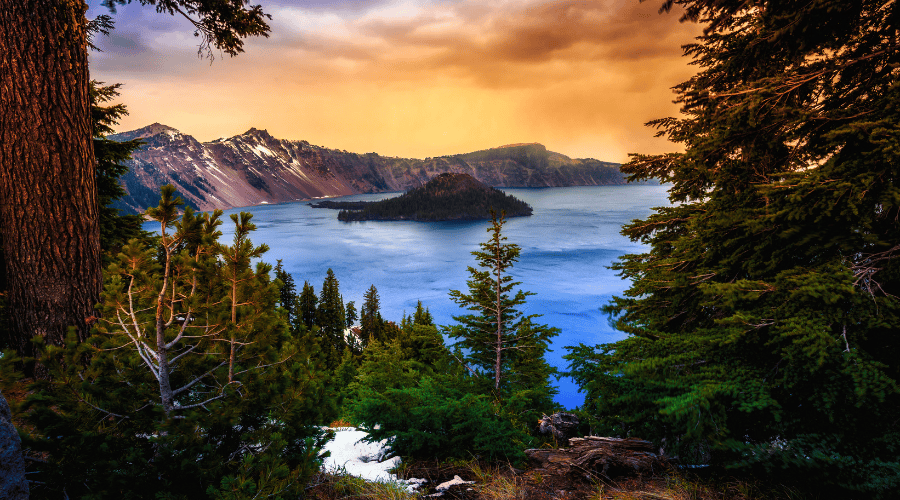
Oregon proudly hosts one official national park—Crater Lake National Park. This park is famous for its stunning beauty and the deepest lake in the U.S. It’s found in the caldera of a sleeping volcano. Crater Lake National Park covers about 920 square miles1. It’s a top spot to see when checking out Oregon’s protected places.
However, Oregon has a total of six national park units. Each offers unique experiences and history. The John Day Fossil Beds National Monument, set up in 1975, spans over 13,000 acres with preserved geological treasures.
Fort Vancouver National Historic Site, partly in Oregon, was named a National Monument in 1948 and a Historic Site in 1965.
You’ll also find the Lewis and Clark National Historical Park and the Oregon Caves National Monument and Preserve that highlight Pacific coast history and fascinating cave formations.
Finally, there is the Nez Perce National Historic Park which stands as a powerful testament to the courage and heritage of the Nez Perce tribe.
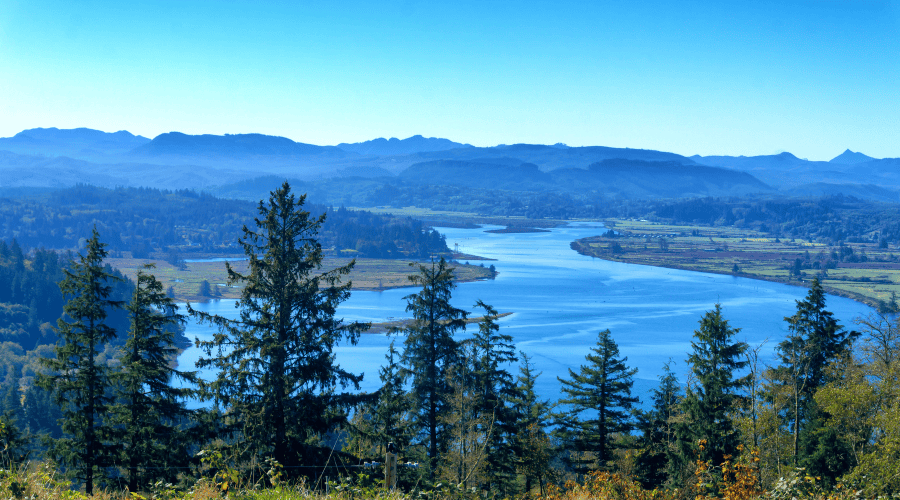
Crater Lake National Park attracts over half a million visitors each year. It’s a key part of Oregon’s national parks tourism. Visiting Oregon’s protected areas offers a mix of nature’s beauty and lessons in history. There are many activities and sites to explore and learn from.
Oregon Highlights
- Oregon is home to one official national park: Crater Lake National Park.
- Crater Lake features the deepest lake in the United States, plunging nearly 2,000 feet1.
- Crater Lake National Park draws over half a million visitors annually2.
- Oregon has a total of six national park units, offering various natural and historical sites.
- Oregon Caves National Monument and Preserve and John Day Fossil Beds are notable park units with significant geological and historical value23.
Overview of National Parks in Oregon
Oregon has many national parks with unique experiences for nature fans and history lovers. Crater Lake National Park is famously known for being the deepest lake in the U.S. It’s 1,943 feet deep and holds about 4.6 trillion gallons of water4.
Crater Lake’s stunning blue waters were formed by an ancient volcano.
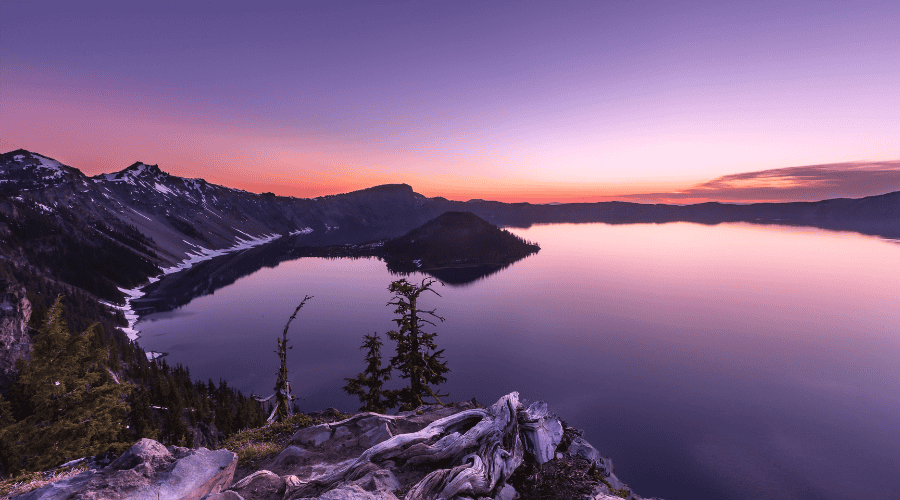
This beautiful spot brings in hundreds of thousands of visitors each year, reaching a record 664,000 in 201554. Visitors love the park’s winter activities, including its 41 feet of annual snowfall4.
John Day Fossil Beds National Monument shows off Earth’s history with its colorful rocks6. It’s known around the world for its important fossil sites5.
The Oregon Caves National Monument and Preserve has amazing marble caves. It’s a great place for exploring nature and history. The park also protects a variety of plants and animals5.
Lewis & Clark National Historical Park is found in 16 states, including Oregon6. It honors early explorers with places like Netul Landing & River Trail. The park is perfect for learning and outdoor fun.
Fort Vancouver National Historic Site is made up of four areas. It shares the area’s fur trading, military, and aviation history6. Visitors enjoy learning about the Pacific Northwest’s past while taking in the views.
Oregon’s trails offer incredible walks through history. The Oregon National Historic Trail and the California National Historic Trail are among these. They give a peek into the past, like the Gold Rush6. These trails make exploring Oregon’s parks and wonders even more exciting.
Oregon is proud of its 1 national park, 5 national park sites, 11 National Natural Landmarks, and 17 National Historic Landmarks5. In 2015, these places welcomed 1.1 million visitors. They also brought in $114.7 million, showing their economic and cultural value5.
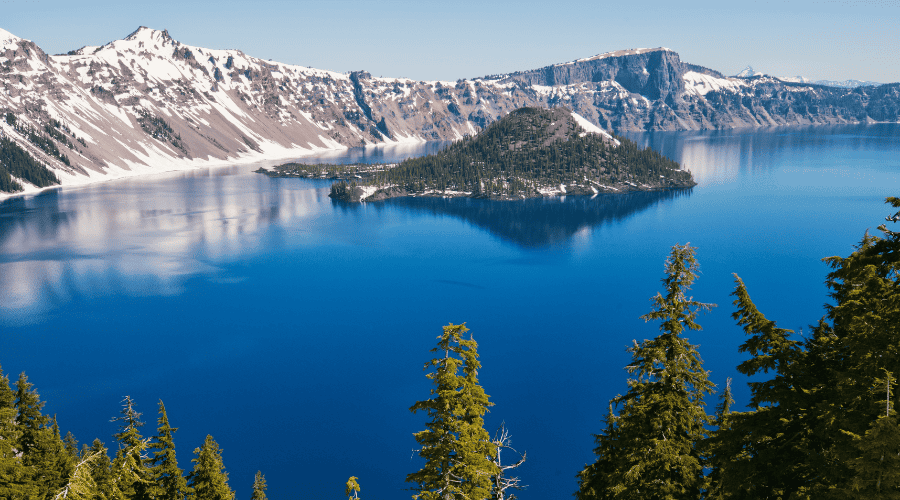
Crater Lake National Park: Oregon’s Gem
Crater Lake National Park is known for its striking blue waters and beautiful views. It was created on May 22, 1902. Covering 183,224 acres, it welcomes around 704,512 visitors each year7.
Overview and Features
It’s the only national park in Oregon and has the deepest lake in the U.S., reaching more than 1,900 feet7. Its clear, blue waters are unforgettable. With 90 miles of trails, Crater Lake is perfect for hiking and outdoor fun7.
Activities at Crater Lake
Driving around Crater Rim Drive is a favorite activity. It shows off the lake and landscapes. Hiking to Wizard Island is also incredible, taking you into the lake’s volcanic history. Winter brings snow sports, with an average snowfall of 43 feet7.
Visitor Information
You’ll find two visitor centers, Steel and Rim Village, with exhibits and passport stamps7. For stays, try Crater Lake Lodge or the Cabins at Mazama Village, open seasonally from mid-May to October7. There’s also Mazama Campground, with 214 sites, most of which you can reserve7.
John Day Fossil Beds National Monument
The John Day Fossil Beds are an amazing landmark with a rich history in fossils. These fossils tell stories from over 40 million years ago. Spread over 14,062 acres in Oregon, they let us peek into the world’s past. We learn about ancient eruptions, changing climates, and how plants and animals evolved89. The National Park Service takes care of this treasure. They make sure everyone can visit and learn from it8.
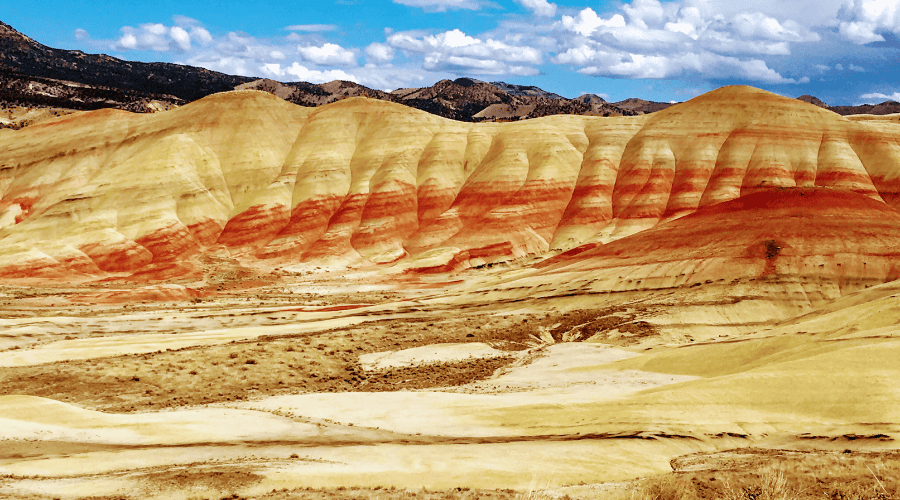
The ‘Painted Hills’ at John Day Fossil Beds National Monument are particularly stunning.
Geological Significance
The John Day Fossil Beds are incredibly significant geologically. They have fossils from a time when volcanic fields grew in the Blue Mountains, between 45 and 25 million years ago9. The climate here changed from wet and warm to cooler and drier around 33 million years ago9. Exploring these rocks helps us understand how the Earth has changed. These shifts are recorded in the Clarno and John Day formations. The Picture Gorge Basalt also adds to the story with its ancient lava flows starting 17 million years ago, creating a vast range of geological features and fossils9.
Visitor Activities and Trails
Visitors to the John Day Fossil Beds can do lots of fun activities. They can hike trails that display the area’s geological wonders. The Sheep Rock Unit is especially cool. It has the Thomas Condon Paleontology Center where you can see ancient fossils up close8. Nature lovers will enjoy the beautiful views and wildlife. Walking these trails, you might see elk or reptiles among the willows and grasses8. There’s also thrilling rafting available in the John Day Basin, a perfect combo of adventure and nature’s calm.
Paleontological Research
The John Day Fossil Beds are a hotspot for studying ancient life. Researchers have looked at over 7,000 fossil samples here, publishing a lot of their findings10. Their work sheds light on how animals moved between continents and how nature’s shifts affected life on Earth10. The Thomas Condon Paleontology Center showcases some of these fascinating glimpses into the distant past10. The science world is always finding new things here, thanks to groups like UCMP who keep digging and sharing10.
In short, the John Day Fossil Beds are a cornerstone of exploration. They offer amazing geological insights, fun activities, and groundbreaking research. This place lets us journey through millions of years of Earth’s history, all in one visit.
Oregon Caves National Monument and Preserve
In the Siskiyou Mountains, the Oregon Caves National Monument and Preserve awaits discovery. It was established in 1909 and grew in size in 2014. This special place draws people with its complex underground paths and gorgeous natural surroundings.
Exploring the Caves
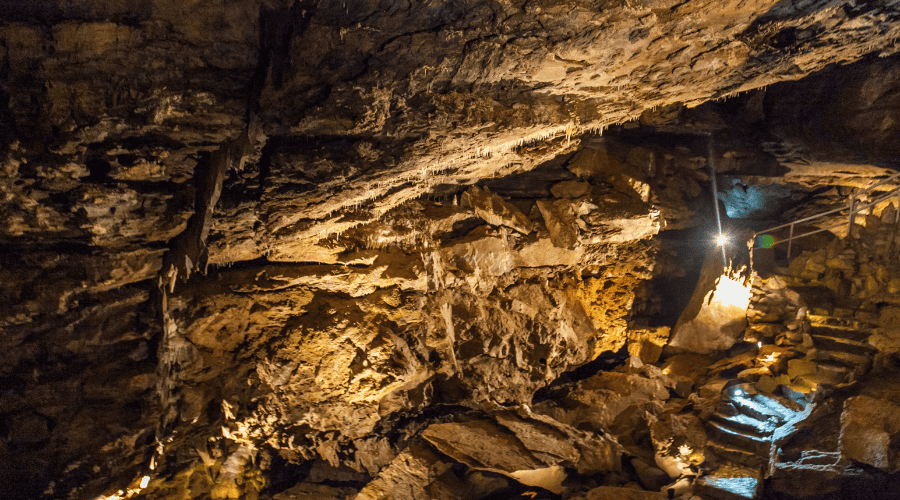
At the Oregon Caves National Monument, you can explore around 15,000 feet (4,600 m) of stunning cave passages, some over 1.7 million years old1112. The area’s elevation ranges from 3,680 to 5,480 feet, showing off different geological wonders11. Park rangers lead tours into the deep caves, where you’ll see the ancient Neptune’s Grotto and its 370,000-year-old formations12.
Historical Significance
Since 1909, the Oregon Caves have fascinated visitors as a national monument13. The historic Oregon Caves Chateau is a National Historic Landmark, offering a glimpse into the past13. The caves are also a treasure trove of fossils, like black bear bones and a 38,000-year-old jaguar, highlighting their historical impact12.
Visitor Center and Tours
The visitor center is where your adventure starts. Here, you’ll find educational exhibits and sessions on the area’s history. For hikers, there are six trails with lengths from 0.7 to 9.2 miles for all levels13. The Oregon Caves Chateau awaits after spelunking, offering cozy accommodations13.
If collecting stamps is your hobby, visit the Illinois Valley Visitor Center in Cave Junction. It’s a place where you can get a special stamp, making your trip to the Siskiyou Mountains unforgettable.
Lewis and Clark National Historical Park
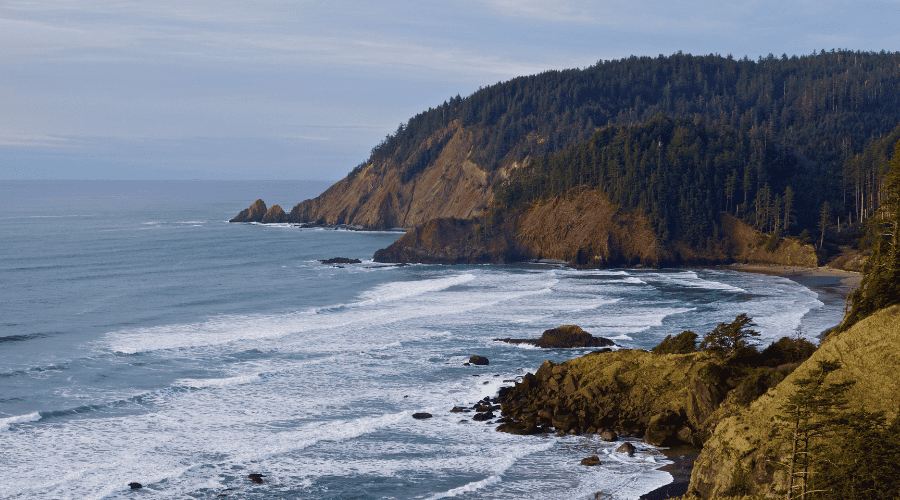
The Lewis and Clark National Historical Park takes you on a journey through Pacific coast history. It honors the Corps of Discovery’s epic exploration. Spanning 3,303 acres across locations from Long Beach, Washington, to Cannon Beach, Oregon1415, it’s vast. Guests can enjoy a range of activities and discover many historic spots within this large area.
Historic Sites to Visit
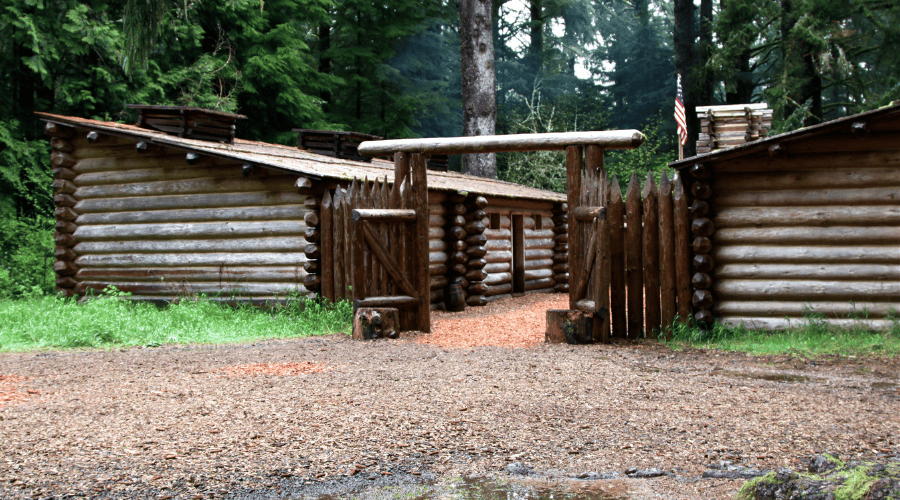
Fort Clatsop is the park’s highlight, carefully rebuilt to show where the Corps of Discovery stayed over winter and noted their observations15. Other notable places include Cape Disappointment lighthouse, Fort Columbia, and the Salt Works area. Several interpretive centers provide close looks into Lewis and Clark’s expedition and their meetings with native peoples16.
Recreational Opportunities
This park is perfect for those who love the outdoors, featuring miles of trails for hiking, especially around Cape Disappointment State Park with its 27 miles of beachfront14. You can watch wildlife, have a picnic, or camp out. The Fort to Sea trail goes from Fort Clatsop to the Pacific Ocean, mixing historical sites with stunning landscapes. There are also programs about local plants and animals, plus fun events throughout the year16.
Passport Stamps Locations
Collecting passport stamps at various park locations enhances your visit. Make sure to get stamps at the Fort Clatsop visitor center, Ecola State Park, Cape Disappointment State Park, and Fort Columbia State Park. They symbolize your adventure through the important history of the Pacific coast and its interpretive centers. These stamps become a cherished souvenir of your exploration141516.
Fort Vancouver National Historic Site
Fort Vancouver National Historic Site is a window to the Pacific Northwest’s rich history. It highlights the Hudson Bay Company’s settlement in the 1820s and its use as a World War II airfield. It became a national monument on June 19, 1948, and was named a national historic site on June 30, 196117. This historic treasure spans two locations: the main fort in Vancouver, Washington, and a smaller unit in Portland, Oregon18.
Historical Context
Fort Vancouver was key to the Hudson Bay Company’s fur trade operations. Today, visitors can see modern replicas of the fort’s structures built on their original sites17.
Spread over 207 acres, it attracted 710,439 visitors in 2011. It’s a place where history buffs and tourists come to dive into the past17.
Museum Explores
The site’s museum showcases its complex history. It features artifacts from the Hudson Bay Company and its World War II military role. Plus, there’s an interpretive garden started in 1974, filled with plants from that era19.
Visitor Information
Fort Vancouver offers various activities. Lantern Tours let you see the fort or historic barracks at night during the 2018-2019 season19. “Survive and Thrive” teaches 1800s survival skills used in the fur trade, thanks to National Park Service rangers in Oregon and Washington19.
Visit the Barclay House in Oregon City for more insights. It’s a great place for information and passport cancellations for those exploring the site’s history.
| Park/Site | Acres | Annual Visitors |
|---|---|---|
| Crater Lake National Park | 183,224 | 756,000 |
| John Day Fossil Beds National Monument | 13,944 | 210,000 |
| Oregon Caves National Monument | 4,558 | 72,000 |
| Lewis & Clark National Historical Park | 3,303 | 200,000 |
| Fort Vancouver National Historic Site | 207 | N/A |
Importance of Protecting Oregon’s Natural and Historic Sites
Oregon’s natural and historic sites need our constant protection. By conserving them, we keep the area’s biodiversity and geological features safe. Over the last fifty years, the Land and Water Conservation Fund (LWCF) has provided more than $320 million. This fund helps protect places like the Steens Mountain and Hart Mountain National Antelope Refuge23. The Great American Outdoors Act also gives $900 million every year to the LWCF. This includes about $116 million for maintenance at places such as Crater Lake National Park23. Protecting these areas brings many benefits, like preserving nature and providing places for outdoor fun. Click here to learn more about the LWCF’s impact on these landscapes.
Conservation Efforts
Many programs work hard to conserve Oregon’s natural sites. The Oregon Natural Areas Program began in 1979 with a goal. It aims to set up a full system of natural areas for study, teaching, and enjoying nature24. By doing this, it preserves landscapes for everyone. A group called the Natural Areas Committee leads the efforts with help from U.S. Forest Service24. Check out more about these important environmental initiatives in Oregon.
Community Involvement
Community support is crucial for conservation and preserving history in Oregon. Through education and local projects, people grow to value their natural heritage even more. The Fender’s Blue Butterfly shows how well community efforts can work24. To designate natural areas, we often need data from public input and science. Oregon’s national monuments, like the John Day Fossil Beds, show how important community help is25. Supporters push for new protected areas like the proposed Owyhee Canyonlands National Monument. This would boost Oregon’s preservation efforts25.
Learn more about how Oregon’s national monuments are preserved through these initiatives.
Nez Perce National Historical Park
Nez Perce National Historical Park is a profound tribute to the Nez Perce tribe, preserving 38 significant sites across Idaho, Montana, Oregon, and Washington. This park commemorates the tribe’s resilient history, including their 1877 struggle under Chief Joseph against U.S. forces.
While the majority of the sites are visited in Idaho, there are 3 sites in Oregon.
Managed by the National Park Service and introduced in 1965, these locations honor the Nez Perce’s rich cultural heritage and their enduring spirit. Visitors can explore these sacred grounds to connect deeply with the tribe’s legacy and the landscapes that hold their history. The park serves as a powerful reminder of the Nez Perce’s enduring strength and cultural contributions.
FAQ
How many national parks are there in Oregon?
Oregon has one official national park, Crater Lake National Park. Besides, there are several national park sites. These include monuments, historic trails, and parks.
What makes Crater Lake National Park notable?
Crater Lake National Park is famous for its stunning deep blue color and beautiful views. It’s the deepest lake in the U.S. Visitors enjoy driving around Crater Rim, hiking to Wizard Island, and taking photos.
What can you do at John Day Fossil Beds National Monument?
At John Day Fossil Beds National Monument, you can walk interpretive trails, hike, and check out paleontology centers. One example is the Thomas Condon Paleontology Center. Plus, the John Day River system offers fun rafting.
What does the Oregon Caves National Monument and Preserve offer?
The Oregon Caves National Monument and Preserve allows guided cave tours. You can explore the Oregon Caves Chateau. Also, visit the Illinois Valley Visitor Center in Cave Junction.
What historic sites can you visit at Lewis and Clark National Historical Park?
Lewis and Clark National Historical Park features several key sites. Visit Fort Clatsop, the Fort to Sea trail, Cape Disappointment Lighthouse, and Dismal Nitch.
What is significant about Fort Vancouver National Historic Site?
The Fort Vancouver National Historic Site is historically important due to its early Hudson Bay Company settlement in the 1820s. It was also used as a WWII military airfield later. Visitors enjoy its extensive exhibits and reenactments of pioneer life.
How can you contribute to the conservation efforts in Oregon’s national park sites?
Support conservation by joining community initiatives, visiting parks responsibly, and backing educational programs. These efforts help preserve Oregon’s beautiful natural and historic sites.
Are there opportunities for outdoor adventures in Oregon’s national park,True sites?
Absolutely, Oregon’s national park sites are perfect for outdoor adventures. Enjoy hiking and rafting at John Day Fossil Beds. Explore caves at the Oregon Caves National Monument. Also, explore historical trails at Lewis and Clark National Historical Park. There’s something for everyone.
What educational resources are available at Oregon’s national park sites?
Oregon’s national park sites offer great educational resources. Find visitor centers with exhibits, interpretive trails, guided tours, and programs. They teach about the natural and historic importance of the sites.
Source Links
- https://www.parkrangerjohn.com/national-parks-oregon/ – National Parks in Oregon
- https://www.parkchasers.com/2019/02/visit-all-the-national-park-sites-in-oregon/ – Visit All the National Park Sites in Oregon – Park Chasers
- https://nationalparkobsessed.com/national-parks-of-oregon/ – National Parks of Oregon
- https://www.opb.org/article/2023/05/22/crater-lake-national-park-oregon-overview/ – A quick dive into Oregon’s only national park
- https://www.oregonlive.com/travel/2016/08/oregons_national_parks_by_the.html – Oregon’s national parks, by the numbers
- https://www.travelandleisure.com/oregon-national-parks-and-sites-7095272 – 10 Best Oregon National Parks and Sites
- https://www.nationalgeographic.com/travel/national-parks/article/crater-lake-national-park – This Stunning National Park Is Set in a Dormant Volcano
- https://en.wikipedia.org/wiki/John_Day_Fossil_Beds_National_Monument – John Day Fossil Beds National Monument
- https://sos.oregon.gov/blue-book/Pages/explore/monuments/john-day-fossil-beds-mcclaughry.aspx – State of Oregon: Blue Book – John Day Fossil Beds National Monument
- https://ucmp.berkeley.edu/science/parks/johnday.php – John Day Fossil Beds National Monument
- https://en.wikipedia.org/wiki/Oregon_Caves_National_Monument_and_Preserve – Oregon Caves National Monument and Preserve
- https://sos.oregon.gov/blue-book/Pages/explore/monuments/oregon-caves-mcclaughry.aspx – State of Oregon: Blue Book – Oregon Caves National Monument and Preserve
- https://www.oregonicroads.com/oregon-caves – Oregon Caves National Monument and Preserve — Oregonic Roads
- https://en.wikipedia.org/wiki/Lewis_and_Clark_National_Historical_Park – Lewis and Clark National Historical Park
- http://npshistory.com/publications/foundation-documents/lewi-fd-overview.pdf – Lewis and Clark National Historical Park Foundation Overview
- https://www.national-park.com/lewis-and-clark-national-and-state-historical-park/ – Lewis and Clark National and State Historical Park 2024
- https://en.wikipedia.org/wiki/Fort_Vancouver_National_Historic_Site – Fort Vancouver National Historic Site
- https://www.americansouthwest.net/oregon/national-parks.html – National Parks, National Monuments and National Recreation Areas of Oregon
- https://www.nationalparkstraveler.org/park/fort-vancouver-national-historic-site – Fort Vancouver National Historic Site
- https://oregontails.org/pnw-national-parks-all-19-parks-in-the-pacific-northwest/ – PNW National Parks: All 19 Parks in the Pacific Northwest | Oregon Tails
- https://everything-everywhere.com/national-park-service-sites-in-oregon/ – National Parks in Oregon
- https://blog.trekaroo.com/oregon-national-parks/ – 5 Oregon National Parks You Need to Visit!
- https://www.nature.org/en-us/about-us/where-we-work/united-states/oregon/stories-in-oregon/protected-public-lands-lwcf/ – Five Iconic Oregon Places Protected by the Great American Outdoors Act
- https://inr.oregonstate.edu/orbic/natural-areas-program – Natural Areas Program
- https://www.oregonlive.com/travel/2016/10/oregons_4_national_monuments_w.html – Oregon’s 4 National Monuments