
As an RVer, you’ve likely faced the uncertainty of finding a safe and legal place to stop for the night. Did you know that some states allow overnight parking at rest areas, while others don’t? This patchwork of regulations can make planning a trip challenging.
For many RV travelers, a quick overnight stop at a rest area is a hassle-free way to get some rest during long journeys. However, understanding the distinction between “parking” and “camping” is crucial to using rest areas responsibly.
As you hit the road, knowing where you can legally park overnight can save you money and ensure your safety. In this article, we’ll explore the complex regulations surrounding rest areas and provide you with the information you need to plan your route with confidence.
Key Takeaways
- Understand the regulations surrounding overnight parking at rest areas across different states.
- Learn the distinction between “parking” and “camping” to use rest areas responsibly.
- Discover how to plan your route to accommodate necessary overnight stops.
- Find out how to save money by parking overnight at rest areas.
- Stay safe by knowing the rules and etiquette for overnight parking.
Understanding Rest Area Regulations for RV Travelers
When traveling by RV, understanding the rules governing rest areas is essential for a smooth journey. As you plan your route, it’s crucial to know what to expect from these stops.
The Purpose of Highway Rest Areas
Highway rest areas were designed with safety in mind, providing drivers a place to combat fatigue and reduce accidents caused by drowsy driving. These rest stops typically include parking areas, restrooms, and picnic tables, offering a short-term respite for travelers.
Some more developed rest areas may include additional amenities such as walking trails, Wi-Fi access, or even electric vehicle charging stations. The primary purpose of these areas is to offer a safe haven for drivers to rest and recharge.
Federal vs. State Jurisdiction
Rest areas fall under different jurisdictions depending on their location. Those on interstate highways often have different regulations than those on state highways. While federal funding may support many rest areas, individual states typically establish and enforce the specific rules governing their use.
Understanding the distinction between federal guidelines and state-specific regulations is crucial for RV travelers planning to use rest areas for overnight stays. The table below summarizes key differences in jurisdiction and regulations:
| Jurisdiction | Regulations | Overnight Parking |
|---|---|---|
| Federal (Interstate) | Generally governed by federal guidelines | Varies by state |
| State (State Highways) | Regulated by individual state laws | Often restricted or prohibited |
By understanding these regulations, RV travelers can better plan their stops and avoid potential issues. It’s always a good idea to check current regulations before planning overnight stops, as some states have recently updated their rest area policies to address the growing number of RV travelers.
Can Motorhomes Park Overnight at Service Rest Areas?
One of the biggest dilemmas for motorhome owners is figuring out if they can legally park overnight at service rest areas. As an RV traveler, understanding the rules and regulations surrounding overnight parking is crucial for a smooth journey.
Legal Definition of “Overnight Parking” vs. “Camping”
The distinction between overnight parking and camping is essential to comprehend.Overnight parkingrefers to staying inside your vehicle without setting up any outdoor amenities. This means you shouldn’t have chairs, tables, grills, or tents outside your vehicle; you’re simply using the parking space to rest before continuing your journey. On the other hand,campinginvolves a more elaborate setup, such as leveling your RV, extending awnings, setting up outdoor furniture, or using external equipment, effectively turning the space into a temporary living area.
Understanding this difference is vital because most states that allow overnight stays at rest areas specifically prohibit camping activities. The rules vary significantly by state, with some explicitly allowing overnight parking while others strictly prohibit it.
How to Identify If Overnight Parking is Allowed
To determine if overnight parking is allowed at a service rest area, look for signs posted at the rest area, as they reflect current local regulations. If there are no signs, it’s safest to assume that while brief rest is permitted, extended overnight stays may not be allowed. Some states have specific time limitations, typically between 8-12 hours, which effectively allow overnight stays without explicitly stating it.
RV travelers should pay close attention to the language used on signs, distinguishing between “no overnight parking” and “no camping” to understand what’s permitted at each location. Being aware of these regulations can help you avoid any potential issues during your trip.
By understanding the rules and being mindful of your surroundings, you can enjoy a safe and comfortable overnight stay at a service rest area. Always check for specific rules and regulations to ensure a hassle-free experience.
States That Allow Overnight RV Parking at Rest Areas
The rules regarding overnight RV parking at rest areas vary significantly from state to state, making it essential to know where you’re allowed to stop. As an RV traveler, understanding these regulations can make a big difference in your journey’s comfort and legality.
States with Explicit Permission
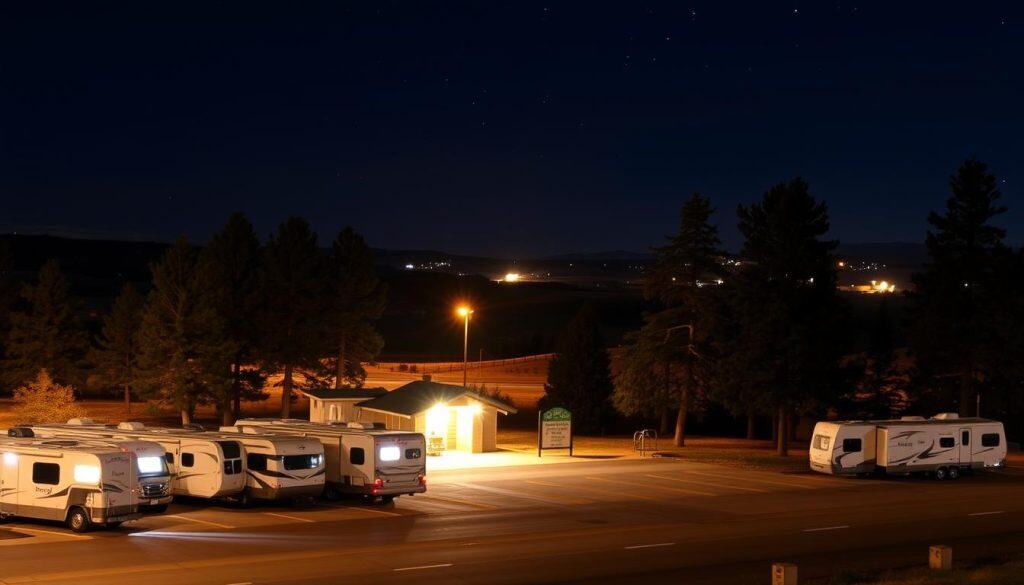
Several states explicitly allow overnight parking for motorhomes at their rest areas, making them reliable options for RV travelers needing a place to sleep. For instance, California permits stays up to 8 hours within any 24-hour period, providing sufficient time for a full night’s sleep before continuing your journey. Similarly, Idaho offers generous time allowances with 8 consecutive hours permitted on interstate highways and 16 consecutive hours on other state highways.
- Oregon is particularly RV-friendly, allowing stays up to 12 hours and even encouraging tired drivers to rest before continuing their journeys.
- Minnesota allows motorists to stop at rest areas for up to 6 hours at a time, which accommodates most overnight rest needs.
- Washington State maintains an 8-hour maximum parking duration, which effectively allows overnight stays when timed appropriately.
- Ohio offers a unique option with overnight parking with hookups available at eight select service plazas on the Ohio Turnpike.
Time Limitations by State
It’s not just about whether a state allows overnight parking; the time limitations are also crucial. States that allow overnight parking typically post clear signage about time limitations, making it easy for travelers to determine if they can legally stay overnight. For example, while California and Washington State have an 8-hour limit, Oregon’s 12-hour limit provides more flexibility for RV travelers.
Even in states that allow overnight parking, it’s essential to respect the primary purpose of rest areas and move on after getting necessary rest. This not only ensures compliance with regulations but also helps maintain a positive relationship between RV travelers and the communities they visit.
States That Prohibit or Restrict Overnight Parking
Before embarking on your next road trip, familiarize yourself with the states that prohibit or restrict overnight parking at rest areas. As a seasoned traveler, I’ve learned that understanding these regulations can save you from potential headaches and fines.
States with Complete Prohibition
Several states have implemented complete prohibitions on overnight parking at rest areas, requiring motorhome travelers to find alternative accommodations. For instance, states like Colorado, Hawaii, Maryland, North Carolina, South Carolina, and Virginia have clear policies against overnight stays at their rest areas. These restrictions are often in place due to safety concerns, limited resources, or to prevent rest areas from becoming de facto campgrounds.
States with Strict Time Limits
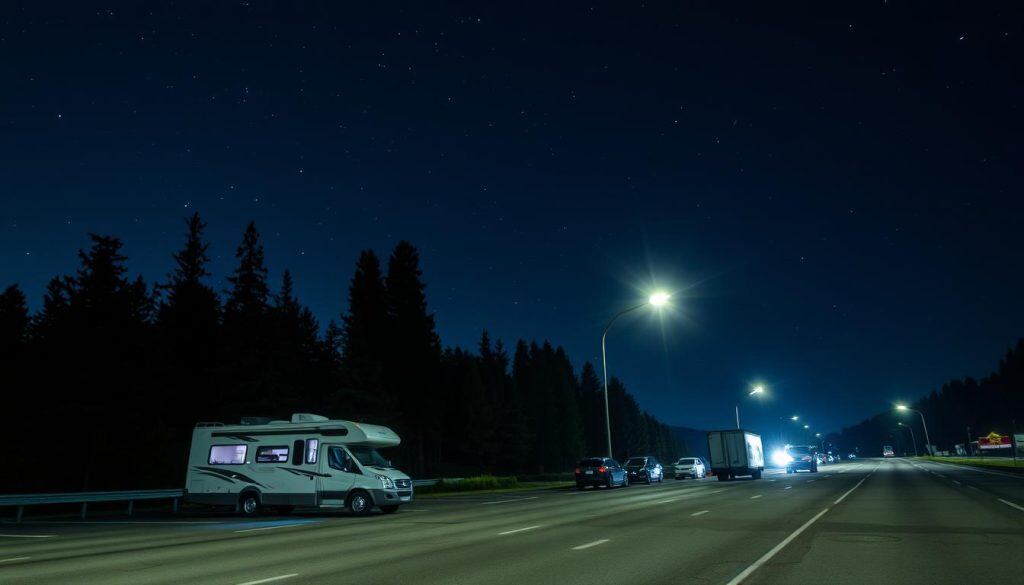
Some states allow parking but impose strict time limits that effectively prevent overnight stays. For example, Florida and Illinois have a 3-hour maximum stay at their rest stops. These regulations are often enforced through regular patrols, making it risky to attempt overnight stays. Understanding these restrictions is crucial for planning long-distance trips and arranging alternative overnight accommodations when traveling through these states.
It’s also worth noting that even in states with restrictions, exceptions may sometimes be made during severe weather conditions when travel becomes hazardous. As you plan your trip, be sure to research the specific regulations for each state on your route to ensure a smooth and enjoyable journey.
Rest Area Etiquette for Motorhome Travelers
The key to enjoying rest areas lies in being considerate of others and following basic etiquette rules. Whether you’re parking in a state that clearly allows overnight parking at rest areas or staying in one where no obvious rules are posted, being courteous is key to maintaining the privilege of overnight stays.
Proper Parking Practices
When it comes to parking your motorhome at rest areas, there are a few best practices to keep in mind. Always park in designated RV or oversized vehicle spaces when available. This helps avoid conflicts with truckers who are required by law to take mandatory rest periods in designated truck parking areas. Keeping your motorhome footprint minimal by not extending slides or awnings is also crucial, as it maintains the distinction between parking and camping.
| Best Practice | Benefit |
|---|---|
| Park in designated RV spaces | Avoids conflicts with truckers |
| Minimize motorhome footprint | Maintains distinction between parking and camping |
Respecting Facilities and Other Travelers
Being mindful of noise levels, especially during evening and early morning hours, is essential. Leaving restroom facilities as clean or cleaner than you found them is also a must, as these amenities are shared by many travelers. Limit your stay to the necessary rest period and move on promptly in the morning. Never dump any waste at rest areas, as these facilities are not designed as dump stations.
By following these simple etiquette rules, you can help ensure that rest areas remain a welcoming and safe haven for all travelers. Your behavior reflects on the entire RV community, and courteous practices help maintain continued access to overnight parking at rest areas.
Safety Considerations When Parking Overnight
Safety should be your primary concern when deciding to park your motorhome overnight at a rest area. As many RVers have reported, sleeping overnight at rest stops can be generally safe, but it’s crucial to trust your instincts and be aware of your surroundings.
Choosing a Safe Rest Area
When selecting a rest area for overnight parking, look for well-lit areas with regular patrol presence or visible security cameras. If a location feels unsafe upon arrival, it’s best to continue to another rest area or find an alternative place to park. Positioning your motorhome strategically is also key; park near other RVs or in visible areas rather than isolated corners.
Security Measures for Overnight Stays
To enhance your safety during overnight stays, keep your doors locked and windows secured while sleeping. Have a security plan in place, including knowing how to quickly access the driver’s seat if needed. Consider using window coverings for privacy while maintaining visibility of your surroundings. Keeping valuables out of sight and being aware of your surroundings when entering and exiting your motorhome can also add to your security. Additionally, safety devices like door alarms or motion-activated lights can provide extra peace of mind.
By being mindful of these safety considerations and taking necessary precautions, you can have a safer and more enjoyable overnight stay at a rest area.
Alternative Options for Overnight RV Parking
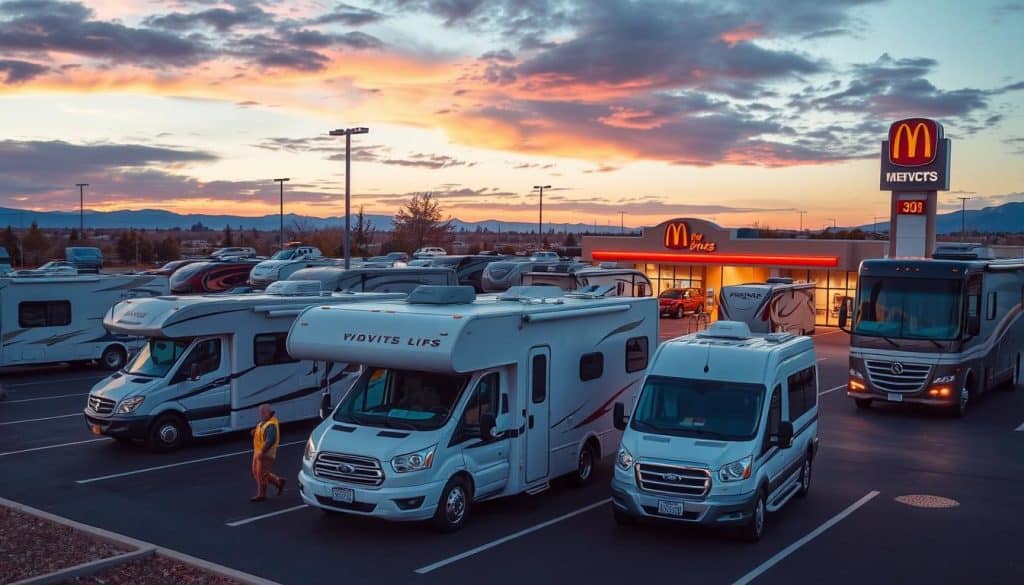
If you’re looking for places to park your RV overnight beyond rest areas, you’re in luck. Several alternatives offer not just a place to rest but also additional amenities to make your journey more comfortable.
Truck Stops and Travel Centers
Truck stops and travel centers are great alternatives, offering facilities like showers, laundry, and food options. They are generally open 24 hours and can be a safe haven for RV travelers.
Retail Store Parking Lots
Many retail stores like Walmart, Cabela’s, and Cracker Barrel allow overnight RV parking in their lots. It’s always best to check with the store management first, as policies can vary.
Service Plazas and Welcome Centers
Service plazas, especially on toll roads, and welcome centers at state borders often have more lenient overnight parking policies and may offer dedicated RV parking areas.
Other options include casino parking lots, which often welcome RVs with the expectation that travelers will visit their establishments. Membership programs like Harvest Hosts provide unique overnight opportunities at wineries and farms. Apps and websites such as RV LIFE Trip Wizard, Campendium, and iOverlander can help locate legal overnight parking spots along your route.
When using these alternatives, remember to keep a low profile, avoid setting up camp, and leave no trace of your stay. These locations often provide greater security and more amenities than standard rest areas.
Conclusion: Making Informed Decisions for Safe Overnight Stops
As you navigate the rules surrounding rest areas, it’s crucial to be informed to enjoy your motorhome journey. Overnight parking at rest areas plays a significant role in reducing drowsy driving, a factor in about 100,000 crashes annually.
To make the most of these facilities, research and planning are key. Understanding the distinction between parking and camping is vital, as is respecting the patchwork of state regulations.
Utilizing apps and online resources can help plan your route according to state-specific rules. Always prioritize safety and follow posted guidelines to ensure rest areas remain available for all. By doing so, you contribute to a positive RV community perception and help maintain access to these convenient stops.
FAQ
Are all rest areas open to RVs for overnight parking?
No, not all rest areas allow RVs to park overnight. Some have specific rules or restrictions, so it’s crucial to check the signs posted at the rest area or research beforehand.
How can I identify if a rest area allows overnight parking?
Look for signs indicating overnight parking rules, and check the rest area’s website or contact the state’s transportation department for more information.
What is the difference between "overnight parking" and "camping" at rest areas?
Overnight parking typically refers to stopping for a short period, usually 8-12 hours, whereas “camping” implies a longer stay with possible hookups or amenities.
Are there any states that explicitly allow overnight RV parking at rest areas?
Yes, some states like Ohio, through the Ohio Turnpike, allow overnight stays at their service plazas, while others may have designated areas for RVs.
What are some alternative options for overnight RV parking besides rest areas?
You can consider truck stops, travel centers, or retail store parking lots that allow RVs to park overnight, but be sure to follow their rules and regulations.
How can I ensure my safety when parking overnight at a rest area?
Choose a well-lit and populated rest area, keep your valuables secure, and be aware of your surroundings to minimize risks.
Are there any specific etiquette rules to follow when parking overnight at a rest area?
Yes, be respectful of other travelers, keep noise levels down, and follow proper parking practices to avoid disturbing others.
Can I stay for more than one night at a rest area?
Generally, rest areas have time limits, and staying for more than one night is not allowed, but this varies by state and rest area.