

I’m thrilled to share my top picks for national parks in the Southwest. These places offer stunning desert landscapes that will amaze you. You’ll see towering red rock formations and vast canyons.
The Southwest is home to some of the top national parks in the country. You’ll find them in Arizona, California, Utah, and more. Each park shares stories of Earth’s past and the culture of ancient peoples.
Exploring these parks has been incredible. I’ve hiked tough trails, seen massive sand dunes, and looked at petroglyphs from long ago. There’s a wide range of experiences, from easy family trips to exciting hikes for the adventurous.
Did you know Guadalupe Mountains National Park has a 10-mile hike to a great viewpoint? Or that Saguaro National Park has a 5.2-mile hike to Bridal Wreath Falls with a big climb? These parks are full of surprises!
Key Takeaways
- The Southwest offers diverse landscapes from sand dunes to red rock wonders.
- National parks in this region span across multiple states.
- Each park provides unique experiences for different skill levels.
- The best time to visit is during spring and fall shoulder seasons.
- Many parks offer guided hikes and tours to enhance your experience.
Exploring the Southwest’s Natural Wonders
The Southwest’s national parks are full of natural wonders. They have towering canyons and red rocks. These places are known for their beauty and history.
Diverse Landscapes and Geological Marvels
The Southwest has a wide range of landscapes. Death Valley National Park is the largest, covering 3,422,024 acres. It’s known for its extreme heat and very little rain.
Great Basin National Park is cooler. Wheeler Peak reaches 13,063 feet, showing the change from desert to mountains. The park has Lehman Caves with over 300 rare formations.
Rich Cultural Heritage and Ancient History
These parks are not just beautiful. They also have a rich cultural history. Great Basin National Park has rock art and a Fremont Indian village. It shows us the lives of ancient people.
Outdoor Adventure Opportunities
For outdoor fun, these parks are perfect. You can hike, climb rocks, and watch wildlife. Death Valley is home to desert bighorn sheep, kangaroo rats, and desert tortoises.
| Park | Size (acres) | Key Feature |
|---|---|---|
| Death Valley | 3,422,024 | Hottest, driest, lowest point in North America |
| Great Basin | 77,180 | Wheeler Peak (13,063 ft) |
| Saguaro | 91,716 | Giant saguaro cacti |
Planning is key when visiting these parks. They are far from cities and have limited services. Be ready for the weather changes to enjoy your trip.
Best National Parks in the South West: Our Top Selection
I’ve explored the Southwest’s stunning national parks, and I’m excited to share my top picks with you. These parks offer incredible experiences for nature lovers and adventure seekers alike.
The American Southwest boasts some of the most diverse and breathtaking landscapes in the country. From Arizona to California, Colorado to Nevada, and New Mexico, each state offers unique natural wonders. Let’s dive into the best national parks this region has to offer.
For hiking enthusiasts, the Southwest is a paradise. The top hiking trails southwest offer challenges for all skill levels. Whether you’re looking for easy-going walks or demanding treks, you’ll find plenty of options.
| National Park | State | Unique Feature |
|---|---|---|
| Arches | Utah | Over 2,000 natural sandstone arches |
| Zion | Utah | Towering sandstone cliffs and canyons |
| Grand Canyon | Arizona | Vast, colorful canyon |
| Death Valley | California | Extreme landscapes and weather |
| Joshua Tree | California | Unique desert flora and rock formations |
If you’re interested in arid climate recreation, these parks offer unparalleled opportunities. From rock climbing in Joshua Tree to exploring the extreme conditions of Death Valley, there’s no shortage of adventures.
Remember to check entrance fees, respect wildlife, and carry adequate gear when visiting these parks. With proper planning, your Southwest national parks adventure will be unforgettable.
Arches National Park: Land of Iconic Stone Arches
I’ve seen many beautiful places in the southwest, but Arches National Park is special. It’s a desert wonderland in eastern Utah with over 2,000 stone arches. This makes it perfect for outdoor lovers.
The Fiery Furnace: A Maze of Red Rock Wonders
The Fiery Furnace is my top spot in Arches. It’s like entering another world with its narrow paths and tall red rocks. The area’s history goes back millions of years, with rocks from the Pennsylvanian Paradox Formation.
Delicate Arch: Symbol of Utah
Delicate Arch is a must-see when you’re at Arches. This famous arch is 46 feet high and symbolizes Utah. The hike there is 3 miles round trip, with a 480-foot climb. I suggest going early to see it at sunset before it gets crowded.
Best Hiking Trails and Viewpoints
The Windows Section trails offer amazing views. The park’s elevation varies from 4,085 to 5,653 feet, showing off different landscapes. Remember, it’s dry here with only 8-10 inches of rain a year, so drink plenty of water. The dry climate keeps changing the park’s arches and rocks.
“Arches National Park is a testament to nature’s artistry, sculpted over millions of years into a landscape that never fails to inspire awe.”
Zion National Park: Majestic Canyons and Cliffs
Zion National Park is truly a sight to behold. Since 1919, it has welcomed millions of visitors each year. In 2023, a record 4.62 million people came to see its stunning canyons and cliffs.
The park is full of life, with over 800 plant species and 290 bird species. Its rocks tell stories of the past, dating back 150 million years. Hiking here means walking among red rocks and deep canyons carved by the Virgin River.
The Narrows is a top trail in the Southwest, stretching 16 miles through a slot canyon. For a tougher challenge, try Angels Landing. Families might enjoy the Riverside Walk more.
“Zion National Park is a testament to nature’s artistry, where red rock canyons and towering cliffs create a landscape that takes your breath away.”
Spring is the best time to visit, with temperatures between 60 and 80°F. It’s perfect for hiking and enjoying the fresh air. Summer gets hot, often over 100°F, but it’s great for water activities like tubing in the Virgin River.
| Season | Temperature Range (°F) | Best Activities |
|---|---|---|
| Spring | 60-80 | Hiking, sightseeing |
| Summer | 90-100+ | Water activities, early morning hikes |
| Fall | 70-90 | Canyoneering, stargazing |
The $35 entrance fee per vehicle is a small price for the wonders of Zion. Be sure to visit the Zion Human History Museum. It tells the stories of Native Americans and Mormon pioneers who shaped this area.
Grand Canyon National Park: A Natural Wonder of the World
I’m excited to talk about my time at Grand Canyon National Park, a top spot in the southwest. Since 1919, it has been a place of wonder, covering 1.2 million acres and welcoming over 6 million visitors each year. It’s a hub for outdoor fun, from hiking to gazing at the stars.
South Rim vs. North Rim: Which to Visit
The South Rim is open all year and is easy to get to, making it great for newcomers and those who want comforts. It’s bustling with life and activities. The North Rim, however, is only open from May 15 to October 15. It’s cooler and quieter, offering a special view of the canyon away from the crowds.
| Feature | South Rim | North Rim |
|---|---|---|
| Accessibility | Year-round | Seasonal (May 15 – Oct 15) |
| Visitor Facilities | Extensive | Limited |
| Climate | Warmer | Cooler |
| Crowds | Busy | Less crowded |
Hiking the Bright Angel Trail
The Bright Angel Trail is a top choice for hikers. It’s a well-kept path down into the canyon. Only about 5% of visitors make it below the rim, making this trail a special adventure. Don’t forget to get a permit if you plan to stay overnight in the canyon.
Scenic Drives and Viewpoints
For those who prefer to stay on the ground, scenic drives are a great option. The Desert View Drive has many viewpoints, like Mather Point and Yavapai Point. These spots let you see the canyon’s vastness and colorful layers, perfect for photographers.
Grand Canyon National Park is a place where thrilling adventures and nature’s beauty come together. It’s a spot that leaves a lasting impression on all who visit.
Canyonlands National Park: Utah’s Rugged Wilderness
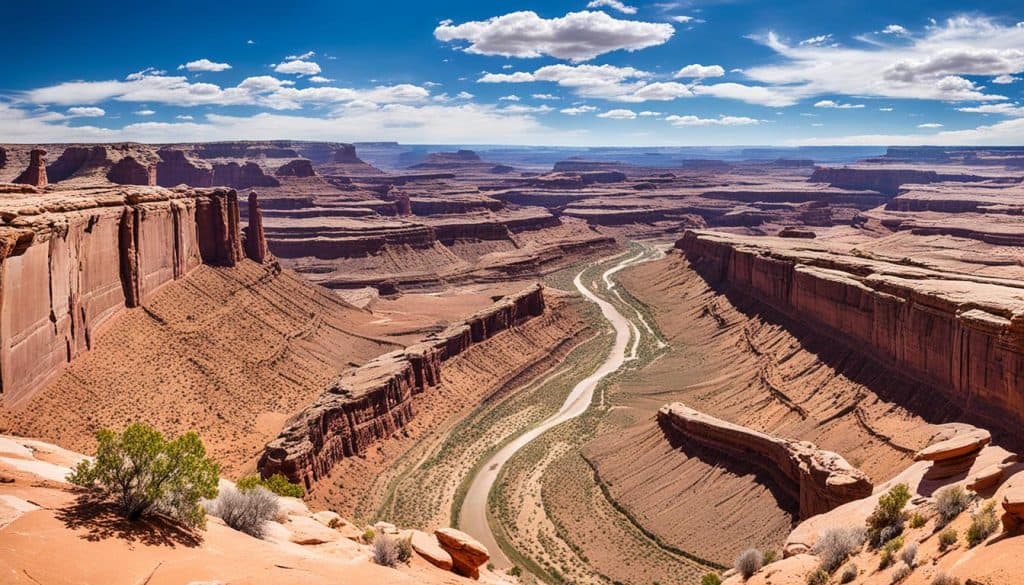
I’ve explored Canyonlands National Park, and it’s a true gem for outdoor adventures in the Southwest. This vast park spans 337,598 acres of rugged desert landscapes. It offers diverse experiences across its four distinct districts.
Island in the Sky District
The Island in the Sky is the most accessible and popular area. I love visiting Mesa Arch for stunning sunrise views. This district offers panoramic vistas stretching up to 100 miles, showcasing the park’s breathtaking beauty.
The Maze: Remote and Challenging Adventures
For those seeking extreme wilderness, The Maze is the ultimate destination. It’s the most remote area, accessible only by high-clearance 4×4 vehicles. The narrow canyons and towering cliffs make it a paradise for experienced adventurers.
White Rim Road: Epic 4×4 Journey
The White Rim Road is a 100-mile off-road adventure circling the Island in the Sky mesa. It’s perfect for those looking to combine scenic drives with camping under starry skies. Canyonlands is recognized as an International Dark Sky Park, making it ideal for stargazing.
| District | Key Features | Best For |
|---|---|---|
| Island in the Sky | Mesa Arch, Upheaval Dome | Scenic drives, easy hikes |
| The Needles | Colorful sandstone spires | Hiking, backpacking |
| The Maze | Remote canyons, hidden arches | Experienced 4×4 explorers |
With its diverse landscapes and endless opportunities for exploration, Canyonlands National Park is a must-visit destination for anyone seeking outdoor adventures in the Southwest.
Death Valley National Park: Land of Extremes
Death Valley National Park is truly a sight to behold. Spanning 3.37 million acres across California and Nevada, it’s a haven for those who love the desert. You’ll find everything from salt flats to sand dunes, making it feel like another world.
The park is famous for being the hottest place on Earth, with a record temperature of 134°F. But don’t let that scare you off. Death Valley is full of life, thanks to creatures that have adapted to the harsh conditions. Badwater Basin, the lowest point in North America, is a must-see for its stunning geology.
For adventure lovers, Death Valley has plenty to offer. The Mesquite Flat Sand Dunes trail is a moderate 2-mile walk with amazing views. If you’re up for more, try the Golden Canyon, Gower Gulch, and Badlands Loop trails, which can take up to 8 miles to complete.
“Death Valley is not a place of death, but a place of extremes – extreme beauty, extreme solitude, and extreme contrasts.”
The best time to visit is from November to March, when it’s cooler. Always carry enough water – at least 2 liters for short hikes and a gallon for longer ones in the heat.
| Hike | Distance (Round Trip) | Elevation Gain |
|---|---|---|
| Badwater Salt Flat | 2 miles | Minimal |
| Mesquite Flat Sand Dunes | 2 miles | 185 ft |
| Mosaic Canyon | 4 miles | 1,200 ft |
Death Valley National Park is a unique place with an arid climate and breathtaking desert landscapes. It’s perfect for those who love nature and adventure. Don’t miss out on this incredible destination.
Joshua Tree National Park: Desert Landscapes and Rock Formations
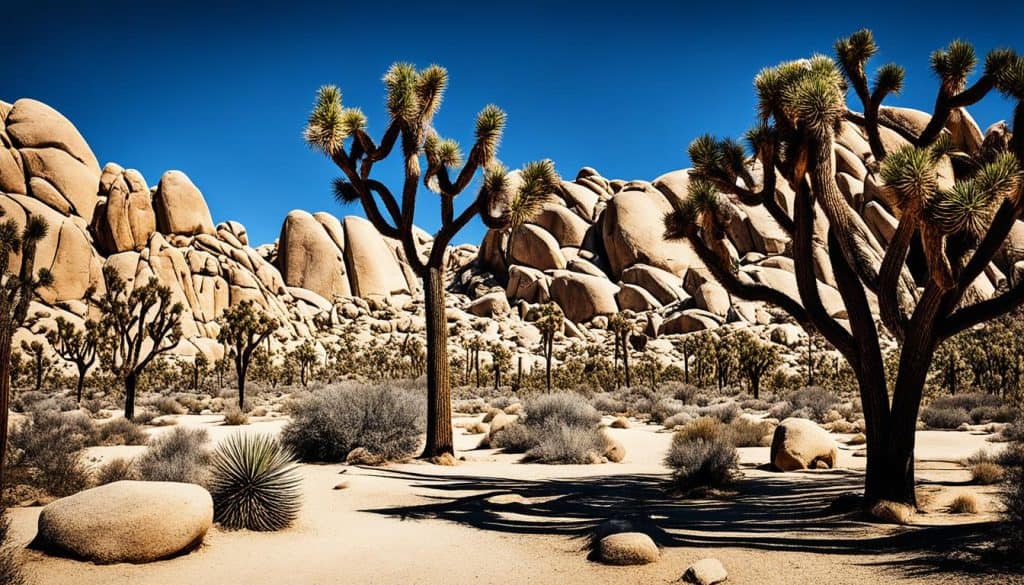
I love exploring Joshua Tree National Park, a true gem in the Southwest. It spans 794,000 acres, offering unique desert landscapes that draw millions each year. With iconic Joshua trees and massive boulders, it’s perfect for nature lovers and rock climbers.
Unique Joshua Tree Forests
The park’s namesake, the Joshua tree, is actually a giant yucca plant. These plants grow in the Mojave Desert, creating surreal forests. Spring is the best time to visit, when wildflowers bloom and paint the desert in vibrant colors.
Rock Climbing and Bouldering Opportunities
Rock climbers come to Joshua Tree for its top-notch climbing routes. It has over 8,000 established routes for all skill levels. The Hidden Valley Nature Trail is a great place to start, offering a 1-mile loop through the rocky terrain.
Stargazing in the Dark Sky Park
At night, Joshua Tree turns into a stargazer’s dream. It’s an International Dark Sky Park, ideal for seeing the Milky Way. Keys View is a must-visit for stunning views of the Coachella Valley and the stars.
| Feature | Details |
|---|---|
| Park Size | 794,000 acres |
| Annual Visitors | 2.8 million |
| Entrance Fee | $30 per vehicle |
| Visitor Centers | 4 (Joshua Tree, Oasis, Cottonwood, Black Rock) |
| Climbing Routes | Over 8,000 |
Whether you’re climbing rocks, hiking through unique landscapes, or stargazing, Joshua Tree National Park is unforgettable. It’s in the heart of the Southwest’s desert beauty.
Saguaro National Park: Giant Cacti and Sonoran Desert Beauty
I’ve found a true gem in the southwestern nature reserves. Saguaro National Park, near Tucson, Arizona, is split into two districts. It shows off the iconic saguaro cactus and the stunning Sonoran Desert. With over 91,000 acres to explore, it’s perfect for nature lovers and adventure seekers.
The park is home to an amazing 1.6 million saguaro cacti. These giants can reach up to 80 feet tall and weigh nearly 5,000 pounds. They can live for 200 years, making them awe-inspiring to see.
Diverse Districts and Trails
Each district in the park offers something special. The Tucson Mountain District has dense saguaro forests and grasslands. I enjoy hiking the Kings Canyon Trail, a 7-mile loop to Wasson Peak.
In the Rincon Mountain District, the Cactus Forest Loop Drive gives you stunning valley views. It’s a must-see.
Wildlife and Climate Concerns
The park is full of diverse wildlife, from roadrunners to mountain lions. But, the Sonoran Desert faces big challenges from climate change. Rising temperatures and droughts threaten the ecosystem, including the saguaros.
| Park Feature | Statistic |
|---|---|
| Total Area | 91,445 acres |
| Saguaro Cacti Count | 1.6 million |
| Max Saguaro Height | 80 feet |
| Saguaro Lifespan | Up to 200 years |
| Unique Cactus Species | Over 25 |
Visiting Saguaro National Park lets you see the raw beauty of the American Southwest. Whether you’re hiking, watching wildlife, or just enjoying the views, this park is unforgettable. It’s one of nature’s most unique places.
Conclusion: Planning Your Southwest National Parks Adventure
I’ve looked into the stunning landscapes of the Southwest, and I’m thrilled to share tips for your own adventure. Road trips here let you see nature’s beauty up close. You’ll see the Grand Canyon’s deep chasm and Bryce Canyon’s amazing views.
Think about getting the America the Beautiful pass for $80. It gives you access to all national parks, saving money if you visit many. Book your stay early, especially if you want to camp. Spring and fall are best times to go, with nice weather and fewer people.
Be prepared for your trip. Carry a big water bottle and get ready for hot or cold weather. In Death Valley, it can get as hot as 128°F in summer. Also, plan for higher gas prices inside parks, which can be over $5 per gallon. With good planning and respect for nature, you’ll make memories that last a lifetime on your Southwest national parks adventure.
FAQ
What are some of the top national parks to visit in the Southwest?
Top national parks in the Southwest include Arches National Park, Zion National Park, and the Grand Canyon. Canyonlands National Park, Death Valley National Park, Joshua Tree National Park, and Saguaro National Park are also great spots.
What kind of outdoor adventures can I experience in these parks?
You can enjoy hiking, rock climbing, and whitewater rafting in these parks. Scenic drives, stargazing, and exploring ancient cultural sites are also on the list.
What are some of the unique geological features found in these parks?
These parks are known for their amazing geology. You’ll find iconic stone arches at Arches National Park and towering cliffs at Zion. The Grand Canyon offers a vast view, while Canyonlands has rugged wilderness.
Death Valley is known for its colorful badlands and salt flats. Joshua Tree has unique forests and boulder formations. And Saguaro National Park is home to giant saguaro cacti.
Are there any tips for planning a trip to the Southwest national parks?
Start by getting an annual park pass. Book your stay early and check park websites for updates. Be prepared for extreme weather and bring enough water and supplies.
Respect the environment by following Leave No Trace principles. Consider camping and staying in historic lodges or nearby towns. Spring and fall are the best times to visit for good weather and fewer crowds.
What are some of the best hiking trails in the Southwest national parks?
Top trails include the Delicate Arch Trail and the Windows Section at Arches National Park. Angels Landing and the Narrows at Zion are also must-sees.
The Bright Angel Trail at the Grand Canyon is another favorite. The White Rim Road at Canyonlands and the Douglas Spring Trail at Saguaro National Park are great too.
Are there any opportunities for rock climbing and bouldering in these parks?
Yes, Joshua Tree National Park is perfect for rock climbing and bouldering. It has over 8,000 established climbing routes. The park’s huge boulders are ideal for these activities.
Can I see ancient cultural sites in the Southwest national parks?
Yes, many parks have ancient Native American sites. You can see petroglyphs and ruins at Hovenweep National Monument and other archaeological sites. These sites let you explore the rich cultural heritage of the area.