

I’ve always been fascinated by the vast natural landscapes of the United States, and the question of which national park is the largest is one that many outdoor enthusiasts wonder about. Spanning across 13 million acres, Wrangell-St. Elias National Park and Preserve in Alaska is not just the largest national park in the US, but it’s also one of the most pristine wilderness areas in North America.
Established in 1980 by President Jimmy Carter, this vast park encompasses a diverse range of ecosystems, including mountains, glaciers, lakes, and forests, making it a haven for wildlife such as grizzly bears, moose, and caribou.
As we explore the largest national parks in the US, we’ll discover what makes these enormous protected areas so special and why they’re worth visiting.
Key Takeaways
- Wrangell-St. Elias National Park and Preserve is the largest national park in the US.
- It covers an area of 13 million acres in Alaska.
- The park features diverse ecosystems, including mountains and glaciers.
- It’s home to a wide variety of wildlife, such as grizzly bears and moose.
- The park was established as a national park in 1980.
Discovering America’s Vast National Park System
As I explore the vastness of America’s national parks, I’m struck by their sheer diversity and beauty. The United States is home to an incredible system of protected areas that not only preserve natural wonders but also provide opportunities for public enjoyment.
The National Park Service, established by the Organic Act of 1916, plays a crucial role in managing these areas. Its mission is “to conserve the scenery and the natural and historic objects and wildlife therein, and to provide for the enjoyment of the same in such manner and by such means as will leave them unimpaired for the enjoyment of future generations.”
The National Park Service’s Mission
The National Park Service has a dual mission: to preserve the natural and cultural resources within the parks and to make these areas accessible to the public. This balance is crucial in ensuring that the parks remain unimpaired for future generations while still allowing visitors to enjoy their beauty.
“The national parks are a treasure that belongs to all Americans, and it’s our responsibility to protect them.”
The National Park Service manages over 400 areas, including national parks, monuments, and historic sites, covering more than 85 million acres. This vast network requires careful management to maintain its integrity.
Diversity of Landscapes and Ecosystems
America’s national parks showcase a wide range of landscapes and ecosystems. From the scorching deserts of Death Valley to the glacial landscapes of Alaska, these parks represent every major ecosystem in North America.
| State | Number of National Parks |
|---|---|
| California | 9 |
| Alaska | 8 |
| Utah | 5 |
| Colorado | 4 |
The diversity is not just in the landscapes but also in the wildlife and species that inhabit these areas. The national parks are home to a vast array of flora and fauna, some of which are found nowhere else on Earth.
Wrangell-St. Elias: America’s Largest National Park
Spanning over 8 million acres, Wrangell-St. Elias National Park is not only the largest national park but also a testament to America’s rich natural heritage. This vast wilderness area in southeastern Alaska was established in 1980 by President Jimmy Carter as part of the Alaska National Interest Lands Conservation Act.
Location and Impressive Size Statistics
Wrangell-St. Elias National Park is truly massive, covering an area larger than each of the nine smallest states in the United States. To put its size into perspective, it’s roughly the same size as six Yellowstone National Parks combined or larger than Switzerland. The park’s enormous size is matched by its incredible diversity, featuring four major mountain ranges and nine of the sixteen highest peaks in the United States.
The park’s vast expanse encompasses a wide range of ecosystems, including mountains, glaciers, lakes, rivers, forests, and tundra. This diversity supports a rich variety of wildlife, including grizzly bears, moose, caribou, and Dall sheep. The park is also home to active volcanoes, such as Mount Wrangell, which last erupted in 1910.
Mountains, Glaciers, and Wilderness Features
One of the most striking features of Wrangell-St. Elias National Park is its glaciers. The park is home to the largest concentration of glaciers in North America, with the Malaspina Glacier alone covering over 1,000 square miles. This makes it larger than the state of Rhode Island. The park’s glaciers, mountains, and vast wilderness areas make it a paradise for adventurers and nature lovers.
For those interested in exploring this incredible park, there are numerous activities and attractions to discover. You can learn more about the various things to do at Wrangell-St. Elias National to plan your visit.
Despite its enormous size and incredible natural features, Wrangell-St. Elias receives relatively few visitors compared to more accessible parks, with only about 70,000-80,000 people making the journey each year. This relative isolation adds to the park’s allure, offering a truly unique and untouched wilderness experience.
Gates of the Arctic: Untouched Wilderness in Alaska
As the second-largest national park in the United States, Gates of the Arctic is a vast and remote area that offers an unparalleled wilderness experience. Spanning 8.4 million acres, this national park preserve is a true marvel of untouched wilderness, with no roads or trails leading into it.
To experience the raw beauty of Gates of the Arctic, visitors must be prepared for adventure. The park’s remote location and lack of infrastructure make it one of the most challenging destinations in the United States. Accessing the park requires careful planning, with options including flying into designated airstrips or using river boats.
Remote Location and Access Challenges
The park’s isolation is part of its allure, but it also presents significant challenges. Visitors typically fly in on small bush planes that land on gravel bars or remote lakes, or they arrive by hiking in from the Dalton Highway, the nearest road. This journey is not for the faint of heart, as it demands a high level of physical fitness and wilderness survival skills.
As wilderness advocate Robert Marshall once described, the park’s name is derived from two mountains, Frigid Crags and Boreal Mountain, which appeared to him as “gates” to the arctic world beyond. This description captures the essence of Gates of the Arctic – a gateway to a vast, untouched world.
Arctic Ecosystems and Wildlife
Gates of the Arctic is home to a diverse range of wildlife, including grizzly bears, wolverines, and caribou. The park protects the habitat of the Western Arctic Caribou Herd, one of the largest caribou populations in North America, which migrates through the park during their annual 500+ mile journey.
| Wildlife | Species | Notable Facts |
|---|---|---|
| Grizzly Bears | Ursus arctos horribilis | Omnivorous, hibernates during winter |
| Wolverines | Gulo gulo | Solitary, primarily nocturnal |
| Caribou | Rangifer tarandus | Migrates long distances, crucial to indigenous cultures |
With over 200 species of birds, including trumpeter swans, eagles, and peregrine falcons, Gates of the Arctic is a haven for birdwatchers and nature enthusiasts. The park’s vast wilderness areas, including mountains, tundra, glaciers, rivers, and lakes, provide a unique and diverse ecosystem that supports a wide range of flora and fauna.
“The clearest way into the Universe is through a forest wilderness.”
In 2024, about 11,900 visitors made the journey to this isolated wonderland, a testament to the park’s allure despite its challenges. Gates of the Arctic remains one of the last truly wild places in North America, offering an adventure like no other.
Denali National Park: Home to North America’s Tallest Peak
Spanning across six million acres, Denali National Park is a marvel of untouched Alaskan wilderness. Located in south-central Alaska, this vast national park is not only a haven for wildlife but also a paradise for adventurers and nature enthusiasts.
Six Million Acres of Protected Land
Denali National Park and Preserve is one of the largest national parks in the United States, encompassing a variety of ecosystems including boreal forest, tundra, glacier ice fields, and mountainous terrain. The park’s vastness is served by just a single 92-mile road that penetrates deep into the wilderness, with most of it accessible only by park buses to minimize environmental impact.
As I reflect on my experience visiting this park, I was amazed by the unique “no-trail” backcountry policy, which encourages visitors to forge their own paths rather than concentrating impact on established trails. This approach offers a true wilderness experience that few other parks can match.
Mount McKinley and Diverse Wildlife
The crown jewel of this massive park is Denali (formerly known as Mount McKinley), which at 20,310 feet is the highest peak in North America. The park is home to numerous species since prehistoric times and continues to provide habitat for large mammals such as grizzly bears, wolves, moose, caribou, and Dall’s sheep. There are over 450 species of birds that can be found here throughout the year.
As noted by a park visitor, “The diversity of wildlife in Denali National Park is astounding, with the ‘Big Five’ – grizzly bears, wolves, moose, caribou, and Dall sheep – being a major draw for visitors.” You can explore more about the diverse national parks in Alaska on this page.
Originally established in 1917 as Mount McKinley National Park, primarily to protect the Dall sheep from overhunting, Denali National Park was expanded and renamed in 1980. Today, it stands as a testament to the beauty and diversity of Alaskan wilderness.
Katmai National Park: Land of Bears and Volcanoes
In the heart of Alaska lies Katmai National Park, a land of unparalleled beauty and rich biodiversity. This vast national park is a treasure trove of natural wonders, featuring active volcanoes, unique geothermal areas, and an abundance of wildlife.
Katmai National Park and Preserve encompasses approximately 4 million acres of pristine Alaskan wilderness, making it the fourth largest national park in the United States. The park was originally established in 1918 to protect the Valley of Ten Thousand Smokes, a 40-square-mile area created by the Novarupta volcano eruption in 1912.
The Valley of Ten Thousand Smokes
The Valley of Ten Thousand Smokes is one of Katmai’s most iconic features, a testament to the park’s volcanic history. This vast area is dotted with volcanic vents and fumaroles, emitting smoke and steam into the air.
The valley was formed during the largest volcanic eruption of the 20th century, which occurred in 1912. Today, visitors can witness the remnants of this catastrophic event, with numerous volcanic features still active.
Brown Bear Viewing Opportunities
Katmai National Park is renowned for its brown bear population, with an estimated 2,200 bears calling the park home. The Brooks Falls area offers one of the most iconic wildlife viewing opportunities in North America, where visitors can watch massive bears catching salmon as they leap up the falls during the summer spawning season.
- The park is home to over 2,000 species of plants and animals, adapted to its unique volcanic and coastal environments.
- Visitors can observe a diverse range of wildlife, including bald eagles, caribou, moose, and sea otters.
- The park’s remote location and challenging access make it an authentic wilderness experience for visitors.
Death Valley: Extreme Landscapes and Harsh Beauty
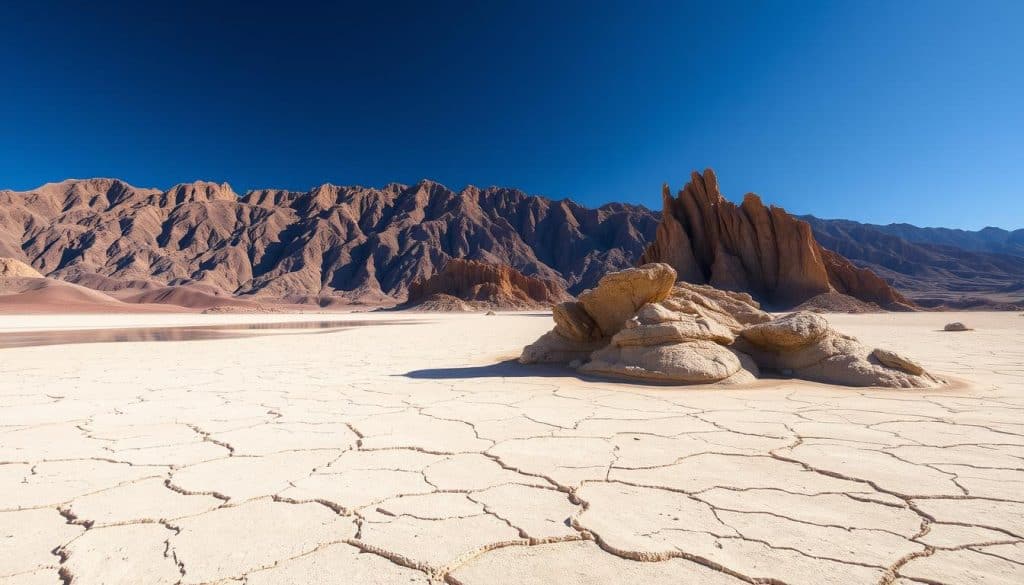
Death Valley, the 5th largest national park in the US, is a land of superlatives, boasting the lowest, driest, and hottest conditions in North America. Spanning an impressive 3.3 million acres across California and Nevada, it’s a place where the extremes of nature are on full display.
Badwater Basin and Salt Flats
One of the park’s most striking features is Badwater Basin, which sits at 282 feet below sea level, making it the lowest point in North America. The vast salt flats here create a surreal landscape that’s both beautiful and haunting. As you explore this area, you’ll be struck by the park’s unique geological features, which are a result of millions of years of tectonic activity and erosion.
If you’re planning to visit Badwater Basin, I recommend checking out the things to do at Death Valley National to make the most of your trip.
Surviving in America’s Hottest Location
Despite the harsh conditions, Death Valley is home to a surprising diversity of wildlife, including bighorn sheep, coyotes, and kangaroo rats. These animals have adapted to survive in one of the most challenging environments in North America. The park is also a haven for plants, with over 1,000 species calling Death Valley home.
As you explore the park, you’ll be amazed by the dramatic landscapes, from towering sand dunes to multicolored badlands and rugged mountains. And if you’re lucky, you might even witness a “super bloom” – a rare event where the desert comes alive with wildflowers after a wet winter.
What is the biggest national park in the US? Comparing the Giants
The question of what is the biggest national park in the US is one that sparks curiosity about the vastness of America’s protected lands. As we delve into the details, it becomes clear that Alaska plays a significant role in the country’s national park system.
Let’s start by comparing the sizes of the largest national parks. The top five largest national parks in the US are all located in Alaska, showcasing the state’s vast wilderness areas. Wrangell-St. Elias National Park tops the list at an impressive 13.2 million acres, followed by Gates of the Arctic at 8.4 million acres, Denali at 6 million acres, Katmai at 4 million acres, and Death Valley at 3.3 million acres.
Size Comparison of the Top 10 Largest Parks
To put these numbers into perspective, consider that Wrangell-St. Elias National Park is larger than the combined area of Yellowstone, Yosemite, and the Grand Canyon. This comparison highlights the enormous scale of Alaska’s national parks compared to those in the lower 48 states.
| Rank | National Park | Size (acres) | Location |
|---|---|---|---|
| 1 | Wrangell-St. Elias | 13.2 million | Alaska |
| 2 | Gates of the Arctic | 8.4 million | Alaska |
| 3 | Denali | 6 million | Alaska |
| 4 | Katmai | 4 million | Alaska |
| 5 | Death Valley | 3.3 million | California |
Alaska’s Dominance in National Park Size
Alaska’s dominance in terms of national park size is undeniable. The eight largest national parks in the US are all located in Alaska, making up over 60% of the total national park acreage in the United States. This is particularly noteworthy when considering that California has the most national parks by count, with nine, but Alaska’s parks are significantly larger.
For instance, if Wrangell-St. Elias were considered a state, it would be larger than nine of the smallest states in the US. This scale gives us a deeper appreciation for the vastness and diversity of America’s national park system.
In conclusion, when comparing the largest national parks in the US, Alaska’s massive wilderness areas stand out. The sheer size of these parks not only highlights the state’s commitment to preserving its natural beauty but also underscores the importance of these areas in the overall national park system.
Visiting America’s Largest National Parks
For those seeking an immersive wilderness experience, America’s largest national parks offer a chance to disconnect from civilization and reconnect with nature. These vast protected areas provide a unique opportunity for exploration and discovery, attracting visitors from around the world.
Optimal Visitation Times
Planning a visit to these massive parks requires careful consideration of their remote locations and extreme weather conditions. I’ve found that the best time to visit Alaska’s massive parks like Wrangell-St. Elias, Gates of the Arctic, and Denali is during the short summer season from mid-June to early September. During this period, daylight extends for nearly 20 hours, and temperatures are moderate. In contrast, for parks like Death Valley, the fifth largest park and the largest in the contiguous United States, winter and spring (November through April) offer the most comfortable temperatures. Summer visits to Death Valley can be dangerous due to extreme heat often exceeding 120°F.
Accessibility and Activities
What many potential visitors don’t realize is how challenging access can be to these enormous wilderness areas. Gates of the Arctic has no roads at all and requires bush plane access, while Wrangell-St. Elias has only two rough roads penetrating its vast boundary. Denali National Park is served by a single 92-mile road that penetrates deep into the wilderness, with most of it accessible only by park buses to minimize environmental impact. Popular activities in these massive parks include backcountry hiking, wildlife viewing, mountaineering, river rafting, and flightseeing. The latter is often the only way to truly appreciate the immense scale of these protected landscapes.
| Park Name | Best Time to Visit | Access Methods | Popular Activities |
|---|---|---|---|
| Wrangell-St. Elias | Mid-June to early September | Roads, Bush Planes | Backcountry hiking, Mountaineering |
| Gates of the Arctic | Mid-June to early September | Bush Planes, River Boats | Backcountry hiking, Wildlife viewing |
| Denali | Mid-June to early September | Park Road, Bus Tours | Wildlife viewing, Mountaineering |
| Death Valley | November to April | Private Vehicles | Scenic driving, Hiking |

Despite their remote locations and access challenges, these parks offer some of North America’s most authentic wilderness experiences. As you plan your visit, consider exploring resources likeEnjoy National Parksto learn more about the best national parks and how to make the most of your trip.
Conclusion: Preserving America’s Natural Treasures
The National Park System stands as one of the most significant conservation achievements in history, protecting vast ecosystems and diverse landscapes across the United States. Established in 1916, the National Park Service has worked tirelessly to conserve these areas while making them accessible for public enjoyment.
From the glaciers of Wrangell-St. Elias to the extreme landscapes of Death Valley, these parks are home to a wide range of ecosystems and geological wonders. The international significance of these natural treasures is recognized through UNESCO designations, with 14 national parks designated as World Heritage Sites and 21 as Biosphere Reserves.
As we face the challenges of climate change and increased visitation, the National Park Service must balance preservation with public access. This balance is crucial to ensuring that these magnificent landscapes remain “unimpaired for the enjoyment of future generations,” as mandated by the Organic Act of 1916.
The evolution of the National Park System from a single park, Yellowstone, to a comprehensive network of protected areas spanning over 52 million acres is truly remarkable. These parks serve as critical refuges for countless species and as living laboratories where we can study natural processes relatively undisturbed by human activity.
In conclusion, America’s national parks are not just natural wonders; they are also a reflection of our commitment to conservation and preservation. As we move forward, it’s essential that we continue to protect these areas for the benefit of future generations.
FAQ
Which national park is considered the largest in the US?
Wrangell-St. Elias National Park, located in Alaska, is America’s largest national park, covering over 13 million acres.
How big is Wrangell-St. Elias National Park compared to other national parks?
Wrangell-St. Elias is larger than the next three largest national parks combined, and it’s bigger than the states of Vermont and New Hampshire combined.
What are some of the notable features of Wrangell-St. Elias National Park?
The park is home to an impressive mountain range, including Mount St. Elias, and numerous glaciers, making it a unique destination for outdoor enthusiasts.
Are there other large national parks in the US besides Wrangell-St. Elias?
Yes, other notable large national parks include Gates of the Arctic, Denali, and Katmai, all located in Alaska, as well as Death Valley in California.
What kind of wildlife can be found in these large national parks?
These parks are home to a diverse range of wildlife, including brown bears, moose, caribou, and numerous bird species.
How can visitors access these remote national parks?
Access to these parks varies, with some requiring hiking or backcountry flying, while others have more developed infrastructure for visitors.