
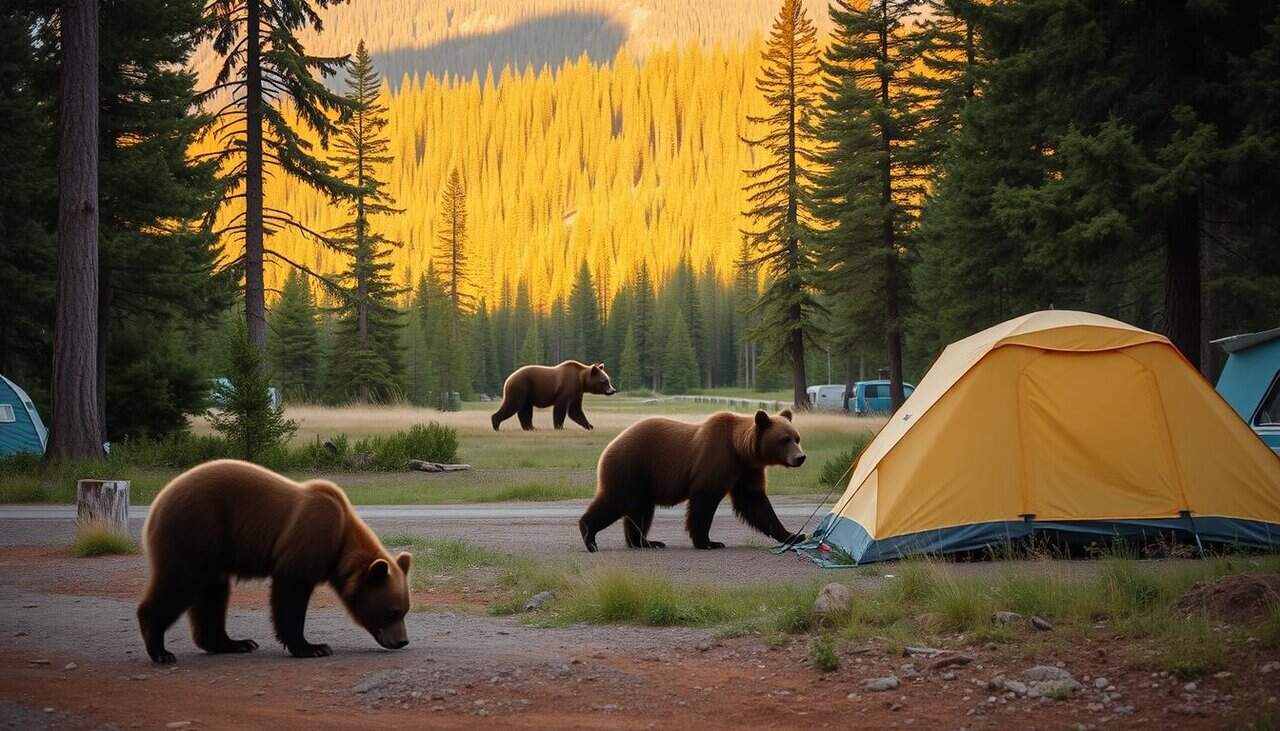
As a seasoned guide, I’ve had the privilege of leading visitors through Yellowstone National Park for years, and one question that consistently tops the list is: “Are there bears in Yellowstone campgrounds?” The answer is yes, but it’s not as daunting as it sounds. Yellowstone is home to both black bears and grizzly bears, making it a unique place to observe these magnificent creatures in their natural habitat.
With over 118 million visits since 1979, the chances of being injured by a grizzly bear are approximately 1 in 2.7 million visits. This statistic is reassuring, yet it highlights the importance of understanding bear behavior and adhering to safety guidelines when camping in wildlife-rich areas like Yellowstone.
By knowing how to properly store food and dispose of waste, you can significantly minimize the risk of a bear encounter gone wrong. For more insights on visiting national parks during winter, check out our guide on the best national parks to visit in.
Key Takeaways
- Yellowstone is home to both black bears and grizzly bears.
- The chances of being injured by a grizzly bear are approximately 1 in 2.7 million visits.
- Understanding bear behavior is crucial for a safe camping experience.
- Proper food storage and waste disposal are essential safety protocols.
- Yellowstone has implemented extensive management practices to minimize human-bear conflicts.
Are There Bears in Yellowstone Campgrounds?
As you prepare for your camping trip toYellowstone National Park, understanding the reality of bears in the area is crucial. Yellowstone is home to a diverse range of wildlife, including two species of bears: grizzly bears and black bears.
The Reality of Bears in Yellowstone
The presence of bears in Yellowstone is a reality that campers must be aware of. While it’s true that bears can and do enter campgrounds, the frequency of such incidents is often exaggerated. In fact, the statistical risk of a bear encounter in campgrounds is extremely low. To put this into perspective, more people have died from drowning or burns from hot springs than from bear attacks since the park was established in 1872.
The grizzly bear population in Yellowstone has made a remarkable recovery, growing from 136 in 1975 to over 1,000 today. This recovery is a testament to conservation efforts, but it also means that visitors need to be aware of the potential for bear encounters.
Types of Bears You Might Encounter
Yellowstone is home to both black bears and grizzly bears. Understanding the differences between these two species can help you respond appropriately if you encounter one. Black bears are generally smaller, with straight facial profiles and no shoulder hump. Grizzly bears, on the other hand, are larger, with a distinctive shoulder hump and concave facial profile.
| Bear Type | Size | Facial Profile | Shoulder Hump |
|---|---|---|---|
| Black Bear | Smaller | Straight | No |
| Grizzly Bear | Larger | Concave | Yes |
By understanding the types of bears you might encounter and taking necessary precautions, you can minimize the risk of a bear encounter and enjoy your time in Yellowstone National Park.
Bear Management in Yellowstone National Park
As I reflect on my experience working in Yellowstone, I’m struck by how bear management has adapted over time to balance the needs of both visitors and wildlife. The history of managing bears in this iconic national park is a story of continuous improvement, driven by a deeper understanding of bear behavior and the importance of preserving their natural habitat.
Evolution of Bear Management Practices
In the early days of the National Park Service, bears were often encouraged to eat at garbage dumps and were fed by visitors – practices that we now know were harmful to both bears and people. However, the turning point came in 1970 when the park implemented a comprehensive bear management plan focused on maintaining natural bear populations while ensuring visitor safety. This approach has remained in place, with ongoing refinements to protect both humans and bears.
Today’s bear management in Yellowstone focuses on five key goals: protecting natural bear populations, educating visitors, making human food unavailable to bears, alerting visitors about bear presence, and providing opportunities to view bears safely. These efforts are crucial in maintaining the delicate balance between preserving wildlife and ensuring public safety.
Bear Management Areas and Restrictions
To protect public safety and bear habitat in backcountry areas, Yellowstone wildlife biologists establish “bear management areas” in locations where grizzly bears are known to seasonally concentrate. In these areas, certain recreational activities are limited at specific times of year to reduce encounters between bears and humans. Popular locations like Mary Mountain Trail, Pelican Valley, and Hayden Valley are subject to seasonal closures or restrictions to protect both bears and visitors.

Current Bear Population Status
The success of these bear management practices is evident in the dramatic reduction of bear-caused human injuries, from multiple incidents per year in the 1960s to approximately one every two years in developed areas since the 1970s. Moreover, bear management in Yellowstone represents one of the most successful wildlife conservation efforts in North America, with the grizzly population growing from just 136 bears in 1975 to over 1,000 today.
Staying Safe in Bear Country: Essential Camping Guidelines
As an experienced camper and guide in Yellowstone, I’ve learned that bear safety is paramount when enjoying the great outdoors. Camping in bear country, especially with grizzly bears in the area, requires certain precautions to ensure a safe and enjoyable experience for all visitors.
Food Storage Requirements in Campgrounds
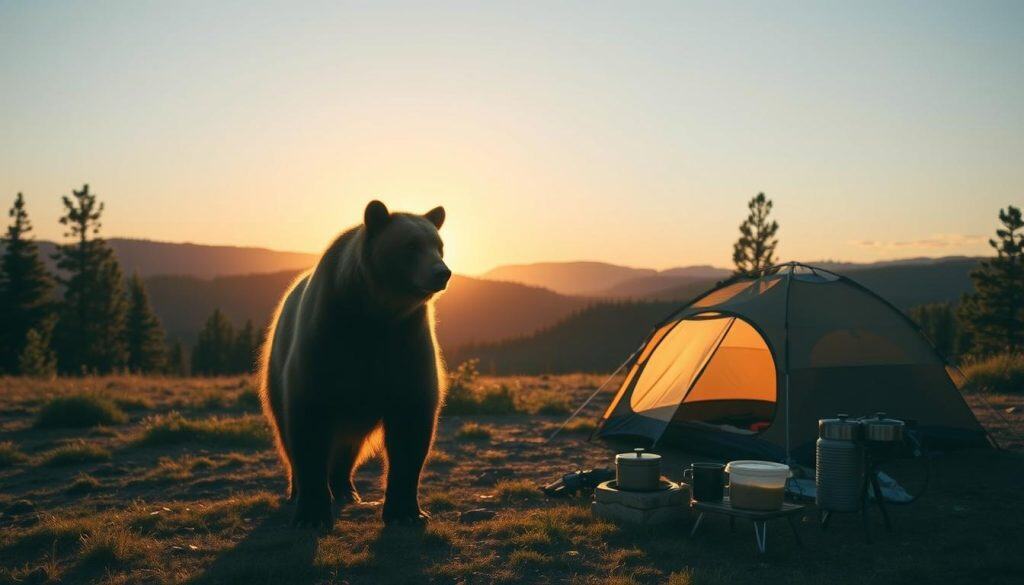
Proper food storage is absolutely critical for bear safety in campgrounds. The park provides bear-proof food storage boxes in most campsites, and using these properly is non-negotiable. All food, toiletries, cooking equipment, and anything with an odor must be secured. When camping in the backcountry where bear boxes aren’t available, you’ll need to hang food from designated food poles at least 10 feet off the ground and 4 feet from any tree or post. This is a crucial step in preventing bears from being attracted to your campsite.
Campsite Selection and Setup
When selecting a campsite, avoid areas with obvious bear signs like tracks, scat, or digging. Be particularly cautious near streams during fish spawning seasons when bears may be fishing. It’s also recommended to follow national park camping rules to minimize encounters with bears. Setting up your sleeping area at least 100 yards away from your cooking and food storage areas creates a safety buffer between you and any potential bear attractants.
What to Do If You Encounter a Bear While Camping
If you do encounter a bear while camping, remain calm and group together to appear larger. Slowly back away while speaking in a calm, low voice – never run or make sudden movements. It’s also essential to carry bear spray and know how to use it effectively. Bear spray is your most effective defense if a bear charges, but remember it’s for emergency use only, not as a repellent for your campsite. For more information on camping with kids, you can visit best national parks for young kids.
By following these guidelines and being mindful of your surroundings, you can significantly reduce the risk of a bear encounter gone wrong. Always check the latest information on bear management in Yellowstone National Park before your trip to ensure you’re up-to-date on the best practices for bear safety.
Conclusion: Enjoying Yellowstone Safely Despite Bear Presence
Embracing the beauty of Yellowstone National Park means acknowledging and respecting its bear population, ensuring a safe and enjoyable visit. The park’s bear management philosophy has been highly successful in reducing bear-human conflicts and human-caused bear mortalities. By following simple safety guidelines, such as proper food storage and being aware of your surroundings, you can minimize the risk of encounters gone wrong.
It’s remarkable that in Yellowstone, most bears die of old age and natural causes, a testament to the effectiveness of the park service’s management strategies. As a visitor, you’re part of this success story when you follow the guidelines and respect wildlife. For more information on planning your visit and staying safe, check out resources like Enjoy National Parks.
By being informed and prepared, you’re not just protecting yourself; you’re also contributing to the conservation of these magnificent animals. So, take the time to learn about bear behavior, stay in groups when hiking, and use bear boxes when available. Your actions make a difference in preserving this unique ecosystem for future generations.
FAQ
What types of bears can I expect to see in Yellowstone National Park?
You may encounter grizzly bears and black bears while visiting the park. Grizzly bears are more common in the interior and northern parts of the park.
How can I store my food and trash properly to avoid attracting bears?
To avoid attracting bears, store your food and trash in bear-proof containers or hang them from a tree at least 10 feet off the ground and 4 feet out from the trunk. Make sure to check with park rangers for specific guidelines.
What should I do if I encounter a bear while camping in Yellowstone?
If you encounter a bear, remain calm and speak in a calm, assertive voice. Give the bear a clear path to leave and do not run. If the bear approaches, use bear spray as a last resort.
Are there any specific camping guidelines I should follow to stay safe from bears?
Yes, choose a campsite in an open area, away from trails and water sources. Keep a clean campsite, and avoid cooking or storing food near your tent.
How does the National Park Service manage bear populations in Yellowstone?
The National Park Service implements various bear management practices, including monitoring bear populations, enforcing food storage regulations, and educating visitors about bear safety.
Can I hike or camp in areas with known bear activity?
Yes, but be sure to check with park rangers for up-to-date information on bear activity and follow all safety guidelines and regulations.