

Imagine embarking on a 42-mile hiking journey with over 21,000 feet of elevation change. This is the reality for hikers tackling the Grand Canyon Rim to Rim to Rim trail, a behemoth of a hike that tests even the most seasoned hikers.
The United States is home to some of the world’s most breathtaking and challenging hiking trails, from the scorching desert floors of the Grand Canyon to the high-altitude alpine environments of the Rockies.
Determining the hardest trail is subjective, depending on factors like elevation gain, distance, terrain, and weather extremes. For many, the Grand Canyon Rim to Rim to Rim stands as the ultimate challenge, but other contenders like Half Dome in Yosemite and Angels Landing in Zion also push hikers to their limits.
Key Takeaways
- The Grand Canyon Rim to Rim to Rim is a 42-mile hike with over 21,000 feet of elevation change.
- Other challenging hikes include Half Dome in Yosemite and Angels Landing in Zion.
- Factors like elevation gain, distance, and weather conditions determine a trail’s difficulty.
- Preparation is key to tackling America’s most challenging hikes.
- Expert opinions vary on what constitutes the hardest hike in the US.
The Challenge of America’s Toughest Trails

From the Grand Canyon to Yosemite, America’s toughest trails offer breathtaking views and grueling tests of stamina. These iconic trails span diverse landscapes, from the desert Southwest to alpine environments in the Cascades and Rockies, to the rugged terrain of New England.
America’s toughest hiking trails represent the pinnacle of outdoor challenges, drawing thousands of adventurous hikers and trail runners each year seeking to test their physical and mental limits. What makes these trails particularly challenging is their unique combination of extreme elements – whether it’s the scorching heat and massive elevation changes of the Grand Canyon or the exposure and technical difficulty of Yosemite’s Half Dome.
Many of these hikes have achieved legendary status among the hiking community, appearing on bucket lists and inspiring dedicated training regimens for those hoping to conquer them. For instance, the Grand Canyon Rim to Rim to Rim is a 42-mile hike that requires careful planning and physical endurance. You can explore more about such challenging trails and their locations in various national parks.
While some trails can be completed in a single day by exceptionally fit hikers, others require multiple days and careful planning, with weather conditions and seasonal factors playing crucial roles in their difficulty level. The psychological challenge of these trails often matches or exceeds the physical demands, testing hikers’ mental fortitude.
What Makes a Hiking Trail Difficult?
The difficulty of a hiking trail is a complex factor that depends on several key elements. As an experienced hiker, I’ve come to realize that it’s not just about the distance or elevation gain; it’s a combination of factors that test both physical and mental endurance.
One of the primary factors is elevation gain. Trails that climb thousands of feet in relatively short distances put tremendous strain on the cardiovascular system and leg muscles. For instance, some of America’s hardest trails feature over 5,000 feet of vertical gain, making them challenging even for seasoned hikers.
Distance also plays a significant role in determining trail difficulty. Longer trails require greater endurance and often necessitate hikers to carry more water and supplies, adding weight to their packs. The Grand Canyon Rim to Rim to Rim, for example, is 42 miles long and demands careful planning and preparation.
Weather and environmental conditions can dramatically affect the difficulty of a trail. Extreme heat, cold, high winds, or precipitation can turn a moderately challenging hike into a potentially dangerous endeavor. Location is another critical factor, as remote trails far from roads or services require greater self-sufficiency and risk management.
| Factor | Description | Impact on Hiker |
|---|---|---|
| Elevation Gain | Trails with significant vertical climb | Strains cardiovascular system and leg muscles |
| Distance | Longer trails requiring more endurance | Demands more supplies and energy |
| Weather Conditions | Extreme temperatures, winds, or precipitation | Increases risk and difficulty |
| Location | Remote trails with limited access to help | Requires greater self-sufficiency and risk management |
As noted by experienced hikers, “The most challenging aspect of a hike is often not the physical act of walking, but the mental and emotional demands of navigating difficult terrain and unpredictable conditions.” This quote highlights the psychological factors that play a crucial role in trail difficulty.
“The most challenging aspect of a hike is often not the physical act of walking, but the mental and emotional demands of navigating difficult terrain and unpredictable conditions.”
In conclusion, the difficulty of a hiking trail is determined by a combination of factors including elevation gain, distance, weather conditions, and location. Understanding these factors is essential for hikers to prepare adequately and tackle challenging trails with confidence.
Grand Canyon Rim to Rim to Rim: The Ultimate Challenge

Embarking on the Grand Canyon Rim to Rim to Rim hike means undertaking a journey of over 42 miles and 21,000 feet of elevation change. This arduous hike is not for the faint of heart; it demands a high level of fitness and experience with desert hiking.
The hike typically follows the South Kaibab or Bright Angel Trail on the South Rim and the North Kaibab Trail on the North Rim. The traditional route combines the South Kaibab Trail, known for being steeper but more scenic, with the North Kaibab Trail, the only maintained trail to the North Rim.
Most hikers attempt the full Rim to Rim to Rim hike in a single push, lasting between 15 to 24 hours. They start before dawn to avoid the intense heat of the day in the inner canyon. The hike takes you through diverse ecological zones, from the pine forests at the rims to the desert environment along the Colorado River.
The extreme environment of the Grand Canyon presents several challenges, including limited water sources and temperatures that can exceed 100°F at the bottom. The psychological challenge of climbing out of the canyon when fatigued adds to the hike’s difficulty.
While backpacking this route requires a difficult-to-obtain permit, day hiking it is permit-free, making it accessible to experienced hikers. Many consider this the most physically demanding day hike in America, due to its length, elevation gain, and the “reverse psychology” of descending first and climbing out later.
Extreme Mountain Challenges in the West
For serious hikers, the western US offers a range of extreme mountain challenges that test endurance and mental toughness. The region is home to some of the most iconic and challenging trails in the National Park system, with hikes that attract experienced hikers from around the world.
Half Dome in Yosemite National Park
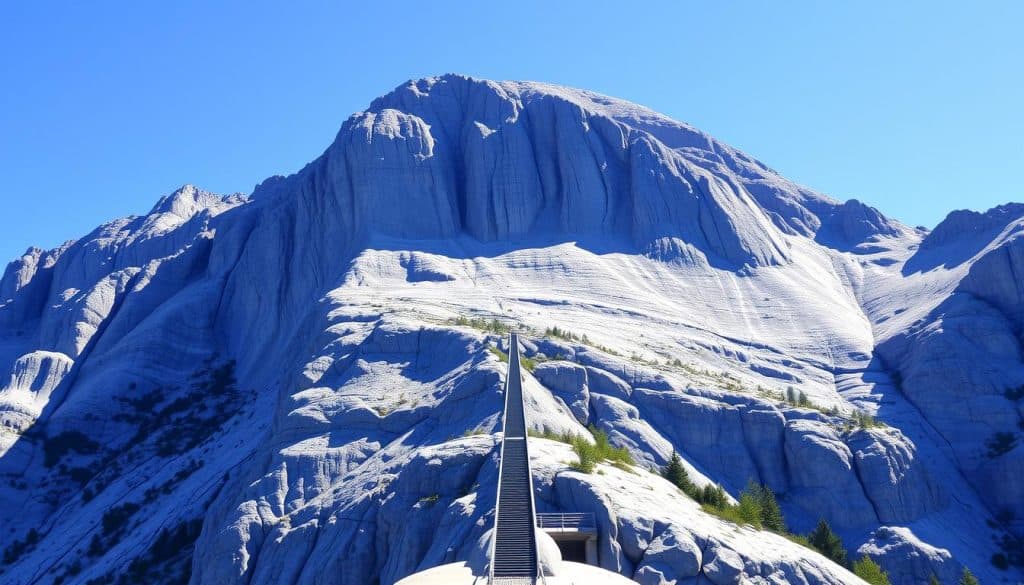
Half Dome is one of America’s most recognizable hiking challenges, located in Yosemite National Park. The 16-mile round trip journey involves a grueling 4,800 feet of elevation gain, culminating in the famous cable route that ascends the final 400 feet up a steep granite face. To manage the crowds, a permit system is in place, making it essential for hikers to plan ahead.
The cables installed each summer assist hikers up the otherwise technical rock climb, creating a unique challenge that combines physical exertion with exposure to heights. The psychological challenge of ascending a 45-degree slope with nothing but cables and wooden supports is not for the faint of heart.
Angels Landing in Zion National Park

Though shorter at just 5 miles round trip, Angels Landing in Zion National Park features one of the most exposed and mentally challenging sections of any trail in the National Park system. The knife-edge ridge with 1,000-foot drop-offs on both sides is protected only by chains bolted into the rock, making it a truly exhilarating experience.
The popularity of Angels Landing has led to the implementation of a permit system to manage crowds on the dangerous final section. Despite the presence of safety chains, numerous fatalities have occurred over the years, underscoring the need for caution and preparedness.
Mount Rainier’s Camp Muir Route
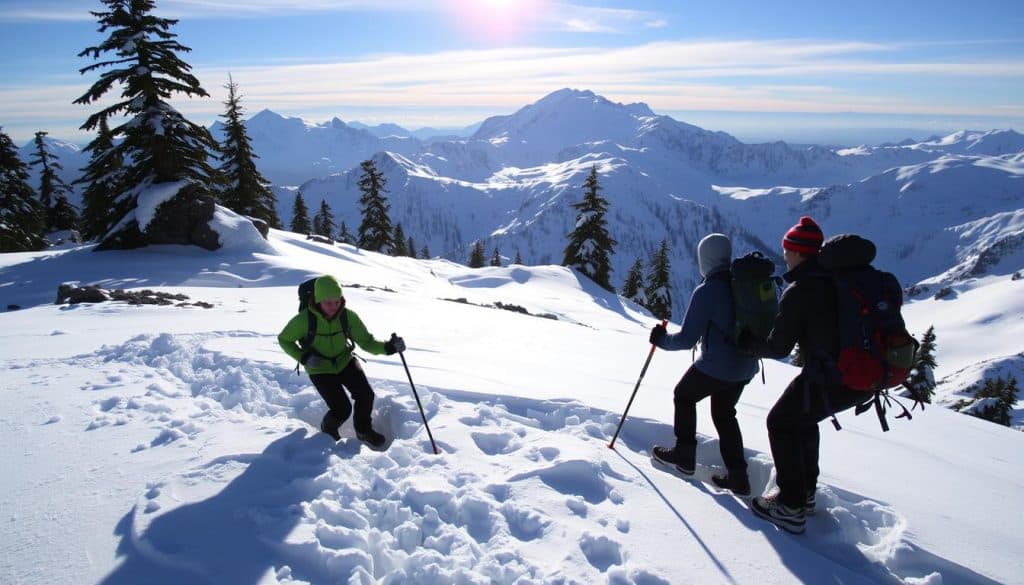
Mount Rainier’s Camp Muir route presents a different kind of challenge, with hikers gaining nearly 4,700 feet of elevation over just 4.5 miles in a high-altitude environment. The unmarked, snow-covered upper sections require route-finding skills and the ability to navigate potentially extreme weather conditions.
What makes these western mountain challenges particularly difficult is their combination of significant elevation gain, exposure to heights, technical sections requiring the use of hands, and in many cases, the need to obtain limited permits through competitive lottery systems.
What is the Hardest Hiking Trail in the US? Expert Opinions
When it comes to the most challenging hikes in the US, expert opinions vary widely. The definition of “hardest” can differ based on factors such as distance, elevation gain, technical difficulty, and exposure to extreme weather conditions.
According to Michael Lanza, a longtime field editor for Backpacker magazine, the Grand Canyon Rim to Rim to Rim is “arguably the granddaddy of ultra-dayhikes” and “the most demanding stroll on this list.” This hike is notable for its combination of distance, elevation change, and extreme environment.
Other experts point to different trails based on their unique challenges. For instance, the Presidential Range “Death March” in New Hampshire’s White Mountains is cited for its notoriously rocky and steep terrain, staying above treeline for 15 miles with 8,500 feet of elevation gain.

The Paintbrush-Cascade Canyons Loop in Grand Teton National Park is another trail that earns mentions for its high altitude, significant elevation gain, and technical terrain. Crossing the 10,720-foot Paintbrush Divide, this loop is a formidable challenge for even experienced hikers.
Experts also consider trails like the West Coast Trail on Vancouver Island for American hikers seeking the ultimate challenge. Although it’s located in Canada, its 47 miles of coastal terrain with numerous steep ladders, cable cars, and challenging river crossings make it a significant undertaking.
| Trail Name | Location | Distance | Elevation Gain |
|---|---|---|---|
| Grand Canyon Rim to Rim to Rim | Grand Canyon National Park, Arizona | Approx. 23 miles (one way) | Approx. 6,000 feet ascent and 12,000 feet descent |
| Presidential Range “Death March” | White Mountains, New Hampshire | 15 miles | 8,500 feet |
| Paintbrush-Cascade Canyons Loop | Grand Teton National Park, Wyoming | Approx. 19 miles | Significant, crossing 10,720-foot Paintbrush Divide |
For those prioritizing technical difficulty and exposure, trails like Angels Landing or the cables section of Half Dome are considered among the most psychologically challenging hiking experiences in the US National Park system.
Ultimately, the “hardest” trail depends on the metrics that matter most to the hiker, whether it’s distance, elevation gain, technical difficulty, or exposure to extreme conditions. Many experienced hikers suggest that the Wonderland Trail circumnavigating Mount Rainier represents the ultimate multi-day challenge, with 93 miles and 22,000 feet of elevation gain.
Preparing for America’s Most Challenging Hikes
Preparing for the toughest hikes in the US requires a multi-faceted approach that includes physical training, gear selection, and mental preparation. As you plan to tackle some of America’s most demanding trails, it’s essential to understand the various aspects that contribute to a successful and safe journey.
First and foremost, physical training is crucial. Months of dedicated training are necessary to build both cardiovascular endurance for covering long distances and strength training for managing steep ascents and descents. Many experienced hikers recommend training specifically for the unique demands of your target trail – incorporating long uphill hikes, stair climbing, or weighted backpack training to simulate the conditions you’ll face.

Securing permits is another critical early step in preparation. Many of the hardest trails, including Half Dome and Angels Landing, require permits that may need to be obtained months in advance through competitive lottery systems. It’s also vital to check weather conditions regularly, as conditions on high peaks and in desert environments can change rapidly and dramatically affect difficulty.
Proper gear selection becomes increasingly important as trail difficulty increases. Appropriate footwear, layering systems for changing conditions, navigation tools, and emergency equipment all play crucial roles in safety. Additionally, water and nutrition planning requires special attention on challenging hikes, with strategies needed for carrying sufficient water or safely treating water from sources, and consuming enough calories to fuel extended high-output efforts.
Mental preparation is often overlooked but equally important. Visualizing challenging sections, having decision points predetermined for when to turn back, and preparing for the psychological challenges of exposure or fatigue are all crucial. For the most challenging hikes, many experts recommend building experience progressively, tackling increasingly difficult trails to develop the skills, judgment, and confidence needed for the hardest routes.
Conclusion: Embracing the Challenge
As we conclude our exploration of America’s most challenging hikes, it’s clear that these trails offer more than just a physical test. They provide a journey of self-discovery and a deeper connection with nature.
Whether you’re drawn to the vast expanse of the Grand Canyon or the granite monoliths of Yosemite, these hikes showcase America’s diverse natural heritage. For those willing to take on the challenge, the rewards extend far beyond the trail, offering memories that last a lifetime and a sense of accomplishment.
If you’re planning your next adventure, consider exploring some of America’s most spectacular landscapes during the winter season. You can find more information on the best national parks for winter to plan your trip.
FAQ
What are some of the most challenging aspects of hiking Half Dome in Yosemite National Park?
Hiking Half Dome is challenging due to its steep ascent, long distance of 22 miles round trip, and significant elevation gain of over 5,000 feet. The final ascent up the cables can be particularly daunting, and hikers must be prepared for changing weather conditions and potential rain.
Do I need a permit to hike Half Dome?
Yes, a permit is required to hike Half Dome, and it’s highly recommended to apply well in advance due to limited availability. The permit system helps manage the number of hikers on the trail and reduces the risk of overcrowding.
How difficult is the Grand Canyon Rim to Rim hike?
The Grand Canyon Rim to Rim hike is considered challenging due to its long distance of approximately 23 miles and significant elevation change of over 5,000 feet. Hikers must be prepared for a full-day hike, and it’s recommended to bring plenty of water and snacks.
What kind of preparation is required for hiking Angels Landing in Zion National Park?
Hiking Angels Landing requires physical preparation, mental toughness, and a good understanding of the trail conditions. The hike involves chain-assisted climbing and navigating narrow ridges, making it a challenging and potentially hazardous hike.
How can I prepare for hiking in extreme mountain weather conditions?
To prepare for hiking in extreme mountain weather, it’s essential to check forecasts, bring appropriate gear such as rain jackets and warm layers, and be prepared for changing conditions. Hikers should also be aware of potential hazards such as rockfall and landslides.
What are some essential items to pack for a challenging hike?
When preparing for a challenging hike, it’s crucial to pack essentials such as plenty of water, snacks, a first aid kit, and a map. Hikers should also bring a headlamp, extra batteries, and a repair kit for their gear.