
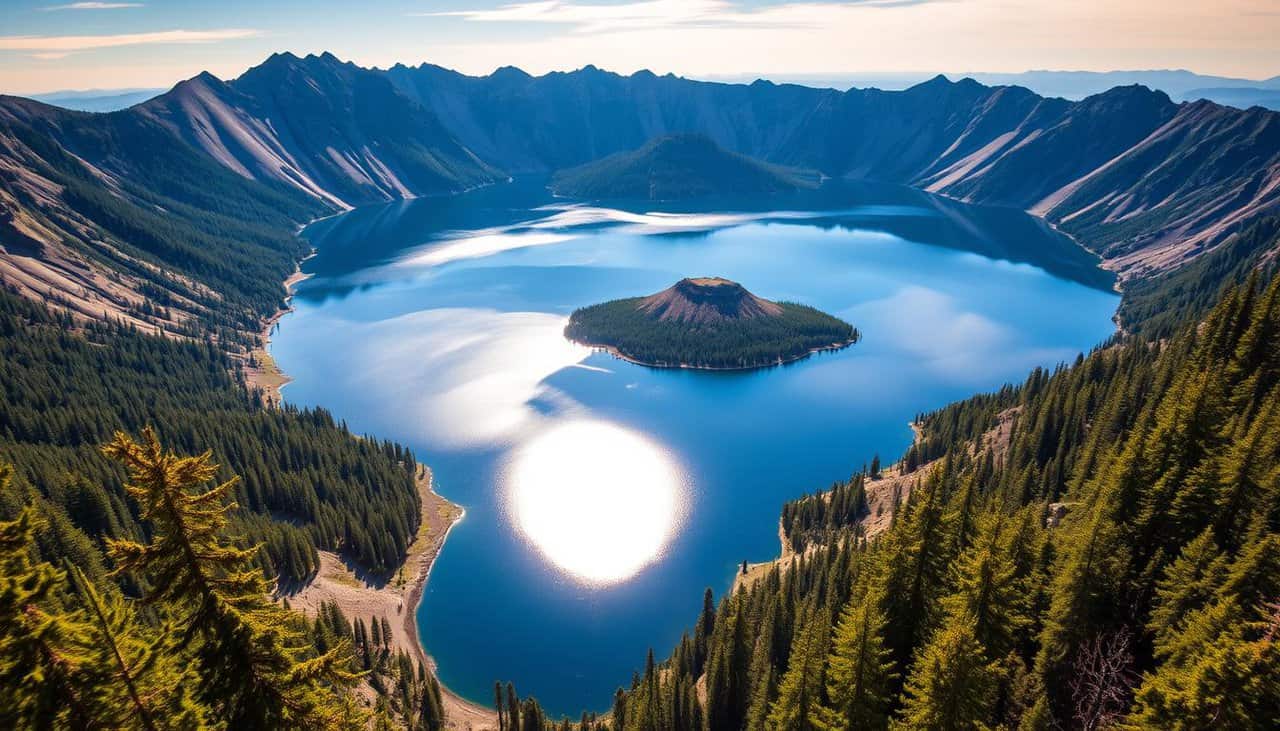
Ever wondered how a volcanic eruption millions of years ago made a breathtaking lake? Welcome to Crater Lake National Park in Oregon. It’s not just water; it’s a spot filled with history, beauty, and adventure.
In this guide, you’ll learn all you need about this amazing national park. It formed around 7,700 years ago from Mt. Mazama’s eruption. You’ll see incredible views from Rim Drive and can hike over 90 miles of trails. No matter if you love adventure or just want to see new things, Crater Lake has unforgettable experiences.
Key Takeaways
- Crater Lake is the deepest lake in the United States at 1,943 feet.
- Established in 1902, it is the fifth-oldest national park in the US.
- The park features over 90 miles of hiking trails.
- Cleetwood Cove Trail is the only legal access point for swimming in the lake.
- Annual visitors exceed 700,000, making it a popular destination.
- The park receives an average of 41 feet of snow each year.
Introduction to Crater Lake National Park
Crater Lake National Park is a place where natural beauty and history meet. It was established in 1902, becoming the fifth national park in the United States. This park offers a peek into ancient times and displays breathtaking views.
The lake was formed about 7,700 years ago after Mount Mazama erupted. This event created a basin that water filled, resulting in Crater Lake. It’s known for its clear blue water, making it a geological treasure.
Overview of the Park’s History
The history of Crater Lake is closely linked to volcanic activities. Mount Mazama once stood tall before its explosive eruption formed today’s caldera. The park showcases the Earth’s ever-changing nature.
It’s also a place of deep cultural importance to Native American tribes. They hold this area in high regard, adding layers to the Crater Lake National Park history. This blend of nature and culture makes the park exceptionally special.
Significance of the Lake
The Crater Lake significance goes beyond its beauty. It is the deepest lake in the United States, with a depth of 1,943 feet. The water’s clarity shows incredible colors, drawing in those who see it.
Its cleanliness and the stories it holds offer more than just a view. They invite you to delve deeper into its beauty and importance. This lake is a place to truly experience and reflect on.
How to Get to Crater Lake National Park
Going to Crater Lake National Park is a journey of beautiful sights and memories. It’s key to know the best way to travel there. Most people visit from late June to mid-September. During this time, all the park’s features are open, and the weather is great.
Best Times to Visit
Summer is busy, but spring and fall have their own beauty. Spring brings wildflowers and melting snow. Fall showcases colorful leaves. But, remember, winter snow can close some entrances. For example, the North Entrance shuts from November until June. The South and West entrances are always open.
Transportation Options
Think about how you’d like to get to Crater Lake. Driving? It’s easy to reach from cities like Bend (2 hours), Eugene (3 hours), and Portland (4 hours). If flying is your choice, Rogue Valley-Medford Airport is 75 miles away. It connects with five major airlines. Shuttle services can also help you get around.
Need to fill up your tank? Prospect and Chiloquin have fuel stations not too far away. And don’t worry about your vehicle size. Crater Lake welcomes RVs, trailers, and buses with no issues.
Park Entrance Fees and Regulations
Understanding Crater Lake National Park’s entrance fees and rules is key for your trip planning. The park has guidelines to keep its beauty and make sure visitors have a great time. Knowing about the entrance fees and annual pass choices helps with budgeting and improves your trip.
Daily Entrance Fees
Visitors can get daily passes to enter Crater Lake National Park. These passes are good for up to seven days. Here’s the cost for a daily pass:
| Pass Type | Non-Winter Months (May-October) | Winter Months (November-May) |
|---|---|---|
| 7-Day Vehicle Pass | $30.00 | $20.00 |
Remember, the park has six free admission days every year. These days let visitors explore without having to pay entrance fees.
Annual Pass Information
The Crater Lake annual pass is perfect for those who visit often. At $55, it offers unlimited access for the car’s owner and all passengers. If entering by other means, it covers the pass holder plus three friends.
If you visit national parks often, the America the Beautiful Pass is a good deal at $80. It gives access to all 63 National Parks in the U.S. Seniors, military, and disabled folks might get this pass for free or at a lower cost.
Knowing the park’s rules is important. Keeping the park beautiful, staying on trails, and respecting wildlife ensures a safe visit for all. The park has over 100 miles of roads with amazing views and places to see.
Camping at Crater Lake National Park
Crater Lake National Park offers a special experience for lovers of nature and the outdoors. There are many campgrounds at Crater Lake, so visitors can pick the best spot for them. Here, you can set up camp and dive into the park’s natural beauty.
Campgrounds and Reservations
Mazama Campground is a favorite choice, with 214 places to camp. It has sites just for tents and others that are good for RVs. It’s smart to book early, especially in the busy summer, as it fills up fast. This campground has all you need for a great adventure in the park.
Amenities Available
Mazama Campground provides key amenities to make your stay better:
- Restrooms and showers
- Accessible RV sites
- Special area for PCT hikers and bicyclists
These amenities serve all types of campers, whether you’re staying in an RV or a tent. You’ll see beautiful forests and wildlife, like deer and birds. No matter if you want to relax or seek adventure, Mazama Campground at Crater Lake has something for you.
| Site Type | Cost per Night | Max Length (Feet) |
|---|---|---|
| Tent Site | $21 | N/A |
| RV Site (No Hook-ups) | $31 | 50 |
| RV Site (Electric Hook-ups) | $36 | 50 |
| Full Hook-ups | $42 | 50 |
| PCT Hiker/Bicyclist Site | $5 | N/A |
Popular Hiking Trails in the Park
Crater Lake National Park is a great place to enjoy the outdoors. It has over 90 miles of trails that start above 4,000 feet. There’s a trail for everyone, from newbies to expert hikers.
The Cleetwood Cove Trail and the Rim Drive Trail are really special. They offer amazing views and unique features. You get to see beautiful landscapes and geological wonders, making you feel closer to nature.
Cleetwood Cove Trail
Cleetwood Cove is your gateway to Crater Lake. This trail is about 2.13 miles long. It lets you swim and fish in the lake’s clear waters.
It’s a bit of a challenge. You’ll go down to the shore and then back up. But it’s an adventure worth taking.
Rim Drive Trail
The Rim Drive Trail has some of the best views of Crater Lake. It’s around 11 miles long. You get to see the lake from many spots.
This trail is perfect for those who love to pause and soak in the beauty. You can take stunning photos and find peaceful spots.
Annie Creek Canyon Trail
The Annie Creek Canyon Trail is rich with geological beauty. It’s surrounded by cypress trees and wildflowers. The trail is 1.7 miles long, making it great for families.
It’s an easy hike that’s full of nature’s sounds and sights. Add it to your list when you visit Crater Lake.
| Trail Name | Distance (Round Trip) | Elevation Gain | Access |
|---|---|---|---|
| Cleetwood Cove | 3.43 km | Moderate | Swimming & Fishing |
| Rim Drive Trail | 11 miles | Varied | Scenic Views |
| Annie Creek Canyon Trail | 1.7 miles | 200 ft | Accessible |
Check out this guide for more trails in Utah’s national parks. Crater Lake National Park has breathtaking scenery to explore.
Wildlife Viewing Opportunities
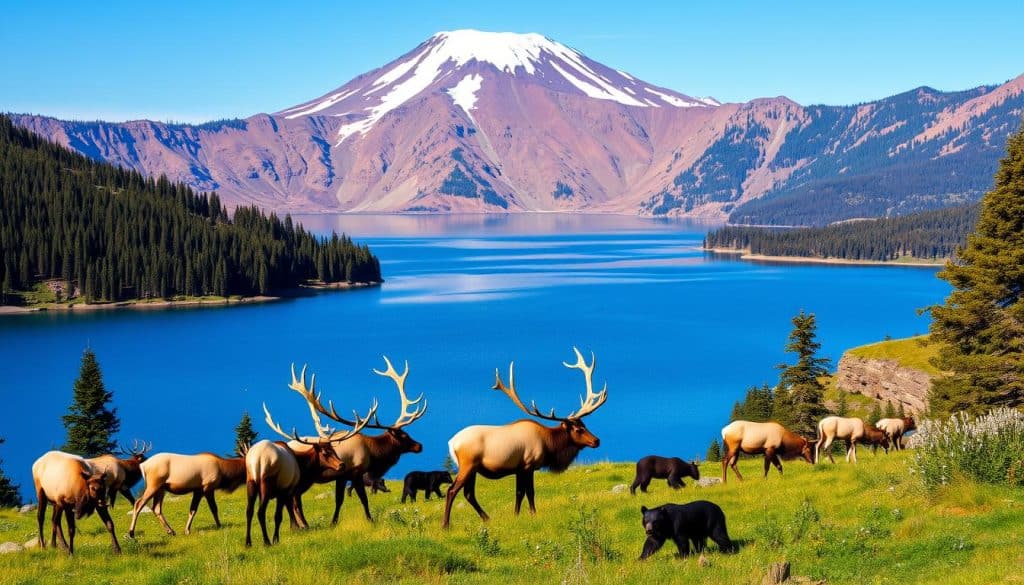
Crater Lake National Park is a great place to see wildlife. It has over 70 kinds of mammals. This makes it a perfect spot for anyone who loves animals. Watching animals here makes your trip better and connects you with nature.
Common Species to Spot
As you walk through the park, keep an eye out for animals that live here. You can see:
- Golden-mantled ground squirrels
- Canada jays
- American martens
- Snowshoe hares
In the fall and late spring, black bears are common. Birds pass through, adding to the lively scene. Frogs and salamanders also live near lakeshores and meadows, making the park full of life.
Best Times for Wildlife Viewing
The best times to see animals are early mornings and late afternoons. This is when animals are most active. As the seasons change, so do the animals’ behaviors.
In spring, animals move around looking for food. Summer is full of life with 30 overlooks on the Rim Drive for watching animals. This drive is 33 miles long and is great for spotting both common and rare animals.
| Species Type | Activity Period | Visibility Frequency |
|---|---|---|
| Common Species | Daily | Abundant |
| Uncommon Species | Seasonal | Monthly |
| Rare Species | Few Times a Year | Occasional |
Activities to Enjoy at Crater Lake
Crater Lake National Park has activities for everyone, from thrill-seekers to those looking for peace. The clear lake and wilderness around it make every activity special. Enjoy fishing, take stunning photos, or explore trails to see the park’s beauty.
Boating and Fishing
Boating at Crater Lake offers a special view, with guided tours that teach about the park. On the lake, you see the blue waters up close. Fishing is great here, with no need for a license. You can catch Rainbow Trout and Kokanee, just use artificial lures.
Photography Spots
Photographers will love the views, especially in the morning and evening. There are many places to get great shots of Crater Lake’s changing beauty. The Rim Drive goes around the lake, offering 30 spots for amazing photos. Whether you’re new or experienced in photography, you’ll find endless chances to capture the lake. For more tips on where to go, seethis guide.
Scenic Viewpoints Around the Lake
Crater Lake National Park is home to stunning views. Watchman Peak and Sinnott Memorial Overlook stand out. These places show the lake’s beauty and surroundings perfectly.
Watchman Peak
Watchman Peak is a must-see, with a 1.6 miles trail. It rises 420 feet, offering wide views. From the top, Crater Lake’s beauty and the nearby nature amaze visitors.
It’s best to hike early for fewer crowds. This ensures a quiet and enjoyable climb.
Sinnott Memorial Overlook
Many families love Sinnott Memorial Overlook, opened since 1931. It has educational displays about the park. This makes learning about the lake’s creation fun.
It’s very popular for its views, especially from 10 AM to 3 PM. Visitors take amazing photos here, creating lasting memories of Crater Lake.
Exploring the Lake’s Unique Geology
Learning about Crater Lake geology adds to how much you’ll love this amazing place. It formed from a huge volcanic event and is a beautiful example of nature’s power. This happened about 7,700 years ago after Mount Mazama erupted big time, changing the land around it. A caldera was formed, making the lake unlike any other.
Formation of Crater Lake
A huge eruption led to Crater Lake’s creation. This event threw lots of stuff into the air, making a big hole called a caldera. It’s between 5 to 6 miles across and more than half a mile deep. Rain and melted snow filled it up, making it the deepest lake in the U.S. Its depth of 1,943 feet means its waters are super clear and come only from rain and snow.
Volcanic Features of the Park
Crater Lake National Park is full of cool volcanic features, like Phantom Ship. This rock looks just like a spooky ship and makes the lake even more breathtaking. There’s also lots of lava rocks and old volcanic stuff to see. You can learn about the park’s fiery history and even find out about the work to watch for future eruptions under the lake. This makes the lake even more interesting and mysterious.
| Feature | Description |
|---|---|
| Caldera Formation | Formed from explosive eruptions approximately 7,700 years ago. |
| Depth | 1,943 feet (592 meters), the deepest lake in the USA. |
| Phantom Ship | A volcanic rock formation resembling a ghost ship. |
| Source of Water | Exclusively fed by rain and snow. |
| Geological Activity | Monitored due to potential for future eruptions beneath the lake. |
Seasonal Experiences at Crater Lake
Crater Lake National Park shows its beauty in different seasons. Each season brings its unique activities, making it a great place to visit all year. From the snow in winter to the wildflowers in spring, there’s always something to see and do.
Winter Activities
Winter turns Crater Lake into a snowy wonderland. The park gets about 42 feet of snow each year, perfect for winter sports. The closed Rim Drive becomes a top spot for skiing and snowshoeing. Ranger-led snowshoe walks let visitors see the park’s beauty up close. These walks are for anyone eight and older, but you need to book in advance. You can rent snowshoes between 10 a.m. and 3 p.m. at the Rim Café and Gift Shop.
It’s important to check the weather as clouds and storms can hide the lake often in winter. While you can’t ski or snowboard down into the caldera, there’s plenty of space for cross-country skiing and snowshoeing. Remember, the park has areas with avalanche risk, but there are no avalanche forecasts.
Spring Wildflowers
When spring comes, Crater Lake dazzles with colorful wildflowers on the lower trails. It’s a great time for those who love photos and nature. The best view of wildflowers is from late July to August, with lots of colors by the lake. The park’s wide range of elevations leads to these beautiful flower displays.
The spring season adds to Crater Lake’s beauty. Hiking or just walking around, you’ll find unforgettable views.
Safety Tips for Visitors
Making sure you’re safe while visiting Crater Lake National Park is key to a great time. Following safety tips helps keep you and the park’s animals safe. Learn about the area and follow rules for hiking and dealing with animals. By doing this, you can enjoy your visit and stay safe.
Hiking Safety Guidelines
Keep safe on the park’s trails by staying on marked paths. Know how hard your hike will be. The Cleetwood Cove Trail drops 700 feet in 1.1 miles, which might be tough for some. Always take more water than you think you’ll need. This is important because Rim Village is 7,100 feet high, increasing the risk of getting dehydrated.
Pay attention to the weather, especially in summer when storms are quick to form. Stay off the trails in bad weather to avoid lightning strikes. Lightning can hit from over 10 miles away.
Wildlife Precautions
Seeing animals is a big part of visiting the park, but always be careful. Keep a safe distance and don’t feed them. Driving too fast is risky for you and animals like bears and marmots. Follow speed limits, which are usually 35 to 45 mph, but sometimes as low as 20 mph. Drive carefully to keep everyone safe, including the park’s many animals.
Educational Programs and Tours
Crater Lake National Park has many educational programs for visitors of all ages. Ranger-led tours are a highlight. They help you learn about the park’s beautiful geology and ecosystems. Rangers tell interesting stories and facts. This makes it easy for everyone to see why Crater Lake is so special.
Ranger-led Programs
Ranger-led tours offer a special way to see the park. They cover things like wildlife and the history of Crater Lake. You can go on guided walks or attend talks. These programs help you learn more and feel connected to nature.
Visitor Center Resources
The visitor center is full of helpful info. It has interactive exhibits that show what makes the park unique. At the Steel Visitor Center, there are maps, materials, and staff to help you. Engaging with these resources makes your visit better. You learn a lot about what Crater Lake offers. For more educational options, check out this link.

Suggested Itineraries for Your Visit
Planning your visit to Crater Lake National Park makes your trip better. It lets you see more of this beautiful place. Whether you’re there for one day or the whole weekend, there are special ways to explore Crater Lake’s beauty.
One-Day Itinerary
For a great one-day trip at Crater Lake, start early to use all your time. Drive around Rim Drive, which is 33 miles long and has lots of beautiful spots. Stop at places like Sinnott Memorial and Watchman Peak to see amazing views.
Next, hike the Rim Trail to get closer to the lake’s bright blue waters. Finish your day with a nice meal at Crater Lake Lodge. It’s the best way to wrap up your adventure.
Weekend Getaway Plan
If you’ve got a weekend, stay longer to really get the feel of Crater Lake. Start by setting up camp at Mazama Campground. It’s peaceful and perfect for spending the night in nature.
Spend your days hiking trails, like the trail that goes down to the lake, and maybe swim if you’re brave. Don’t miss a boat tour to Wizard Island. It gives you a whole new view of the park.
The weekend is your chance to go fishing, look at stars, and enjoy the beauty around you. For more ideas on what to do, check out this useful resource.
Nearby Attractions to Explore
Make your visit to Crater Lake even better by seeing nearby attractions. These places show off the area’s beauty and special rock features. You’ll see amazing views and interesting geological spots, adding to your Crater Lake adventure.
Cascade-Siskiyou National Monument
Cascade-Siskiyou National Monument is close to Crater Lake. It’s known for its diverse plants and animals. There are hiking trails that go through green forests and offer views of the mountains. This area is perfect for outdoor lovers and is a must-see near Crater Lake.
Lava Beds National Monument
Lava Beds National Monument offers a unique beauty. It’s famous for its many lava tube caves. Here, you can explore caves and see signs of ancient volcanoes. The mix of rough lava fields and bright spring wildflowers is truly special next to Crater Lake.
Conclusion: Making the Most of Your Visit to Crater Lake
Planning your trip to Crater Lake National Park is more than a simple getaway. It’s an adventure that showcases some of the most amazing views nature offers. With the deepest lake in the U.S. and over 90 miles of trails, there’s plenty of beauty to explore.
When planning, consider going in the summer for easier park access. Winter visits can be tricky with lots of snow and closed attractions. Remember to think about where you’ll stay and how you’ll get around, as places like Crater Lake Lodge get booked fast.
To make the most of your visit, try the park’s ranger programs and educational opportunities. These can help you learn more about this special place.
Getting ready for your trip means doing your homework. Look into the best trails, like Cleetwood Cove Trail, and how to travel from Rogue Valley International-Medford Airport. Paying attention to these details can make your Crater Lake visit truly unforgettable. So, keep these tips in mind to fully enjoy all the beauty the park has to offer.
FAQ
What is the best time to visit Crater Lake National Park?
The best time to go is in the summer, July and August, with warm weather and all areas open. Spring and fall are also good times but the weather may be less predictable.
Can I camp inside Crater Lake National Park?
Yes, you can camp at Mazama Campground and Lost Creek Campground. It’s best to make a reservation during busy seasons.
Are there hiking trails available for all skill levels?
Yes, the park has over 90 miles of trails for every skill level. This includes the Cleetwood Cove Trail for swimming and fishing, and the beautiful Rim Drive Trail.
What wildlife can I expect to see in the park?
You might see black bears, deer, bobcats, and birds. Early mornings or late afternoons are the best times to spot them.
Is fishing allowed in Crater Lake?
Yes, fishing in Crater Lake is allowed without a license. But you can only use artificial lures. Expect to catch Rainbow Trout and Kokanee.
What types of educational programs are offered in the park?
The park has ranger-led programs on its history and ecology. You’ll also find interactive exhibits at the Steel Visitor Center.
Are there scenic viewpoints for photography?
Yes, there are. Places like Watchman Peak and Sinnott Memorial Overlook give you stunning views. Sunrise and sunset are great times for photos.
How much are the entrance fees for Crater Lake National Park?
Fees are charged per vehicle or person, for up to a week. You can also buy an annual pass for unlimited visits.
What winter activities are available at Crater Lake National Park?
In winter, there’s cross-country skiing, snowshoeing, and hiking through the snow. The park gets over 41 feet of snow on average.
How can I get to Crater Lake National Park?
You can enter from the west (Medford), south (Klamath Falls), or the north (Roseburg in summer). You can drive, fly to nearby airports, or take a shuttle.