

Did you know Idaho has over 400 native fish species? Many of these thrive in its stunning national parks. These parks offer amazing landscapes and a wide variety of wildlife. They are some of the best places to explore in Idaho.
From the Rocky Mountains’ towering peaks to the high desert’s unique formations, Idaho’s parks are a treat. They invite you to dive into nature’s beauty.
When you start exploring Idaho’s parks, you’ll find endless outdoor adventures. You can hike through forests, admire clear lakes, or see incredible wildlife. These experiences are unforgettable. Get ready to see the beauty and diversity of Idaho’s landscape!
Key Takeaways
- Idaho’s national parks feature diverse ecosystems and stunning vistas.
- Wildlife enthusiasts can encounter unique species across various landscapes.
- Outdoor activities include hiking, camping, and wildlife watching.
- Each park offers distinct geological and historical features to explore.
- Planning your trip helps maximize your adventure in Idaho’s parks.
Overview of National Parks in Idaho
Idaho’s national parks are a mix of stunning natural beauty, diverse wildlife, and fun activities. They are a must-see for nature lovers. Each park has its own special features, from lush forests to breathtaking landscapes.
Why Explore Idaho’s National Parks?
Idaho’s national parks offer endless adventures and peaceful moments. You can see unique plants and animals while hiking, biking, or watching wildlife. The beauty of these parks helps you connect with nature.
They are perfect for family trips, solo journeys, or romantic escapes. With so many trails and views, every visit is a new discovery. This highlights the need to protect these places for the future.
What Makes Idaho Unique?
Idaho’s parks are special because of their unique geology and lively ecosystems. The state’s rich culture and natural wonders make it unlike anywhere else. You can see ancient volcanoes, beautiful rivers, and thriving wildlife.
From the towering sawtooth mountains to calm lakes, Idaho’s parks are part of American history. They show the importance of saving nature, just like New Mexico’s parks do. They highlight the beauty of nature and culture. Learn more about New Mexico’s diverse.
The Beauty of Yellowstone National Park
Yellowstone National Park is a place of wonder, filled with natural beauty. It’s known for its stunning landscapes and geothermal wonders. Here, you can see amazing sights and unique wildlife. Let’s explore the key attractions, the best times for wildlife watching, and the best seasons to visit.
Key Attractions in Yellowstone
Yellowstone is famous for its iconic features. These attractions draw millions of visitors each year. Here are some of the key attractions in Yellowstone:
- Old Faithful: This famous geyser erupts about every 90 minutes, amazing everyone with its power.
- Grand Prismatic Spring: The largest hot spring in the U.S., it’s a stunning sight with its vibrant colors.
- Lamar Valley: Known as the “Serengeti of North America,” it’s great for seeing bison and other wildlife.
- Yellowstone Lake: This scenic lake offers activities and views, especially during sunrise and sunset.
Wildlife Watching Opportunities
The park is perfect for wildlife enthusiasts. With many species living here, you can see:
- Bison roaming freely across the plains.
- Elk grazing in the meadows.
- Wolves in their packs, especially in the Lamar Valley.
- Various bird species, including the majestic bald eagle.
Best Times to Visit
Choosing the right time to visit Yellowstone can make your trip better. The best seasons are:
| Season | Visitor Experience | Wildlife Viewing | Crowd Levels |
|---|---|---|---|
| Spring (April – June) | Wildflowers bloom, and animals emerge. | High chances to see newborns. | Moderate crowds. |
| Summer (July – August) | All attractions open, warm weather. | Good wildlife visibility. | Very high crowds. |
| Fall (September – October) | Beautiful foliage, cooler temperatures. | Best time for elk rutting season. | Low to moderate crowds. |
| Winter (November – March) | Winter wonderland, quieter experience. | Idyllic for seeing winter wildlife activities. | Very low crowds. |
Exploring Grand Teton National Park
Grand Teton National Park is a place of breathtaking beauty. It offers stunning views and outdoor adventures. The park’s peaks and lakes are perfect for exploring.
Whether you love hiking or just want to enjoy the scenery, there’s something for you. This park is a must-see for anyone who loves nature.
Must-See Spots in Grand Teton
There are several spots you can’t miss in Grand Teton National Park:
- Jenny Lake: A beautiful lake great for family fun and photos.
- The Teton Range: See the rugged peaks and enjoy amazing views.
- Schwabacher’s Landing: Find peace with the mountains reflected in calm waters.
- Snake River Overlook: A famous spot for sunrise and sunset views.
Outdoor Activities to Enjoy
Grand Teton offers many outdoor activities. Here are some favorites:
- Hiking: Choose from easy to hard trails for all hikers.
- Fishing: Catch trout in the lakes and rivers. Don’t forget your license.
- Boating: Kayak or canoe on Jenny Lake for a special view.
- Wildlife Watching: See moose, elk, and more in their homes.
Tips for a Great Visit
Here are some tips to enhance your visit:
- Get there early to park at popular spots.
- Wear layers because the weather can change fast.
- Follow park rules to protect the environment.
- Bring a camera to capture the park’s beauty.
The Wonders of Craters of the Moon National Monument
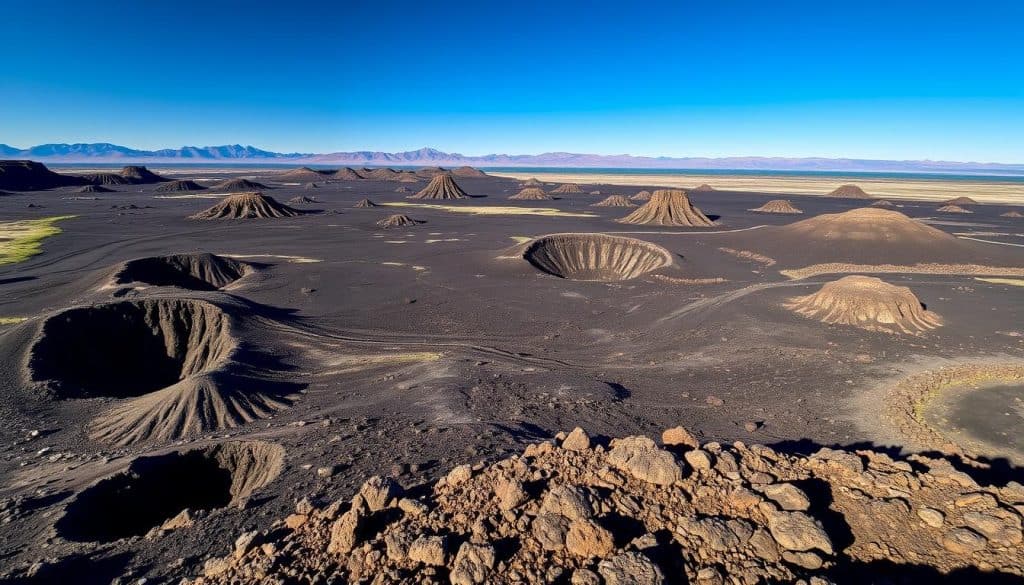
Craters of the Moon National Monument in Idaho is a sight to behold. It’s like walking on the moon, with its craters and lava tubes. You’ll see black basalt rocks, vast lava fields, and plants that thrive in this unique environment.
Landscapes and Geology
The geology in Idaho is showcased at Craters of the Moon. It was formed by volcanic eruptions. You’ll see lava flows, spatter cones, and craters.
This landscape is a dream for those who love geology. It shows the power of nature over thousands of years.
Hiking Trails You Shouldn’t Miss
Exploring Craters of the Moon’s hiking trails is a must. Here are some top trails for an amazing adventure:
| Trail Name | Distance | Difficulty | Highlights |
|---|---|---|---|
| North Crater Loop | 3.8 miles | Moderate | Views of the North Crater and diverse lava formations |
| Lava Flow Trail | 1.0 mile | Easy | Close-up of lava formations and the unique ecosystem |
| Tree Molds Trail | 0.5 miles | Easy | Fascinating tree molds created by lava flow |
Each trail gives a different view of the monument’s geology. It’s perfect for photography and exploration. So, get your hiking boots ready and explore the wonders!
Visiting Sawtooth National Recreation Area
The Sawtooth National Recreation Area is known for its stunning beauty. It has jagged peaks and clear lakes. It’s a favorite spot for hiking and camping in Idaho.
There are many trails and campsites for all kinds of visitors. This ensures everyone can enjoy the area’s beauty.
Popular Trails and Scenery
Exploring the scenic trails in Sawtooth is a highlight. Some top trails include:
- Sawtooth Scenic Byway: A drive that shows off the Sawtooth Mountains’ beauty.
- Alpine Lakes Trail: A moderate hike to peaceful alpine lakes, great for a day out.
- Redfish Lake Trail: An easy trail for families and beginners, with beautiful lake views.
Each trail lets you connect with nature. You’ll see different plants and animals, making your hike memorable.
Camping and Lodging Options
For longer stays, there are great camping spots in Idaho. The Sawtooth National Recreation Area has many campgrounds. They offer basic needs in a natural setting. Here are some choices:
- Stanley Lake Campground: Near Stanley, it has fishing, hiking, and lake views.
- Redfish Lake Campground: Great for families, with amenities and easy trail access.
- Backcountry Camping: For those wanting peace, there are backcountry sites for a deep outdoor experience.
Whether you like cabins or tent camping, Sawtooth has it all. It lets you dive into the wilderness fully.
Historical Sites in Idaho’s National Parks
Idaho’s national parks are more than just places for outdoor fun. They are filled with historical sites that tell the story of Idaho’s past. These sites show the cultural and historical importance of the land. They give visitors a chance to see the beauty of nature and learn about the people who came before us.
Significance of Historic Landmarks
Historic landmarks in Idaho’s national parks remind us of the past. They show the area’s diverse heritage. You might see old mining camps or visit centers with exhibits on Native American tribes.
These sites offer a glimpse into the lives of those who lived here before. They make your visit more meaningful and interesting.
How History Shapes Your Experience
Exploring Idaho’s history can change your visit from ordinary to extraordinary. Knowing the history behind the landscapes deepens your appreciation. You might be inspired by stories of resilience or gain a new respect for nature and human achievements.

| Historic Landmark | Significance | Location |
|---|---|---|
| Old Idaho Penitentiary | Reflects Idaho’s 19th-century justice system | Boise, ID |
| Fort Hall Replica | Preserves history of early mountain men and trappers | Fort Hall, ID |
| Shoshone Bannock Tribal Cultural Center | Cultural heritage and customs of the Shoshone-Bannock Tribes | Fort Hall, ID |
Wildlife Experiences in Idaho
Idaho is famous for its amazing wildlife. Visitors can connect deeply with nature here. You can see grizzly bears, moose, and golden eagles in Idaho’s national parks and wilderness areas.
Species to Look Out For
When you explore Idaho’s wildlife, you’ll see many interesting species. Some of the most notable include:
- Grizzly Bears: These majestic creatures are often seen in the northwestern parts of Idaho.
- Moose: Found in forests and near wetlands, moose are known for their big size and impressive antlers.
- Golden Eagles: These birds are easy to spot flying over Idaho’s stunning landscapes.
Responsible wildlife viewing is key. It keeps both you and the animals safe.
Best Practices for Wildlife Viewing
It’s important to view wildlife safely. This ensures your safety and the animals’ well-being. Here are some tips:
- Maintain a safe distance: Use binoculars or a camera with a zoom lens to observe animals without disturbing them.
- Do not feed wild animals: Feeding them disrupts their natural foraging behavior and can lead to dangerous interactions.
- Respect their habitat: Stay on designated trails and avoid venturing into sensitive areas where wildlife may be nesting or resting.
Engaging with wildlife in Idaho is a unique chance to appreciate nature. By following these practices, you can have memorable and responsible wildlife experiences. Remember, learning about wildlife protection is also important. You can find more information by checking resources like historical sites in different regions.
Photography Tips for Capturing Idaho’s Parks
Exploring Idaho’s national parks through photography is rewarding. Whether you’re a pro or a hobbyist, good nature photography tips are key. They help you capture the unique landscapes and wildlife in these parks. Knowing the best spots can make your photos truly special.
Best Locations for Stunning Shots
Idaho has many great places for photography. Here are some top spots:
- Sunrise at Grand Teton for breathtaking mountain silhouettes
- Twilight reflections at Jenny Lake for mesmerizing water imagery
- The rugged terrain of Sawtooth National Recreation Area for dynamic landscapes
- Scenic overlooks in Craters of the Moon for unique volcanic formations
Golden Hour and Lighting Tips
Using natural light is key for great photos in Idaho. Here are some tips:
- Capture during golden hour: The hour just after sunrise and before sunset has the softest, most flattering light.
- Mind the weather: Cloudy days can soften harsh sunlight, creating a dramatic mood.
- Experiment with angles: Changing your position can create interesting shadows and highlights.
Planning Your Trip to Idaho’s National Parks
Planning a trip to Idaho’s parks requires the right gear. The season and activities you plan will determine what you need. Camping essentials include a sturdy tent, sleeping bag, and cooking gear. Also, remember first aid kits, hydration systems, and clothes for different weather.
Essential Gear and Supplies
Start by picking the right gear for your trip. For hiking, you’ll need strong shoes and layers for the weather. Trekking poles can also make trails easier. If camping, bear-proof containers are key for food safety.
For a detailed packing list, check out travel guides for Idaho. They offer specific advice for your trip.
How to Get Around and Where to Stay
Choosing how to travel is important. Renting a car gives you freedom to explore. Local shuttles are another option for getting to trails and sights.
Accommodation choices vary from campgrounds to cozy lodges. For more trip planning tips, visit this guide. It helps you plan your adventure in Idaho’s beautiful national parks.
FAQ
What are the best national parks in Idaho to visit?
Idaho’s top national parks include Yellowstone, Grand Teton, and Craters of the Moon. Each park offers unique natural wonders and outdoor adventures. They are perfect for nature lovers.
What unique experiences can I find at Idaho’s national parks?
Idaho’s national parks offer special experiences. Yellowstone has geothermal features, Grand Teton has stunning mountain views, and Craters of the Moon has eerie volcanic landscapes. Exploring these parks lets you see Idaho’s diverse ecosystems and geological formations.
What wildlife can I expect to see in Idaho’s national parks?
Idaho’s national parks are home to a wide variety of wildlife. In Yellowstone, look out for bison, elk, and bears. In Grand Teton, moose and wolves are common. Bring binoculars for an unforgettable wildlife watching experience!
How can I prepare for outdoor adventures in Idaho’s parks?
To prepare for outdoor adventures, pack sturdy footwear, weather-appropriate clothing, and plenty of water. Don’t forget a map for navigation and a camera to capture Idaho’s breathtaking scenery!
When is the best time to visit Idaho’s national parks?
The best times to visit Idaho’s national parks are late spring through early fall. The weather is mild, and wildlife is active. Check specific park conditions beforehand to enhance your visit.
Are there camping facilities available in Idaho’s national parks?
Yes, Idaho’s national parks offer various camping options. From campgrounds with basic amenities to backcountry sites for adventure. It’s wise to check availability and make reservations in advance, especially during peak seasons.
What should I keep in mind for wildlife viewing in Idaho?
For safe wildlife viewing, maintain a respectful distance from animals and never feed them. Carry binoculars for a closer look. Familiarize yourself with the park’s wildlife viewing guidelines to ensure your safety and the wellbeing of the animals.
What cultural or historical attractions can I visit within Idaho’s national parks?
Idaho’s national parks have historical landmarks like Native American heritage sites and interpretive centers. These sites share insights into the region’s rich history. Engaging with these sites can deepen your appreciation for Idaho’s cultural heritage.