
Nearly 300 million people visited national parks in the United States in 2022. This shows how much people love these natural wonders. To capture their beauty, you need the best camera for national parks.
Whether you’re new to photography or have lots of experience, the right gear is key. It helps you document your outdoor adventures well.
This article will help you find the best camera for national park adventures. You’ll learn about DSLRs and mirrorless cameras. We’ll cover essential features and tips to improve your photography in these amazing places.
Key Takeaways
- Choosing the right camera is essential for capturing the beauty of national parks.
- Your gear should be suitable for various environments and conditions.
- Different types of cameras offer specific advantages for outdoor photography.
- Understanding key features can greatly improve your photography experience.
- Always consider portability and weather resistance when selecting a camera.
Why You Need a Great Camera for National Parks
Exploring national parks lets you connect with nature. A great camera is key to capturing their beauty. It ensures every moment is saved in detail.
Capture Stunning Landscapes
National parks have amazing landscapes, from deserts to forests. The right camera lets you keep these views forever. Look for a camera with high resolution for vibrant colors and details.
Document Unique Wildlife
Seeing animals like bears, eagles, and deer is a trip highlight. A top camera for wildlife photography captures these moments. Quality optics are crucial for capturing wildlife in their natural setting.
Cherish Memories with Friends and Family
Sharing adventures with loved ones makes them even more special. A good camera captures not just scenes but also smiles and connections. These memories in high quality let you cherish the joy of exploring together.
Key Features to Look for in a Camera
When picking a camera for national park adventures, focus on key features. Look for sensor size and resolution, portability, and weather resistance. These features help you capture stunning landscapes and enjoy your outdoor time.
Sensor Size and Resolution
The sensor size affects image quality. Larger sensors work better in low light, perfect for early mornings or evenings. Higher resolution means more detail, making your photos sharp, whether it’s landscapes or wildlife. Choose a camera that balances sensor size and resolution for better photos.
Portability and Weight
When hiking in national parks, carrying a camera is important. Lighter cameras make it easier to carry without getting tired. Compact cameras offer quality without being too heavy. Finding a camera that’s both light and high-quality is key for outdoor adventures.
Weather Resistance
Weather in national parks can change quickly. A weather-resistant camera protects against rain, dust, and temperature changes. This means you can shoot in any weather without worrying about damage. Choosing a camera that can handle harsh conditions makes your trip better.
| Feature | Importance |
|---|---|
| Sensor Size | Improves image quality, especially in low light. |
| High Resolution | Captures details for stunning landscapes and wildlife. |
| Portability | Easy to carry on long hikes. |
| Weather Resistance | Protects against unpredictable outdoor conditions. |
Best DSLR Cameras for National Parks
When you’re capturing the beauty of national parks, the right gear is key. DSLRs are top picks for their quality, versatility, and features. Here are some great options to boost your photography.
Canon EOS 90D
The Canon EOS 90D has a 32.5 MP sensor for detailed shots. Its fast autofocus means you won’t miss a thing, even with moving subjects. It’s also great for video, capturing your adventures in high quality.
Nikon D7500
The Nikon D7500 has a 20.9 MP sensor that shines in low light. This is perfect for wildlife shots at dawn or dusk. With long battery life, it’s perfect for long trips in national parks. It’s a great choice for exploring places like Theodore Roosevelt National Park.
Advantages of DSLRs
Choosing a DSLR offers many benefits:
- Interchangeable lenses: You can change lenses for different shots, from wide landscapes to distant wildlife.
- Superior image quality: DSLRs usually beat other cameras in photo quality, giving you clear and vibrant images.
- Optical viewfinder: See your subjects live without delay, helping you frame your shots better.
For more on national park adventures, check out Theodore Roosevelt National Park. It’s full of photography opportunities.
| Camera Model | Megapixels | Low-Light Performance | Battery Life |
|---|---|---|---|
| Canon EOS 90D | 32.5 MP | Good | Up to 1,300 shots |
| Nikon D7500 | 20.9 MP | Excellent | Up to 950 shots |
Best Mirrorless Cameras for National Parks
Exploring national parks is more fun with a good camera. Mirrorless cameras are great for this, being both powerful and light. The Sony A7 III and Fujifilm X-T4 are top picks for their amazing features.
Sony A7 III
The Sony A7 III has a full-frame 24.2 MP sensor for top-notch images. Its in-body image stabilization keeps your photos sharp, even in tough spots. Fast autofocus helps you catch wildlife in action.
It also performs well in low light, so your photos will be clear even at dusk.
Fujifilm X-T4
The Fujifilm X-T4 has a 26.1 MP sensor and is great for videos. It’s small and easy to carry, perfect for long walks. Its autofocus is strong, and film simulation modes add a special touch to your photos.
Benefits of Mirrorless Cameras
Mirrorless cameras are light, making them perfect for hiking. They have electronic viewfinders that let you see how changes will look in your photos. This helps a lot when you’re outdoors.
For more tips on hiking in national parks, check out the best times to visit. Knowing when to go can make your photos better and your trip more enjoyable.
Top Compact Cameras for National Parks
Choosing the right camera is key for your national park adventures. Compact cameras are great because they’re small yet pack a punch. They’re perfect for capturing stunning landscapes and quick wildlife shots. Here are two top picks:
Sony RX100 VII
The Sony RX100 VII is a top pick for national park trips. It’s small but powerful. With a 24-200mm zoom lens, you can shoot wide scenes and close-ups. Its high image quality means every photo will look amazing.
Canon PowerShot G7 X Mark III
The Canon PowerShot G7 X Mark III is another great choice. It has a 20.1 MP sensor and can record 4K video. It’s light and easy to carry, perfect for capturing the moment. You get great quality without the bulk of a big camera.
Reasons to Choose a Compact Camera
Compact cameras have many advantages for national park trips:
- Portability: They’re easy to carry in your pocket or bag.
- Ease of Use: They have simple interfaces for quick shots.
- Quality Versatility: Many offer excellent image quality, even in tough conditions.
Best Action Cameras for Adventure Seekers
Planning an adventure in a national park? You’ll need a camera that can keep up. Action cameras are perfect for this, offering great video and photos while withstanding rough conditions. Here are some top picks for capturing your national park adventures.
GoPro HERO10 Black
The GoPro HERO10 Black is a standout with its 5.3K video and hyper-smooth stabilization. It’s great for fast activities like biking or kayaking. Plus, it’s water and dust resistant, perfect for any weather.
DJI Osmo Action
The DJI Osmo Action has dual screens for easy shooting. Its RockSteady stabilization keeps your video smooth, even on rough terrain. It’s ideal for vlogging or capturing unique angles during your adventures.
Suitability for Extreme Conditions
Cameras like the GoPro HERO10 Black and DJI Osmo Action are made for tough conditions. They’re lightweight and waterproof, perfect for underwater shots. Their durable design can handle drops and scratches, making them great for national park adventures.
| Camera Model | Video Resolution | Stabilization | Water Resistance |
|---|---|---|---|
| GoPro HERO10 Black | 5.3K | HyperSmooth | Yes, up to 33ft |
| DJI Osmo Action | 4K | RockSteady | Yes, up to 36ft |
Understanding Lenses for Your Photography Needs
Choosing the right lens can really improve your photography in national parks. Each lens has its own purpose, helping you capture the beauty of these places. Look into different lenses to find the best one for your needs.
Wide-Angle Lenses for Landscapes
Wide-angle lenses are great for big landscapes. They let you take in more of the scene in one shot. This is perfect for showing off national parks’ beauty. Canon and Nikon have excellent wide-angle lenses for your camera.
Telephoto Lenses for Wildlife
Telephoto lenses are key for wildlife photos. They let you take close-up shots without disturbing animals. This way, you can capture wildlife’s beauty and behavior. For more tips, check out this resource.
Versatile Zoom Lenses
Zoom lenses offer flexibility, combining wide-angle and telephoto features. They’re great for different outdoor photography needs. They’re perfect for a camera that can handle many scenes without changing lenses.
| Lens Type | Best Uses | Recommended Brands |
|---|---|---|
| Wide-Angle | Landscapes | Canon, Nikon |
| Telephoto | Wildlife | Canon, Nikon, Sony |
| Zoom | Versatile Photography | Canon, Fujifilm, Tamron |
Knowing about these lenses will improve your outdoor photography. The right lens can greatly enhance your photos. This ensures you have the best camera for national parks and outdoor photography.
Accessories to Enhance Your Photography
Having the right accessories can really boost your photography, especially in national parks. These tools help you capture stunning scenes and make sure you don’t miss a thing. They let you see nature’s beauty in all its glory.
Tripods for Stability
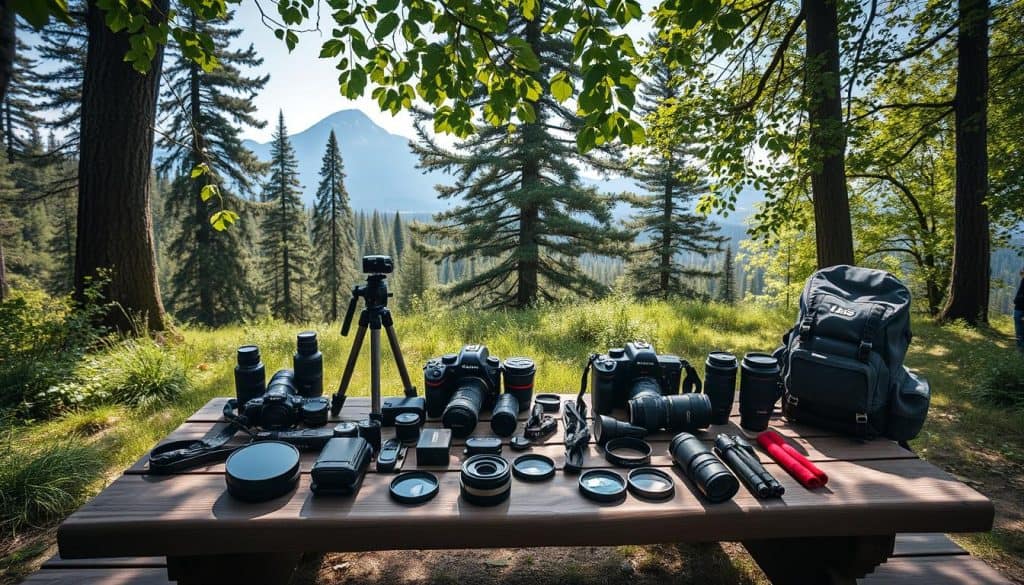
A good tripod is key for steady shots. It’s perfect for long exposure photos, even in dim light. Choose a tripod that’s light but strong, fitting your travel style without weighing you down.
Filters for Better Shots
Filters can make your photos stand out. Polarizing filters cut down glare and brighten colors, making landscapes more vivid. Neutral density filters help with exposure in bright light, creating smooth water effects. The right filters capture the essence of the views you see on your adventures.
Extra Batteries for Longevity
Running out of battery can ruin a moment. Getting extra batteries is smart for outdoor photographers. Shooting a lot, especially in cold, can drain batteries fast. Having extra means you’re always ready to shoot, without interruptions.
| Accessory | Benefits |
|---|---|
| Tripod | Provides stability for sharp images and long exposures. |
| Polarizing Filter | Reduces glare and enhances colors in landscapes. |
| Neutral Density Filter | Manages exposure, allowing for creative effects. |
| Extra Batteries | Prevents running out of power during critical moments. |
Tips for Photographing in National Parks
Photography in national parks is a rewarding journey. To capture their beauty, follow some key tips. Whether you’re after wildlife or stunning views, the right techniques are crucial.
Best Times for Capturing Light
The magic hour, just after sunrise and before sunset, is perfect for photos. This golden light brings out colors and adds depth. With a great camera and the right timing, your shots will be amazing.
Respecting Wildlife and Nature
When taking photos in national parks, keep a safe distance from wildlife. This keeps you safe and the animals calm. Being respectful also helps you capture their natural behavior, especially with a top camera.
Keeping Your Gear Safe
Protecting your camera from nature’s elements is key. Use weather-resistant covers and durable bags. This way, your camera will last through any condition, letting you focus on your photos.
Budget-Friendly Camera Options
Exploring national parks doesn’t have to be expensive. The right camera can help you capture stunning views, unique wildlife, and special moments with loved ones. Here are some budget-friendly camera options to consider.
Best Entry-Level DSLRs
Entry-level DSLRs are great for beginners. Cameras like the Canon EOS Rebel T8i and Nikon D3500 offer top-notch image quality. They’re easy to use and let you swap lenses, perfect for capturing the beauty of national parks.
Affordable Mirrorless Choices
Mirrorless cameras are a lighter, yet powerful choice. The Fujifilm X-T200 and Sony ZV-E10 are known for their modern features and ease of use. They’re compact and lightweight, ideal for long hikes. These cameras ensure your national park adventures are documented beautifully and efficiently.
Final Recommendations for Your National Park Adventure
Getting ready for your national park trip? Choosing the right camera is key to capturing its beauty. Think about your photography style, skill level, and budget. There are many camera options for national park adventures, fitting different skills and tastes.
Choosing the Right Camera for You
Your camera choice should match how you plan to use it. If you want something portable but still high-quality, the Sony RX100 VII is great. For specialized photography, versatile gear with different lenses is a good investment. Knowing the best cameras for national parks helps you choose wisely.
Combining Gear for Different Needs
To capture wildlife and landscapes fully, consider adding essential accessories to your camera. A lightweight tripod, filters, and extra batteries are must-haves. They make sure you’re ready for any situation, letting you enjoy nature more.
Where to Buy Your Gear
For buying your camera and accessories, go to trusted camera stores and online shops. They offer competitive prices and deals, making your shopping easy and rewarding. Having the right gear lets you focus on capturing the beauty of nature.
FAQ
What is the best camera for national parks?
The best camera for national parks depends on your style and needs. The Canon EOS 90D and Sony A7 III are top picks. They have impressive features for outdoor photography.
Are mirrorless cameras suitable for wildlife photography?
Yes, mirrorless cameras like the Fujifilm X-T4 and Sony A7 III are great for wildlife. They have high image quality and fast autofocus. Plus, they’re light, perfect for nature lovers on the move.
What key features should I look for in a camera for national park adventures?
Look for a camera with a good sensor size and resolution for quality images. It should also be portable and weather-resistant. These features are key for outdoor adventures.
Can I use compact cameras for capturing landscapes in national parks?
Absolutely! Compact cameras like the Sony RX100 VII are perfect for landscapes. They have powerful zooms and high image quality. They’re great for convenience and quality on your travels.
What accessories should I bring to enhance my photography in the national parks?
Bring a sturdy tripod for stability, filters for better shots in different lights, and extra batteries. These accessories will help keep your camera going all day.
What are the best times for photographing national parks?
The golden hours after sunrise and before sunset are best. They offer the best light for landscapes and wildlife. Plan your shoot for these times for the best results.
What budget-friendly camera options are available for beginners?
Beginners should look at entry-level DSLRs like the Canon EOS Rebel T8i or Nikon D3500. Also, consider the Fujifilm X-T200, an affordable mirrorless option. All offer great performance without costing too much.