
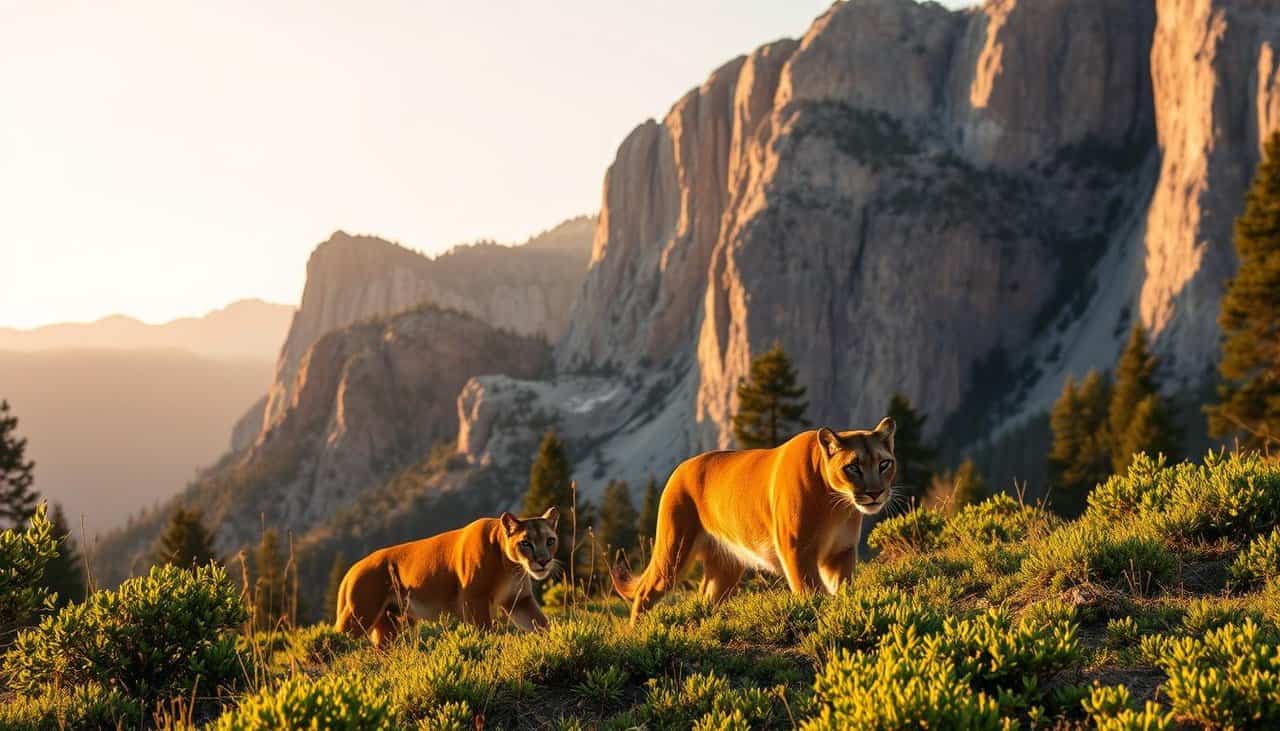
Yosemite National Park is home to a diverse range of wildlife, including the elusive mountain lion. These majestic creatures, also known as cougars, pumas, or panthers, roam the park’s mountains and valleys, playing a vital role in maintaining the balance of the ecosystem.
As a visitor to Yosemite, you might be wondering if you’ll encounter these magnificent animals during your stay. The answer is yes, mountain lions are present in Yosemite, although they are shy and solitary, making sightings relatively rare.
Understanding more about these incredible animals can enhance your appreciation for the park’s natural beauty and help ensure a safe and enjoyable visit.
Key Takeaways
- Mountain lions are native to Yosemite and play a crucial role in the park’s ecosystem.
- These animals are generally shy and avoid human contact.
- Visitors can minimize the risk of encounters by being aware of their surroundings.
- Yosemite’s mountain lion population is part of a larger regional presence.
- Safety guidelines are available for visitors in case of a mountain lion encounter.
Mountain Lion Presence in Yosemite National Park
Mountain lions are known to inhabit Yosemite National Park, and their presence is a significant aspect of the park’s ecosystem. As apex predators, they play a crucial role in maintaining the balance of the park’s natural landscape.
Confirmation of Mountain Lions in the Park
There have been confirmed sightings of mountain lions throughout Yosemite National Park’s various ecosystems. These sightings often document a mountain lion on the prowl, sometimes chasing, killing, or eating smaller animals like raccoons or coyotes, even in developed areas. This confirms that Yosemite National Park provides a suitable habitat for these majestic creatures.
Historical Context and Protection Status
Historically, from 1907-1963, mountain lions were viewed by the State of California as a “bountied predator,” with monetary incentives offered for every kill. Later, their status changed to “big game,” making them available for trophy hunting. However, in 1990, Proposition 117 was passed, banning almost all killings of mountain lions in California. Within Yosemite National Park, these animals receive complete protection as part of the park’s mission to preserve natural wildlife.
Physical Characteristics and Behavior
When exploring Yosemite, understanding the physical characteristics and behavior of mountain lions can enhance your appreciation of these majestic creatures. As a visitor, being aware of these aspects can also contribute to a safer and more enjoyable experience.
Size and Appearance
Mountain lions are impressive physical specimens. Adult males can reach more than 8 feet long, from nose to the end of their tail, while females typically measure around 7 feet long. Males generally weigh between 130-150 pounds, whereas females are smaller, weighing between 65-90 pounds. Their appearance is characterized by a tawny, reddish-brown coat with black-tipped ears and tail, although some individuals may display a grayish-brown “gray phase” coloration. 
These physical attributes make them powerful predators in Yosemite’s ecosystem. Unlike other big cats, mountain lions cannot roar but can emit a penetrating scream, particularly during mating season.
Hunting Patterns and Diet
Mountain lions are stalk-and-ambush predators, relying on stealth rather than speed for extended chases. They often creep within a short distance of deer before launching a quick, powerful attack. Deer constitute their primary food source in Yosemite, with estimates suggesting each lion consumes approximately one deer per week. After a successful kill, a mountain lion may feed on the carcass multiple times, sometimes consuming only portions of the deer before moving on and potentially returning later.
Their hunting behavior typically peaks during dawn and dusk hours, coinciding with the times when their primary prey, mule deer, are most active. While deer are their preferred prey, mountain lions occasionally hunt smaller animals like raccoons, coyotes, and ground squirrels when necessary.
Mountain Lion Population and Distribution
Understanding the population and distribution of mountain lions in Yosemite National Park is crucial for both conservation efforts and visitor safety. The park’s vast wilderness areas provide an ideal habitat for these majestic creatures.
Population Estimates
A 2003 scientific study provided valuable insights into the mountain lion population in Yosemite. By attaching radio-collared transmitters to some of the animals, researchers were able to track their movements and estimate their numbers. The study identified 18 known individuals within the study area, which extended beyond the park’s boundaries. Based on this research, scientists estimated a density of approximately one mountain lion per 25 square miles. With Yosemite National Park covering approximately 1,169 square miles, this estimate suggests a potential population of around 47 mountain lions within the park’s boundaries.
| Category | Estimate | Description |
|---|---|---|
| Study Area | 18 individuals | Known mountain lions in the study area beyond park boundaries |
| Density Estimate | 1 per 25 square miles | Estimated density of mountain lions |
| Park Area | 1,169 square miles | Total area of Yosemite National Park |
| Potential Population | Around 47 | Estimated number of mountain lions within the park |
Habitat and Range
Mountain lions in Yosemite primarily inhabit areas where their main prey, mule deer, are found. This includes the Canadian, Transition, and Upper Sonoran zones of the park. These predators demonstrate seasonal migration patterns, often shifting their ranges to follow the seasonal movements of deer populations between higher and lower elevations. If you’re interested in learning more about wildlife in national parks, you can visit best national parks for wildlife for more information.
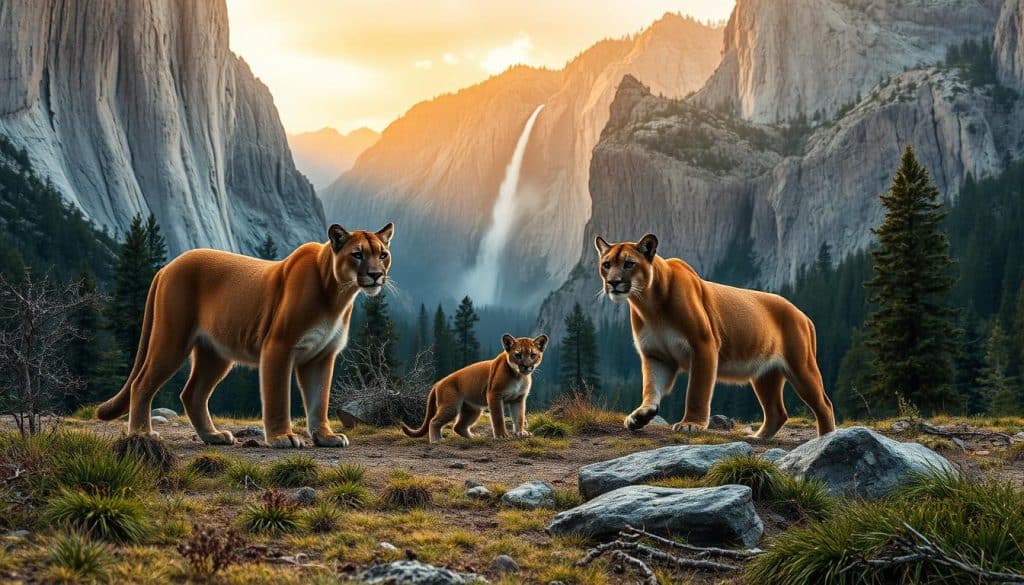
The study revealed that mountain lions occasionally pass through developed areas within the park, including Yosemite Valley, but typically don’t linger in these human-occupied spaces. Researchers noted an unexplained periodic use of Yosemite Valley by mountain lions, with intensity varying at different times, suggesting complex habitat utilization patterns. For those planning to visit Yosemite in different seasons, understanding mountain lion behavior can be helpful, similar to how it is in other national parks during winter, as discussed in best national parks to visit in.
Staying Safe Around Mountain Lions in Yosemite
As you explore the vast landscapes of Yosemite, knowing how to react during a mountain lion encounter can make all the difference. While attacks on humans are extremely rare, with no documented cases of aggressive behavior toward visitors according to a 2003 study, being prepared is key.
Understanding mountain lion behavior is essential; these animals are typically shy and prefer to avoid human contact. If you encounter a lion, remain calm and do not run, as this may trigger its chase instinct. Instead, make yourself appear larger by raising your arms or opening your jacket wide.
To further minimize the risk of an encounter, it’s crucial to follow park guidelines: avoid feeding any wildlife, including deer, raccoons, and coyotes, as this can attract mountain lions to developed areas. Be particularly vigilant during dawn and dusk when mountain lions are most active.
When hiking, especially in remote areas, travel in groups and keep children close. If a lion approaches, become more aggressive – shout loudly, throw sticks or rocks, and prepare to fight back if necessary. By taking these precautions and respecting wildlife, you can enjoy Yosemite’s natural beauty while staying safe.
FAQ
What is the estimated population of mountain lions within Yosemite National Park?
The population is estimated to be around 40 to 60 individuals, although exact numbers can be difficult to determine due to the elusive nature of these animals and the vast area they inhabit.
What do mule deer have to do with mountain lions in Yosemite?
Mule deer are a primary food source for mountain lions in Yosemite, and the deer population plays a significant role in sustaining the lion population.
How large is the Yosemite National Park area that mountain lions inhabit?
Yosemite National Park covers over 747,956 square miles (or 1,193 square kilometers) of wilderness, providing a vast habitat for mountain lions and other wildlife, with Yosemite Valley being just one part of their potential range.
At what feet elevation can mountain lions be found within the park?
Mountain lions can be found at various elevations within the park, from the valley floor up to the higher mountainous regions, indicating their adaptability to different habitats.
How can visitors to Yosemite minimize encounters with mountain lions?
Visitors can minimize encounters by being aware of their surroundings, making noise while hiking, keeping children close, and not leaving pet food or trash outside, as these can attract lions and other wildlife.
What should you do if you encounter a lion while hiking in Yosemite?
If you encounter a lion, maintain eye contact, do not run, and try to appear larger; slowly back away and give the animal a clear path to leave, as this can help prevent an attack.