

Did you know that Wrangell-St. Elias National Park is larger than the entire country of Switzerland? Spanning over 13 million acres, this park is the largest in the United States. It’s a place where rugged mountains, expansive glaciers, and rich history come together to create an unforgettable adventure.
From the towering peaks of Mount St. Elias to the icy expanse of its glaciers, this park offers a diverse range of environments. Whether you’re a seasoned hiker or a curious traveler, there’s something for everyone. The park’s history is just as fascinating, with the Kennecott mining town offering a glimpse into its copper mining legacy.
Planning a trip to this vast wilderness can be overwhelming, but don’t worry. This guide will walk you through everything you need to know. From the best times to visit to the must-see trails, we’ve got you covered. Get ready to explore one of the most breathtaking places on Earth.
Key Takeaways
- Discover the largest national park in the United States, spanning over 13 million acres.
- Explore diverse environments, from rugged mountains to expansive glaciers.
- Learn about the park’s rich history, including the Kennecott mining town.
- Get tips on the best times to visit and must-see trails.
- Prepare for an unforgettable adventure in this breathtaking wilderness.
Welcome to America’s Largest National Park
Step into a wilderness so vast it feels like another world. Spanning over 13.2 million acres, this park is larger than Vermont and New Hampshire combined. It’s a place where nature’s grandeur stretches beyond the horizon, offering endless opportunities for exploration and discovery.
Overview of the Vast Wilderness
This park is a treasure trove of natural wonders. From icy glaciers to rugged mountains, the landscapes are as diverse as they are breathtaking. Over 33% of the area is covered in glacial ice, creating a stunning contrast with the lush valleys and winding rivers.
Visitors can explore five distinct areas, each offering unique experiences. Whether you’re hiking through backcountry trails or marveling at the towering peaks, there’s something for everyone. The park’s remote nature ensures that you’ll feel truly immersed in the wild.
Key Facts and Figures
Here’s a quick look at some essential details about this incredible destination:
| Statistic | Details |
|---|---|
| Total Area | 13.2 million acres |
| Established as a Park | 1980 |
| Visitor Numbers (2018) | 79,450 |
| Glacial Coverage | 33% |
| Highest Peak | Mount St. Elias (18,008 feet) |
This park isn’t just a destination; it’s an experience. Its sheer size and diverse landscapes make it a must-visit for anyone seeking adventure. Whether you’re a seasoned explorer or a first-time visitor, you’ll find something to marvel at in this American treasure.
Discover the Unique History and Heritage
Journey through the rich history and heritage of Alaska’s vast wilderness. This region is not just a natural wonder but also a treasure trove of human stories. From the bustling days of copper mining to the quiet preservation of its landmarks, every corner has a tale to tell.
The Legacy of Kennecott and Copper Mining
In the early 1900s, the Kennecott mining town became the heart of Alaska’s copper industry. From 1903 to 1938, it produced over 1 billion pounds of ore, valued at up to $300 million. The town’s legacy is a testament to human ingenuity and perseverance.
Today, Kennecott stands as a ghost town, offering a glimpse into its vibrant past. The old mines, processing plants, and railway tracks tell stories of hard work and ambition. It’s a must-see for anyone interested in industrial history.
Historical Landmarks and Preservation
Efforts to preserve this history are ongoing. Kennecott was designated a National Historic Landmark in 1986, ensuring its stories are not forgotten. Visitors can explore restored buildings and learn about the lives of miners and their families.
Here’s a quick look at key historical sites:
| Site | Significance |
|---|---|
| Kennecott Mines | Center of copper production from 1911 to 1938 |
| McCarthy Town | Support hub for the mining operations |
| Nabesna Road | Built in the 1930s to transport gold ore |
These landmarks are more than just relics; they’re windows into a bygone era. Whether you’re on a guided tour or exploring on your own, you’ll feel connected to the past.
Understanding the Geography and Geology
Glaciers and mountains dominate this landscape, sculpted by powerful geological processes. Over millions of years, tectonic forces and glaciation have shaped the dramatic terrain you see today. This region is a testament to nature’s ability to create awe-inspiring wonders.
Glacial Features and Mountain Ranges
The park is home to some of the largest glaciers in North America. The Malaspina Glacier, nearly 40 miles across, is the continent’s largest piedmont glacier. The Hubbard Glacier stretches over 76 miles, making it Alaska’s longest tidewater glacier. These icy giants are constantly moving, carving valleys and shaping the land.
The Saint Elias Mountains, formed by the collision of tectonic plates, are a defining feature of the area. Mount St. Elias, the second-highest peak in the U.S., stands at 18,008 feet. Volcanic activity also plays a role, with Mount Wrangell being the only active volcano in the region.
Here’s how geological processes have shaped this unique landscape:
- Tectonic Uplift: The collision of the Pacific and North American plates created the towering mountain ranges.
- Glaciation: Massive icefields and glaciers have carved valleys and shaped the terrain over thousands of years.
- Volcanic Activity: Mount Wrangell’s eruptions have added to the region’s geological diversity.
Exploring this area is like stepping into a natural laboratory. Every day brings new discoveries, from the vast icefields to the rugged peaks. Whether you’re marveling at the Nabesna Glacier or learning about the region’s copper mining history, the geology here tells a fascinating story.
How to Access Wrangell-St. Elias National Park
Getting to this expansive wilderness is an adventure in itself. Whether you choose to drive or fly, each option offers its own unique experience. Planning ahead ensures you’ll make the most of your journey.
Driving Versus Flying: Your Options
Driving from Anchorage takes about five hours, offering a scenic route through Alaska’s stunning landscapes. This is a great choice if you enjoy road trips and want to take in the views at your own pace.
Flying is another popular option. Air taxi services from Chitina provide quick access to the park, especially if you’re short on time. These flights also offer breathtaking aerial views of the vast wilderness.
Navigating the McCarthy Road
The McCarthy Road is a 60-mile gravel route that leads directly into the heart of the park. It’s an adventurous drive, but be prepared for rough conditions. High-clearance vehicles are recommended, and it’s wise to check road conditions before you go.
Keep in mind that most rental car companies prohibit driving on this road. If you’re up for the challenge, the journey is worth it. You’ll be rewarded with stunning scenery and a true sense of exploration.
For those seeking a more comprehensive view of the park, consider an air tour. These flights provide unparalleled perspectives of the rugged terrain, including the towering peaks of Mount Elia and the expansive glaciers below.
Top Attractions and Must-See Sights
Prepare to be amazed by the breathtaking sights this vast wilderness has to offer. From towering peaks to historic sites, every corner of this destination is packed with unforgettable experiences. Whether you’re planning a leisurely trip or an action-packed adventure, there’s something for everyone.
One of the highlights is the Kennecott ghost town. Once a bustling copper mining hub, it now stands as a fascinating historical landmark. Explore the old mines and processing plants to get a glimpse of its vibrant past. Guided tours offer deeper insights into the lives of the miners and their families.
For nature enthusiasts, the Bonanza Mine Trail is a must. This challenging eight-mile hike rewards you with panoramic views of the surrounding mountains and valleys. If you prefer something less strenuous, the Root Glacier Trail is a great alternative. Its 2.5-mile round trip leads you to the mouth of a stunning glacier.
Scenic flights are another unforgettable way to experience this vast wilderness. From the air, you’ll witness the park’s expansive glaciers and rugged peaks. It’s a trip that offers a unique perspective on the landscape’s grandeur.
Don’t miss the McCarthy Road, a 60-mile gravel route that takes you deep into the heart of the park. While the drive can be rough, the scenery along the way is worth every bump. High-clearance vehicles are recommended for this adventurous journey.
Whether you’re exploring historic sites, hiking scenic trails, or taking in the views from above, every activity adds to the richness of your visit. Plan your itinerary to include these top attractions for a truly comprehensive experience.
Essential Visitor Centers and Information Points
Start your adventure by visiting the essential hubs that make exploring this vast wilderness easier. These centers are your go-to spots for maps, safety tips, and cultural exhibits. They ensure you’re well-prepared for the journey ahead.
One of the main hubs is the Copper Center Visitor Center. Located near the Chitina River, it’s a great place to gather resources and learn about the area. Rangers here can provide up-to-date information on trail conditions and weather.
Another key spot is the McCarthy/Kennicott Ranger Station. This station offers guided tours and detailed literature about the park’s history and trails. It’s a must-visit for anyone heading into the backcountry.
In Chitina, the ranger station is another valuable resource. Here, you can get real-time updates on road conditions and wildlife activity. These centers are designed to enhance your visit and ensure you have all the support you need.
Whether you’re planning a day hike or a multi-day expedition, these information points are invaluable. They provide local insights and practical advice to help you navigate the area confidently. Make them your first stop to maximize your experience.
Unforgettable Outdoor Adventures
From rugged trails to soaring skies, this destination offers endless ways to connect with nature. Whether you’re hiking through pristine wilderness or taking in breathtaking views from above, every moment here is an adventure waiting to happen.
Hiking, Camping, and Backpacking
Lace up your boots and hit the trails. The Root Glacier Trail is a popular choice, offering a 2-mile hike to the glacier’s edge. For a more challenging trek, the Bonanza Mine Trail spans 8 miles and rewards you with panoramic views of the surrounding peaks.
Camping here is an experience like no other. Backcountry sites let you immerse yourself in the wild, with starry skies and the sounds of nature as your companions. If you prefer a more structured stay, designated campgrounds near Kennecott provide a balance of comfort and adventure.
Backpacking enthusiasts will find plenty of routes to explore. From multi-day expeditions to shorter loops, the trails here cater to all skill levels. Just remember to pack essentials like sturdy gear, extra layers, and plenty of water.
Scenic Flights Over Glaciers and Peaks
For a bird’s-eye view of this vast wilderness, take to the skies. Scenic flights offer unparalleled perspectives of the mountain ranges and sprawling glaciers below. Companies like Copper Valley Air provide tours that last 50 to 70 minutes, giving you a chance to see landmarks like the Hubbard Glacier and Mount Wrangell.
These flights are perfect for those short on time or looking for a unique way to experience the area. As one pilot put it,
“Flying over this landscape is like seeing the Earth in its purest form.”
Whether you’re hiking, camping, or soaring above the peaks, this destination invites you to embrace the spirit of adventure. Every activity here is a chance to create memories that will last a lifetime.
Detailed Itinerary for a Two-Day Adventure
Make the most of your time with this carefully planned two-day adventure. Whether you’re exploring historic sites or hiking scenic trails, this itinerary ensures a balanced and fulfilling experience.
Day 1: Arrival and Historical Exploration
Start your journey by driving or flying into McCarthy. Check in at your lodge, such as the Kennicott Glacier Lodge, and settle in. Begin your exploration with a guided tour of the Kennecott Mill. This 2-hour tour offers insights into the area’s copper mining history.
After the tour, take a leisurely walk through the ghost town. Visit the old mines and processing plants to get a glimpse of its vibrant past. Wrap up the day with dinner at a local lodge and enjoy the serene surroundings.
Day 2: Hiking and Scenic Flights
Kick off your second day with a hike on the Root Glacier Trail. This 2-mile round trip takes about 2 hours and leads you to the glacier’s edge. Don’t forget to bring sturdy shoes and crampons for safety.
In the afternoon, take a scenic flight over the area. Companies like Copper Valley Air offer 50 to 70-minute tours, showcasing breathtaking views of the Hubbard Glacier and Mount Wrangell. These flights provide a unique perspective of the vast wilderness.
End your adventure with a shuttle ride back to McCarthy. Reflect on the unforgettable experiences as you prepare for your journey home.
| Activity | Duration | Tips |
|---|---|---|
| Kennecott Mill Tour | 2 hours | Wear comfortable shoes and bring a camera. |
| Root Glacier Hike | 2 hours | Pack crampons and extra layers. |
| Scenic Flight | 50-70 minutes | Book in advance for the best views. |
This two-day plan ensures you experience the best of this vast wilderness. From historical tours to outdoor adventures, every moment is designed to create lasting memories.
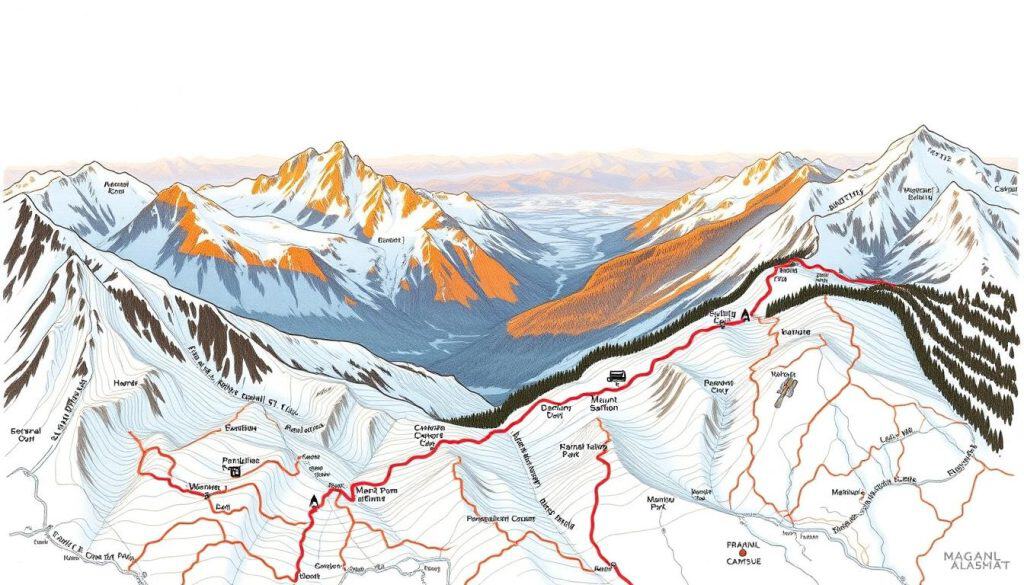
Exploring Scenic Trails and Backcountry Routes
Discover the untamed beauty of Alaska’s most scenic trails. From easy walks to challenging backcountry adventures, these routes offer a chance to immerse yourself in the wilderness. Whether you’re near the historic town of Kennicott or exploring the rugged landscapes along McCarthy Road, every trail tells a story.
One of the highlights is the Root Glacier Trail. This 4-mile round trip takes you to the edge of a stunning glacier. For a more challenging hike, the Bonanza Mine Trail spans 8 miles and rewards you with panoramic views of the surrounding peaks. These trails are designed to reveal secret vistas and hidden gems.
If you’re up for a backcountry adventure, consider the Dixie Pass route. This 10-mile trail offers a mix of alpine meadows and rugged terrain. Another option is the Nugget Creek Trail, which extends 15 miles to a remote cabin near the Kuskulana Glacier. These routes are perfect for those seeking solitude and untouched landscapes.
Here’s a quick guide to some of the best trails:
| Trail | Distance | Difficulty |
|---|---|---|
| Root Glacier Trail | 4 miles | Moderate |
| Bonanza Mine Trail | 8 miles | Challenging |
| Dixie Pass route | 10 miles | Advanced |
| Nugget Creek Trail | 15 miles | Advanced |
Safety is key when exploring these trails. Always check weather conditions and carry essential gear like sturdy boots, extra layers, and plenty of water. Wildlife encounters are possible, so stay alert and follow Leave No Trace principles. The best time to hike is from mid-May to mid-September, when the weather is mild and the trails are accessible.
Whether you’re a seasoned hiker or a first-time visitor, these trails offer a chance to connect with Alaska’s dramatic landscapes. Venture off the beaten path and create memories that will last a lifetime.
Wildlife Watching and Natural Encounters
Immerse yourself in the wild beauty of Alaska’s untouched landscapes. Across millions of acres, you’ll find diverse wildlife thriving in their natural habitats. From moose grazing in lush valleys to bears roaming dense forests, every moment here is a chance to connect with nature.
One of the best ways to experience this is along the McCarthy Road. This 60-mile gravel route offers opportunities to spot moose, bears, and even bison. Keep your camera ready, as wildlife sightings are common, especially in the early morning or late evening.
For a more structured experience, visit the Slana Ranger Station or the Chitina Ranger Station. These centers provide up-to-date information on wildlife activity and the best viewing spots. Rangers can also guide you on how to observe animals safely and responsibly.
Here’s a quick guide to some of the wildlife you might encounter:
| Species | Habitat | Best Viewing Time |
|---|---|---|
| Moose | Low-lying areas with shrubs | Early morning |
| Brown Bears | Forests and riverbanks | Late evening |
| Dall Sheep | Mountain slopes | Midday |
| Bison | Copper and Chitina River valleys | Year-round |
Respecting nature is key to a memorable experience. Always maintain a safe distance from animals and avoid feeding them. Follow Leave No Trace principles to preserve the pristine ecosystems for future generations.
For more insights into Alaska’s natural wonders, check out this guide on Alaska’s national parks. It’s a great resource for planning your next adventure in this breathtaking wilderness.
Volcanic Activity and Glacial Formations Explored
Witness the powerful interplay of fire and ice in this unique landscape. Here, volcanic eruptions and glacial movements have shaped the terrain over millions of years. These forces create dramatic landforms that are both awe-inspiring and educational.
Mount Wrangell, one of the largest active volcanoes in the world, dominates the skyline. Its eruptions have contributed to the region’s geological diversity. Nearby, the Malaspina Glacier stretches nearly 40 miles, showcasing the raw power of ice.
The Hubbard Glacier, Alaska’s longest tidewater glacier, is another highlight. Its constant movement carves valleys and shapes the land. These features are a testament to the dynamic processes that continue to shape this wilderness.
Hiking is one of the best ways to explore these natural wonders. Trails like the Root Glacier Trail take you close to the ice, while the Bonanza Mine Trail offers panoramic views of the volcanic peaks. Each step reveals the story of Earth’s geological history.
For a deeper understanding, visit the visitor center. Rangers provide insights into the region’s volcanic activity and glacial formations. They also offer safety tips for exploring these areas responsibly.
Here’s a quick guide to key features:
| Feature | Details |
|---|---|
| Mount Wrangell | Active volcano, 14,163 feet |
| Malaspina Glacier | Largest piedmont glacier in North America |
| Hubbard Glacier | Longest tidewater glacier in Alaska |
Whether you’re hiking or taking a scenic flight, these natural wonders are unforgettable. They remind us of the Earth’s raw power and beauty. Plan your visit to experience this remarkable landscape firsthand.
Tips for a Safe and Enjoyable Outdoor Experience
Exploring Alaska’s rugged wilderness requires careful preparation to ensure a safe and enjoyable experience. Whether you’re hiking remote trails or driving on gravel roads, being well-prepared is key to making the most of your adventure.
Start by checking the weather forecast before you head out. Conditions can change quickly, so pack layers and waterproof gear. A good rule of thumb is to prepare for temperatures 10-15 degrees colder than expected. This ensures you’re ready for sudden shifts in weather.
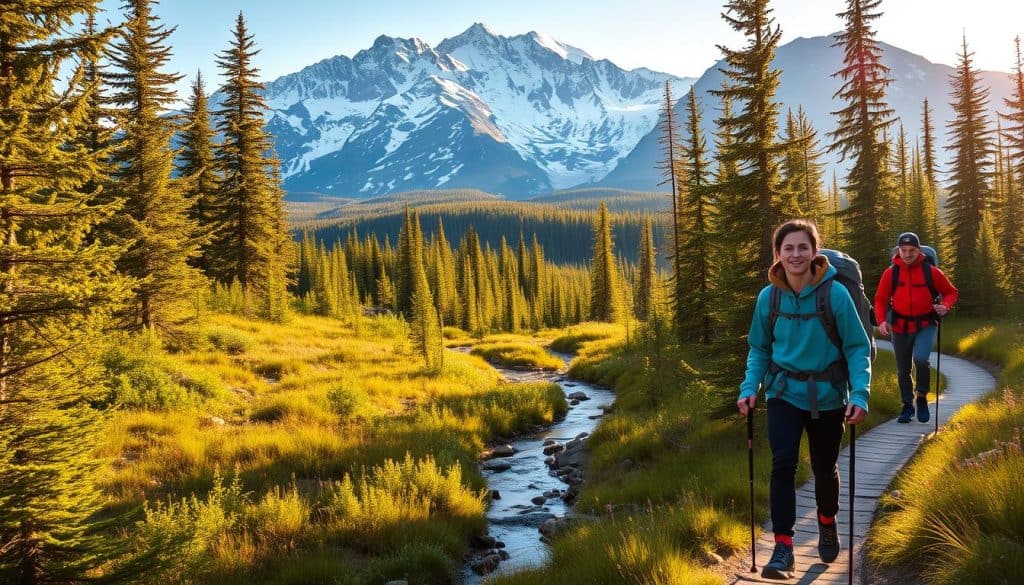
If you’re driving, make sure your car is equipped for rough terrain. High-clearance vehicles are recommended for gravel roads like the McCarthy Road. Carry a spare tire, jumper cables, and emergency supplies in case of breakdowns. Always check road conditions before you go.
For backcountry camping, follow these guidelines:
- Use bear-resistant food containers, available for free at visitor centers.
- Store food and scented items at least 100 feet from your sleeping area.
- Pack a first-aid kit, including supplies for treating blisters and minor injuries.
These steps help protect both you and the wildlife.
When hiking, stay on marked trails to avoid getting lost. Carry a map, compass, or GPS device, and let someone know your plans. Trails like the Nugget Creek route can be challenging, so plan for the distance and elevation gain. For example, the Dixie Pass trail is 8 to 10 miles one way and may require multiple creek crossings.
Wildlife encounters are possible, so stay alert. Keep a safe distance from animals like moose and bears. If you see a bear, speak calmly and back away slowly. Avoid sudden movements or running, as this can trigger a chase.
Finally, respect the land by following Leave No Trace principles. Pack out all trash, minimize campfire impact, and avoid disturbing plants and wildlife. This ensures the wilderness remains pristine for future visitors.
By following these tips, you’ll be ready to explore safely and responsibly. Preparation is the key to a memorable and enjoyable outdoor experience.
Maximizing Your Visit for an Immersive Journey
Make your journey unforgettable by planning ahead and immersing yourself in the wonders of this vast wilderness. Whether you’re exploring the towering peaks or the serene forests, a well-organized trip ensures you make the most of every moment.
Start by deciding between guided tours and self-guided explorations. Guided tours, like those to the kennicott glacier, offer expert insights and access to off-the-beaten-path sites. Self-guided hikes, on the other hand, let you set your own pace and discover hidden gems at your leisure.
Plan your schedule carefully to balance adventure and relaxation. Allocate time for must-see attractions like the glacier and forest trails, but also leave room for spontaneous discoveries. Booking equipment rentals in advance ensures you’re prepared for activities like hiking or glacier walks.
Stay connected with local resources like visitor centers and ranger-led programs. These hubs provide up-to-date information on trail conditions, weather, and wildlife activity. They’re invaluable for ensuring a safe and enriching experience.
Set personal goals for your trip. Whether it’s reaching a specific peak or simply soaking in the tranquility of the forests, having clear objectives enhances your connection with the landscape. Tailor your itinerary to include both high-energy adventures and moments of quiet reflection.
By following these strategies, you’ll create a journey that’s as rewarding as it is memorable. Every step you take deepens your bond with the natural wonders of this incredible wilderness.
Wrangell-St. Elias National Park: A How-To Adventure Guide
Planning your adventure in this vast wilderness doesn’t have to be overwhelming—here’s your step-by-step guide to making it seamless. From booking tours to securing lodging, we’ve got you covered with actionable advice to ensure a smooth and enjoyable experience.
Start by deciding on your activities. Guided tours, like glacier hikes or packrafting, are excellent for beginners and cost between $115 to $240 per person. For a more immersive experience, consider small group backpacking trips, which range from $580 to $4,450 depending on duration. These tours often include expert guides trained in backcountry safety and navigation, ensuring you’re in good hands.
When it comes to lodging, the Kennicott Glacier Lodge is a popular choice. It offers a comfortable stay with stunning views of the surrounding peaks. If you prefer a more rustic experience, there are several campgrounds available, though they require advance booking during peak season (May to September).
Transportation is another key factor. Driving from Anchorage takes about five hours, but be prepared for rough roads like the McCarthy Road. High-clearance vehicles are recommended. Alternatively, air taxis from Chitina provide quick access and breathtaking aerial views of Mount St. Elias and the expansive glaciers below.
Here’s a quick cost breakdown for popular activities:
| Activity | Cost | Duration |
|---|---|---|
| Glacier Hike | $115+ | 4-9 hours |
| Packrafting | $240+ | 4-8 hours |
| Backpacking | $580+ | 2-10 days |
To manage your budget, book activities and lodging well in advance. Many tours and campgrounds fill up quickly, especially during the summer months. Also, pack smart—layers, waterproof gear, and sturdy footwear are essential for this rugged terrain.
For wildlife enthusiasts, the spot along McCarthy Road is a great place to see moose, bears, and bison. Early mornings and late evenings are the best times for sightings. Remember to maintain a safe distance and follow Leave No Trace principles to protect the environment.
Finally, don’t forget to check the weather and road conditions before you go. This area is known for its unpredictable weather, so flexibility is key. With proper planning, your adventure in this breathtaking wilderness will be unforgettable.
Off-the-Beaten-Path Experiences and Hidden Gems
Uncover the hidden treasures of Alaska’s wilderness, where adventure meets solitude. Away from the crowded trails, you’ll find secret spots that offer a fresh perspective on this vast landscape. These lesser-known attractions provide a quieter, more personal connection with the area’s rich history and natural beauty.
Ghost Town Tours and Secret Trails
Step back in time with a visit to the ghost town of Kennicott. Once a bustling copper mining hub, it now stands as a fascinating historical landmark. Guided tours take you through the old mines and processing plants, offering insights into the lives of the miners and their families. It’s a journey into the past that’s both educational and awe-inspiring.
For those who love to explore, the secret trails along Nabesna Road are a must. These hidden paths wind through untouched landscapes, offering breathtaking views and a sense of solitude. Whether you’re hiking or driving, these trails provide a unique way to experience the world of Alaska’s wilderness.
| Trail | Distance | Difficulty |
|---|---|---|
| Nabesna Road Trail | 10 miles | Moderate |
| Kennicott Ghost Town | 2 miles | Easy |
| Chitina River Trail | 5 miles | Moderate |
To access these remote areas safely, ensure you have the right gear. Sturdy boots, extra layers, and plenty of water are essential. Always check weather conditions and trail updates before you go. These precautions will help you make the most of your adventure.
Exploring these hidden gems offers a truly one-of-a-kind experience. From the ghost town of Kennicott to the secret trails along Nabesna Road, every step brings you closer to the heart of Alaska’s wilderness. So, take the road less traveled and discover the world of hidden treasures waiting for you.
Conclusion
As you prepare for your journey, remember that this vast wilderness offers more than just stunning views—it’s a place where history, adventure, and nature collide. From the historic copper center of Kennecott to the breathtaking trails and glaciers, every corner of this landscape invites exploration. Whether you’re a first-time visitor or a seasoned adventurer, there’s something here for everyone.
Use this guide as your roadmap to plan the perfect trip. Pack wisely, check weather conditions, and don’t forget to explore the hidden gems along the way. The stories of this land are waiting to be discovered, and your adventure is just beginning.
So, lace up your boots, grab your camera, and step into a world of wonder. Share your experiences and questions in the comments—we’d love to hear about your journey. Let this guide inspire you to explore, learn, and create memories that will last a lifetime.
FAQ
What’s the best way to get to Wrangell-St. Elias National Park?
You can drive via the McCarthy Road or fly into McCarthy or Kennecott. Driving offers scenic views, while flying saves time and provides stunning aerial perspectives.
Are there visitor centers in the park?
Yes, the Copper Center Visitor Center is a great starting point. Rangers here can help you plan your trip and provide essential information about trails, weather, and safety.
What are the must-see attractions in the park?
Don’t miss the Kennecott Mines, Root Glacier, and Mount St. Elias. Each offers unique experiences, from historical tours to breathtaking glacier hikes.
Can I camp inside the park?
Absolutely! There are campgrounds near McCarthy and Kennecott, as well as backcountry options for those seeking a more rugged adventure.
What wildlife might I encounter?
You could spot grizzly bears, moose, caribou, and bald eagles. Always keep a safe distance and follow wildlife safety guidelines.
Is the McCarthy Road difficult to drive?
The McCarthy Road is mostly gravel and can be rough. A high-clearance vehicle is recommended, and you should drive cautiously, especially in wet conditions.
Are there guided tours available?
Yes, guided tours are offered for activities like glacier hiking, mine tours, and scenic flights. These are great for learning more about the park’s history and geology.
What’s the best time to visit?
Summer (June to August) is ideal for hiking and exploring. Fall offers fewer crowds and stunning foliage, while winter is perfect for snowshoeing and cross-country skiing.
Are there hiking trails for beginners?
Yes, trails like the Root Glacier Trail and Bonanza Mine Trail cater to various skill levels. Always check trail conditions before heading out.
Can I see glaciers up close?
Absolutely! Kennecott Glacier and Root Glacier are accessible for hiking and guided tours. You can even walk on some glaciers with proper equipment.