
You’re not alone. Many campers have experienced this frustrating phenomenon, leaving them wondering if their tent is truly waterproof.
The issue arises when the surface tension of the water is disrupted by touch, causing it to penetrate the fabric. This isn’t a problem with the tent, but rather a natural physical process.
Understanding the science behind water resistance and how modern tent materials work is key to staying dry while camping.
Key Takeaways
- Camping in the rain can be challenging, especially when water seeps into your tent.
- Touching the inside of your tent can disrupt its waterproofing.
- The science behind tent waterproofing involves surface tension and fabric technology.
- Modern tents are designed to be waterproof, but require proper care.
- Understanding how to maintain your tent’s waterproofing can enhance your camping experience.
The Science Behind Tent Waterproofing
The science behind keeping you dry in the rain is more complex than you might think. As someone who’s spent countless nights under the stars, I’ve come to appreciate the importance of a waterproof tent. But have you ever wondered how modern tents manage to keep water out?
How Modern Tents Keep Water Out
Modern tents utilize sophisticated waterproofing technologies that involve applying special coatings to the fabric that create a barrier against water penetration. These technologies have evolved significantly, allowing campers to stay dry even in the most unexpected downpours. The key lies in the treatment of the fabric and the physical principles that allow water to be repelled by treated surfaces.
For instance, when I was on a camping trip last summer, I was impressed by how my tent withstood a heavy rainstorm without leaking. It was a testament to the advancements in waterproofing technology.
Understanding Hydrostatic Head Ratings
The hydrostatic head is a measure of how much water pressure a fabric can withstand before it starts to leak. Essentially, it’s a column of water that the tent fabric can resist. A higher hydrostatic head rating indicates better waterproofing. Quality camping tents usually have ratings between 2000mm to 5000mm.
| Hydrostatic Head Rating (mm) | Water Resistance Level | Typical Use |
|---|---|---|
| 0-1000 | Low | Light rain or mist |
| 1000-2000 | Moderate | Average rain conditions |
| 2000-5000 | High | Heavy rain or prolonged exposure |
Understanding the hydrostatic head rating helps you make an informed decision when choosing a tent. It’s not just about withstanding rain; it’s about ensuring your camping experience remains enjoyable and dry.
Why Shouldn’t You Touch the Inside of a Tent?
Have you ever wondered why your waterproof tent sometimes leaks when you touch it from the inside? This phenomenon is not just about the quality of your tent, but also about the science behind how water interacts with the tent fabric.
The Surface Tension Phenomenon
The surface tension is a critical factor here. It’s a physical property that creates a “skin” on the water’s surface, holding water droplets together on the outside of your tent. When rainwater hits your tent, it forms droplets that are kept intact by this surface tension.
This natural barrier is what prevents water from penetrating through the microscopic pores in the tent fabric. The surface tension acts as a defence mechanism, keeping the inside of your tent dry as long as it’s not disrupted.
- When rainwater hits your tent, it forms droplets on the outside surface held together by surface tension.
- This surface tension creates a natural barrier that prevents water from penetrating through the fabric.
- The phenomenon is particularly noticeable in areas where the tent fabric is under pressure from rain or where water has pooled.
Breaking the Water Barrier
However, when you touch the inside wall of your tent during rainfall, you inadvertently break this surface tension. Your finger disrupts the water’s natural barrier, allowing it to seep through the fabric. This is why even high-quality, properly waterproofed tents can leak when touched from the inside during rainy conditions.
Understanding this helps you take precautions to keep your tent dry. By minimizing contact with the inside of your tent during rain, you can maintain the integrity of the surface tension and prevent water from seeping in.
Key takeaway: Avoid touching the inside of your tent during rain to preserve the surface tension and keep your tent dry.
Condensation vs. Actual Leaking
It’s easy to misattribute the cause of a wet tent, but distinguishing between condensation and actual leaking is key. I’ve been there, waking up to a soggy sleeping bag and wondering if my tent was defective. But more often than not, the culprit is condensation.
Condensation occurs when warm, humid air inside the tent meets the cooler surface of the tent fabric, causing water vapor to convert back to liquid form. This process is natural and can happen even in dry weather conditions, especially overnight when temperatures drop.
Identifying Condensation
So, how can you tell if the moisture inside your tent is due to condensation or an actual leak? One way is to look for the distribution of water. Condensation tends to be evenly distributed across the tent surfaces, whereas leaks are usually localized around a specific area. You can also check if the moisture appears during or after rainfall; if it occurs even when it’s not raining outside, it’s likely condensation.
| Characteristics | Condensation | Actual Leaking |
|---|---|---|
| Distribution | Evenly distributed across tent surfaces | Localized around a specific area |
| Weather Conditions | Can occur in dry weather | Typically occurs during rainfall |
Common Misconceptions About Tent Leaking
Many campers mistakenly believe their tent is leaking when they experience moisture inside. However, as discussed, this is often condensation. Modern tents are designed to be waterproof, and actual leaking is less common than perceived. The myth that touching the inside of a tent causes it to leak is just that—a myth. In reality, if something touches the outer tent and condensation is present, the water will follow the path of least resistance and drip onto the inner surface or object in contact.
Understanding the difference between condensation and leaking is crucial for addressing moisture issues effectively. By recognizing the signs of condensation and taking steps to minimize it, such as improving ventilation and using breathable fabrics, you can enjoy a drier camping experience.
The Role of Capillary Action in Tent Fabrics
The phenomenon of capillary action is key to understanding why water sometimes seeps into your tent. As we explore this concept, you’ll gain insights into how water molecules move through the fabric of your tent and why certain conditions can lead to wet spots inside.
Capillary action refers to the ability of water to flow through narrow spaces without the need for external forces like gravity. This phenomenon is observable in everyday life, such as when a paper towel absorbs a spill. In the context of tent fabrics, capillary action occurs because the material is not entirely solid; it has microscopic pores that can act as capillaries.
How Water Molecules Move Through Tent Material
When you examine tent fabric under a microscope, you’ll notice that it’s porous. These pores can allow water to pass through, especially when the fabric is subjected to certain conditions like heavy rain or when it’s touched from the inside. The movement of water through these pores is facilitated by capillary action.

Understanding how water molecules move through tent material can help you take preventive measures. For instance, keeping your gear away from the tent walls can reduce the risk of water seepage.
Why Contact Points Create Wet Spots
When you touch the tent wall from the inside, you create a contact point that can establish a capillary pathway for water to follow from the outside to the inside. This is particularly problematic at seams, corners, and places where the tent fabric touches other objects.
| Condition | Effect on Capillary Action |
|---|---|
| Touching tent wall | Increases risk of water seepage |
| Heavy rain | Higher water pressure increases capillary action |
| Proper tent tension | Reduces contact points and thus capillary action |
By understanding capillary action and its impact on tent fabrics, you can take steps to minimize the risk of water entering your tent. This includes maintaining proper tent tension and keeping your gear organized and away from the tent walls.
Factors That Affect Tent Waterproofing
The effectiveness of a tent’s waterproofing depends on several key factors. As someone who’s spent countless nights under the stars, I’ve learned that understanding these factors is crucial for a dry and comfortable camping experience.
Let’s dive into the details. The quality of the tent material plays a significant role in its waterproofing performance. Higher-quality fabrics maintain their water resistance properties for longer periods of time. For instance, a good tent should have a hydrostatic head rating between 3000 to 4000, indicating its ability to withstand various weather conditions.
Tent Material Quality and Construction
The construction techniques used in making a tent are just as important as the material. Seam sealing and reinforcement at stress points significantly impact how well a tent resists water penetration during adverse weather conditions. A well-constructed tent with quality materials can make all the difference in keeping you dry.
As noted by outdoor experts, “The integrity of a tent’s waterproofing is directly related to its material and construction quality.” This emphasizes the importance of investing in a good-quality tent.
“A good tent is like a good friend – it’s there for you when you need it most.”
Weather Conditions and Their Impact
Extreme weather conditions like heavy downpours, driving rain, and high winds can test even the best waterproofing systems. Water can be forced through microscopic openings in the fabric, compromising the tent’s waterproofing.
| Weather Condition | Impact on Tent Waterproofing |
|---|---|
| Heavy Downpours | Water pressure can cause leaks |
| Driving Rain | Rain can be forced through fabric openings |
| High Winds | Stress on tent fabric and seams |
Age and Wear of Tent Fabrics
Over time, the waterproof coatings on tent fabrics break down due to UV exposure, repeated folding and unfolding, and general wear and tear. This degradation can reduce the hydrostatic head rating and make the tent more susceptible to leaking.
Understanding these factors helps campers make informed decisions about tent selection, maintenance, and when it might be time to replace aging camping equipment.
Preventing Water Seepage in Your Tent
To ensure a dry and comfortable camping experience, it’s essential to understand how to prevent water seepage in your tent. One of the primary reasons water seeps into tents is due to accidental contact with the tent walls, which can be mitigated by proper setup and usage techniques.
Proper Tent Setup Techniques
Properly setting up your tent is crucial for preventing water seepage. This includes pitching your tent on slightly elevated ground with good drainage to prevent water from pooling around or under it. Ensuring the tent is tightly secured and using guy lines effectively can also help minimize the risk of water entering the tent.
Key setup tips:
- Choose a site with good drainage.
- Ensure the tent is tightly secured.
- Use guy lines to maintain tent shape and stability.
Creating Adequate Space Inside Your Tent
Creating adequate space inside your tent is vital for preventing accidental contact with the tent walls during rain. When there’s too much gear or too many people inside, it increases the likelihood of touching the walls, which can compromise their waterproof integrity. Consider downsizing your sleeping area or investing in a bigger tent if necessary.
Benefits of adequate space:
- Reduces accidental contact with tent walls.
- Improves overall comfort during camping.
Using Tarps and Rainflies Effectively
Using tarps and rainflies can provide additional protection against rain. By suspending these over your tent, you can decrease the amount of rain that comes into direct contact with your tent, thus reducing the risk of water seepage. Properly securing these additional layers is key to their effectiveness.
| Protection Layer | Function | Benefits |
|---|---|---|
| Tarps | Provides an extra layer of waterproofing | Reduces direct rain contact with the tent |
| Rainflies | Creates an air gap between the rainfly and tent | Reduces condensation inside the tent |
Sealing tent seams with appropriate seam sealers is another critical step in preventing water from entering through stitching holes. Strategic placement of gear inside the tent, keeping items away from walls and creating buffer zones, also helps maintain dry conditions.
Maintaining Your Tent’s Waterproof Properties
Regular maintenance is essential to preserve your tent‘s waterproofing. I’ve learned from experience that a well-maintained tent can be the difference between a dry, comfortable camping trip and a soggy, miserable one. To keep your tent in top condition, you’ll need to clean and dry it properly, apply waterproof treatments as needed, and store it correctly.
Cleaning and Drying Your Tent Properly
Cleaning your tent regularly removes dirt and oils that can damage waterproof coatings. To do this, use a soft-bristled brush or a clean cloth to gently remove any debris. Then, mix a solution of mild soap and warm water, and use it to clean the fabric. Rinse thoroughly with clean water, and allow the tent to air dry completely before storing it.
Applying Waterproof Treatments
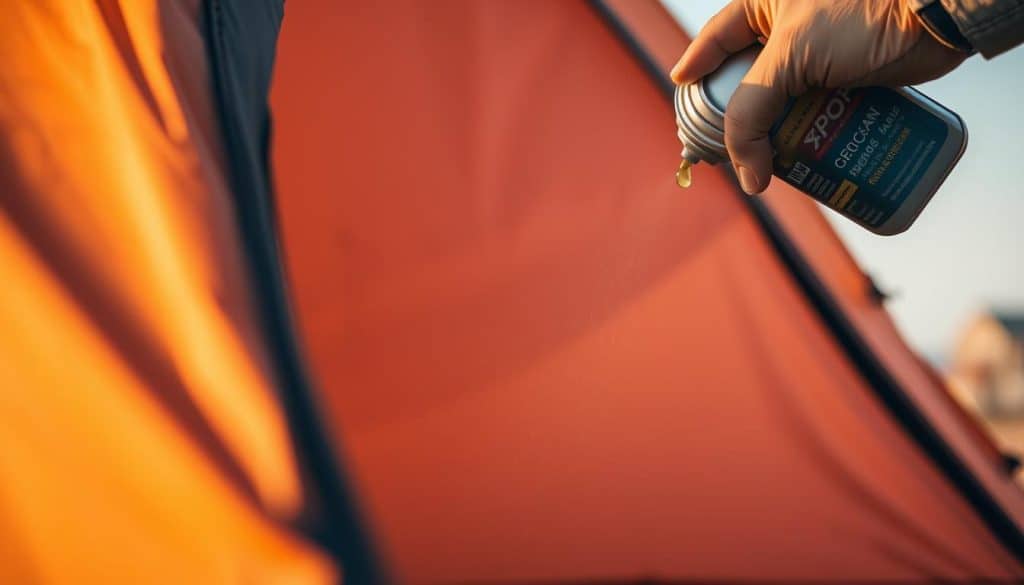
Over time, your tent‘s waterproof coating can wear off, especially at the seams. To restore and enhance water resistance, apply a waterproof treatment to the fabric and seams. There are various products available, including sprays and wash-in treatments. Be sure to follow the manufacturer’s instructions for application and drying time.
Storing Your Tent to Preserve Waterproofing
When storing your tent, make sure it’s completely dry to prevent mold and mildew growth. Store it in a loose, breathable bag or container to prevent creasing and damage to the waterproof coating. Avoid compressing the tent tightly, as this can cause damage to the fabric and compromise its waterproof properties. By storing your tent correctly, you can help extend its lifespan and ensure it remains waterproof for your next camping trip, even in heavy rain.
Solutions for When Your Tent Gets Wet
A wet tent can be a camper’s worst nightmare, but with the right strategies, you can stay dry and comfortable. When you’re out in the rain, and water starts seeping into your tent, it’s essential to act quickly to prevent a minor problem from becoming a major camping disaster.
Emergency Fixes During Camping Trips
During a camping trip, emergency fixes can be a lifesaver. Using duct tape on small tears, repositioning rainflies, or creating temporary drainage channels can help manage water issues until more permanent solutions are possible. For instance, I recall a camping trip where a sudden downpour caused water to seep into our tent. We quickly used duct tape to seal the gaps and repositioned the rainfly to ensure water ran off properly.
As Mark Twain once said, “The reports of my death are greatly exaggerated.” Similarly, the problem of a wet tent can be greatly mitigated with the right emergency fixes.
“It is not the strongest of the species that survives, nor the most intelligent, but the one most adaptable to change.” –
This quote emphasizes the importance of being prepared and adaptable when camping.
Drying Out a Wet Tent and Gear
Properly drying out a wet tent and gear requires strategic approaches. Using absorbent towels, creating airflow, and taking advantage of any breaks in the rain to air out dampened materials can make a big difference. It’s also crucial to prioritize which items to keep dry, such as sleeping bags and clothing, and which can handle some moisture.
| Drying Method | Effectiveness | Time Required |
|---|---|---|
| Using Absorbent Towels | High | Low |
| Creating Airflow | Medium | Medium |
| Airing Out During Breaks in Rain | High | Variable |
By understanding these strategies and applying them, you can minimize the impact of a wet tent and ensure a more enjoyable camping experience. Remember, post-trip care for wet tents, including complete drying before storage, prevents long-term damage and preserves the tent’s waterproof properties for future camping adventures.
Conclusion: Enjoying Dry Camping Experiences
After delving into the world of tent waterproofing, you’re now equipped to tackle the elements. Understanding why you shouldn’t touch the inside of a tent during rainfall is just one aspect of mastering the art of comfortable camping in all weather conditions.
By applying the knowledge of tent waterproofing science, proper setup techniques, and maintenance practices covered in this article, you can significantly improve your camping experiences even during challenging weather. It’s essential to remember that even the best tents require proper care and usage to maintain their waterproof properties – no tent is completely immune to user error or extreme conditions.
The investment in quality tent materials, proper waterproofing treatments, and appropriate camping gear pays dividends in comfort and enjoyment during outdoor adventures. By choosing the right fabric and maintaining your tent’s wall integrity, you’ll be better prepared to face any problem that arises.
Camping should be an enjoyable connection with nature rather than a battle against the elements. With the right knowledge about tent waterproofing and proper techniques, you can ensure your camping experiences remain positive regardless of the weather forecast. So, the next time you’re faced with the prospect of camping in wet conditions, you’ll be confident in your ability to stay dry and comfortable.
By following these guidelines and being mindful of the factors that affect your tent’s waterproofing, such as water exposure and fabric quality, you’ll be well on your way to enjoying many dry camping experiences. Happy camping!
FAQ
What happens when I touch the fabric of my tent?
Touching the fabric can compromise its waterproof layer, creating a potential entry point for water. This is because your skin’s natural oils and the pressure from your touch can disrupt the fabric’s surface tension.
How does hydrostatic head rating relate to my tent’s waterproofing?
Hydrostatic head rating measures a fabric’s ability to withstand water pressure. A higher rating indicates better waterproofing. Modern tents often have a high hydrostatic head rating, but touching the fabric can still compromise its effectiveness.
What’s the difference between condensation and actual leaking in my tent?
Condensation occurs when moisture in the air condenses on the tent’s surface, while actual leaking is when water enters the tent from outside. To identify condensation, check if the water droplets are on the inside or outside of the tent.
How can I prevent water from seeping into my tent?
Proper tent setup, creating adequate space inside, and using tarps and rainflies effectively can help prevent water seepage. Make sure to follow the manufacturer’s instructions for setup and use.
What factors affect my tent’s waterproofing over time?
The quality and construction of the tent material, weather conditions, and age and wear of the fabrics all impact waterproofing. Regular maintenance, such as cleaning and applying waterproof treatments, can help extend the life of your tent’s waterproofing.
How do I dry out a wet tent and gear?
To dry out a wet tent, set it up in a well-ventilated area and allow it to air dry. You can also use towels to gently pat the fabric dry. For gear, remove any dirt or debris and let it air dry, or use a clean towel to dry it.
Can I fix a leaking tent on a camping trip?
Yes, there are emergency fixes you can make during a camping trip. Use a waterproof sealant or tape to repair small tears or holes, and consider using a tarp or rainfly to provide extra protection.
How often should I clean and maintain my tent’s waterproof properties?
Regular cleaning and maintenance can help preserve your tent’s waterproofing. Clean your tent after each use, and apply waterproof treatments as needed. Store your tent in a dry, well-ventilated area to prevent damage.