
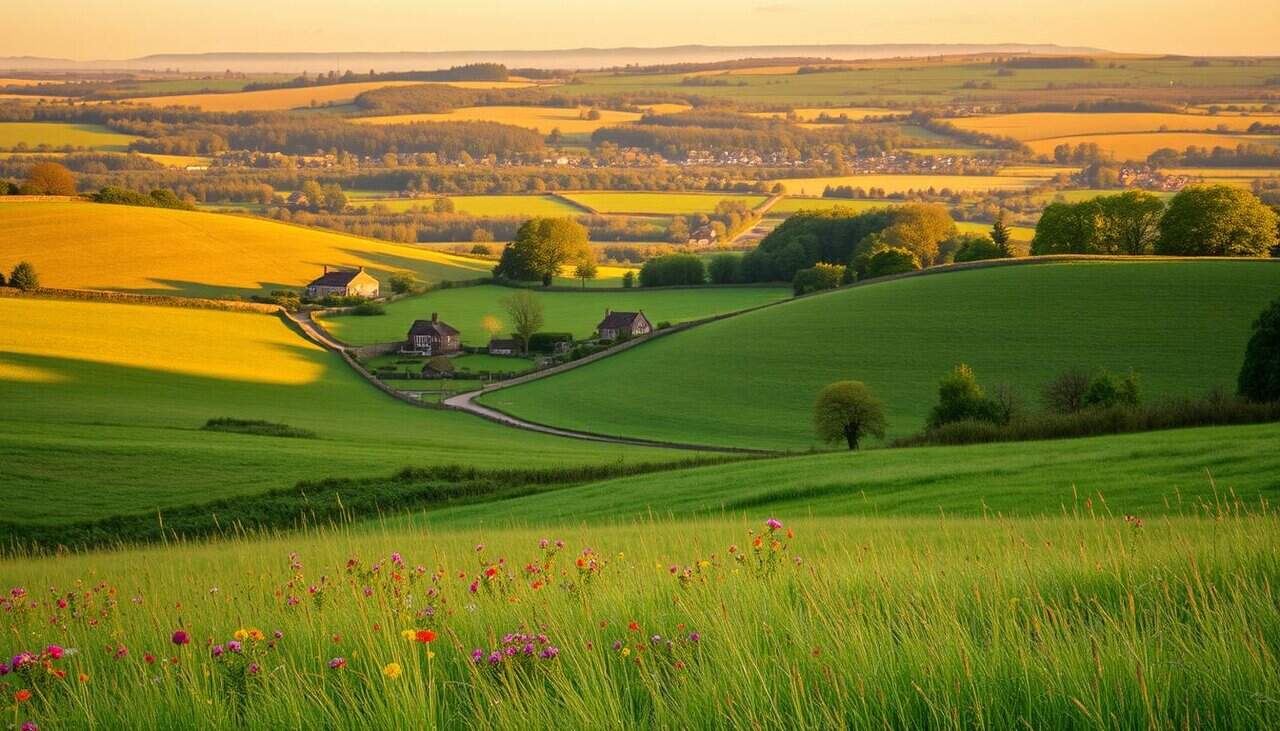
I still remember my first visit to the Cotswolds, a region in central South West England that left me in awe of its rolling hills and picturesque villages. Spanning over 787 square miles, this stunning area is designated as a National Landscape, a testament to its exceptional natural beauty.
The Cotswolds has been a protected landscape since 1966, and it’s easy to see why. The region’s unique charm, characterized by its famous Cotswold stone houses and idyllic countryside, makes it a popular destination for tourists and locals alike.
Recently, the Cotswold National Landscape Board dropped plans to pursue national park status, a decision welcomed by the Cotswold District Council. This raises an important question: what led to this decision, and what implications does it have for the region?
Key Takeaways
- The Cotswolds is a region of outstanding natural beauty, designated as a National Landscape.
- The area spans over 787 square miles, making it one of England’s largest protected landscapes.
- The Cotswold National Landscape Board recently dropped plans to pursue national park status.
- The decision was welcomed by the Cotswold District Council.
- The region’s unique charm and natural beauty make it a popular destination.
The Cotswolds’ Current Designation Status
Understanding the Cotswolds’ current designation status requires a look into its history and recent changes. The Cotswolds area has been recognized for itsoutstanding natural beautyfor many years, initially being designated as an Area of Outstanding Natural Beauty (AONB) in 1966, with an expansion in 1990. This designation was a significant step in protecting the area’s uniquelandscapeandnatural beauty.
What is a National Landscape?
In September 2020, the term “Cotswolds National Landscape” was adopted, marking a change in the naming convention for Areas of Outstanding Natural Beauty. This rebranding effort was further solidified in November 2023 when all AONBs in England and Wales were re-designated as “National Landscapes.” Although the legal name remains “Area of Outstanding Natural Beauty” under the Countryside and Rights of Way Act 2000, the new designation aims to better reflect the importance of these areas. The Cotswolds National Landscape, covering 787 square miles across multiple counties, is now recognized as England’s largest National Landscape area. TheCotswold National Landscape Boardplays a crucial role in overseeing conservation projects and environmental protection within this significantarea.
The government’s confirmation in 2000 that AONBs have the samelandscape quality and statusas National Parks has been instrumental in the area’s protection over the years. This status underscores the importance of continued conservation efforts and the management of the Cotswolds National Landscape.
Why is the Cotswolds not a national park?
The Cotswolds, known for its outstanding natural beauty, has seen a shift in plans regarding its potential National Park status. This change is largely due to the recent decision made by the Cotswold National Landscape Board.
In 2018, the Cotswold District Council decided not to endorse the previous Cotswold National Landscape Management Plan because of its emphasis on gaining National Park status. This decision was a significant turning point in the discussion around the Cotswolds’ designation.
Recent Developments in Designation Plans
The latest Cotswold National Landscape Management Plan has removed the aim of achieving National Park status, which has allowed the Cotswold District Council to support it. This development is seen as a positive step by the Council, as expressed by Councillor Juliet Layton, who welcomed the news that the National Park plans were dropped. The concern was that planning powers would be transferred to “unelected bureaucrats,” potentially impacting local decision-making.
The Cotswold National Landscape Board’s Decision
The Cotswold National Landscape Board has made it clear that while they have dropped plans for National Park status for now, they are ready to engage in future discussions if the government decides to revisit the topic. This position indicates a willingness to adapt to changing circumstances and priorities.
The decision to drop National Park plans has implications for the local people and communities within the area of outstanding natural beauty. It reflects changing priorities for both landscape management and local government authorities.
As the situation stands, the Cotswolds will maintain its current designation as an Area of Outstanding Natural Beauty (AONB), ensuring continued protection and management of its unique landscape.
Differences Between National Parks and National Landscapes
The UK’s environmental protection framework is characterized by two key designations: National Parks and National Landscapes. As we explore the nuances of these designations, you’ll gain insight into how they impact conservation efforts and local communities.
One of the primary differences between National Parks and National Landscapes lies in their governance structures. Let’s take a closer look.
Governance and Authority Structures
National Parks are administered by their own authorities, composed of unelected officials. This means that decision-making power is concentrated within these authorities, potentially limiting the influence of local councils on planning matters. In contrast, National Landscapes operate through existing local government structures, with additional oversight mechanisms in place. This approach allows for a more distributed decision-making process.
For instance, in areas designated as National Parks, the park authorities often have control over future development, which can lead to tensions between local councils and park authorities. On the other hand, National Landscapes work within the existing local government framework, which can facilitate more collaborative decision-making.
Protection Levels and Management Approaches
While both designations offer protection to areas of outstanding natural beauty, the levels of protection and management approaches differ. National Parks are generally considered to have a higher level of protection, with stricter controls over development. National Landscapes, formerly known as Areas of Outstanding Natural Beauty (AONBs), have similar landscape quality and status as National Parks, but their management approaches are more integrated with local government structures.
The government confirmed in 2000 that AONBs have the same landscape quality and status as National Parks. However, the governance structures and management approaches differ, reflecting the unique characteristics of each designation. By understanding these differences, you’ll be better equipped to appreciate the complexities of conservation efforts in the UK.
Local Opposition to National Park Status
The prospect of the Cotswolds being designated as a National Park has ignited a heated discussion among local residents, businesses, and government officials. As we explore the concerns raised by the local community, it becomes clear that the opposition is driven by a range of factors. You might be wondering what lies at the heart of this debate.
One of the primary concerns is the potential impact on housing prices. Data suggests that houses within National Parks face a 20% premium, potentially adding £100,000 to the average house price in the Cotswolds. This could have severe consequences for local young people, families, and key workers who are already struggling with affordability.
Concerns About Housing Prices
The Cotswolds already have some of the highest house prices in the country. Becoming a National Park could exacerbate this issue, forcing local residents out of the area. According to Councillor Juliet Layton, Cabinet Member for Planning and Regulatory Services, “The Cotswolds already have some of the highest house prices in the country. Becoming a National Park could’ve hiked prices up even more, forcing local young people, families and key workers out of the area.”
| Designation | Average House Price | Premium |
|---|---|---|
| Current Status | £500,000 | – |
| National Park Status | £600,000 | 20% |
Issues of Local Democratic Control
Another significant concern is the potential transfer of planning powers from elected council members to unelected National Park authority officials. Councillor Layton described this as “a disaster for local democracy and decision-making.” The Cotswold District Council is keen to maintain control over planning decisions, ensuring that the needs of local residents are prioritized.

As we can see, the opposition to National Park status is driven by a range of concerns, from housing affordability to local democratic control. By understanding these issues, we can better appreciate the complexities surrounding the Cotswolds’ designation.
Benefits of Maintaining the Current Designation
Maintaining the Cotswolds’ current status as a National Landscape has several advantages that are worth considering. The existing designation provides a framework for managing the area’s natural beauty while allowing for local flexibility.
The current Area of Outstanding Natural Beauty designation gives more than enough protection for the Cotswolds’ beautiful natural landscape. As Councillor Juliet Layton said, “Our current Area of Outstanding Natural Beauty designation gives more than enough protection for our beautiful natural landscape and offers the scope to enhance it further.”
Environmental Protection Under Current Status
The Cotswolds’ current designation provides substantial environmental protection. Some key benefits include:
- Conservation of the area’s outstanding natural beauty and unique landscape features.
- Protection of the environment through sustainable management practices.
- Support for conservation projects that benefit both nature and people.
The Cotswold National Landscape Board works closely with the district council to implement environmental initiatives. This collaborative approach ensures that the area’s natural beauty is preserved for future generations.
Balancing Tourism and Local Needs
The current designation allows for a balance between tourism needs and local community interests. Tourism is a significant part of the economy, with the Cotswold District area gaining over £373 million from visitor spending on accommodation in 2016. The local economy benefits from tourism, with about £1 billion generated in the larger Cotswolds Tourism area, providing 200,000 jobs.
By maintaining the current designation, the Cotswolds can continue to support both the environment and the local economy. This approach ensures that the area remains a beautiful and thriving place forpeopleto live and visit.
Conclusion: The Future of the Cotswolds’ Protected Status
The Cotswolds National Landscape Board’s newly published Management Plan 2023-25 has brought the area’s protected status into sharp focus. With this plan, the Board is prioritizingpractical conservation and community support, indicating a shift towards addressing immediate needs rather than pursuing a change in designation.
You might wonder what this means for the future of the Cotswolds. The decision to maintain its current status as a National Landscape rather than pushing for National Park designation reflects a complex balance between conservation goals and local governance. The Cotswold District Council’s role in maintaininglocal democratic control over planning powershas been a significant factor in this decision.
For local families and communities, this means a continued focus on preserving the area’soutstanding natural beautywhile supporting sustainable development. As government policies and environmental priorities evolve, the designation of national parks and other protected landscapes may also change.
The Cotswolds’ situation highlights the broader tensions between conservation, local governance, and sustainable development that exist across many protected landscapes. As we move forward, it’s clear that the future of protected areas will depend on finding a balance between these competing interests.
FAQ
What is the current designation status of the Cotswolds?
The Cotswolds is currently designated as an Area of Outstanding Natural Beauty (AONB), now more commonly referred to as a National Landscape.
How does the Cotswolds’ governance structure differ from that of a national park?
Unlike national parks, which have their own dedicated authorities, the Cotswolds is managed by multiple local authorities, including Cotswold District Council, and lacks a single, unified governing body.
What are the main concerns of local residents regarding national park status?
Local residents have expressed concerns about the potential impact of national park status on housing prices and the loss of local democratic control over planning decisions.
How does the current designation as a National Landscape protect the environment?
The National Landscape designation provides a framework for protecting the area’s natural beauty and environment, with a focus on conservation and sustainable development.
What are the benefits of maintaining the Cotswolds’ current designation?
Maintaining the current designation allows for a balance between environmental protection and local needs, including managing tourism and preserving the area’s character.
Have there been any recent developments in plans to change the Cotswolds’ designation status?
Yes, there have been ongoing discussions and proposals regarding the potential designation of the Cotswolds as a national park, but no decision has been made to change its current status.
How do national parks and National Landscapes differ in terms of protection levels and management approaches?
National parks have stronger planning powers and a more centralized management structure, whereas National Landscapes rely on existing local authorities and have a more collaborative approach to management.