

Did you know that roughly 41 million people in the United States claim German ancestry, making up about 12% of the population? This significant demographic is a result of centuries-old migration patterns.
As someone who’s explored the stories behind these numbers, I’m fascinated by the diverse reasons that have driven German immigrants to the US over the years.
The history of German migration to America is complex, influenced by factors ranging from religious persecution and economic hardship to professional opportunities and lifestyle choices.
Key Takeaways
- German Americans account for a significant portion of the US population.
- The reasons for German migration have evolved significantly over time.
- German immigrants have had a profound impact on American culture and society.
- The story of German immigration is a complex and multifaceted one.
- Understanding this history can provide insights into the modern-day experiences of German Americans.
The Historical Context of German Immigration
The story of German immigration to the United States begins long before the country was even established. The early history of German settlers in America is a fascinating tale of adventure, perseverance, and the quest for a better life.
First German Settlers in Colonial America
The first documented German to arrive in the colonies was Johannes Fleischer, a physician and botanist who accompanied English settlers to Jamestown, Virginia in 1607. This marked the beginning of German presence in what would become the United States. Early German immigration gained momentum in the late 17th century, driven by the devastating aftermath of the Thirty Years’ War (1618-1648), which left much of German-speaking Europe in ruins. These early immigrants were primarily seeking religious freedom from persecution in their homeland.
Germantown: America’s First German Settlement
In 1683, a group of 13 orthodox Quaker families from Krefeld founded Germantown, Pennsylvania, near Philadelphia, establishing the first permanent German settlement in the country. This settlement laid the foundation for future German immigration and became a significant cultural and historical landmark. The success of Germantown and other early settlements created communication networks that encouraged further waves of German immigration to the United States in the following centuries.
These early German settlers played a crucial role in shaping American history and culture, and their legacy continues to be felt today.
Major Waves of German Immigration to America
Over the centuries, Germany has been a significant source of immigrants to America, driven by various push and pull factors. The history of German immigration is complex, with multiple waves occurring over different periods.
The 17th and 18th Century Migrations
The first significant wave of German immigration occurred in the late 17th and 18th centuries. Approximately 13,000 Germans from the Palatinate region, known as “Palatines,” fled to America due to religious persecution and economic hardship. They settled primarily in Pennsylvania, establishing a strong German-American community.
The 19th Century Mass Migration
The 19th century saw the largest influx of German immigrants, with nearly six million arriving between 1820 and World War I. This period made Germans the largest immigrant group in America from 1840 to 1880. The Revolutions of 1848 prompted a wave of political refugees, known as “Forty-Eighters,” who included professionals, journalists, and politicians. As one historian noted,
“The Forty-Eighters brought a new level of intellectual and political activism to America, significantly influencing its society.”
Post-World War Immigration Patterns
Following World War II, a new wave of Germans immigrated to the United States. This group included scientists, academics, and professionals, as well as war brides who married American soldiers stationed in Germany. This wave contributed to the growing German-American population, bringing with them new skills and cultural practices.
Each wave of German immigration has contributed uniquely to American society, shaping its cultural, economic, and intellectual landscape. The story of German immigration to America is a testament to the enduring connection between the two nations.
Why Do Germans Move to USA? Historical Push Factors
For centuries, Germans have been drawn to the United States, driven by a complex mix of push factors that compelled them to leave their homeland. Understanding these factors provides insight into the historical context of German emigration.
Religious Persecution and the Search for Freedom
One of the significant push factors was religious persecution. Many Germans, particularly Confessional Lutherans, faced severe religious oppression. The Thirty Years’ War and later, the decree by King Friedrich Wilhelm III of Prussia in 1817 to unify Lutheran and Reformed churches, led to many fleeing to America in search of religious freedom.
Economic Hardship and Land Shortages
Economic hardship was another critical factor. As industrialization displaced traditional agricultural practices and population growth led to unsustainable land division among heirs, many farmers found themselves without viable livelihoods. The prospect of available land in America was a powerful draw for these individuals.
| Push Factor | Description | Impact on Emigration |
|---|---|---|
| Religious Persecution | Forced unification of churches, persecution of Confessional Lutherans | Significant emigration following key events like the Thirty Years’ War and the 1817 church union decree |
| Economic Hardship | Industrialization and population growth led to land shortages | Increased emigration as farmers sought better opportunities |
| Political Oppression | Authoritarian governments, failed revolutions (e.g., 1848) | Liberal-minded Germans sought democratic freedoms in the United States |
Political Oppression and Military Service Requirements
Political oppression under authoritarian German governments, especially following the failed revolutions of 1848, drove many liberal-minded Germans to seek democratic freedoms in the United States. Additionally, the requirement for long military service, with minimal pay, prompted many young German men to emigrate rather than serve under harsh conditions.
These push factors created waves of emigration that varied in intensity, affecting different segments of the German population. The combination of religious persecution, economic hardship, political oppression, and mandatory military service requirements made America an attractive destination for many immigrants seeking a better life.
The Promise of America: Historical Pull Factors
The prospect of a better life in America was too enticing for many Germans to resist, driven by the promise of land, freedom, and prosperity. As I reflect on the historical pull factors that drew Germans to the United States, it becomes clear that the opportunities seemed too good to be true.
A peasant farmer who struggled to survive on half a hectare of land in Germany could acquire 64 hectares after just ten years in the United States. This wasn’t just a prospect for the poor; many comparatively wealthy Germans also came to America to better themselves economically, drawn by stories of how easy it was to increase one’s wealth.
Land Ownership Opportunities
The abundant and affordable land in America was a significant pull factor. Many Germans were attracted by the possibility of owning large tracts of land, a stark contrast to the limited land availability in their homeland.
Religious and Political Freedom
America’s constitutional guarantees of religious freedom were a beacon for persecuted religious minorities from German states. The democratic political system of the United States also appealed to Germans frustrated with authoritarian rule, offering voting rights and political participation.
Economic Prosperity and Social Mobility
Economic opportunities and the potential for social mobility drew people from all social classes, including not just the poor but also middle-class and wealthy Germans seeking to multiply their fortunes. Stories of successful German immigrants sent back to the homeland created a powerful narrative about America as a land of opportunity.
These factors combined to make America an irresistible destination for many Germans, offering a chance to improve their lives in ways that were not possible in their homeland.
The Forty-Eighters: Political Refugees in America
In the aftermath of the 1848 revolutions in the German states, a significant wave of political refugees made their way to America, earning the name Forty-Eighters. These individuals were not your typical immigrants; they were professionals, journalists, and politicians who had actively participated in the democratic movements that swept across Germany.
The Failed Revolution of 1848
The democratic revolutions that took place across the German states in 1848-49 were a watershed moment for liberal-minded Germans. When these revolutions ultimately failed, many of the participants found themselves forced into exile. The failed democratic revolutions led to a significant exodus of political liberals, intellectuals, and professionals.
Unlike earlier waves of German immigrants who were primarily farmers, the Forty-Eighters were often educated professionals, including lawyers, doctors, journalists, and politicians. They brought with them valuable skills and progressive ideals that would significantly impact their adopted country.
Impact on American Society
The Forty-Eighters had a profound impact on American society. Prominent figures like Carl Schurz, who rose to become a U.S. Senator and Secretary of the Interior, exemplified the influence of these political refugees. They established German-language newspapers and cultural organizations, and became vocal advocates for abolition, women’s rights, and political reform.
Their intellectual and political contributions helped shape American progressive movements and strengthened the cultural life of German-American communities across the United States. As people who were deeply committed to their ideals, the Forty-Eighters left a lasting legacy in America.
In conclusion, the Forty-Eighters were a unique group of immigrants who not only sought refuge in America but also contributed significantly to its social, political, and cultural landscape.
German Settlement Patterns Across America
The story of German-American settlements is one of resilience, innovation, and cultural preservation, spanning across various regions of the United States. As we explore the settlement patterns of German immigrants, it becomes clear that their impact on American society and culture was profound and far-reaching.
The German Belt: From Pennsylvania to Oregon
The German Belt was characterized by strong concentrations of German Americans in states such as Pennsylvania, Ohio, Wisconsin, Missouri, and Texas. For instance, many of the first German Americans settled in eastern Pennsylvania, as discussed in the history of Pennsylvania Germans. This region became a hub for German culture and traditions, influencing the broader American society.
Urban German Communities
Unlike some immigrant groups that clustered primarily in urban centers, Germans established thriving communities in cities like Milwaukee, Cincinnati, and St. Louis. These urban areas featured German-language businesses, churches, schools, newspapers, and social organizations that preserved their cultural heritage. For example, Milwaukee became known for its vibrant German community, with many cultural events and traditions still celebrated today.
Rural German Settlements
Rural German settlements were also significant, with Germans introducing scientific farming methods and crop diversification that improved American agricultural productivity. These communities were known for their agricultural innovations, contributing to the growth and development of the population in the states where they settled.
Key aspects of German settlement patterns include:
- The establishment of the German Belt across the Midwest and beyond.
- The creation of both urban and rural communities that preserved German culture.
- Agricultural innovations introduced by German settlers.
- The diverse skills brought by German immigrants, from farming to craftsmanship and entrepreneurship.
As German Americans settled across the United States, they made significant contributions to the country’s cultural and economic landscape. Their legacy can be seen in the many cultural events, traditions, and communities that continue to thrive today.

German-American Cultural Contributions
German-Americans have left an indelible mark on American culture, from food to education and beyond. Their influence is a testament to the rich cultural heritage that many Germans brought with them to the United States, significantly shaping the country’s identity.
Culinary Delights
One of the most palpable contributions of German-Americans is in the culinary realm. Foods that are now quintessentially American, such as hamburgers, hot dogs (frankfurters), pretzels, and a variety of sausages, were introduced by German immigrants. Moreover, German brewing traditions have played a significant role in shaping America’s beer culture.
| Food Item | Origin | Impact on American Culture |
|---|---|---|
| Hamburgers | German | Staple fast food |
| Hot Dogs | Frankfurt, Germany | Popular at sports events and barbecues |
| Pretzels | German | Snack food, often associated with beer |
Educational Innovations
The kindergarten concept, developed by Friedrich Froebel in Germany, was brought to the United States by German educators. This revolutionary approach to early childhood education emphasized play, creativity, and developmental learning, significantly impacting American educational practices.
Music, Arts, and Festivals
German musical traditions have enriched American cultural life through the establishment of singing societies, orchestras, and the popularization of classical music education in public schools. Christmas traditions, including Christmas trees and carols, were also introduced by German immigrants. Furthermore, German-inspired festivals like Oktoberfest have become integral to American cultural celebrations, fostering community and cultural heritage.
These contributions highlight the significant part that German-Americans have played in shaping the cultural landscape of the United States. Their legacy continues to be celebrated by people across the country, reflecting the enduring impact of German heritage on American society.
The Changing Identity of German-Americans
The World Wars had a profound impact on the identity of German-Americans, leading to a rapid assimilation into American culture. As part of the population in the United States, German-Americans were significantly affected by the anti-German sentiment that arose during this period.
Anti-German Sentiment During World Wars
During World War I, German-Americans faced intense scrutiny and hostility. The pressure to assimilate was so intense that many German-Americans anglicized their names, stopped speaking German, and abandoned cultural practices to prove their loyalty to America. This was part of a broader trend where immigrants were expected to conform to American norms.
The suppression of German language newspapers, renaming of German-sounding streets and foods, and even violence against German-Americans were common. As a result, German-Americans began to lose their distinct cultural identity.
The Erosion of German-American Identity
World War II further accelerated the erosion of German-American identity. Any association with German culture became politically and socially problematic during the fight against Nazi Germany. Unlike other immigrant groups who maintained strong ethnic identities, German-Americans experienced an almost complete dissolution of their visible ethnic identity.
This rapid assimilation makes German-Americans unique among major immigrant groups in America – they are simultaneously the largest ancestry group in the United States while being one of the least visible in terms of distinct cultural identity. As a significant part of American history, understanding this transformation is crucial.
Modern German Immigration to the United States
Modern German immigration to the United States represents a significant shift from historical patterns, with a focus on professionals and academics. After the Second World War, the USA remained an important destination country for new groups of German emigrants. These included the fiancées and wives of American soldiers who had been stationed in Germany, as well as an increasing number of academics and highly qualified professionals.
They still form the most important group of German immigrants in the USA today. In 2017, around 12,500 Germans emigrated to America. By 2025, approximately 190,000 permanent residents from Germany were living in the United States.
Post-WWII Immigration Trends
Post-World War II German immigration to the United States took on a different character than previous waves. War brides, or German women who married American soldiers, formed a significant portion of new arrivals. The Immigration and Nationality Act of 1965 also played a crucial role by shifting immigration patterns towards prioritizing skilled professionals and family reunification.
This legislative change led to a more educated and professionally oriented German immigrant population. As a result, modern German immigration has been characterized by the temporary migration of professionals, academics, researchers, and corporate transferees rather than permanent settlement.
Contemporary German Immigrants: Professionals and Academics
Unlike earlier German immigrants who often sought to escape difficult conditions, contemporary German immigrants typically come to the United States for specific professional opportunities or educational advancement. Many have plans to eventually return to Germany. The modern German immigrant population is highly skilled, contributing to various sectors in the United States.
The shift towards professionals and academics is a defining feature of contemporary German immigration. This trend is expected to continue, with the United States remaining an attractive destination for Germans seeking career advancement and educational opportunities.
Why Germans Move to the USA Today
Germans are increasingly looking towards the USA as a destination for professional growth, academic excellence, and cultural diversity. This trend is not new; after the Second World War, the USA remained a significant destination for German emigrants, including fiancées and wives of American soldiers, as well as academics and highly qualified professionals.
These individuals continue to form a substantial portion of German immigrants in the USA today. So, what drives this migration? Let’s explore the key factors.
Career Opportunities and Professional Development
Today’s German immigrants are primarily drawn to the United States for professional advancement in fields where America leads globally. Industries such as technology, finance, research, and entertainment offer unparalleled opportunities for career growth.
- Many German professionals seek to expand their expertise in the American market, benefiting from the country’s innovative environment and global influence.
- Corporate transfers also play a significant role, with German multinational companies sending employees to their American operations for career development and cross-cultural business experience.
Academic and Research Opportunities
The American academic system is renowned for its prestigious universities and well-funded research opportunities, attracting German scholars, scientists, and students.
- German academics are drawn to the USA for its world-class educational and research experiences, which offer a platform for professional advancement and networking.
- The entrepreneurial ecosystem, particularly in innovation hubs like Silicon Valley, also attracts German entrepreneurs and startups seeking venture capital and access to the world’s largest consumer market.
Lifestyle and Cultural Attractions
Beyond professional and academic reasons, lifestyle factors also play a crucial role in the decision to move. Germans are attracted to the geographic diversity, cultural opportunities, and in some cases, lower tax burdens that the USA offers.
- The USA provides a diverse range of living experiences, from urban centers to rural landscapes, catering to different preferences and lifestyles.
- Cultural attractions, including arts, festivals, and historical sites, enrich the living experience for German immigrants.
In conclusion, the reasons for Germans moving to the USA today are multifaceted, encompassing professional, academic, and lifestyle factors. As the world becomes increasingly interconnected, the USA continues to be a beacon for those seeking new opportunities and experiences.
Challenges Faced by German Immigrants
For centuries, German immigrants have been drawn to the United States, but their journey has not been without its challenges. The process of leaving one’s homeland and adapting to a new country is inherently difficult, and German immigrants have faced unique obstacles throughout history.
Language and Cultural Adaptation
Historically, German immigrants faced significant challenges, starting with the perilous journey across the Atlantic. Many suffered from disease, malnutrition, and harsh conditions during the voyage, which could last for months. Upon arrival, language barriers presented a significant hurdle, making everyday tasks and integration into American society difficult. To mitigate this, German immigrants often established German-language schools, newspapers, and communities to ease their transition.
- Historical German immigrants faced perilous journeys across the Atlantic, with many dying from disease and malnutrition.
- Language barriers and cultural differences complicated the integration process.
Visa Restrictions and Professional Recognition
Today, German immigrants face different challenges. Navigating complex immigration laws and visa restrictions is a significant hurdle, limiting their ability to work and settle permanently in the United States. Furthermore, professional credential recognition remains a challenge, as German qualifications and certifications may not be automatically recognized by American employers or licensing boards.
- Modern German immigrants must navigate complex visa requirements and restrictions.
- Professional credentials earned in Germany often require additional validation in the U.S.
In conclusion, while the challenges faced by German immigrants have evolved over time, they remain significant. Understanding these challenges is crucial for fostering a more inclusive and supportive environment for immigrants in the United States.
German-American Demographics Today
The German-American community remains a significant demographic in the United States today. As of 2022, German Americans make up roughly 41 million people, which is approximately 12% of the population. This number has decreased from 50.7 million in 2012, reflecting changes in immigration patterns and how Americans identify their ancestry.
Population Statistics and Distribution
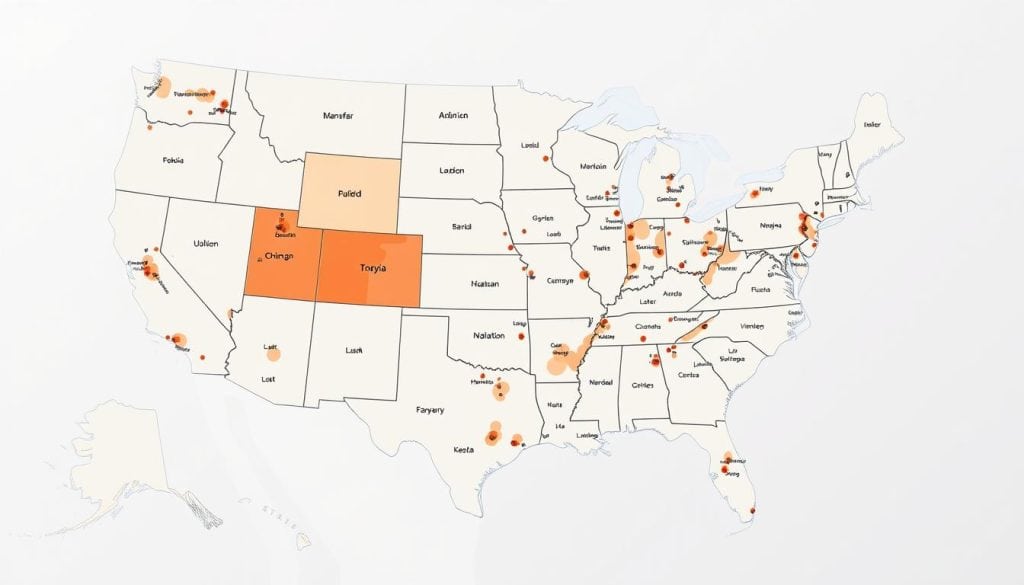
The geographic distribution of German-Americans is concentrated in the “German Belt” states. Pennsylvania has the largest population with 3.5 million people of German ancestry, followed by significant numbers in Ohio, Wisconsin, Minnesota, and Texas. The census data also reveals that roughly two-thirds of those who identify as German also identify with another ancestry.
Socioeconomic Profile of German-Americans
German-Americans tend to have higher-than-average education levels, income, and rates of homeownership compared to the general U.S. population. This reflects their long history of integration and establishment in American society. The demographic profile has evolved throughout the 21st century as more Americans identify with multiple ancestries.
Overall, German-Americans continue to be a vital part of American society, with a strong presence in various aspects of life.
Famous German-Americans and Their Impact
German-Americans have left an indelible mark on the United States, shaping its history, culture, and identity. Their contributions span various fields, from business and politics to science and entertainment.
Historical Figures: From John Jacob Astor to Carl Schurz
Historical figures of German descent have played a significant role in shaping America’s past. John Jacob Astor, for instance, became America’s first multimillionaire through his fur trading empire and New York real estate investments in the early 19th century. Many other German-Americans have also made lasting impacts.
Carl Schurz, another influential figure, was the first German-born U.S. Senator and later Secretary of the Interior. He championed civil service reform and civil rights in the post-Civil War era. These individuals exemplify the significant contributions German-Americans have made to the country’s development.
| Name | Field | Contribution |
|---|---|---|
| John Jacob Astor | Business | First multimillionaire through fur trade and real estate |
| Carl Schurz | Politics | First German-born U.S. Senator and Secretary of the Interior |
| Albert Einstein | Science | Revolutionized physics |
Modern German-American Influencers
The legacy of German-Americans continues into the present day, with influencers across various sectors. In entertainment, figures like Leonardo DiCaprio and Sandra Bullock have made significant contributions. In business, entrepreneurs such as John Paulson have shaped the financial landscape.
German-Americans have also excelled in sports and politics, with Dirk Nowitzki and John Boehner being notable examples. Their achievements demonstrate the ongoing impact of German heritage in American culture.
Conclusion
German emigration to America represents one of the most significant demographic movements in U.S. history. Over the centuries, millions of Germans have made their way to the United States, driven by various motivations that have evolved significantly over time.
The reasons behind German immigration have been diverse, ranging from seeking religious freedom and land ownership opportunities to escaping political oppression and pursuing economic prosperity. Today, German-Americans are recognized as America’s largest ancestry group, despite experiencing a unique pattern of cultural assimilation that has sometimes rendered their ethnic identity less visible.
The legacy of German immigration is evident throughout American society, influencing educational systems, culinary traditions, and cultural practices. As we look at immigration patterns in the 21st century, the German-American experience offers valuable insights into the complex processes of migration, adaptation, and cultural integration that continue to shape the United States as a nation of immigrants.
FAQ
What are the primary reasons for German emigration to the United States?
Many Germans have moved to the USA seeking better career opportunities, academic and research opportunities, and a different lifestyle. Historically, factors such as religious persecution, economic hardship, and political oppression have driven German immigration.
How has German immigration to the USA changed over the centuries?
German immigration to the USA has evolved significantly over time, from the early settlers in colonial America to the mass migrations of the 19th century, and the more recent influx of professionals and academics. Each wave has been influenced by different push and pull factors.
What cultural contributions have German-Americans made to American society?
German-Americans have had a profound impact on American culture, introducing traditions such as Christmas celebrations, influencing the education system through the kindergarten movement, and contributing to the country’s culinary landscape with dishes like hamburgers.
How have German immigrants adapted to life in America?
German immigrants have faced various challenges, including language barriers and cultural adaptation. While historical immigrants struggled with these issues, modern German immigrants often face challenges related to visa restrictions and professional certification recognition.
What is the current demographic profile of German-Americans?
Today, German-Americans are a significant part of the US population, with a diverse socioeconomic profile. They are distributed across the country, with concentrations in certain regions, reflecting historical settlement patterns.
How is German heritage maintained in America?
German-American cultural organizations, events, and language preservation efforts help maintain German heritage in the USA. These initiatives ensure that the cultural traditions and history of German-Americans continue to be celebrated and passed down.