

Imagine standing at the edge of a massive volcanic crater, surrounded by an abundance of wildlife and breathtaking landscapes. Yellowstone National Park, America’s first national park, is a destination that fulfills the wildest dreams of nature lovers and adventure seekers alike.
With over 2.2 million acres to explore, planning your trip to Yellowstone can be daunting. Established on March 1st, 1872, by President Ulysses S. Grant, this incredible park attracts millions of visitors each year. Whether you’re looking to spend a day or several days exploring its wonders, having a guide can make all the difference.
This comprehensive guide is designed to help you navigate the park’s must-see highlights, optimal visiting times, and create an itinerary that suits your schedule.
Key Takeaways
- Must-see attractions for first-time visitors to Yellowstone
- Best times to visit to avoid crowds
- Recommended duration for your Yellowstone trip
- Practical tips for creating a balanced itinerary
- Insights into the park’s unique geothermal features and wildlife
Discovering Yellowstone National Park: An Overview
With its rich history and diverse landscapes, Yellowstone is a destination like no other. As the world’s first national park, it has been a source of fascination for visitors since its establishment in 1872.
The World’s First National Park
Yellowstone National Park holds a special place in history as it was designated as the world’s first national park. This distinction is not just a matter of pride; it reflects the park’s unique features and the forward-thinking conservation efforts of its founders. The park’s significance is further highlighted by its inclusion of over 2.2 million acres of diverse ecosystems, making it a haven for wildlife and a fascinating area for scientific study.
Yellowstone’s Unique Geography and Features
The park’s unique geography is characterized by the Yellowstone Caldera, a massive supervolcano that drives the park’s geothermal features. This includes an array of geysers and hot springs, with Yellowstone containing approximately half of the world’s active geysers. The diverse landscape also encompasses mountains, canyons, lakes, and rivers, with Yellowstone Lake being the largest high-elevation lake in North America, sitting at 7,733 feet above sea level.
| Feature | Description |
|---|---|
| Yellowstone Caldera | A massive supervolcano driving the park’s geothermal features |
| Geysers and Hot Springs | Approximately half of the world’s active geysers are found in Yellowstone |
| Yellowstone Lake | Largest high-elevation lake in North America |
For more information on planning your visit to other national parks, you can check out the best time to visit Montana’s national parks on this page.
Best Time to Visit Yellowstone
If you’re wondering when to plan your trip to Yellowstone, you’re not alone. The park is open year-round, but the experience varies significantly with the seasons.
Peak Season vs. Shoulder Season
Visiting Yellowstone during peak season (June to August) means you’ll encounter large crowds and long wait times at popular attractions. In contrast, the shoulder season (April to May and September to October) offers a more serene experience with fewer tourists. If you’re looking for a balance between comfortable weather and smaller crowds, consider visiting during the shoulder season.
The table below summarizes the pros and cons of visiting Yellowstone during different times of the year:
| Season | Weather | Crowds | Wildlife Viewing |
|---|---|---|---|
| Spring (May-June) | Mild temperatures | Fewer crowds | Excellent wildlife viewing |
| Summer (July-August) | Warm days, chilly nights | Large crowds | Good wildlife viewing |
| Fall (September-October) | Cool temperatures | Fewer crowds | Good wildlife viewing |
| Winter (December-February) | Cold temperatures | Minimal crowds | Limited wildlife viewing |
Seasonal Highlights and Weather Considerations
Each season in Yellowstone offers unique experiences. Spring brings new life to the park, with animals emerging from hibernation and baby animals being born. Summer is ideal for hiking and exploring the park’s many trails. Fall offers spectacular foliage, while winter transforms the park into a magical landscape with steaming geysers against the snow.
Regardless of when you visit, be prepared for changing weather conditions. Yellowstone’s weather can be unpredictable, with sudden rain or snow showers possible at any time of year. Always pack layers and rain gear to ensure a comfortable trip.
How Long Should You Stay in Yellowstone?
With so much to see and do, figuring out how long to stay in Yellowstone is essential for making the most of your trip. If you’re planning to visit Yellowstone National Park for the first time, you’ll want to ensure you have enough time to explore its many attractions without feeling rushed.
Minimum Time Recommendations
For a park as vast and diverse as Yellowstone, I recommend spending at least four to five days here. This duration allows you to visit the top sights and experience the lot of natural wonders without feeling like you’re in a race. You can explore the major attractions, enjoy the scenic landscapes, and perhaps even take a few hikes or participate in ranger programs.
Ideal Duration for First-Time Visitors
For first-time visitors wanting a comprehensive experience, 4-5 days is ideal for exploring Yellowstone National Park. This allows people to visit all major attractions while building in flexibility for unexpected wildlife sightings or weather changes. A longer trip also provides time to escape the crowds by visiting popular spots during early morning or evening hours. Many experienced visitors recommend staying in different areas of the park to minimize driving time and maximize exploration. For more insights on planning your visit, you can check out resources like planning your national park trip.
- Visit all major attractions with flexibility for unexpected events.
- Explore different areas of the park to minimize driving time.
- Enjoy early morning or evening visits to popular spots to avoid crowds.
Where Should I Go for the First Time in Yellowstone?
Yellowstone is a vast and diverse park, but for first-time visitors, some areas stand out as must-see destinations. As you plan your trip, it’s essential to prioritize the experiences that will give you a comprehensive introduction to the park’s unique features.
Must-See Geothermal Features
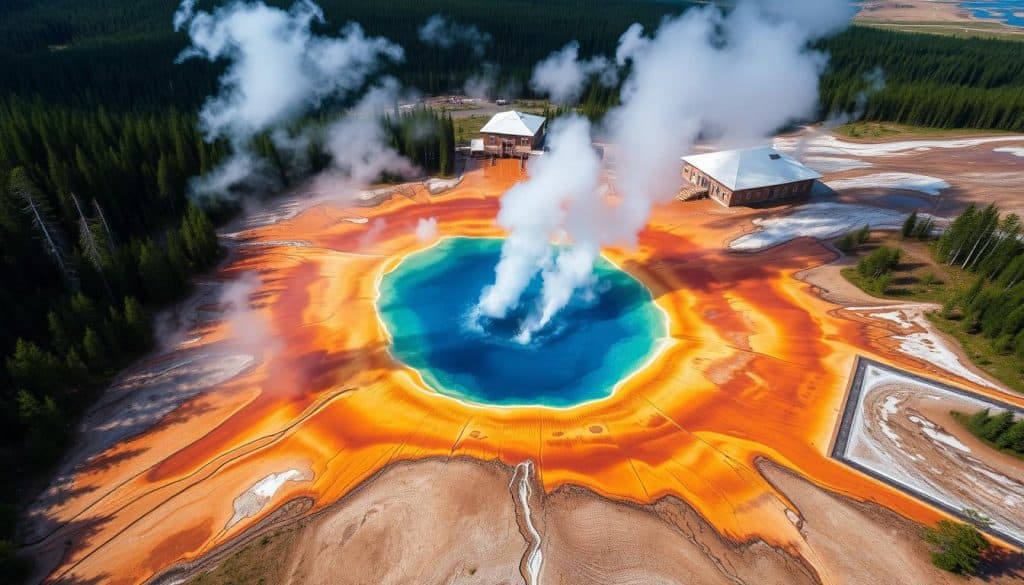
The park is home to numerous geothermal wonders that are a hallmark of Yellowstone’s unique identity. One of the top attractions is the Grand Prismatic Spring, the largest hot spring in the United States, known for its vibrant colors created by the presence of microorganisms and minerals. A hike to the Grand Prismatic Spring Overlook provides a stunning aerial perspective that can’t be appreciated from the boardwalk alone.
Other notable geothermal features include the Upper Geyser Basin, home to Old Faithful, and the Norris Geyser Basin, which is known for its diverse range of geysers and hot springs.

Scenic Landscapes and Viewpoints
Beyond its geothermal features, Yellowstone is also renowned for its breathtaking scenic landscapes. The Grand Canyon of the Yellowstone offers spectacular views of colorful canyon walls and two magnificent waterfalls, with Artist Point providing the most iconic vista in the park.
For wildlife enthusiasts, Hayden Valley and Lamar Valley are prime viewing territories. Hayden Valley is known for its vast open meadows where visitors can spot large herds of bison, elk, and occasionally bears or wolves.
Driving the Grand Loop Road through the park connects these scenic landscapes and offers numerous pullouts with interpretive displays and viewpoints.
| Location | Main Attractions | Best Time to Visit |
|---|---|---|
| Grand Prismatic Spring | Vibrant colored hot spring | Mid-day for best colors |
| Hayden Valley | Wildlife viewing (bison, elk, bears) | Dawn and dusk |
| Grand Canyon of the Yellowstone | Colorful canyon walls, waterfalls | Anytime, but be prepared for crowds |
For those interested in exploring more of what the region has to offer, there are other national parks in Wyoming worth visiting, such as those listed on enjoynationalparks.com.
Old Faithful and Upper Geyser Basin
Visiting Yellowstone isn’t complete without witnessing the majesty of Old Faithful and exploring the Upper Geyser Basin. As one of the park’s most popular attractions, this area is a must-see for anyone traveling to Yellowstone.
Experiencing Old Faithful Eruptions
Watching Old Faithful erupt is an unforgettable experience. The geyser erupts approximately every 90 minutes, shooting steam and water up to 185 feet in the air. To make the most of your visit, plan to arrive early and secure a good viewing spot. You can check the predicted eruption times on the park’s website or at the visitor center.
Exploring the Upper Geyser Basin Boardwalks
The Upper Geyser Basin is home to an incredible concentration of geothermal features, with over 60% of the world’s geysers located within a single square mile. A network of boardwalks allows you to safely explore the area and witness the majesty of geysers like Castle Geyser and Beehive Geyser.
| Geyser Name | Eruption Frequency | Notable Features |
|---|---|---|
| Old Faithful | Every 90 minutes | Predictable eruptions, iconic status |
| Castle Geyser | Variable | Distinctive cone-shaped formation |
| Beehive Geyser | Variable | Intensely powerful eruptions |
To fully appreciate the Upper Geyser Basin, allow at least 2-3 hours to explore the boardwalks and take in the sights. Be sure to visit Geyser Hill, just across from Old Faithful, which is often overlooked by visitors rushing to see the main attraction.
Grand Prismatic Spring and Midway Geyser Basin
The Grand Prismatic Spring, located in the Midway Geyser Basin, is a breathtaking sight that awaits you in Yellowstone. As the largest spring in Yellowstone and the third largest in the world, it’s a must-visit attraction. The vibrant colors of the spring are a result of thermophile bacteria living in the cooler water surrounding it.
Viewing Options for Grand Prismatic
When planning your visit to the Grand Prismatic Spring, consider the viewing options available. You can view the spring from a boardwalk that surrounds it, offering multiple perspectives. For a more panoramic view, there’s an overlook nearby.
- Boardwalk around the spring for a closer look
- Overlook for a panoramic view
Best Time of Day for Vibrant Colors
The best time to see the Grand Prismatic Spring’s vibrant colors is during midday when the sun is high, typically between 10 AM and 3 PM. Sunny days are ideal as they showcase the colors much better than cloudy days. Morning visits can be less colorful due to steam, especially on cool days. Late afternoon can also be good for photography due to the lower sun angle.
- Midday (10 AM – 3 PM) for the most vibrant colors
- Avoid mornings when possible due to steam
- Late afternoon for enhanced photography opportunities
Grand Canyon of the Yellowstone
After exploring the main geyser basins, many visitors consider the Grand Canyon of the Yellowstone to be the park’s most impressive non-geothermal feature. The walls of the canyon are colorful and vibrant, and the Lower Falls drop powerfully into the canyon. As you stand at the edge, the roar of the water and the stunning vistas create an unforgettable experience.
North and South Rim Highlights
The Grand Canyon of the Yellowstone offers several viewpoints along its North and South Rims. On the South Rim, Artist Point provides one of the most iconic views of the Lower Falls, accessible via a short, paved walkway from the parking lot. The North Rim offers Lookout Point, which gives a direct view of the Lower Falls, and you can descend to Red Rock Point for a closer look.
Best Viewpoints for the Falls
Some of the best viewpoints include:
- Artist Point on the South Rim for an iconic view of the Lower Falls.
- Lookout Point on the North Rim for a direct view of the Lower Falls.
- The Brink of the Lower Falls Trail, a strenuous hike that takes you to the edge where the water plunges 308 feet into the canyon.
- Upper Falls View and Brink of the Upper Falls for views of the often-overlooked Upper Falls.
These viewpoints and trails offer a range of experiences for visitors to enjoy the grandeur of the Grand Canyon of the Yellowstone.
Wildlife Viewing in Yellowstone
With its vast wilderness areas and varied landscapes, Yellowstone National Park is a haven for wildlife viewing, attracting visitors from all over the world. The park is home to an abundance of wildlife, including grizzly bears, wolves, bison, and elk, making it a prime destination for wildlife enthusiasts.
Hayden and Lamar Valleys
The Hayden and Lamar Valleys are two of the most renowned areas for wildlife viewing in Yellowstone. These valleys are teeming with a variety of animals, and the chances of spotting wildlife are significantly higher here compared to other parts of the park. During peak season, these areas can get crowded with people eager to catch a glimpse of the park’s incredible fauna.
When visiting these areas, it’s essential to be mindful of your surroundings and follow the guidelines provided by park authorities to ensure a safe and enjoyable experience for both you and the wildlife.
Wildlife Safety and Viewing Tips
To make the most of your wildlife viewing experience in Yellowstone, it’s crucial to maintain a safe distance from the animals. Always keep a minimum distance of 100 yards (91 meters) from bears and wolves, and 25 yards (23 meters) from all other wildlife, including bison and elk.
- Carry bear spray and know how to use it when hiking in Yellowstone National Park, as encounters with bears can occur on any trail.
- Never approach, feed, or attempt to touch any wildlife, no matter how docile they may appear; bison injure more park visitors than any other animal.
- When wildlife causes traffic jams, remain in your vehicle and make sure to pull completely off the road if stopping to observe.
- Bring binoculars or a spotting scope for the best wildlife viewing experience, allowing you to observe animals from a safe distance without disturbing them.
For more information on the best national parks for wildlife viewing, you can explore other resources that highlight the diverse wildlife across different national parks.
Planning Your Yellowstone Itinerary
To experience the best of Yellowstone, you need to plan your trip strategically, considering the time you have available. Ideally, you should allocate at least three to four days to visit Yellowstone National Park. However, if you’re short on time, you can still get to the main highlights even with just a day or two.
When planning your trip, it’s essential to prioritize the attractions you want to see. Yellowstone is vast, and travel times between locations can be significant. Understanding the park’s layout and the time required to explore its various features will help you create a realistic itinerary.
One-Day Essential Route
If you only have one day, focus on the southwestern section of the park. Start your morning at Old Faithful and explore the Upper Geyser Basin. In the afternoon, visit Grand Prismatic Spring and other nearby geyser basins. This route allows you to experience some of Yellowstone’s most iconic geothermal features.
Three-Day Comprehensive Plan
With three days, you can enjoy a more comprehensive experience. Here’s a suggested itinerary:
| Day | Morning | Afternoon/Evening |
|---|---|---|
| 1 | Old Faithful and Upper Geyser Basin | Grand Prismatic Spring and nearby geyser basins |
| 2 | Grand Canyon of Yellowstone (North and South Rims) | Hike on Uncle Tom’s Trail or to the Brink of the Lower Falls |
| 3 | Norris Geyser Basin and Mammoth Hot Springs | Wildlife watching in Hayden Valley and Lamar Valley |
If you have extra time, consider adding West Thumb Geyser Basin on Yellowstone Lake and a scenic hike like Mount Washburn for panoramic views. This three-day itinerary provides a balanced experience of Yellowstone’s diverse landscapes.
Practical Tips for First-Time Visitors
Before you embark on your Yellowstone journey, understanding a few essential tips can greatly enhance your visit.
Navigating Park Roads and Traffic
When exploring Yellowstone, it’s vital to know how to navigate its roads and manage potential traffic. The park is vast, and traffic can be heavy, especially during peak season. Be prepared for crowds and potential delays. You’ll need to make sure you have a good map or GPS device to help navigate the park roads.
Packing Essentials for Yellowstone
Packing the right gear is crucial for a comfortable and safe trip. Make sure to include bear spray, as encounters with wildlife are possible, especially when hiking on a trail. Additionally, bring sturdy walking shoes, as you’ll likely be walking a lot, even on boardwalks around hot springs. Don’t forget to pack layers for unpredictable weather and a refillable water bottle to stay hydrated at high elevations.
For more detailed information on planning your trip, you can visit Yellowstone National Park guides or explore resources on national park resources.
Conclusion: Making the Most of Your First Yellowstone Adventure
Visiting Yellowstone National Park for the first time is an experience you’ll cherish forever, and with the right planning, it can be truly unforgettable. Your adventure will be memorable regardless of how many days you spend there.
To make the most of your trip, prioritize the park’s diverse attractions based on your interests. Whether you’re drawn to wildlife viewing, geothermal wonders, or scenic landscapes, Yellowstone National Park has something for everyone.
Consider visiting during the shoulder seasons (May-June or September-October) to enjoy fewer crowds while still experiencing good weather and wildlife activity. For a first-time visitor, I recommend a 3-day itinerary if you’re not hiking, and 4 days if you plan to explore trails and enjoy photography.
Remember, Yellowstone National Park is a place to be savored, not rushed. It’s better to thoroughly enjoy a few attractions than to try to see everything in a hurry. Many visitors find themselves planning their return trip before they even leave the park, as Yellowstone National creates a lasting impression that calls people back year after year.
FAQ
What are the must-see geothermal features in Yellowstone?
The Upper Geyser Basin and Norris Geyser Basin are top attractions, featuring iconic geysers like Old Faithful and other unique geothermal wonders.
How can I avoid crowds and traffic jams in Yellowstone?
Visiting during the shoulder season (April-May or September-October) can help minimize encounters with large crowds. Additionally, exploring the park early in the morning or later in the evening can provide a more serene experience.
What are the best ways to experience Yellowstone’s wildlife?
Hayden Valley and Lamar Valley are renowned for their abundant wildlife, including bison, bears, and wolves. Maintaining a safe distance and carrying bear spray can enhance your wildlife viewing experience.
How long does it take to explore Yellowstone National Park?
While it’s possible to see some highlights in a day, spending at least 3 days in the park allows for a more leisurely exploration of its main attractions and scenic landscapes.
What are the most scenic landscapes and viewpoints in Yellowstone?
The Grand Canyon of the Yellowstone, Yellowstone Lake, and the Lower Falls are among the park’s most breathtaking natural wonders, offering stunning views and memorable experiences.
Are there guided tours available for exploring Yellowstone?
Yes, various guided tour options are available, ranging from general park tours to specialized wildlife viewing and hiking excursions, which can be booked through authorized operators.
What should I pack for a visit to Yellowstone?
Essentials include comfortable hiking shoes, layers for changing weather, bear spray, and a camera to capture the park’s incredible scenery and wildlife.
Can I visit Grand Prismatic Spring and Midway Geyser Basin together?
Yes, these two attractions are relatively close to each other, making it easy to visit both in one trip. The Grand Prismatic Spring is particularly vibrant during the late morning and early afternoon.