
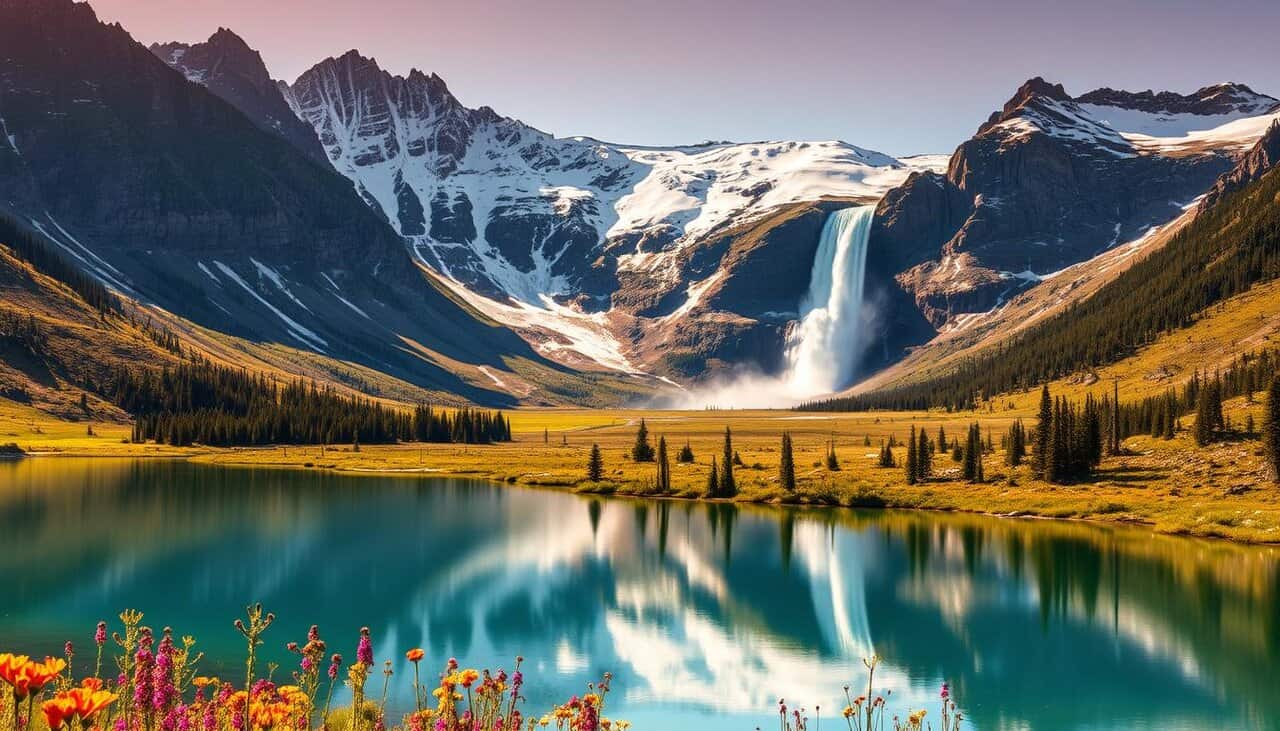
Imagine standing at the edge of a massive volcanic crater, surrounded by an abundance of wildlife and geothermal wonders. Yellowstone National Park, America’s first national park, is a destination that promises an unforgettable experience. With over 2.2 million acres to explore, planning is essential to make the most of your trip.
As one of the most visited national parks, with 4.5 million visitors in 2023, Yellowstone can be overwhelming, especially during peak season. But with a strategic approach, you can witness the park’s iconic geysers, hot springs, canyons, and diverse wildlife.
This guide will help you maximize your time in Yellowstone, focusing on must-see attractions and experiences tailored to your schedule, whether you have a day or several.
Key Takeaways
- Plan your trip according to the park’s size and your available time.
- Prioritize iconic attractions like geysers and hot springs.
- Consider visiting during the shoulder season for a more relaxed experience.
- Be prepared for variable weather conditions.
- Take time to appreciate the park’s diverse wildlife and landscapes.
Discovering Yellowstone National Park
Established in 1872, Yellowstone National Park is not only a marvel of nature but also a pioneering conservation effort. This designation as the world’s first national park was a groundbreaking move, signed into law by President Ulysses S. Grant on March 1st, 1872, to protect over 2 million acres of wilderness.
The World’s First National Park
As the first national park globally, Yellowstone set a precedent for conservation efforts worldwide. This historic designation has enabled the preservation of its vast wilderness, ensuring that future generations can experience its natural beauty. You can explore more about the significance of national parks and their conservation efforts on other national park trips.
Yellowstone’s Unique Landscape and Features
Yellowstone sits atop the Yellowstone Caldera, a supervolcano that is responsible for the park’s unique geothermal features. The park is home to more than half of the world’s hydrothermal features, including geysers, hot springs, travertine terraces, and mudpots. This diversity of landscapes, from mountains and forests to canyons and lakes, makes Yellowstone unlike any other place on earth.
| Feature | Description |
|---|---|
| Geothermal Features | More than half of the world’s geysers and hot springs |
| Wildlife | Nearly 300 species of birds and 67 species of mammals |
| Area | Spans across Wyoming, Montana, and Idaho, covering 2.2 million acres |
Best Time to Visit Yellowstone
As you prepare for your Yellowstone adventure, understanding the park’s seasonal dynamics is crucial. Yellowstone is open year-round, but the experience varies significantly with the seasons.
Peak Season: June to August
Summer is the peak tourist season in Yellowstone, with June to August being the busiest months. During this time, all facilities are open, and the weather is ideal for exploring the park. However, this period also attracts the largest crowds, with July and August seeing the heaviest visitation. If you’re planning to visit during peak season, be prepared for potential parking challenges and long wait times at popular attractions.
Shoulder Seasons: May and September-October
Visiting Yellowstone during the shoulder seasons (May and September-October) offers a more balanced experience. The crowds have thinned out compared to the peak summer months, but most attractions remain accessible. May is particularly good for wildlife viewing as animals emerge from hibernation and the snow has cleared, making it an ideal time for nature enthusiasts.
Winter Experience
For those seeking a unique experience, visiting Yellowstone in winter (November-April) can be magical. While most roads are closed to regular vehicles, the park transforms into a snow-covered wonderland accessible by snowmobile or snow coach. This season offers a serene and peaceful experience, ideal for those who enjoy winter sports and landscapes.
When planning your trip, consider your priorities: wildlife viewing, geothermal features, hiking, or photography. Each season offers different advantages, so choosing the right time based on your interests will enhance your Yellowstone experience.
Where Should I Go for the First Time in Yellowstone?
As you plan your trip to Yellowstone, understanding the park’s vast layout is crucial for a memorable experience. Yellowstone National Park is enormous, covering almost 2.3 million acres across Wyoming, Montana, and Idaho.
Understanding Yellowstone’s Layout
The park’s road network forms a figure-eight, with Grand Loop Road Bisecting this loop is Norris Canyon Road, making it easier to navigate the park.
The Five Park Entrances
Yellowstone has five different entrances: North, Northeast, East, South, and West. The most popular are the West and South entrances. Depending on where you’re coming from, you’ll want to choose the entrance that best suits your route.
| Entrance | Nearest Town | Best For |
|---|---|---|
| West | West Yellowstone | Old Faithful, Madison River |
| South | Jackson, WY | Grand Teton National Park, beginner-friendly attractions |
Must-See Attractions for First-Timers
With so much to see, prioritizing is key. Must-see attractions include Old Faithful and Upper Geyser Basin, Grand Prismatic Spring, and the Grand Canyon of the Yellowstone. Wildlife viewing in Hayden or Lamar Valley is also a highlight. For a day trip, focus on one or two areas to make the most of your time.
Old Faithful and Upper Geyser Basin
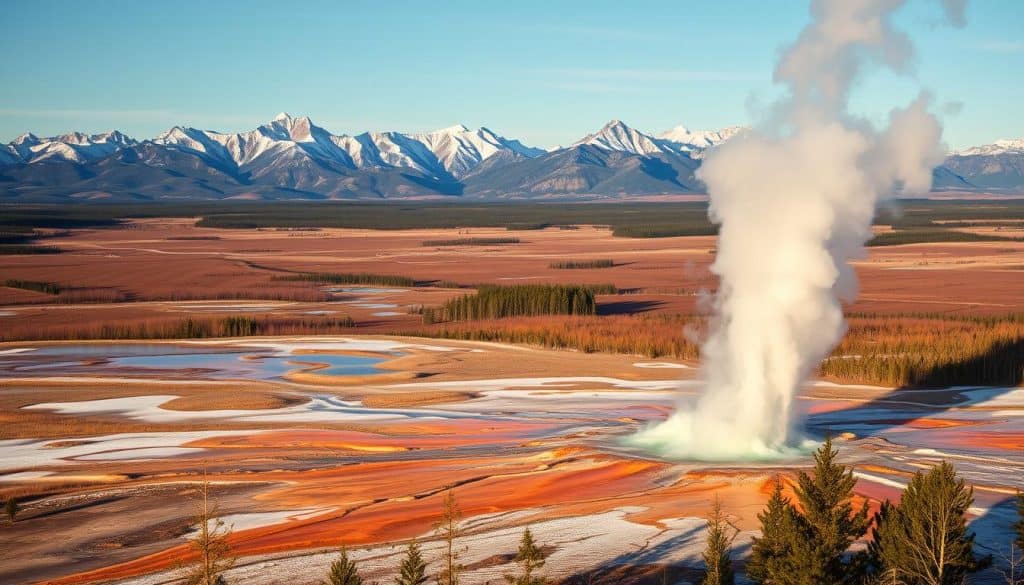
Old Faithful stands as one of Yellowstone’s most breathtaking natural wonders, drawing visitors from around the globe. Located in the heart of the park, it is a must-see attraction for anyone visiting Yellowstone for the first time.
Experiencing Old Faithful Eruptions
Old Faithful is renowned for its predictable eruptions, occurring approximately every 90 minutes. To make the most of your visit, plan your day around these eruptions by checking the prediction boards at the visitor center. I recommend arriving 20-30 minutes before the predicted eruption time to secure a good viewing spot. The anticipation builds up as you wait, and witnessing the geyser shoot hot water high into the air is truly awe-inspiring.
Exploring the Upper Geyser Basin Boardwalks
Beyond Old Faithful, the Upper Geyser Basin is home to the highest concentration of geysers in the world. Take a leisurely walk along the extensive boardwalk system to explore other impressive features like Castle Geyser, Beehive Geyser, and Morning Glory Pool. Spending at least 2-3 hours in this area allows you to fully appreciate both Old Faithful and the surrounding geyser basin. To avoid the largest crowds, consider visiting early in the morning or late in the afternoon, or view Old Faithful from less crowded vantage points like Observation Point.
Grand Prismatic Spring and Midway Geyser Basin
Yellowstone’s Grand Prismatic Spring is a kaleidoscope of colors that will leave you in awe. As the largest hot spring in the United States and the third largest in the world, it’s a must-see attraction for anyone visiting the park.
The Rainbow Colors of Grand Prismatic
The Grand Prismatic Spring is renowned for its vibrant colors, which are created by the presence of thermophile bacteria in the water. The blue center of the spring is a result of the water’s depth and purity, while the surrounding rings of orange, yellow, and green are produced by different types of bacteria that thrive in various temperature zones. The unique combination of these colors makes Grand Prismatic Spring one of the most photographed thermal features in Yellowstone.
Grand Prismatic Overlook Trail
To experience the Grand Prismatic Spring from a different perspective, I recommend hiking the Grand Prismatic Overlook Trail. This 1.6-mile round-trip hike offers breathtaking views of the spring from above, allowing you to appreciate its full glory. The trail is moderately difficult, but the scenery is well worth the effort. For the best views, plan your visit for midday when the sun is high and the morning mist has burned off.
Visiting Grand Prismatic Spring during peak season can be busy, but the experience is still worth it. Be sure to explore the surrounding Midway Geyser Basin, which features other notable attractions like Excelsior Geyser Crater.
Grand Canyon of the Yellowstone
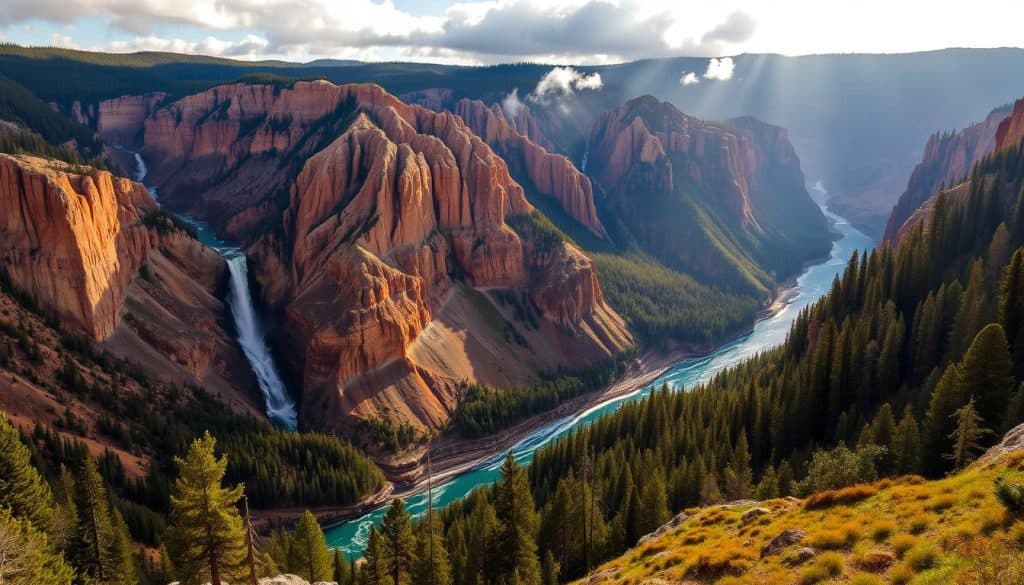
As I stood at the edge of the Grand Canyon of the Yellowstone, I was struck by its sheer scale and vibrant colors. The canyon, about 20 miles long and 800-1,200 feet deep, is a testament to the park’s incredible geological diversity. The vibrant yellow, orange, and red colors of the canyon walls come from hydrothermally altered rhyolite rock, creating a breathtaking landscape.
Exploring the Rims
The Grand Canyon of the Yellowstone is accessible from both the North and South Rims, each offering unique perspectives. If you’re short on time, prioritize the South Rim for the iconic view from Artist Point. The North Rim, however, offers different perspectives from Lookout Point and Red Rock Point.
Viewpoints and Trails
Both rims offer various hiking options, from easy paved paths to more challenging trails like Uncle Tom’s Trail, which descends partway into the canyon. To fully appreciate the canyon, allow at least 2-3 hours to explore the area.
| Rim | Viewpoint/Trail | Description |
|---|---|---|
| South Rim | Artist Point | Iconic view of Lower Falls |
| North Rim | Lookout Point | Panoramic view of the canyon |
| North Rim | Red Rock Point | Unique perspective on Lower Falls |
Wildlife Viewing in Hayden and Lamar Valleys
When visiting Yellowstone for the first time, exploring Hayden and Lamar Valleys for wildlife is an unforgettable experience. These two valleys are renowned for their abundant and diverse wildlife, making them a must-visit for any nature enthusiast.
Hayden Valley: Bison Country
Hayden Valley, located in central Yellowstone, is a prime spot for bison viewing. Early morning and late evening are the best times to visit, as large herds of bison are often seen grazing in the area. The valley is also home to other animals like elk and coyotes, and occasionally, bears can be spotted. The river running through the valley is a great place for bird spotting. To make the most of your visit, remember to stop at designated pull-outs and maintain a safe distance from the wildlife.
Lamar Valley: The American Serengeti
Lamar Valley, often referred to as “America’s Serengeti,” is located in the northeast corner of Yellowstone. It’s known for its rich wildlife diversity, including bison, pronghorn, black bears, and the famous wolf packs. The best time to drive through the valley is early in the morning or around sunset when animals are most active. For a more immersive experience, consider bringing binoculars and a spotting scope. Always carry bear spray when hiking in the area.
| Valley | Best Time to Visit | Wildlife to Expect |
|---|---|---|
| Hayden Valley | Early morning, late evening | Bison, elk, coyotes, bears |
| Lamar Valley | Early morning, sunset | Bison, pronghorn, black bears, wolf packs |
For more information on wildlife viewing in national parks, check out our other resources.
Other Notable Attractions
Yellowstone’s natural wonders extend far beyond the ‘big three,’ with numerous other attractions that showcase the park’s diverse beauty. While Old Faithful, Grand Prismatic, and the Grand Canyon are must-sees, there are several other sites that first-time visitors should consider adding to their itinerary if time permits.
Mammoth Hot Springs
Mammoth Hot Springs is a unique thermal area featuring travertine terraces that resemble “inside-out caves.” The complex formation of these terraces is both fascinating and pleasing to the eye. As mineral-rich water flows over the terraces, the features are constantly changing. You can explore the Upper and Lower boardwalks that wind through the many terraces, taking in the breathtaking scenery.
Norris Geyser Basin
Norris Geyser Basin stands out as the hottest and most dynamic thermal area in Yellowstone. It’s home to the Steamboat Geyser, the world’s tallest active geyser, which can erupt up to 120 meters high. Although the eruptions are unpredictable, making it a thrilling experience for those who witness one. The basin is divided into two areas: the Porcelain Basin and the Back Basin, both of which have boardwalks that allow visitors to explore the geothermal features up close.
Yellowstone Lake and West Thumb
Yellowstone Lake, the largest high-elevation lake in North America, offers a serene and picturesque experience. The West Thumb Geyser Basin is a fascinating area where geothermal features meet the lakeshore, creating unique formations such as the “fishing cone,” where early visitors allegedly caught and cooked fish in the same spot. Allocating about 1-2 hours for each of these attractions can provide a more leisurely experience, and they often have fewer crowds than the major highlights.
These secondary attractions not only enrich your Yellowstone experience but also offer a chance to explore the park’s diverse landscapes in a more peaceful setting.
Planning Your Yellowstone Itinerary
To experience the best of Yellowstone, it’s essential to plan your itinerary according to the time you have available. With so many incredible sights and activities, making the most of your trip requires some planning.
One-Day Essential Itinerary
If you’re limited to just one day, focus on the park’s most iconic attractions. Start early at Old Faithful, then head to the Grand Prismatic Spring, and finally visit the Grand Canyon of the Yellowstone. This itinerary gives you a taste of Yellowstone’s geothermal wonders and its natural beauty. For more ideas on planning your trip, check out this guide on the best national parks for a road.
Three-Day Comprehensive Visit
With three days, you can explore more of what Yellowstone has to offer. Spend your first day on the west side, visiting Old Faithful and Norris Geyser Basin. On the second day, head to the Grand Canyon of the Yellowstone and enjoy the scenic views around Yellowstone Lake. On your third day, take time to watch wildlife in Hayden Valley or explore the Lamar Valley.
Five-Day In-Depth Experience
Having five days allows you to delve deeper into Yellowstone’s natural wonders. Follow the three-day itinerary, then use your additional days to hike some of the park’s trails, participate in ranger programs, or explore less-visited areas. This extra time also gives you flexibility in case you encounter unexpected wildlife or weather conditions.
| Day | One-Day Itinerary | Three-Day Itinerary | Five-Day Itinerary |
|---|---|---|---|
| Day 1 | Old Faithful, Grand Prismatic Spring, Grand Canyon of the Yellowstone | West side attractions (Old Faithful, Norris Geyser Basin) | West side attractions (Old Faithful, Norris Geyser Basin) |
| Day 2 | – | Grand Canyon of the Yellowstone, Yellowstone Lake | Grand Canyon of the Yellowstone, Yellowstone Lake |
| Day 3 | – | Wildlife watching (Hayden or Lamar Valley) | Wildlife watching (Hayden or Lamar Valley) |
| Day 4 | – | – | Hiking or ranger programs |
| Day 5 | – | – | Exploring less-visited areas |
Practical Tips for Visiting Yellowstone
Visiting Yellowstone National Park can be a thrilling experience, but it requires some planning to ensure a safe and enjoyable trip. As you prepare for your adventure, consider the following practical tips to make the most of your time in the park.
Lodging Options
When it comes to lodging, you have the option to stay inside or outside the park. Staying inside Yellowstone allows for a more immersive experience and reduces travel time to attractions. However, it can be more expensive. Booking accommodations 6-12 months in advance is highly recommended to ensure availability.
Safety First
Safety should be your top priority when exploring Yellowstone. Keep a safe distance from wildlife – at least 100 yards from bears and wolves, and 25 yards from other animals. Always stay on designated boardwalks around thermal features, as the ground can be thin and scalding hot beneath your feet.
Avoiding Crowds
To avoid crowds and traffic jams, plan your day strategically. Visit popular attractions early in the morning or late in the afternoon. Be patient during “bison jams” and use pullouts to stop and observe wildlife without holding up traffic.
| Tip | Benefit |
|---|---|
| Book accommodations early | Ensures availability and reduces stress |
| Stay on designated paths | Prevents accidents and protects the environment |
| Visit popular spots early or late | Avoids crowds and enhances experience |
By following these practical tips, you can have a safe, enjoyable, and stress-free experience in Yellowstone National Park.
Conclusion
For those planning their first trip to Yellowstone National Park, here’s what I’ve learned: the park is vast, and while it’s impossible to see everything in one trip, focusing on the highlights can still provide an unforgettable experience. Advance planning is crucial, especially for accommodations, but don’t forget to leave some room for spontaneity, whether it’s for wildlife sightings or changing weather conditions.
Whether you’re a casual sightseer or an avid hiker and wildlife photographer, Yellowstone has something for you. Be prepared for a lot of walking and manage your expectations about wildlife sightings – they’re unpredictable but rewarding. For a first visit, 3-4 days is ideal, but even a single day can be magical with proper planning. Check out this helpful guide on what to do in Yellowstone to make the most of your trip.
Lastly, remember to respect this natural treasure by following Leave No Trace principles and being mindful of the park’s delicate ecosystems and wildlife. With these tips in mind, you’re ready to embark on an adventure of a lifetime in Yellowstone National Park.
FAQ
What’s the best time to visit Yellowstone National Park?
The best time to visit Yellowstone depends on your preferences. Peak season is June to August, but if you’re looking for fewer crowds, consider visiting during the shoulder seasons (May and September-October).
How do I avoid crowds and traffic jams in Yellowstone?
To minimize encounters with crowds, plan your visit during the shoulder season or early in the morning. Additionally, consider exploring lesser-known areas like the Lamar Valley or Hayden Valley.
What are the must-see attractions for first-timers in Yellowstone?
For a first-time visit, prioritize iconic sites like Old Faithful, Grand Prismatic Spring, and the Grand Canyon of the Yellowstone. These attractions offer a glimpse into Yellowstone’s unique geothermal features and natural beauty.
Are there any safety precautions I should take when visiting Yellowstone?
Yes, always maintain a safe distance from wildlife, and be aware of your surroundings, especially in areas with thermal features. It’s also a good idea to carry bear spray as a precautionary measure.
Can I hike in Yellowstone, and what are some recommended trails?
Yellowstone offers numerous hiking trails for various skill levels. Popular options include the Grand Prismatic Overlook Trail and trails around Yellowstone Lake. Always check trail conditions and weather forecasts before heading out.
What’s the best way to explore Yellowstone’s geysers and hot springs?
The Upper Geyser Basin and Norris Geyser Basin are must-visit areas for geyser enthusiasts. Take a stroll along the boardwalks to explore these unique geothermal features up close.
How can I make the most of my visit to Yellowstone with limited time?
Even with limited time, you can experience the best of Yellowstone by focusing on one or two main areas, such as the Upper Geyser Basin or the Grand Canyon of the Yellowstone, and planning your itinerary accordingly.