
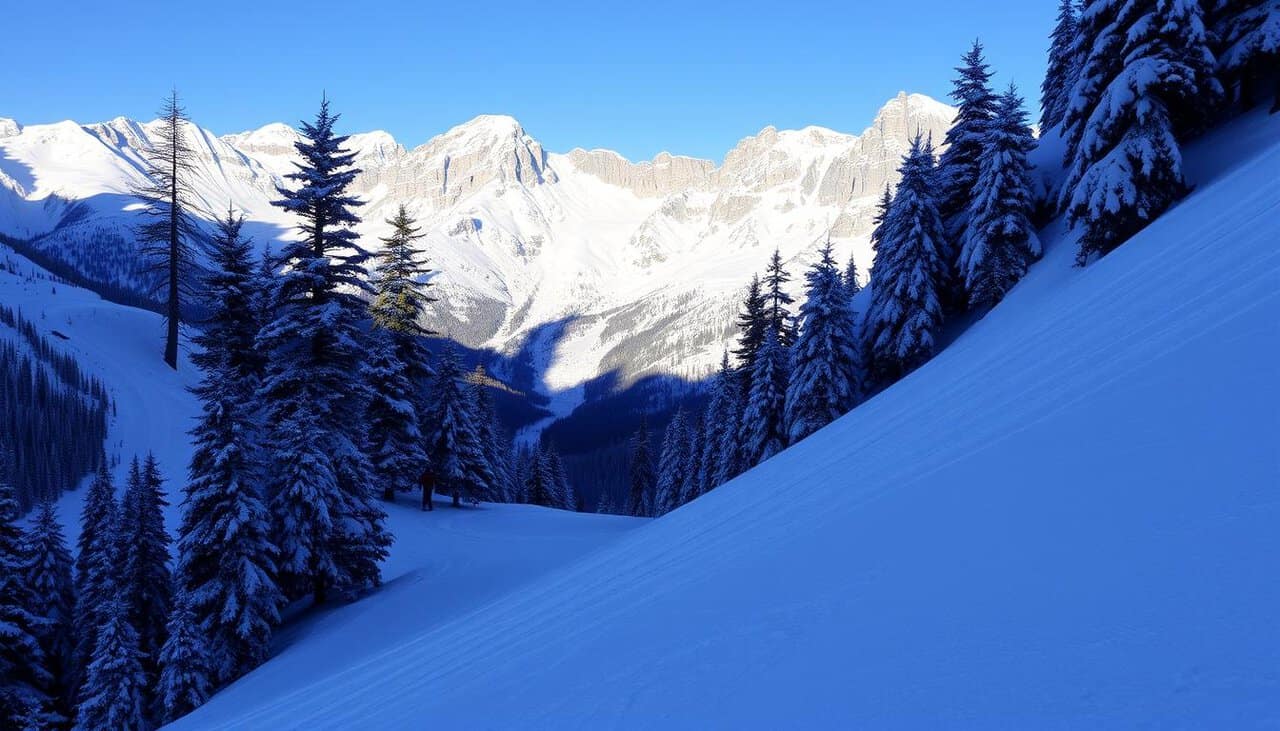
Imagine carving through a slope so steep it makes your heart race and your skills be put to the ultimate test. The steepest ski runs in North America are not for the faint of heart; they’re for those who crave the thrill of descending a mountain at breakneck speeds.
One such run is so notoriously challenging that it has become a bucket-list achievement for expert skiers. With a pitch that will push your limits, this trail is a true test of skill and bravery.
As we explore the top ski runs across the US, you’ll understand what makes these trails uniquely challenging and why they’re considered the most extreme.
Key Takeaways
- Understanding what makes a ski run steep and challenging.
- Exploring the official record holder for the steepest trail.
- Discovering other legendary ski runs across North America.
- Learning about the technical challenges beyond just pitch angle.
- Identifying what separates merely difficult trails from the truly extreme slopes.
Understanding Steep Ski Trails in America
Skiing down steep trails is an exhilarating experience, but have you ever wondered how their difficulty is measured? The steepness of a ski trail is a critical factor in determining its overall difficulty.
How Steepness is Measured in Skiing
The difficulty of a ski run is decided by evaluating the percentage of its pitch. A slope gradient is created to categorize the difficulty rating of a slope. In North America, the rating system differs from those used in Europe, Japan, and Scandinavia.
What Makes a Trail Technically Challenging
Beyond the pure steepness, technical features make trails challenging. These include narrow chutes, mandatory drops, and obstacle navigation. External factors like weather conditions, snow quality, and elevation also play a significant role in transforming a manageable pitch into a nearly impossible one.
Some key factors that contribute to a trail’s technical difficulty include:
- Narrow passages that require precise navigation
- Mandatory drops that demand a certain level of fearlessness
- Obstacle navigation that tests a skier’s agility and control
As you can see, understanding the steepness and technical challenges of a ski trail is crucial for assessing its overalldifficultyand preparing for the adventure ahead.
Corbet’s Couloir – Jackson Hole’s Legendary Drop
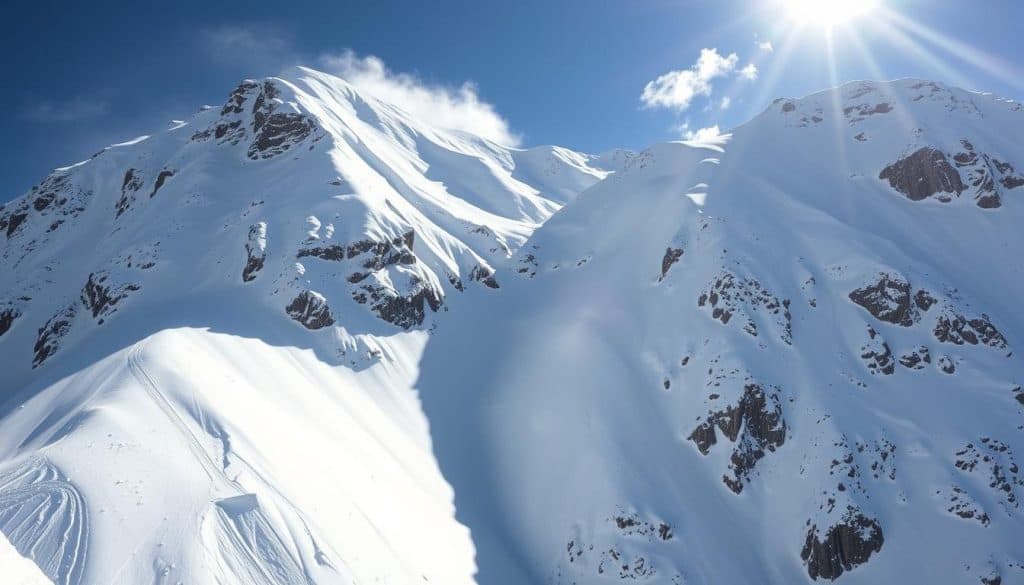
For skiers and snowboarders, Corbet’s Couloir in Jackson Hole represents the ultimate challenge. This double black diamond slope is not for the faint of heart, demanding courage, exquisite technique, and nerves of steel from those who dare to tackle it.
The Infamous Entry Drop
The run begins with an immediate 10 to 20 feet drop, a threshold that skiers must commit to without hesitation. This initial plunge sets the tone for the rest of the run, requiring precision and skill to navigate the steep terrain that follows.
Why It’s Considered America’s Scariest Ski Run
Corbet’s Couloir is considered one of America’s most intimidating runs due to its combination of steepness, exposure, and the mandatory hard turn immediately after the entry drop to avoid the rock wall. Skiers must be traveling at high speed and make this turn with precision, making it a truly exhilarating experience.
Corbet’s Couloir has become a cultural icon in skiing, featured in numerous films and now hosting the annual Kings and Queens of Corbet’s freeride competition. While its 50-degree pitch isn’t the steepest, the overall experience makes it a legendary drop.
McConkey’s (Eagle’s Nest) – Palisades Tahoe’s Vertical Challenge
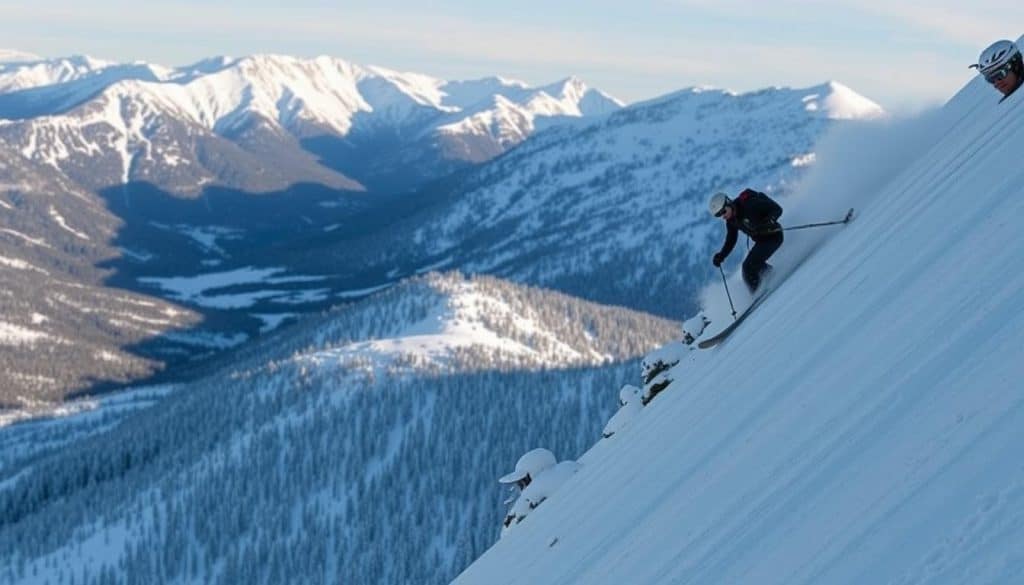
For expert skiers looking for a challenge, McConkey’s at Palisades Tahoe is a name that resonates with thrill and adventure. Named after Shane McConkey, the “Godfather of Freestyle Skiing and Ski-Base Jumping,” this slope is legendary.
The 68-Degree Pitch Experience
The Center Route down McConkey’s is recognized as the world’s steepest lift-accessible slope, boasting a 68-degree pitch at its steepest point. Expert skiers can choose from three routes, each offering a unique skiing experience.
The Legacy of Shane McConkey
Shane McConkey’s influence on extreme skiing is still celebrated through the G.N.A.R. competition, which embodies his playful yet daring approach to the sport. McConkey’s slope is a testament to his legacy, attracting expert skiers who seek to push their limits on its steep slope.
Senior’s Run at Palmyra Peak – Telluride’s Summit Plunge
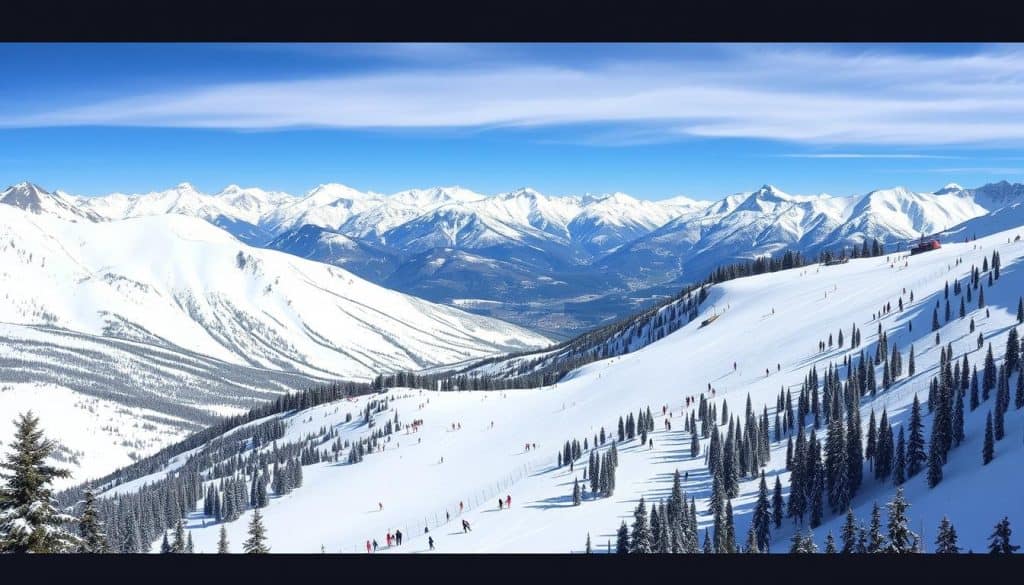
At the summit of Telluride Mountain Resort lies Senior’s Run at Palmyra Peak, a slope that embodies the essence of extreme skiing. Located at an impressive 13,320 feet, this run is not for the faint of heart. You have to hike along a narrow ridgeline with your skis and backcountry equipment to reach the start of this thrilling line.
The High-Altitude Approach
The hike to Senior’s Run is challenging, requiring you to carry your gear along a narrow ridge. This adds an element of mountaineering to the experience, making it a true test of endurance and skill.
Navigating the 52-Degree Descent
With a steep 52-degree pitch, Senior’s Run presents a significant challenge. The occasional rocks along the way offer opportunities for freestyle riders to catch some air. The thin air at this high elevation adds to the difficulty, making every turn a true test of skill and physical condition.
Senior’s Run at Palmyra Peak is a true big-mountain experience within the boundaries of a mountain resort. The vertical drop and sustained steepness make it one of the most physically demanding in-bounds runs in North America.
Christmas Chute – Alaska’s Narrow Nightmare
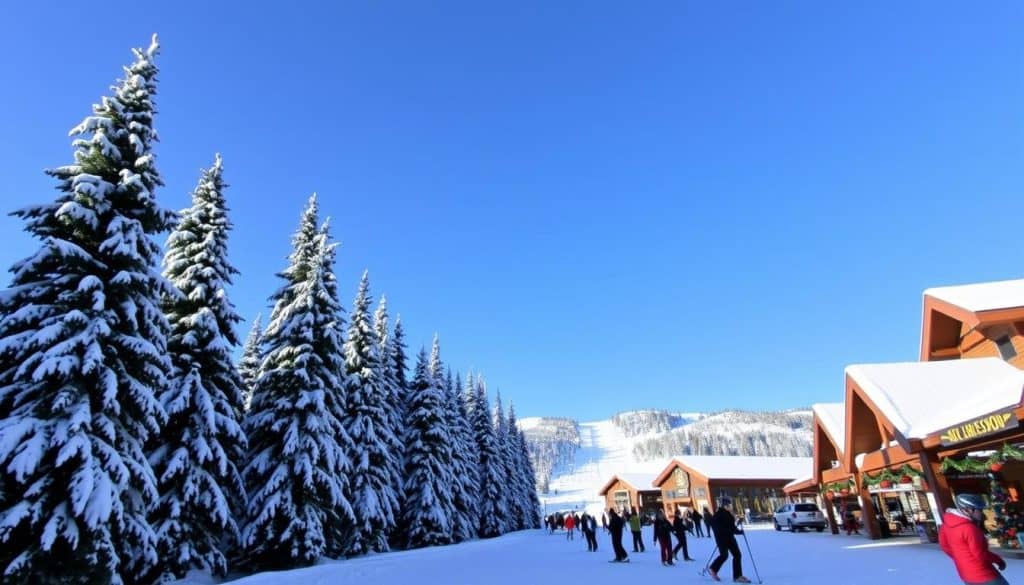
Alyeska Ski Resort’s Christmas Chute is a bucket-list run for expert skiers worldwide. This notorious chute is known for its extreme narrowness and steepness, making it a true test of skill and courage.
Skiing Between Rock Walls
Skiing down Christmas Chute is an intense experience, with rock walls towering 40 feet on either side. This narrow passage creates a claustrophobic sensation, amplifying the challenge and thrill of the descent.
The 50-Degree Sustained Pitch
The Christmas Chute boasts a 50-degree sustained pitch over a 1,500-foot vertical drop. This relentless incline demands unwavering focus and skill from skiers, as there’s no opportunity to rest or regroup during the descent.
Accessing this challenging run is relatively straightforward, thanks to Chair 6, the “Glacier Bowl Express” at Alyeska Ski Resort. For those ready to take on one of North America’s most intimidating in-bounds ski experiences, Christmas Chute awaits.
Lake Chutes – Breckenridge’s Hidden Extreme Terrain
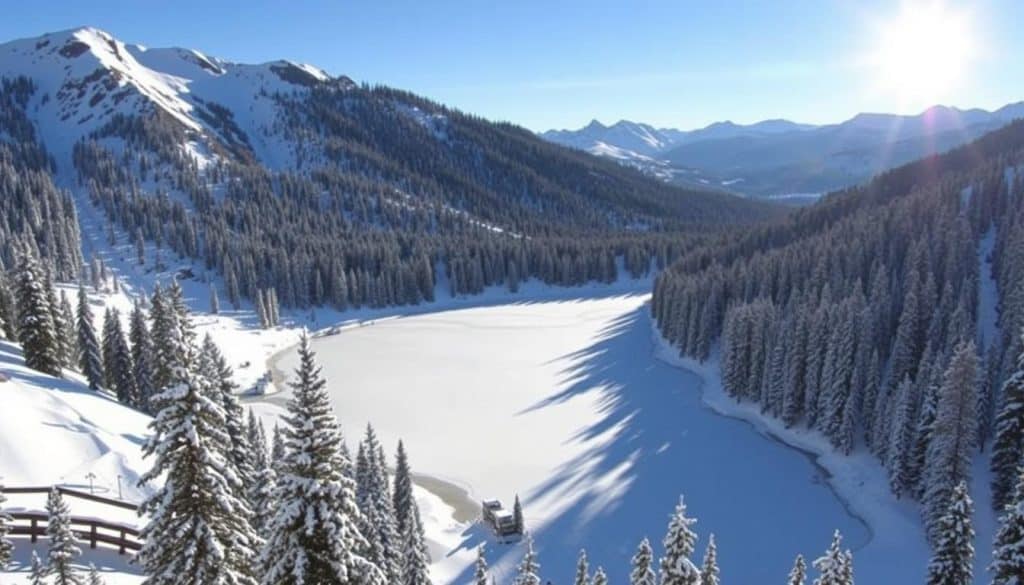
Tucked away in the Breckenridge Ski Resort is Lake Chutes, a hidden gem for thrill-seeking skiers. This double black diamond run is located near Zoot Chute at Peak 8.
Finding the 49-Degree Pitch at Peak 8
The Lake Chutes run begins at 13,000 feet with a steep drop, boasting a 49-degree pitch that rivals some of the steepest in-bounds terrain anywhere. To access this challenging run, skiers must navigate through the Peak 8 area.
Navigating Pyramid Cliffs and Technical Features
As skiers make their way down, they’ll encounter Pyramid Cliffs, a feature that offers opportunities for catching air and attempting flips for experienced freestyle skiers. The presence of rocks and technical features demands high skill levels and caution.
East Coast Extremes – The Steepest Trails in the Eastern US
While Western ski resorts often get the glory for their steep terrain, the East Coast has its own extreme ski runs that demand skill, strategy, and a healthy dose of courage. The Eastern US ski trails offer a unique set of challenges that differentiate them from their Western counterparts.
Paradise at Mad River Glen
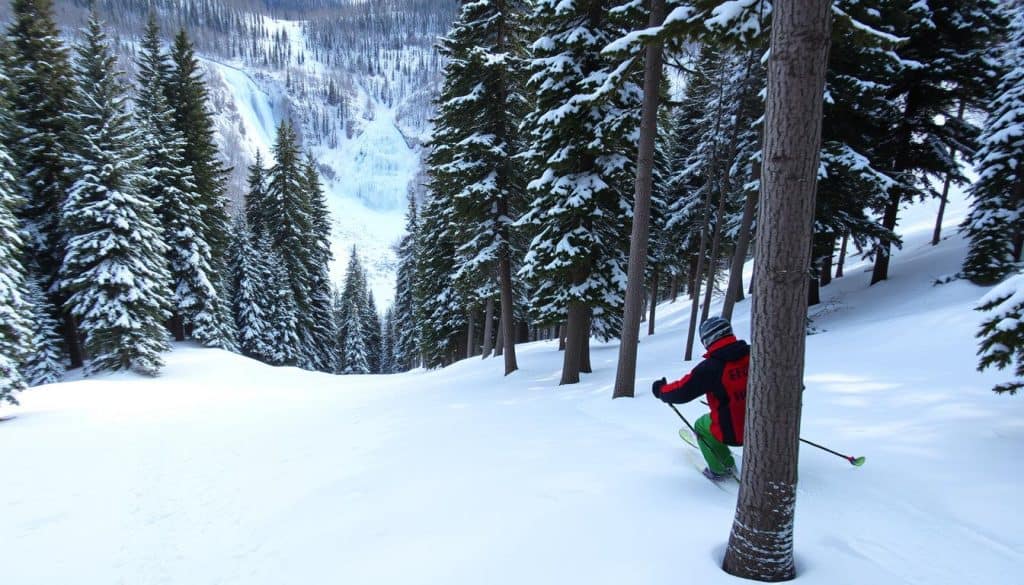
Paradise at Mad River Glen in Vermont is a notoriously difficult run. With a 38-degree pitch, dense trees, and an 8-foot entry drop, this trail is not for the faint of heart. The terrain is filled with moguls and frozen waterfalls, making it a true test of skill and technique.
White Nitro at Sugarloaf

White Nitro at Sugarloaf in Maine boasts a 43-degree pitch, making it one of the steepest runs on the East Coast. The trail is often covered in ice rather than powder, adding to the challenge. Skiers need to have excellent edge control and the ability to navigate through challenging conditions.
These East Coast extremes require a different skill set than Western steeps, emphasizing edge control, quick reflexes, and the ability to navigate through trees. Wind, ice conditions, and narrow trails combine to make these runs legitimately extreme.
What Makes These Trails So Challenging?
For expert skiers, tackling the steepest trails in the US means navigating a complex mix of steep terrain, technical obstacles, and ever-changing weather conditions. As we explore what makes these trails so daunting, it’s essential to look beyond their steepness.
The terrain features of these trails are a significant factor in their challenge. Technical features such as mandatory cliff drops, narrow chutes, and navigating between rocks and trees multiply the difficulty of steep terrain. For instance, trails like Corbet’s Couloir at Jackson Hole are notorious not just for their steepness but also for the technical entry drop that requires precision and skill.
Beyond Steepness – Technical Features and Obstacles
Technical features and obstacles play a crucial role in making these trails challenging. Skiers must navigate through complex terrain that includes narrow passages, rock outcrops, and dense tree stands. The presence of these features demands a high level of skiing proficiency and situational awareness. For example, trails like Christmas Chute in Alaska require skiers to navigate between rock walls, adding an extra layer of complexity to the run.
Moreover, the lack of grooming on these extreme trails means that skiers often face challenging features like moguls and variable snow conditions. This variability keeps skiers on their toes, as they must adapt their technique to the changing terrain.
Weather and Snow Conditions as Factors
Weather and snow conditions dramatically affect the challenge level of these trails. The same run can be approachable in powder but potentially deadly when icy or wind-scoured. Harsh winds, heavy snowfall, and fog can alter the skiing experience in an instant, making it crucial for skiers to assess conditions carefully before attempting these trails. For instance, a trail that is manageable in good visibility can become hazardous in low visibility due to the risk of getting lost or misjudging the terrain.
Furthermore, altitude effects and exposure to drop-offs with serious consequences contribute to the psychological challenge of extreme runs. Skiers must not only be skilled but also mentally prepared to handle the risks associated with these trails.
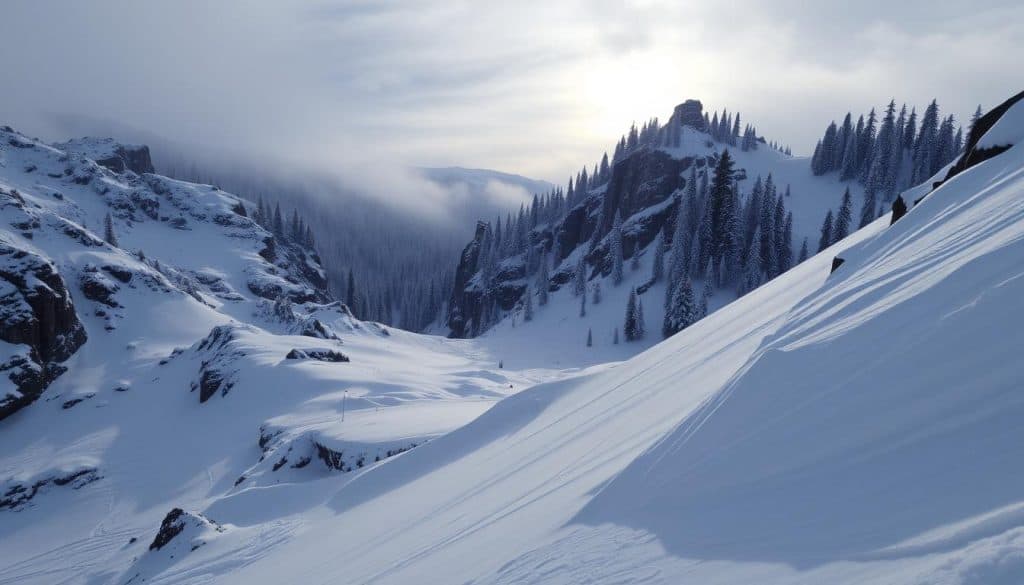
In conclusion, the challenge of the steepest trails in the US is multifaceted, involving not just steepness but also technical features, weather conditions, and the psychological aspect of skiing extreme terrain. Understanding these factors is crucial for skiers looking to tackle these trails.
Safety Considerations for Extreme Ski Trails
Extreme ski runs demand respect, preparation, and a keen awareness of safety considerations. As you prepare to tackle the steepest trails in the US, it’s crucial to understand the factors that contribute to a safe and successful skiing experience.
First and foremost, proper equipment is essential. This includes a helmet and, for certain in-bounds extreme areas, avalanche safety gear. It’s also vital to conduct an honest self-assessment of your skill level to avoid overestimating your abilities on extreme terrain.
- Ski with partners when tackling extreme runs to ensure help is available if needed.
- Properly scout lines before committing to them to understand the terrain and potential hazards.
- Check conditions thoroughly and follow ski patrol guidance to stay informed about the mountain’s status.
- Know when to walk away from a run if conditions aren’t favorable, prioritizing caution over the desire to ski.
Expert skiers approach these runs with respect and preparation rather than recklessness. By doing so, you can enjoy the thrill of skiing extreme terrain while minimizing risks.

Conclusion
The quest for the steepest trail in the US reveals a mix of contenders, with Rambo at Crested Butte standing out as the official record holder.
As we’ve explored, the appeal of these extreme ski runs lies not just in their steepness, but in their technical features, challenging conditions, and the psychological hurdles they present.
For expert skiers, these legendary runs have become bucket-list achievements, offering a challenge that’s both exhilarating and humbling. As you consider tackling these slopes, remember to approach them with proper preparation and respect for the mountain.
FAQ
What makes a ski trail considered steep?
A ski trail is considered steep based on its slope angle, with trails above 35 degrees generally considered challenging. Trails with pitches above 50 degrees are considered extreme.
How do skiers prepare for trails like Corbet’s Couloir?
Skiers prepare for trails like Corbet’s Couloir by honing their skills on progressively steeper terrain, building their physical conditioning, and mentally preparing for the challenge. Many also seek guidance from experienced skiers or guides.
What are some of the most challenging aspects of skiing extreme trails?
Besides steepness, extreme trails often feature technical obstacles like rocks, trees, and moguls. Weather and snow conditions can also greatly impact the difficulty and safety of these trails.
Are there any steep ski trails on the East Coast?
Yes, resorts like Mad River Glen and Sugarloaf offer extreme terrain, including trails like Paradise and White Nitro, which feature steep pitches and challenging conditions.
What safety considerations should skiers take when tackling extreme trails?
Skiers should assess their skill level honestly, check the weather and snow conditions, and consider skiing with a partner or guide. They should also be prepared for emergencies and know their limits.
How do ski resorts like Crested Butte and Jackson Hole maintain their extreme terrain?
Resorts maintain their extreme terrain by monitoring snow conditions, managing vegetation, and sometimes using terrain management techniques to ensure the trails remain safe and accessible for expert skiers.