

As an avid hiker, I’ve learned that the key to a more enjoyable backpacking experience lies in minimizing gear weight without sacrificing comfort or safety. The concept of the “Big 4” in ultralight backpacking has revolutionized the way we think about our backpacking trips.
The Big 4 refers to the four heaviest and most crucial items in our gear: the pack, tent, sleeping bag/quilt, and sleeping pad. These items can make or break our backpacking experience, and optimizing them can significantly reduce our base weight.
By focusing on these four essential items, hikers can dramatically reduce their overall weight, making for a more enjoyable and efficient hiking experience. In this article, we’ll explore the importance of the Big 4 and provide guidance on selecting the right gear for your next backpacking trip.
Key Takeaways
- Understanding the Big 4 is crucial for ultralight backpacking.
- The Big 4 items are the pack, tent, sleeping bag/quilt, and sleeping pad.
- Optimizing these items can significantly reduce base weight.
- A lighter load leads to a more enjoyable hiking experience.
- Balancing weight reduction with comfort and safety is essential.
Understanding the Concept of the Big 4 in Hiking
As an experienced hiker, I’ve learned that the Big 4 is a game-changer for reducing pack weight and enhancing comfort. When preparing for a backpacking trip, it’s essential to understand what the Big 4 entails and how it can significantly impact your hiking experience.
Definition and Importance
The Big 4 refers to the four heaviest items in your backpack: your backpack itself, shelter, sleeping bag or quilt, and sleeping pad. These items typically account for the majority of your base weight, which is the weight of your pack excluding consumables like food, water, and fuel. Understanding the concept of base weight is crucial because it allows you to focus on the items that will make the most significant difference in your overall pack weight. By identifying and optimizing these four critical items, you can substantially reduce your pack weight, making your hiking experience more enjoyable and less strenuous.
Your base weight is a key metric for ultralight hikers, as it directly affects your comfort and mobility on the trail. By focusing on the Big 4, you can make informed decisions about your gear, ensuring that you’re not carrying unnecessary weight.
Why Focus on These Four Items
Focusing on the Big 4 is a strategic approach to reducing pack weight because these items offer the greatest opportunity for significant weight savings. While every ounce counts, optimizing these four items can lead to substantial reductions in your overall base weight. For instance, upgrading to a lighter backpack or shelter can save several pounds, making a considerable difference on long hikes. Moreover, these items are not just about weight; they are also critical for your comfort and safety during the trip. A good sleeping bag, for example, ensures you stay warm, while a comfortable sleeping pad provides the rest you need for the next day’s hike.
By prioritizing the Big 4, you can strike a balance between weight reduction and maintaining the necessary comfort and safety. This approach is more effective than obsessing over smaller, lighter items that may not make as significant a difference in your overall pack weight. As you plan your next backpacking trip, consider the Big 4 and how optimizing these items can enhance your hiking experience.
What is the Big 4 in Hiking?
The Big 4 in hiking refers to the four heaviest items in your pack that significantly impact your overall hiking experience. These items are crucial in determining your pack’s weight and overall comfort during your backpacking trip.
The Four Heaviest Items in Your Pack
For most hikers, the Big 4 includes the backpack, shelter (tent or tarp), sleeping bag or quilt, and sleeping pad. If you’re using a hammock, your Big 4 might slightly differ, comprising your backpack, shelter (tarp and hammock), top quilt, and underquilt or foam pad. These four items typically constitute 70-80% of a hiker’s base weight, making them the primary focus for weight reduction efforts.
| Big 4 Item | Ground Sleeping | Hammock Camping |
|---|---|---|
| 1 | Backpack | Backpack |
| 2 | Tent or Tarp | Shelter (Tarp and Hammock) |
| 3 | Sleeping Bag/Quilt | Top Quilt |
| 4 | Sleeping Pad | Underquilt or Foam Pad |
How They Impact Your Overall Hiking Experience
The weight of these Big 4 items directly impacts your energy expenditure on the trail, affecting how far and fast you can travel comfortably. Moreover, they influence not just pack weight but also pack volume, which affects the size of the backpack needed and overall carrying comfort. The Big 4 items work together as a system; for instance, choosing a warmer sleeping bag might allow for lighter clothing, illustrating how decisions in one area can influence others.
Beyond weight considerations, the Big 4 items significantly impact your overall hiking experience, including comfort in camp, quality of sleep, and protection from the elements. Different hiking styles, such as ground sleeping versus hammock camping, slightly alter what constitutes the Big 4, but the principle remains the same – focusing on the heaviest gear items to optimize your backpacking experience.
The Backpack: Your Carrying System

As we delve into the world of ultralight backpacking, it becomes clear that the backpack is more than just a bag – it’s a carrying system. Your backpack is the foundation upon which your entire hiking setup is built, and it plays a crucial role in determining your overall comfort and efficiency on the trail.
Ultralight Backpack Options
Ultralight backpacking bags come in two major categories: simple frame and frameless. A simple frame pack, like the Zpacks Arc Haul Ultra, is best suited for multi-day hikes and has a base weight between 10 and 12 pounds. These bags are designed to handle more weight and volume comfortably and distribute it evenly across your back and hips.
A frameless backpacking bag has less rigid components and generally simpler designs. Because of their fewer features, these packs tip the scale at around two pounds. When choosing between these options, it’s essential to consider your hiking style, the length of your trips, and the type of terrain you’ll be covering.
Key Features to Consider
When selecting a lightweight backpack, several key features come into play. These include capacity, load transfer capability, padding, and accessibility features. A good backpack should be able to distribute the weight of your gear effectively, ensuring that you’re comfortable throughout your hike.
Additionally, consider the material and build quality of the backpack. A durable backpack that can withstand various weather conditions and rough handling is crucial for long-term use.
Balancing Weight and Comfort
One of the critical trade-offs hikers face when selecting a pack is between weight and comfort. Lighter packs often sacrifice some comfort features or carrying capacity. It’s essential to find a balance that works for you, considering factors like the length of your hikes and your personal comfort preferences.
Properly fitting your backpack is also crucial. Adjusting the straps and load lifters can make a significant difference in how comfortable the pack feels. Experimenting with different adjustments can help you find the optimal fit.
In conclusion, your backpack is a vital component of your hiking gear, serving as both a weight item and the system that carries all your other equipment. By understanding the different types of ultralight backpacks, key features to consider, and the trade-offs between weight and comfort, you can make an informed decision that enhances your overall hiking experience.
Shelter Options: Protecting Yourself from the Elements
The shelter you choose for your backpacking adventure plays a significant role in your overall experience. It’s not just about having a roof over your head; it’s about staying safe, dry, and comfortable throughout the night.

Ultralight Tents
Ultralight tents have revolutionized the backpacking world by offering the perfect blend of protection and weight savings. Traditionally, tents were the heaviest piece of equipment in a backpacker’s pack, but now, with advancements in technology, ultralight tents provide all the comfort and convenience without the excessive weight.
A key advantage of tents over other shelter options is their versatility. They can be set up almost anywhere, especially if they are freestanding. This flexibility, combined with the added protection from the elements and privacy, makes them a popular choice among backpackers.
Hammock Systems
For those who prefer to avoid sleeping on the ground, hammock systems offer an excellent alternative. Hammocks are particularly advantageous in certain terrains where finding a flat spot for a tent is challenging. They can be suspended between trees, providing a comfortable and elevated sleeping solution.
When considering a hammock system, it’s essential to think about the additional gear required, such as bug nets and tarps, to ensure a comfortable and dry night’s sleep. Hammocks can offer significant weight savings compared to traditional tents, making them an attractive option for ultralight backpackers.
Bivy and Tarp Setups
For the most minimalist backpackers, bivy and tarp setups represent the ultimate in lightweight shelter options. These setups can dramatically reduce shelter weight, but they require a certain level of experience and comfort with exposure to the elements.
Bivy sacks provide a compact, enclosed space that can be used in conjunction with a tarp for added protection. While they offer less interior space than tents, they are significantly lighter and can be an effective solution for experienced backpackers looking to minimize their pack weight.
When choosing a shelter, it’s crucial to consider factors such as terrain, climate, and personal sleeping preferences. The lightest option isn’t always the best for every situation. For more insights on upgrading your backpacking gear, check out our article on 10 must-have ultralight backpacking gear items.
Sleeping Bags and Quilts: Staying Warm at Night

When it comes to backpacking, one of the most critical decisions you’ll make is choosing between a sleeping bag and a quilt for staying warm at night. Both options have their advantages and disadvantages, and the right choice for you will depend on several factors, including your personal comfort preferences, the typical weather conditions you’ll be hiking in, and your priorities regarding weight and packability.
Traditional Sleeping Bags vs. Quilts
Traditional sleeping bags are known for their ability to retain heat, making them a great option for colder nights. They are fully enclosed, which helps to keep the warmth in. However, this enclosure comes at the cost of additional weight due to the extra material and the zipper. On the other hand, quilts are designed to be lighter and more packable. By removing the hood, back, and zipper, quilts significantly reduce the amount of material used, making them an attractive option for ultralight backpackers.
Quilts are the clear winner when it comes to weight and packability, but they can be prone to drafts due to their zipperless design. Some backpackers mitigate this issue by using a draft tube or by wearing a hat and warm socks to bed. In contrast, sleeping bags offer superior heat retention but are generally heavier.
Temperature Ratings and Seasons
Understanding the temperature rating of your sleeping bag or quilt is crucial for ensuring you stay warm. These ratings are usually provided by the manufacturer and indicate the lowest temperature at which the bag or quilt will keep you warm. When choosing a sleeping system, consider the seasons and conditions you’ll most likely be hiking in. For colder seasons, a sleeping bag with a lower temperature rating is preferable.
It’s also worth noting that you can extend the temperature range of your sleeping bag or quilt by wearing warm clothing to bed or using a sleeping pad with insulation. This strategy can allow you to carry a lighter sleep system.
Materials and Weight Considerations
The choice between down and synthetic insulation is another critical decision. Down insulation offers a superior warmth-to-weight ratio but loses its insulating properties when wet. Synthetic insulation, while heavier, retains its warmth even when damp. The weight of your sleeping bag or quilt is also influenced by the materials used for the shell and lining, as well as any additional features like a draft collar.
When selecting a sleeping bag or quilt, consider the ultralight options that use advanced materials to minimize weight without compromising on warmth. For example, some ultralight sleeping bags now strip down features like the hood to bring the weight closer to that of quilts, offering a compromise between the two.
Sleeping Pads: Comfort and Insulation

The often-overlooked sleeping pad is a critical component of your backpacking gear, providing both comfort and essential insulation from the ground. When you’re out on the trail, a good night’s sleep can make all the difference in your overall experience.
Types of Sleeping Pads
Ultralight backpackers have three primary options for sleeping pads: air pads, self-inflating pads, and closed-cell foam pads. Air pads are favored for their comfort, compressibility, and lightweight nature, but they require careful handling as they are the most fragile. Closed-cell foam pads are a budget-friendly option that, while not as lightweight as air pads, offer durability and can be trimmed to size. Self-inflating pads strike a balance between comfort, weight, and price.
Air Pads: These are the lightest and most comfortable option, making them a favorite among ultralight enthusiasts. However, they are also the most susceptible to punctures and require careful use.
Closed-Cell Foam Pads: A cost-effective and durable choice, these pads are ideal for backpackers on a tight budget. They can be cut to length and are not dependent on inflation, making them a reliable option.
R-Value and Insulation
The R-value rating system is crucial for understanding a sleeping pad’s insulation performance. It measures the pad’s ability to resist heat flow, with higher values indicating better insulation for colder conditions. Choosing a pad with the right R-value for your expected low temperatures is essential for a warm and comfortable night’s sleep.
Durability vs. Weight
When selecting a sleeping pad, hikers face a trade-off between durability and weight. Ultralight options, while appealing for their packability, may be more prone to damage. It’s essential to consider your hiking style, the terrain you’ll be covering, and the conditions you’ll face when deciding where to compromise.
By understanding the different types of sleeping pads, their R-values, and the balance between durability and weight, you can make an informed decision that enhances your backpacking experience. Whether you prioritize comfort, insulation, or packability, there’s a sleeping pad out there that’s right for you.
Strategies for Reducing Your Big 4 Weight
Shedding ounces from your Big 4 can significantly improve your overall backpacking experience. As you embark on this journey, you’ll find that there are two primary approaches to reducing the weight of your essential gear.
The first involves replacing your current gear with lighter alternatives, a strategy known as “buying it down.” This approach allows you to gradually upgrade your equipment over time, spreading out the costs and steadily reducing your base weight.
The “Buy It Down” Approach
By focusing on one item at a time, you can make significant reductions in your pack weight without breaking the bank. For instance, you might start by replacing your traditional sleeping bag with a sleeping bag quilt, which can offer substantial weight savings. As Ray Jardine, a renowned ultralight backpacking expert, once said, “The key to ultralight backpacking is to make informed choices about the gear you carry.”
When implementing the “buy it down” approach, consider buying used gear or taking advantage of sales to minimize expenses. It’s also essential to prioritize upgrades based on potential weight savings, current gear condition, and budget constraints.
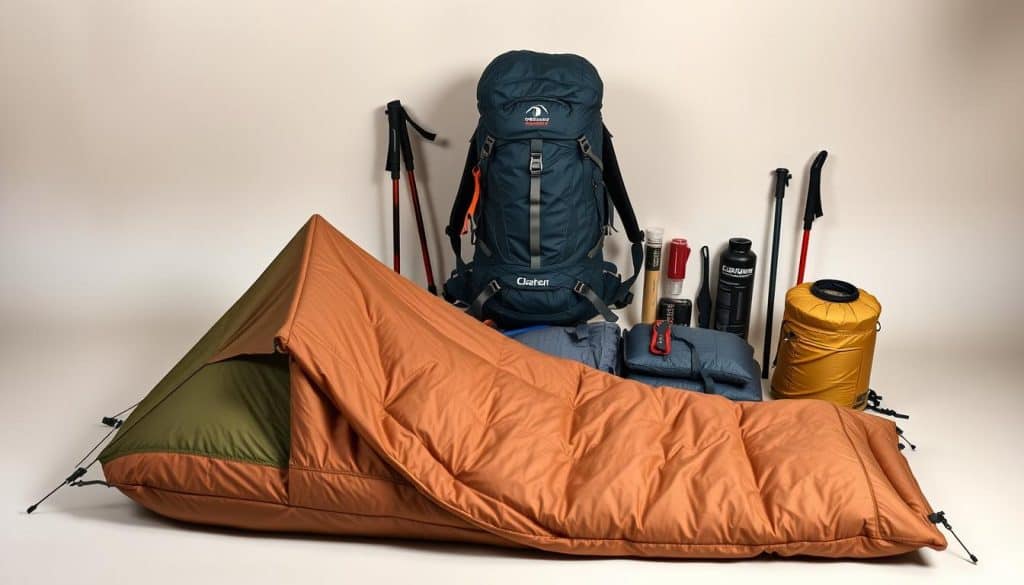
Narrowing Your Objectives
The second strategy involves narrowing your trip objectives to specific seasons or conditions, allowing you to choose more specialized and often lighter gear. By doing so, you can avoid carrying equipment designed for all-season use, which can be unnecessarily heavy and cumbersome.
For example, if you typically hike in warm weather, you can opt for a lighter sleeping bag or quilt with a lower temperature rating, significantly reducing your pack weight. As you refine your gear choices, you’ll find that your overall backpacking experience becomes more enjoyable and efficient.
By combining these strategies and being mindful of your gear choices, you can achieve a more comfortable and sustainable base weight, making your next backpacking trip a more pleasurable experience.
Balancing Comfort, Safety, and Weight
Backpackers often face a dilemma: how to balance the need for comfort and safety with the desire to reduce weight. As someone who leans towards comfort, I’ve had to make conscious decisions about where to draw the line.
I could save some ounces by opting for a tiny sleeping pad or a small bivy tent, but that would compromise my comfort in cooler conditions. My approach has been to find gear that offers comfort in cooler conditions but isn’t too heavy.
Finding Your Personal Sweet Spot
To achieve this balance, I set guidelines for the Big Four: a backpack that can comfortably hold cold weather gear and a bear canister, a tent and sleeping bag suitable for 20-degree weather with moderate snowfall, and a sleeping pad that keeps me warm on snow.
For instance, when choosing a backpack, consider one that can accommodate your gear for various weather conditions. This might mean looking for a pack with multiple compartments and pockets to keep your gear organized and accessible.
| Gear | Comfort Considerations | Weight Considerations |
|---|---|---|
| Backpack | Comfortable fit, adequate space for gear | Lightweight materials, minimalist design |
| Sleeping Bag | Warmth in cold conditions, comfort rating | Lightweight insulation, compact design |
| Tent | Weather protection, interior space | Lightweight materials, simple setup |
Seasonal Considerations
Weather conditions play a significant role in determining the right balance between comfort, safety, and weight. In the summer, a lighter setup might suffice, but in winter, you’ll need gear that can withstand colder temperatures and potentially snow.

For example, during shoulder season, you might need gear that can handle unexpected rain or cooler nights. This requires a flexible approach to packing and the ability to adjust your gear according to the conditions.
Ultimately, the key is to test your gear and your limits gradually, reducing weight incrementally to find your comfort “sweet spot” without compromising safety.
Conclusion
As we wrap up our exploration of the Big 4 in hiking, it’s clear that these four elements are crucial to a successful ultralight backpacking experience. By focusing on your backpack, shelter, sleeping bag or quilt, and sleeping pad, you can significantly reduce your pack weight and enhance your time on the trail.
The journey toward lighter backpacking is personal and often evolves over time as you gain experience and refine your preferences. It’s essential to approach weight reduction thoughtfully, considering your specific needs, hiking style, and the conditions you typically encounter on the trail.
Ultralight backpacking isn’t about achieving a specific base weight number; it’s about carrying only what’s truly needed to make your backpacking trip more enjoyable. By shedding unnecessary gear, you can open up new possibilities, including longer daily distances, more challenging terrain, or simply more enjoyable time on the trail at night.
Your Big 4 selections are not a one-time decision but an ongoing process that evolves with your experience and preferences. As you continue on your backpacking journey, remember that thoughtful attention to these elements can transform your experience, making time in the wilderness more accessible and enjoyable for hikers of all experience levels.
FAQ
What are the Big 4 items in backpacking?
The Big 4 refers to the four heaviest and most essential items in your backpack: shelter, sleeping bag, sleeping pad, and backpack.
Why is it important to focus on the Big 4 when planning a backpacking trip?
Focusing on the Big 4 helps you optimize your gear for weight and comfort, making your hiking experience more enjoyable and efficient.
How can I reduce the weight of my Big 4 gear?
You can reduce weight by choosing ultralight options, such as a lightweight tent or a sleeping bag quilt, and by considering the “buy it down” approach to gear selection.
What are some options for ultralight shelter?
Ultralight shelter options include tents like the Big Agnes Copper Spur, hammock systems, and bivy and tarp setups.
How do I choose the right sleeping bag or quilt for my needs?
Consider factors like temperature ratings, materials, and weight when selecting a sleeping bag or quilt, and think about whether a traditional sleeping bag or a quilt is best for you.
What is the importance of R-value when it comes to sleeping pads?
R-value measures a sleeping pad’s insulation and ability to keep you warm; a higher R-value generally indicates better insulation.
How can I balance comfort, safety, and weight when selecting my Big 4 gear?
Finding your personal sweet spot involves considering your specific needs and priorities, as well as seasonal considerations, to strike a balance between comfort, safety, and weight.