
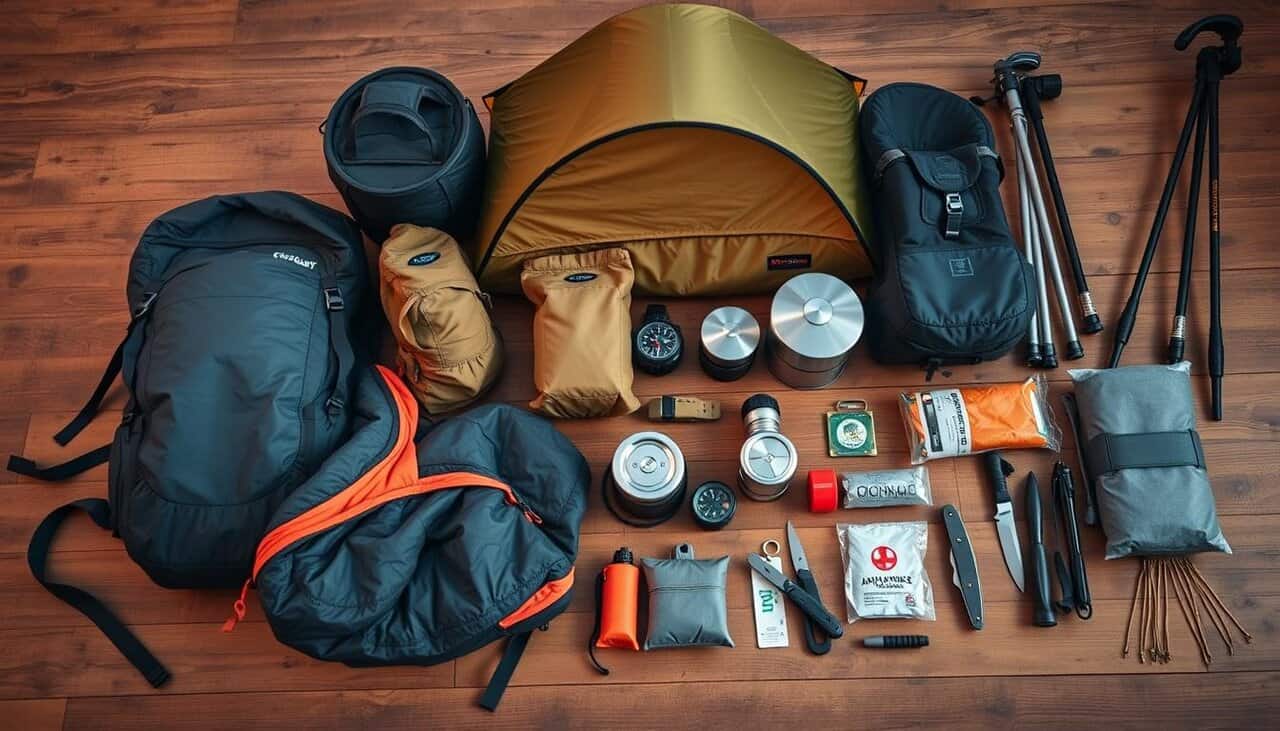
Did you know that the four heaviest items in your backpack can make or break your hiking experience? For many backpackers, the key to a successful trip lies in mastering the Big 4: the backpack, shelter system, sleeping bag/quilt, and sleeping pad.
These essential pieces of gear not only dominate your pack’s weight but also significantly impact your comfort and safety on the trail. As you embark on your ultralight journey, understanding the Big 4 is crucial for reducing your base weight and enhancing your overall hiking experience.
By making informed choices about your Big 4 items, you can dramatically improve your hiking experience, from the distance you can cover to how you feel at the end of the day. Modern innovations have made it possible to go lighter without sacrificing comfort or safety.
Key Takeaways
- Mastering the Big 4 is crucial for ultralight backpacking.
- The Big 4 includes your backpack, shelter system, sleeping bag/quilt, and sleeping pad.
- These items significantly impact your pack’s weight and hiking experience.
- Informed choices can enhance comfort and safety on the trail.
- Modern gear innovations offer lighter options without compromising performance.
Understanding the Big 4 in Hiking
As a seasoned hiker, I’ve come to realize that the Big 4 plays a significant role in determining the success of a backpacking adventure. The Big 4 refers to the four essential items that contribute the most to a hiker’s base weight and overall comfort during a trip.
Definition and Importance
The Big 4 items are critical components of backpacking gear, collectively accounting for approximately 70-80% of a typical backpacker’s base weight. Base weight, which excludes consumables like food, water, and fuel, is a crucial metric for hikers. Most conventional backpackers start with a base weight between 25 and 30 pounds, while ultralight backpacking aims for a base weight under 10 pounds. Understanding the importance of these items is key to making informed decisions about gear and weight reduction.
- The Big 4 items are the primary focus for weight reduction efforts, as they significantly impact a hiker’s overall load.
- Traditional backpacking gear for these items often weighs 12-15 pounds combined, while ultralight alternatives can bring that down to 5-7 pounds or less.
How the Big 4 Impact Your Hiking Experience
Your choice of Big 4 gear directly impacts your comfort, mobility, and energy levels while hiking, especially on multi-day backpacking trips. Reducing the weight of your Big 4 items allows you to either carry more comfort items or enjoy the benefits of a lighter load. The relationship between these four items is interconnected; for example, your choice of shelter may influence your sleeping pad needs, while your backpack must be appropriate for the volume and weight of your other gear.
By understanding how each piece of the Big 4 contributes to your overall hiking experience, you can make informed decisions about where to invest in lighter gear, ultimately enhancing your backpacking adventure.
The Concept of Ultralight Backpacking
The ultralight backpacking philosophy is centered around the idea that less is more when it comes to gear and pack weight. This approach is not just about cutting down on the weight of your backpack; it’s a mindset that influences every aspect of your hiking experience, from gear selection to trail etiquette.
As hikers adopt the ultralight approach, they often find that it requires a significant shift from traditional backpacking practices. Traditional backpacking often involves carrying heavy packs with a base weight of 25-30 pounds or more, excluding food, water, and fuel. In contrast, ultralight backpacking aims to reduce this base weight to under 10 pounds, or in some definitions, under 20% of the hiker’s body weight.
What Makes Backpacking “Ultralight”
Ultralight backpacking is generally defined as hiking with a base weight under 10 pounds. This definition can vary, with some considering it to be under 20% of the hiker’s body weight. The key is not just the absolute weight but the relative weight compared to the hiker’s needs and the terrain.
The ultralight philosophy emphasizes skill and knowledge over gear redundancy. It encourages hikers to rely on their outdoor expertise rather than carrying extra items “just in case.” This approach requires careful consideration of each item’s weight-to-utility ratio, leading to a more thoughtful and intentional packing strategy.
Benefits of Going Lighter on the Trail
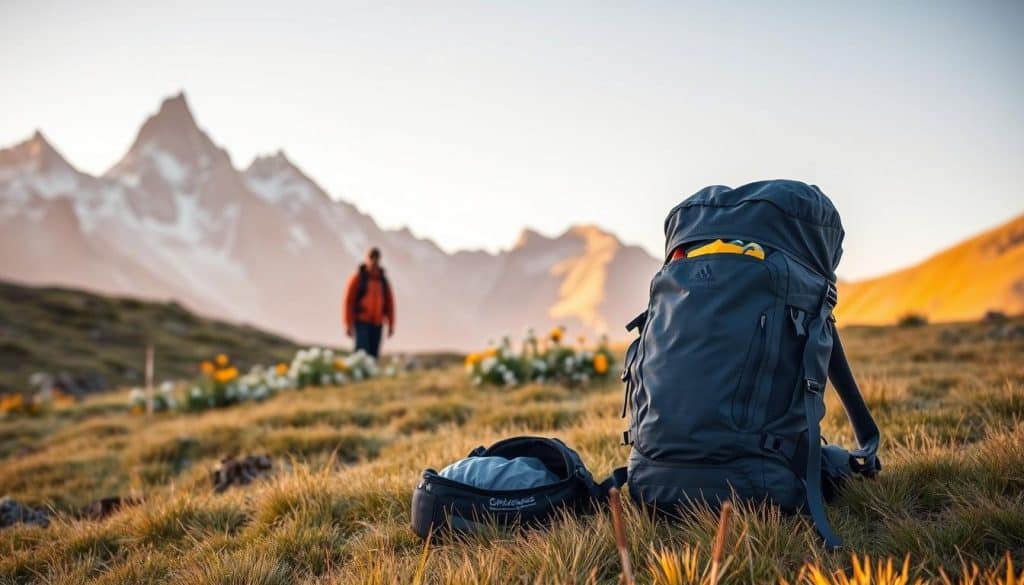
Going lighter on the trail reduces physical strain on your body, particularly your back, shoulders, knees, and joints. This can extend your hiking career and make the experience more enjoyable. For instance, hikers with lighter packs can cover more ground with less fatigue, allowing for greater daily mileage or more energy to enjoy the surroundings.
Many hikers, especially older ones, view lightweight backpacking gear as a blessing. They claim that an ultralight bag is easy on their painful joints and muscles, allowing them to continue with their passion. As one hiker noted in a discussion on ultralight backpacking forums, the reduction in weight significantly improved their overall hiking experience.
| Benefits | Description |
|---|---|
| Reduced Physical Strain | Less weight on back, shoulders, knees, and joints |
| Increased Mobility | Ability to cover more ground with less fatigue |
| Enhanced Enjoyment | More energy to enjoy surroundings and longer hiking career |
Backpack: The First of the Big 4

The first of the Big 4 in hiking is your backpack, a critical component that can significantly impact your overall hiking experience. Your backpack is the foundation of your hiking gear system, serving as both the means to carry everything and often one of the heaviest single items in your kit.
Ultralight backpacking bags come in two major categories: simple frame and frameless. Your choice of bag will depend on the length of the trip, how much weight you plan on carrying, and your experience level.
Types of Ultralight Backpacks
Simple frame packs, like the Zpacks Arc Haul Ultra, are best suited for multi-day hikes and have a base weight between 10 and 12 pounds. These bags are designed to handle more weight and volume comfortably and distribute it evenly across your back and hips.
Frameless backpacking bags, on the other hand, have less rigid components and generally simpler designs. Because of their fewer features, these packs tip the scale at around two pounds. Frameless packs like the Nashville Packs Cutaway are a good choice for ultralight enthusiasts focused on keeping weight down.
Features to Look For in a Lightweight Pack
When selecting a pack, consider not just the weight but also comfort features like padded shoulder straps, load lifters, and a hip belt that effectively transfers weight to your hips. Key features to consider include total volume (typically 40-60 liters for multi-day trips), load capacity, fit, and organization options like external pockets for frequently accessed items.
Many ultralight packs use innovative materials like Dyneema Composite Fabric (formerly Cuben Fiber) or ripstop nylon to achieve strength with minimal weight. Popular ultralight pack brands include Gossamer Gear, Hyperlite Mountain Gear, ZPacks, ULA, and Mountain Laurel Designs, each with different approaches to the weight-comfort balance.
Shelter Systems: Finding Your Home on the Trail
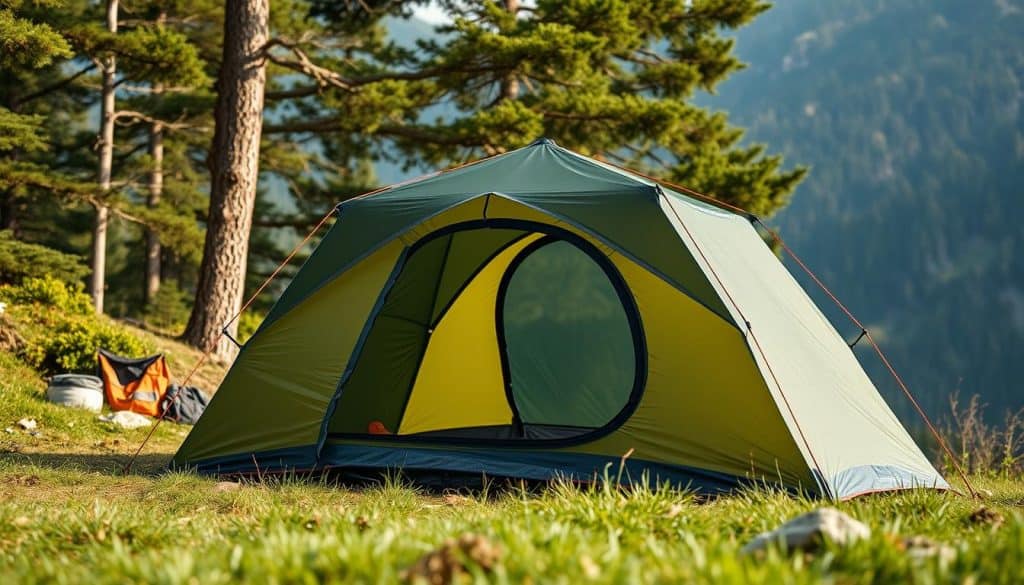
As you venture into the wilderness, your shelter becomes your home away from home, shielding you from the unpredictability of nature. Your shelter system is your haven on the trail, providing protection from the elements and a place to rest after a long day of hiking.
Ultralight Tent Options
Ultralight tents have revolutionized backpacking by significantly reducing weight without compromising on comfort. Modern ultralight tents achieve weight savings through innovative designs, such as trekking pole support instead of tent poles, lighter materials, and more efficient use of space. Popular ultralight tent options include models from ZPacks, Tarptent, Big Agnes, and Gossamer Gear, with weights ranging from 1-2 pounds for a complete shelter.
Hammock Systems
Hammock systems offer an alternative shelter option that excels in forested areas, keeping you off uneven or wet ground and potentially offering a more comfortable sleep for some hikers. Complete hammock systems, including the hammock, suspension, tarp, and insulation, can be comparable in weight to ultralight tents while offering a different camping experience.
Bivy and Tarp Setups
Bivy and tarp combinations represent the most minimalist and often lightest shelter options, with complete setups weighing as little as 8-16 ounces. This setup is ideal for backpackers who want the true feeling of sleeping under the stars. A bivy coupled with a tarp is one of the simplest forms of shelter when ultralight backpacking.
When choosing a shelter system, consider the environments you’ll be hiking in, weather conditions you expect to encounter, and your personal comfort preferences. Each shelter type has specific advantages: tents offer the most protection and privacy, hammocks can be set up in areas where flat ground is unavailable, and bivy/tarp systems offer the lightest weight and quickest setup.
Sleeping Bags and Quilts: The Third Big 4 Item
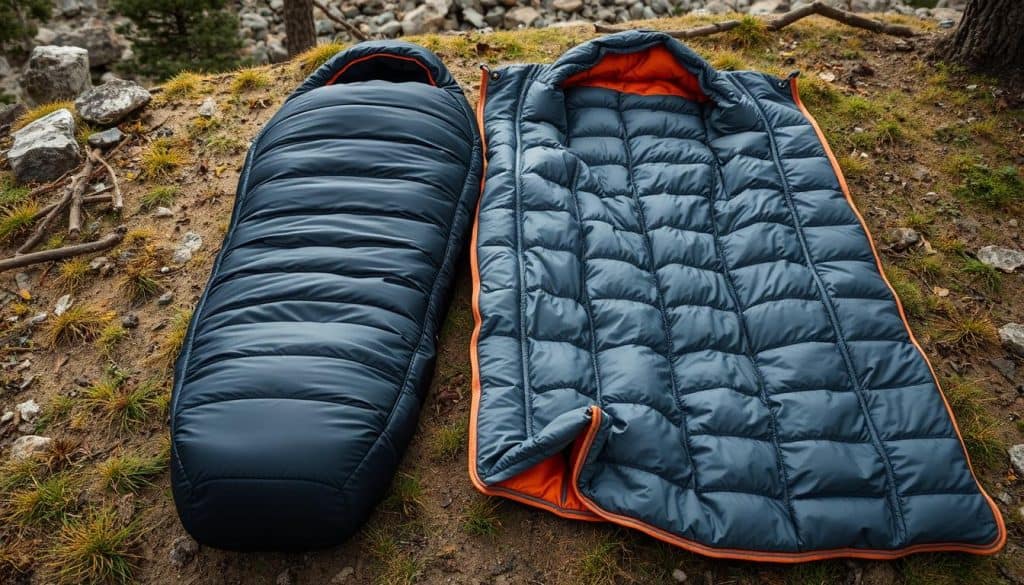
Your sleeping bag or quilt is more than just a piece of gear; it’s your personal haven on the trail. As you prepare for your next adventure, understanding the nuances between sleeping bags and quilts can make all the difference in your hiking experience.
Sleeping Bags vs. Quilts: Weight and Warmth Considerations
The debate between sleeping bags and quilts centers around weight, packability, and warmth. Quilts are generally lighter and more packable because they eliminate unnecessary material like the hood, back, and zipper found in traditional sleeping bags. However, this design can make quilts more susceptible to drafts.
Sleeping bags, on the other hand, excel in heat retention, especially on cold nights. While some ultralight sleeping bags now minimize features like hoods to reduce weight, they still offer better warmth overall. The ease of setup is another factor; sleeping bags are straightforward to use, whereas quilts require attachment to your sleeping pad.
Key considerations include:
– Your sleep system’s importance for rest and recovery
– Traditional sleeping bags weighing 2-3 pounds vs. ultralight options and quilts weighing around 1 pound or less
– Quilts lacking a hood and back, relying on your sleeping pad for insulation
– Quilts often weighing 20-30% less than comparable sleeping bags
Temperature Ratings and Materials
When choosing between a sleeping bag and a quilt, temperature ratings and materials are crucial. A 20°F (-7°C) rated bag or quilt is versatile for three-season hiking, while a 30-40°F (-1 to 4°C) rating is ideal for summer hikes.
The type of insulation is also vital. Down insulation offers the best warmth-to-weight ratio but requires care to keep it dry. Synthetic insulation performs better in wet conditions but is generally heavier.
Some popular brands for ultralight sleeping bags and quilts include Enlightened Equipment, Feathered Friends, and Western Mountaineering. When comparing similar products, quilts are usually lighter and more compressible than sleeping bags.
For cold weather or if you’re a cold sleeper, a mummy bag with a hood might be worth the extra weight for the added warmth around your head.
Sleeping Pads: Completing the Big 4
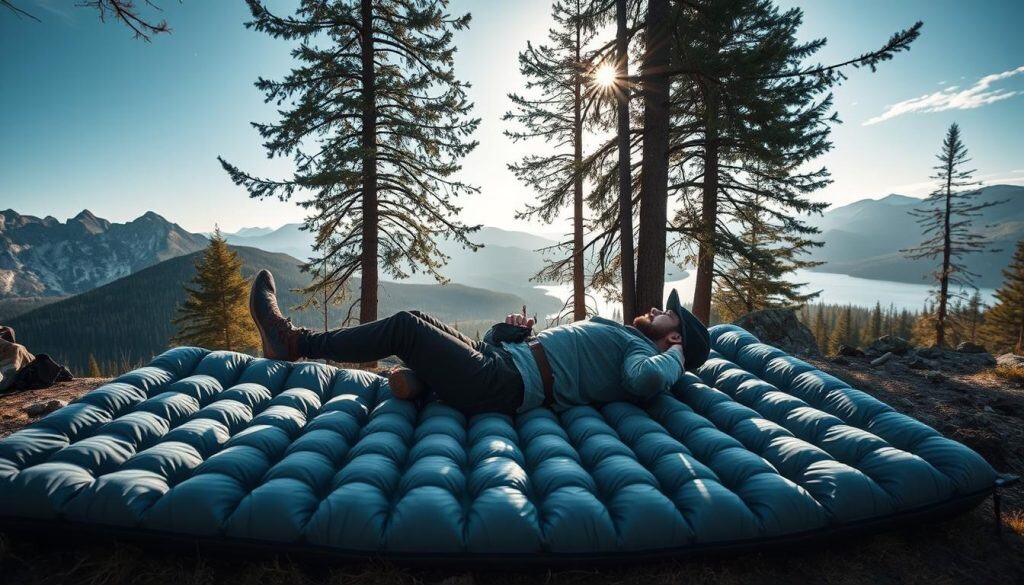
The final piece of the Big 4 puzzle is your sleeping pad, which provides both comfort and insulation on your backpacking trips. Your sleeping pad serves two essential functions: providing cushioning for comfort and, more importantly, insulation from the cold ground beneath you.
Types of Ultralight Sleeping Pads
Ultralight backpackers have three main types of sleeping pads to choose from: inflatable air pads, closed-cell foam pads, and self-inflating pads. Air pads, like the Therm-a-Rest NeoAir XLite, are a favorite among ultralight backpackers because they are comfortable, compressible, packable, and incredibly lightweight. However, they require care as they are the most fragile.
Closed-cell foam pads, such as the Therm-a-Rest Z-Lite or Gossamer Gear’s 1/8″ pad, are durable and inexpensive but bulkier. They weigh between 10-14 ounces and can’t puncture, making them a great option for backpackers on a tight budget.
Self-inflating sleeping pads offer a middle ground between air pads and closed-cell foam pads in terms of comfort, weight, and price. However, they can be bulky, making it challenging to fit them into a tiny backpack.
Balancing Comfort and Weight
When selecting a sleeping pad, consider the conditions you’ll be hiking in. Summer-only hikers can often use a lower R-value pad to save weight, while shoulder season hikers need more insulation. The R-value measures the insulating capability of a sleeping pad, with higher numbers indicating better insulation.
The width and length of your pad are also crucial considerations. Some ultralight hikers prefer torso-length pads to save weight, while side sleepers often prefer wider pads for better comfort. Many ultralight hikers combine a thin foam pad with an inflatable pad for maximum versatility.
Conclusion: Building Your Ideal Big 4 Setup
The art of assembling your Big 4 is a nuanced blend of comfort, weight, and hiking style. As you venture into the world of ultralight backpacking, you’ll discover that it’s a personal journey that requires patience and experimentation.
To start, consider your hiking environment and the conditions you’ll most frequently encounter. This will help you prioritize your gear purchases and create a system that works for you. For instance, a 10°F quilt might allow you to use a lighter sleeping pad in cold weather.
When building your Big 4 setup, remember that it’s not just about saving weight, but about finding a balance between comfort and weight. Test your gear before committing to long trips, and be prepared to refine your system as you gain experience. Your Big 4 items should work together seamlessly, much like the pieces of a well-designed puzzle.
By adopting an ultralight mindset and focusing on what works best for you, you’ll be able to enjoy your time on the trail more fully. The goal is not to achieve the lightest possible base weight, but to create a backpacking system that enhances your overall hiking experience.
FAQ
What are the Big 4 items in backpacking?
The Big 4 refers to the four essential gear items for backpacking: backpack, shelter, sleeping bag or quilt, and sleeping pad. These items are crucial for a comfortable and safe hiking experience.
How do I choose the right ultralight backpack?
When selecting an ultralight backpack, consider factors such as weight, comfort, durability, and features like suspension systems and pockets. Brands like Gossamer Gear offer a range of options to suit different needs.
What’s the difference between a sleeping bag and a quilt?
Sleeping bags provide enclosed warmth, while quilts offer a more flexible, lightweight alternative. Quilts can be a great option for warmer weather or for those who prefer a more minimalist setup.
How do I determine the right temperature rating for my sleeping bag or quilt?
Consider the expected low temperature on your trip and choose a bag or quilt with a suitable temperature rating. Look for materials and fill powers that provide the right balance of warmth and weight.
What type of sleeping pad is best for backpacking?
Ultralight sleeping pads come in various types, including foam, inflatable, and hybrid models. Consider factors like weight, comfort, and durability when selecting a pad that suits your needs.
How can I reduce my base weight on the trail?
To reduce base weight, focus on upgrading your Big 4 gear to lighter options, such as switching to an ultralight tent or a quilt. Consider the overall weight and bulk of your gear to optimize your setup.
What’s the importance of shelter systems in backpacking?
Shelter systems, including tents, hammocks, and tarp setups, provide protection from the elements. Choose a system that balances weight, comfort, and weather resistance to ensure a safe and enjoyable trip.