

As I was finishing my senior year of high school in early 2018, I stumbled upon an article that sparked a crackpot dream – walking across America. The article, titled “So You Want To Walk Across America,” was written by an inspirational woman who had accomplished this feat years prior.
The idea of covering approximately 3,000-5,000 miles on foot is daunting, yet intriguing. Thousands of adventurers have undertaken this journey, and this comprehensive guide will explore the best routes for walking across America.
We’ll delve into the popular American Discovery Trail and other alternatives, considering factors like terrain, weather, and personal preferences. Whether you’re planning to walk across America or just curious about the challenge, this guide will provide you with a thorough understanding.
Key Takeaways
- Overview of the distance and routes for walking across America
- Introduction to the American Discovery Trail and alternative routes
- Factors to consider when choosing a route, such as terrain and weather
- Practical advice on planning, preparation, and gear for the journey
- Insights into the challenges and rewards of walking across America
Understanding the Cross-Country Walking Challenge
Walking across America is more than just a physical journey; it’s a test of mental endurance and personal growth. As you consider taking on this monumental task, it’s essential to understand the challenges and appeals that come with it.
The journey across America is not for the faint of heart. It requires a significant amount of time, typically ranging from 6 to 8 months, though some have completed it in as little as 4 months or as long as 12 months or more. The duration depends on various factors, including your physical condition, the route you choose, and your personal preferences.
The Appeal of Walking Across America
So, what draws people to this incredible adventure? For many, walking across America represents a profound personal challenge. It’s an opportunity to push beyond perceived limits, to test one’s resolve, and to experience a deep sense of accomplishment.
- The journey offers an intimate connection with America’s diverse landscapes, cultures, and communities, providing a unique perspective on the country.
- Many walkers are drawn to the simplicity and mindfulness that comes with reducing life to its basics: walking, eating, and finding shelter.
- The achievement of walking coast-to-coast creates lasting confidence and resilience that walkers carry with them for years after completing their journey.
- Unlike other forms of adventure, such as climbing mountains or sailing oceans, walking across America allows for daily interactions with locals, creating a unique social dimension to the adventure.
- It’s a journey that fosters personal growth, as individuals face and overcome challenges, developing a stronger sense of self along the way.
As you prepare for your journey, remember that it’s not just about the distance; it’s about the transformation that occurs along the way. Whether you’re seeking adventure, personal growth, or a new perspective, walking across America can be a life-changing experience that stays with you for years to come.
What is the Best Route to Walk Across America?
Walking across America requires careful planning, and one of the most critical decisions is choosing the right route. The route you choose can significantly impact your journey, affecting not only your safety and comfort but also your overall experience.
When considering the best route, several factors come into play. It’s essential to think about your personal priorities: Are you looking for a route with breathtaking scenery, or one that minimizes risks? Perhaps you’re interested in a route that offers a mix of urban and rural landscapes.
Factors That Define the “Best” Route
The “best” route for walking across America is not a one-size-fits-all solution. It heavily depends on your individual priorities, such as safety, scenery, terrain variety, or social interactions. For instance, if safety is your top concern, you might prefer routes with well-maintained roads and minimal traffic.
- Road walking conditions are critical, with factors like shoulders, traffic volume, and surface quality dramatically impacting both safety and enjoyment.
- Weather timing is essential; avoiding snow in mountain passes and extreme heat in desert sections requires strategic route planning.
- The availability of resupply points for food and water significantly influences route selection, especially for those traveling without support.
- The ideal route balances natural beauty with practical considerations like cell service coverage, proximity to medical facilities, and legal camping options.
Understanding these factors and how they align with your priorities is key to selecting the best route for your cross-country walking adventure.
As you plan your route, it’s also worth considering the American Discovery Trail, which is one of the most popular routes for cross-country walkers. This trail offers a mix of scenic beauty and practicality, making it an excellent choice for many adventurers.
The American Discovery Trail

The American Discovery Trail is a remarkable coast-to-coast route that allows walkers to experience the breadth of America’s landscapes and cultures. As a system of recreational trails and roads, it collectively forms a comprehensive hiking and biking trail across the mid-tier of the United States.
Overview and History
The American Discovery Trail (ADT) is the only designated non-motorized coast-to-coast trail system in the United States, established in the 1990s. It stretches from the Delmarva Peninsula on the Atlantic Ocean to the northern California coast on the Pacific Ocean, covering a vast array of American landscapes.
Unlike other notable trails such as the Appalachian or Pacific Crest Trails, the ADT combines existing trails, towpaths, rail-trails, and rural roads to create a comprehensive cross-country route. This unique approach allows walkers to experience diverse American landscapes, including historic colonial towns, the Appalachian Mountains, Midwest farmlands, the Rocky Mountains, and the Sierra Nevada.
The trail passes through 14 national parks and 16 national forests, utilizing sections of or connecting to five National Scenic Trails, 10 National Historic Trails, and 23 National Recreation Trails. This extensive network showcases America’s natural, historical, and cultural diversity, making the ADT an ideal route for those seeking to walk across America.
The ADT was designed to highlight the country’s diverse heritage rather than focusing solely on wilderness experiences. While it may not be as well-known as other National Scenic Trails, the ADT offers the most comprehensive infrastructure for cross-country walkers, with established routes and documentation.
For individuals planning to walk across America, the American Discovery Trail provides a well-structured and diverse route that embodies the spirit of adventure and exploration. Whether you’re a seasoned hiker or embarking on a once-in-a-lifetime journey, the ADT is a testament to the beauty and complexity of the United States.
The American Discovery Trail
Embarking on the American Discovery Trail’s Northern Route is an adventure of a lifetime, spanning 4,834 miles across diverse landscapes. This route is not just a path; it’s a journey through the heart of America, showcasing its varied natural beauty and rich history.
Northern Route Highlights
The Northern Route of the American Discovery Trail is a cross-country trek that passes through the District of Columbia and 15 states, including Delaware, Maryland, West Virginia, Ohio, Indiana, Illinois, Iowa, Nebraska, Colorado, Utah, Nevada, and California. It covers a total distance of 4,834 miles, with varying terrain that includes rail-trails, mountain passes, and scenic plains.
Some of the key features of this route include:
- The Northern Route spans 4,834 miles from Delaware to California, passing through Chicago and the northern plains.
- This route features extensive rail-trail systems in the eastern and midwestern sections, providing safe off-road walking for hundreds of miles.
- The northern route offers spectacular mountain scenery through the Rockies in Colorado, including the trail’s highest point at Argentine Pass (13,207 feet).
- Walkers on this route experience the Great Plains of Nebraska, the desert landscapes of Nevada, and the Sierra Nevada mountains before reaching the Pacific.
- While longer than some custom routes, the northern American Discovery Trail provides better documentation, more established trail sections, and a more manageable elevation profile than some alternatives.
The trail passes through a variety of landscapes, offering walkers a unique experience of America’s diverse geography. From the rail trails that provide safe walking paths to the breathtaking mountain scenery, every step of the journey is filled with discovery.
The American Discovery Trail
The southern route of the American Discovery Trail is a 5,057-mile journey that takes you through some of America’s most beautiful landscapes. This route is part of the larger American Discovery Trail, which spans a total of 6,800 miles when including both the northern and southern routes.
Southern Route Details
The southern route diverges from the northern route in Ohio and rejoins it in Colorado, covering a significant distance through various states, including Kentucky, Missouri, and Kansas. As you walk this route, you’ll pass through St. Louis and Kansas City, experiencing the heart of America’s agricultural heartland.
One of the highlights of the southern route is the 240-mile Katy Trail in Missouri, which is America’s longest developed rail-trail. This trail offers a pleasant, traffic-free corridor for walkers, making it an ideal section for those looking to enjoy the scenery without the worry of heavy traffic.
The southern route generally has milder winter conditions compared to the northern route, making it a potentially better option for those planning to start their journey in the winter or early spring. Additionally, this route includes more extensive sections of the Great Plains, offering wide-open vistas and a deeper experience of America’s agricultural heritage.
- The Southern Route of the American Discovery Trail spans 5,057 miles, diverging from the Northern Route in Ohio and rejoining in Colorado.
- This route passes through the heart of America’s agricultural heartland, offering a unique cultural and geographical experience.
- The southern route features the 240-mile Katy Trail in Missouri, providing a traffic-free walking corridor.
- Milder winter conditions make the southern route appealing for winter or early spring departures.
- The route includes extensive sections of the Great Plains, offering wide-open vistas and insights into America’s agricultural heritage.
Alternative Cross-Country Routes
For those looking for a safer, more straightforward cross-country route, the Great American Rail Trail is worth considering. As an ambitious project aiming to create a continuous 3,700-mile rail-trail from Washington D.C. to Washington State, it promises to offer a unique walking experience.
The Great American Rail Trail is currently about 52% complete. When finished, it will provide a safe and consistent walking condition by utilizing converted railway corridors separated from vehicle traffic. This developing trail system is ideal for walkers who prefer to avoid sharing walkways with traffic, although it may feature monotonous, flat, double tracks.
Great American Rail Trail
The completed sections of the Great American Rail Trail already provide excellent walking conditions with gentle grades, solid surfaces, and frequent access to towns and services. Walkers can incorporate these finished segments into their route planning to minimize road walking. While it’s not yet a complete coast-to-coast option, the trail’s relatively flat profile makes it ideal for those pushing carts or strollers.
- The Great American Rail Trail spans 3,700 miles, aiming to connect Washington D.C. to Washington State.
- Currently, about 52% complete, it offers safe walking conditions by utilizing converted railway corridors.
- Completed sections provide gentle grades, solid surfaces, and access to towns and services.
- Walkers can use finished segments to minimize road walking, making it a viable option for cross-country travel.
- The trail’s flat profile is suitable for those with carts or strollers, though it may lack scenic diversity.
As you plan your cross-country walk, considering the Great American Rail Trail can be beneficial. It offers a unique blend of safety, consistency, and accessibility. While it may not be fully complete, incorporating its finished sections into your route can enhance your overall walking experience.
Alternative Cross-Country Routes
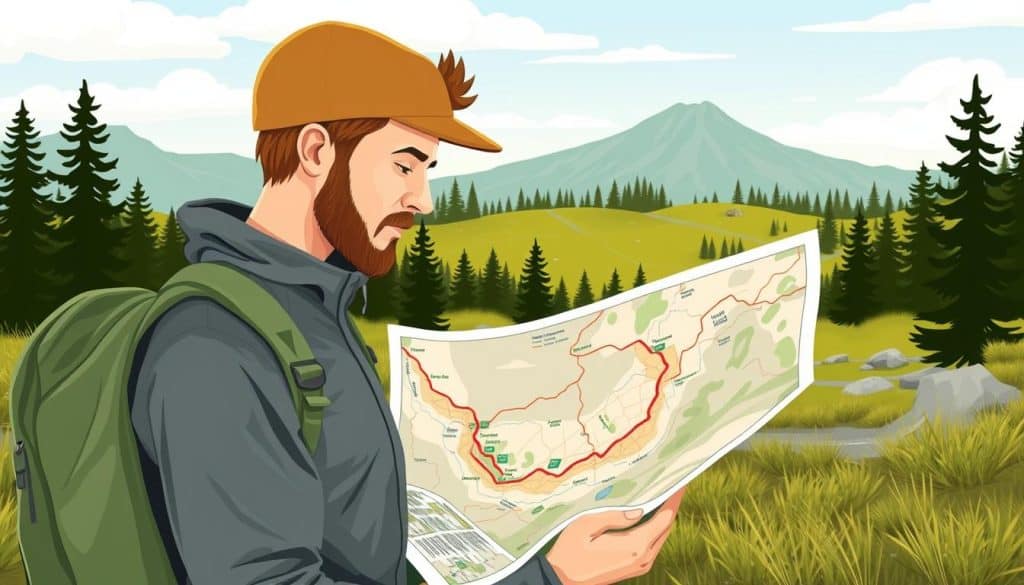
Creating a personalized route can enhance your cross-country walking experience. While established trails like the American Discovery Trail provide a solid foundation, many walkers find that customizing their path better suits their goals and preferences.
Custom Routes and Shortcuts
If you simply want to walk across America with no real affinity for the American Discovery Trail, you’re better off using it as a guideline. Getting on and off of it when convenient can save you significant miles. For instance, I personally saved 1,500 miles by doing so.
Many successful cross-country walkers create custom routes that prioritize their specific goals, whether minimizing total distance or maximizing scenic highlights. Custom routes often combine sections of established trails with carefully selected road walking segments to create the most efficient path.
Using maps and mapping tools like Google Maps (satellite view), Gaia GPS, and OnX can help identify safer road walking options with good shoulders. These tools are invaluable in planning a route that balances safety with scenic appeal.
- Many walkers have found that strictly following the American Discovery Trail adds unnecessary miles, and strategic shortcuts can save 1,000+ miles.
- Creating a custom route requires more planning but allows for personalization based on your timeline, physical capabilities, and points of interest.
By leveraging the American Discovery Trail as a starting point and making adjustments as needed, you can create a route that is tailored to your needs. This approach allows you to enjoy the benefits of a well-planned trail while also experiencing the flexibility of a customized journey across America.
Alternative Cross-Country Routes
When walking across America, one of the most critical decisions you’ll make is choosing between urban and rural pathways. This choice significantly impacts your cross-country walking experience, with each type of route offering distinct advantages and challenges.
The eastern third of America, for instance, can be particularly tough due to its dense population and heavily wooded areas, with the majority of the land being private. However, this region also offers the benefit of numerous motels within walking distance and a higher likelihood of securing hosts through services like Couchsurfing or Warmshowers.
Urban Pathways
Urban routes provide easier access to services, accommodations, and potential trail angels. However, they also come with the challenges of traffic, noise, and complex navigation. Walking through towns and cities can be a mixed bag, offering amenities but also requiring careful attention to road safety.
Some of the benefits of urban routes include:
- Easier access to resupply and accommodations
- Potential for support from trail angels and local communities
- More options for transportation in case of emergencies
On the downside, urban walking can be marred by:
- Increased traffic and noise pollution
- Complex navigation through city streets
- Potential for distractions and decreased safety awareness
Rural Pathways
In contrast, rural routes offer solitude, natural beauty, and often safer walking conditions. However, they require more self-sufficiency and careful planning for resupplies. Walking on rural roads can be a serene experience, allowing for a deeper connection with nature.
The advantages of rural routes include:
- Scenic beauty and solitude
- Generally safer walking conditions with less traffic
- A more immersive experience in nature
However, rural walking also presents challenges such as:
- Limited access to services and accommodations
- The need for more extensive planning and self-sufficiency
- Potential isolation and reduced support networks
Many successful walkers alternate between urban and rural sections, using cities for rest and resupply while enjoying rural areas for the walking experience. The key is finding a balance that works for you and your walking across America goals.
Ultimately, whether you choose urban, rural, or a mix of both for your cross-country route, the most important thing is to plan carefully and be prepared for the challenges that lie ahead.
Planning Your Walking Timeline
Planning your walking timeline is crucial to ensure a safe and enjoyable journey across America. As you prepare to walk across the country, you need to consider several factors, including the direction you’re heading, your expected walking pace, and the weather conditions you’ll encounter along the way.
When walking east to west or west to east, the timing of your journey can significantly impact your experience. For instance, if you’re planning to start and finish your cross-country walk within the same calendar year, you’ll need to carefully plan your start date.
Optimal Starting Times
If you’re walking east to west, it’s generally recommended to start between late January and mid-April. This allows you to reach the Rocky Mountains after the snow has melted but before the early winter storms set in. On the other hand, if you’re walking west to east, it’s usually best to start between late April and May, avoiding the Sierra Nevada snow and reaching the eastern mountains before winter.
Your expected walking pace is another critical factor to consider when planning your timeline. Most walkers average 15-25 miles per day, which can take around 5-8 months to complete the journey. To give you a better idea, here’s a breakdown of the key considerations:
- Timing your walk across America is critical for avoiding dangerous weather conditions in key regions like mountain passes and desert sections.
- For east-to-west journeys, starting from the Atlantic between February and April allows you to reach the Rockies after snowmelt but before early winter storms.
- West-to-east journeys typically begin between April and May to avoid Sierra Nevada snow and reach the eastern mountains before winter.
- Starting times must be coordinated with your expected walking pace.
- The ideal starting window varies based on your route – southern routes permit earlier spring starts, while northern routes may require waiting until May.
By carefully planning your walking timeline and considering these factors, you can ensure a safe and enjoyable journey across America.
Planning Your Walking Timeline
As you plan your cross-country walking adventure, understanding the seasonal conditions you’ll face is crucial. The diverse terrains and climates across America present unique challenges throughout the year.
Seasonal Challenges
Each region has its own set of seasonal challenges. For instance, the Rockies are snow-packed from October to April-May, and the Sierras are similarly affected from November-December to April-May. This makes winter mountain crossings particularly hazardous due to deep snow, sub-zero temperatures, and potential avalanche conditions.
Summer desert crossings can be equally dangerous, with temperatures often exceeding 100°F and limited water sources. The deserts in Nevada, Utah, and eastern California are particularly notorious for their extreme heat during the summer months.
On the other hand, spring brings its own set of challenges, including flooding concerns in the Midwest and unpredictable weather patterns across the country. This requires walkers to be flexible with their planning and to have the appropriate gear to handle varying conditions.
Fall can offer ideal walking conditions in many regions, but it requires careful timing to clear mountain passes before the onset of early snowfall. This makes it essential to plan your daily miles carefully to ensure you reach your destination before the weather turns.
- Seasonal planning is essential for a successful cross-country walk.
- Summer desert crossings can be dangerous due to extreme heat and limited water sources.
- Winter mountain crossings pose serious risks due to snow, sub-zero temperatures, and avalanches.
- Spring requires flexible planning due to flooding and unpredictable weather.
- Fall offers good conditions but demands careful timing to avoid early snowfall.
By understanding these conditions and planning accordingly, you can ensure a safer and more enjoyable cross-country walking experience. It’s all about being prepared for the challenges that each season brings on your day-to-day journey.
As you embark on your cross-country walking adventure, remember that each day will bring its own unique challenges and rewards. With careful planning and a flexible attitude, you’ll be well on your way to completing your journey.
Planning Your Walking Timeline
When planning to walk across America, determining a realistic timeframe is crucial. The duration of your journey will significantly impact your daily routine, accommodation arrangements, and overall experience.
On average, most successful cross-country walkers complete their journey in 6-8 months. This timeframe allows for an average daily distance of 15-25 miles, with regular rest days to avoid fatigue and prevent injuries.
Realistic Timeframes
The time it takes to walk across America can vary greatly depending on your pace, route, and personal preferences. While some walkers have completed the journey in as little as 4 months, others have taken 9-12 months or more.
A faster pace requires sustained daily distances of 25-30 miles or more, which can be challenging and demands a high level of physical fitness. On the other hand, a more leisurely approach allows for deeper exploration of regions, recovery from injuries, and weathering difficult weather conditions.
It’s essential to include buffer time in your planning for unexpected challenges such as injuries, extreme weather events, or gear failures. Your personal walking pace will likely increase throughout the journey as your body adapts, often starting at 15 miles per day and building to 20+ miles per day.
| Timeframe | Average Daily Distance | Description |
|---|---|---|
| 4 months | 25-30+ miles | Fastest documented walks |
| 6-8 months | 15-25 miles | Average completion time |
| 9-12+ months | 10-20 miles | Leisurely approach |
As you plan your walking timeline, consider your personal preferences, physical abilities, and the route you choose. A well-planned schedule will help ensure a successful and enjoyable journey across America.
Daily Distance and Physical Preparation
The success of your cross-country walking adventure hinges on your ability to gauge daily distances effectively. As you prepare for this significant undertaking, understanding your physical capabilities and how they translate into miles per day is crucial.
Average Miles Per Day
Most successful cross-country walkers average between 15-25 miles per day, with their distance increasing as their bodies adapt to the daily challenge. Your daily mileage will often follow a pattern: starting conservatively at 12-15 miles, building to a sustainable pace of 18-22 miles, and occasionally pushing for longer days of 25+ miles when necessary.
The terrain you encounter will dramatically impact your daily distance. For instance, flat rail trails might allow you to cover 25+ miles, while mountainous or sandy sections might limit your progress to 10-15 miles. Strategic planning around town stops, resupply points, and safe camping locations often dictates your daily mileage more than your physical capacity.
Successful walkers typically incorporate regular rest days into their itinerary, usually taking one day per week or following a pattern of 5-6 days on, 1-2 days off. This allows for physical recovery and helps prevent injuries, ensuring you can maintain a consistent pace throughout your journey.
As you plan your cross-country walk, consider your average miles per day and how your body will adapt over time. By understanding these factors, you can better prepare yourself for the challenges ahead and make the most of your adventure.
Daily Distance and Physical Preparation
Preparing for a cross-country walk is as much about mental toughness as it is about physical endurance. It’s a journey that requires a well-planned training regimen to build up your stamina and resilience.
To start, it’s essential to understand that physical preparation for walking across America ideally begins 3-6 months before departure. A progressive training schedule is crucial to condition your body for the long journey ahead.
Training Regimen
A effective training regimen includes gradually increasing your daily walking distances. You can start with 5-7 miles per day and build up to consecutive 15-20 mile days. This gradual increase helps your body adapt to the demands of long-distance walking.
Incorporating loaded training is also vital. This involves wearing your backpack or pushing your cart with weight to simulate the actual conditions you’ll face on your journey. Cross-training with strength exercises focusing on your core, legs, and back will help prevent injuries and build resilience.
Mental preparation is equally crucial. Developing patience, problem-solving skills, and emotional resilience will serve you well on the trail. It’s not just about the physical act of walking; it’s about being prepared for the challenges that come with it.
- Start with a progressive training schedule 3-6 months before departure.
- Gradually increase your daily walking distances to build up your endurance.
- Incorporate loaded training to condition your body for the actual demands.
- Cross-train with strength exercises to prevent injuries and build resilience.
- Focus on mental preparation to develop the necessary skills and resilience.
By following a well-structured training regimen, you’ll be better equipped to handle the challenges of walking across America. Remember, it’s a journey that requires both physical and mental preparation.
Daily Distance and Physical Preparation

Walking across America requires not just physical endurance but also a deep understanding of your body’s signals. As you embark on this journey, you’ll face numerous challenges, including exposure to the elements, wild animals, and the risk of physical injury.
Listening to Your Body
Successful cross-country walkers develop an intimate awareness of their body’s signals and adjust their pace accordingly. This involves paying attention to common warning signs that require attention, such as persistent joint pain, especially in the knees and ankles, unusual fatigue, recurring blisters, and mental fog.
Most serious injuries on long-distance walks result from ignoring early warning signs and pushing through pain rather than addressing issues promptly. It’s crucial to distinguish between normal discomfort and potential injury – some discomfort is inevitable when walking 20+ miles per day, but actual pain requires intervention.
Developing a sustainable daily routine that includes proper stretching, nutrition, hydration, and foot care can prevent many common walking ailments. By listening to your body and taking proactive steps, you can minimize the risk of injury and enjoy a successful cross-country walking experience.
As you walk, you’ll need to be mindful of your daily distance and adjust it according to how your body feels. Some days, you might cover more miles, while on others, you might need to take an extra rest day. The key is to be flexible and not push your body beyond its limits.
Essential Gear for Cross-Country Walking
The choice between a backpack and a stroller is a pivotal one for cross-country walkers, influencing both the journey and the gear you can carry. As someone who has experienced the journey firsthand, I can attest that this decision significantly impacts your walking experience.
Backpack vs. Stroller Options
When it comes to carrying your gear across the country, you’re faced with a fundamental decision: backpack or stroller? Both options have their proponents, and the right choice depends on your specific needs, preferences, and the terrain you’ll be covering.
Backpacks offer versatility for varied terrain and easier stealth camping, allowing you to travel light and navigate through rugged trails or roadways with ease. However, they limit your carrying capacity to around 30-40 pounds of gear, necessitating more frequent resupply of food and water. On the other hand, strollers or carts provide significantly more room for gear, enabling you to carry up to two weeks’ worth of supplies, including extra water for desert sections. Yet, they restrict you primarily to roads and smooth trails.
“The right gear can make or break your cross-country walking experience.”
As you weigh your options, consider the trade-offs. Backpack walkers typically need to resupply every 3-5 days and must carefully manage water in remote sections. In contrast, stroller users can extend their resupply intervals to 7-10 days. Some successful walkers use a hybrid approach, primarily using a stroller but having a backpack option for trail sections or particularly challenging terrain.
In conclusion, the decision between a backpack and a stroller should be based on your walking style, the terrain you’ll be covering, and your personal preferences regarding gear and resupply.
Essential Gear for Cross-Country Walking
When walking across America, one of the most critical decisions you’ll make is choosing the right footwear. Your shoes will be your constant companions throughout your journey, bearing the brunt of miles upon miles of walking. The right footwear can make a significant difference in your comfort, performance, and overall success.
Footwear Considerations
Footwear is arguably the most critical gear choice for walking across America. Most walkers go through 4-6 pairs of shoes during their journey. The type of footwear you choose will depend on your personal preferences, the terrain you’ll be covering, and your walking style.
Trail runners have become the preferred footwear for most long-distance walkers, offering a balance of comfort, weight, and durability. They are lightweight and allow for a more natural stride, making them ideal for high-mileage days. On the other hand, traditional hiking boots provide more support and durability but often cause more blisters and foot fatigue over long distances.
Key Footwear Strategies:
- Rotating between two pairs of shoes to allow each pair to dry out and recover
- Replacing shoes every 500-700 miles to prevent excessive wear and tear
- Having shoes shipped ahead to mail drops to ensure a steady supply
Regardless of your footwear choice, proper fit is essential. Shoes should have ample toe box room as feet will swell significantly during long days of walking. It’s also crucial to break in your shoes before embarking on your journey to prevent blisters and discomfort.
| Footwear Type | Comfort Level | Durability |
|---|---|---|
| Trail Runners | High | Medium |
| Traditional Hiking Boots | Medium | High |
As George Meegan, the first person to walk from the tip of South America to the tip of North America, once said, “The right shoes are the most important piece of equipment for a long-distance walker.” Your footwear choice will significantly impact your walking experience, so choose wisely.
Expect to go through at least 2 pairs of shoes, but most likely 3-6 pairs, depending on your walking style and the terrain. By choosing the right footwear and adopting effective shoe management strategies, you’ll be well on your way to a successful cross-country walking adventure.
Essential Gear for Cross-Country Walking
Cross-country walking exposes you to a wide range of weather conditions, making the right gear essential for a successful journey. As you traverse through different climates and terrains, being prepared for the elements is crucial for your comfort and safety.
Weather Protection Gear
When walking across America, you’ll encounter various weather conditions, from sunny skies to snowy landscapes. Each condition presents its unique challenges, and having the right gear can make a significant difference in your experience.
Sun Protection is vital, even in winter, as sun exposure can be intense. Essential items include a wide-brimmed hat, UV-protective clothing, high-SPF sunscreen, and sunglasses. These will help protect you from sunburns and dehydration.
On the other hand, rain gear is necessary for wet conditions. A reliable waterproof and breathable jacket, a pack cover or liner, and quick-drying clothing are must-haves. It’s also advisable to avoid cotton as it takes a long time to dry.
Temperature regulation is another critical aspect. Layering your clothing allows you to adjust to changing temperatures. Moisture-wicking base layers, insulating mid-layers, and windproof/waterproof outer shells are essential for maintaining a comfortable body temperature.
| Weather Condition | Essential Gear |
|---|---|
| Sunny | Wide-brimmed hat, UV-protective clothing, high-SPF sunscreen, sunglasses |
| Rainy | Waterproof/breathable jacket, pack cover or liner, quick-drying clothing |
| Windy | Windbreaker, windproof outer shell |
| Cold/Snowy | Insulating mid-layers, windproof/waterproof outer shells, warm hat, gloves |
As you move across the country and through different seasons, seasonal gear transitions become necessary. Most walkers mail cold-weather gear ahead or back home as needed to avoid carrying unnecessary weight.
By understanding the various weather conditions you’ll encounter and packing the right gear, you can ensure a more enjoyable and safe cross-country walking experience.
Food and Water Strategies
My experience walking across America taught me that water management varies greatly depending on the terrain. Whether you’re traversing the water-rich eastern forests or the arid western deserts, having a reliable water management strategy is crucial.
Water Management in Different Terrains
During my journey, I used both a stroller and a backpack to carry my gear, including water. This allowed me to carry an ample amount of water at any given time, including up to 4 gallons during my longest 160-mile stretch from Fallon, UT, to Ely, NV.
With a stroller, you should have no concerns about water, as you can carry a significant amount. With a backpack, you should have no problem carrying enough water between towns, except for desert stretches and potentially a few sections in the Midwest.
Water management strategies vary dramatically across America’s diverse landscapes. In eastern and midwestern regions, carrying 2-3 liters is typically sufficient, with reliable water sources every 10-20 miles from streams, towns, and homes.
- In desert sections, careful planning is required, with a capacity for 1-2 gallons per day in extreme heat, potentially necessitating water caches or alternative transportation.
- Water treatment is essential even in developed areas, with most cross-country walkers using a combination of filtration and chemical purification.
- Learning to identify reliable water sources becomes second nature to successful walkers, including clear-flowing streams, spigots at parks/cemeteries, and businesses willing to refill bottles.
By understanding the terrain and planning accordingly, you can ensure a steady supply of water throughout your journey. This involves being prepared for the unexpected and knowing how to find or treat water in various environments.
Food and Water Strategies
The key to a successful cross-country walking trip lies in effective food planning and resupply. As you prepare for your journey, it’s essential to consider how you’ll manage your food and water supply to maintain your energy and overall health.
Planning Your Food Supply
Food planning for a cross-country walk involves balancing several factors: weight, nutrition, shelf-stability, and preparation simplicity. You’ll need to pack food that is not only high in calories but also lightweight and durable.
Most walkers adopt a hybrid resupply strategy, carrying 3-7 days worth of food between towns and taking advantage of grocery stores, restaurants, and convenience stores along the route. This approach allows for flexibility and ensures that you’re always well-stocked.
Key Considerations for Food Planning:
- Caloric needs typically range from 3,500-5,000+ calories per day when walking 20+ miles, requiring dense, high-calorie foods.
- Popular trail foods include nut butters, tortillas, tuna packets, dried fruits, nuts, jerky, instant potatoes, pasta sides, and occasional dehydrated meals.
- Resupply planning involves identifying grocery stores along your route, with most towns offering at least basic options every 2-5 walking days.
With a backpack, you can expect to carry around 1-5 days worth of food, while a stroller allows you to carry 7-10 days worth. Towns are rarely more than 50 miles apart, making it convenient to buy hot food often.
Some of the standard backpacking foods include dehydrated meals, granola bars, chocolate, peanut butter, nuts, tortillas, evaporated milk, beans, cereal, beef jerky, tuna, dried fruit, powdered eggs, and instant rice/noodles. These foods are chosen for their nutritional value, weight, and ease of preparation.
By carefully planning your food supply and resupply strategy, you can ensure that you have the energy you need to complete your cross-country walking adventure successfully.
Food and Water Strategies
One of the most daunting tasks for cross-country walkers is managing the harsh conditions of desert and remote areas. When traversing these regions, it’s essential to have a solid plan in place for food and water.
Desert and Remote Area Considerations
Desert and remote area travel presents significant logistical challenges, requiring specialized strategies for survival. In such desolate areas, your options are to either temporarily acquire a stroller or cache water. Caching water involves having jugs driven ahead and stored in safe, predetermined locations to collect along the way.
When road walking, the likelihood of passing cars occasionally stopping to offer you water is fair. However, it’s still crucial to be prepared with a reliable water management plan.
- Water caching is a common solution for desert sections, though it requires careful planning and coordination.
- In extremely remote areas, carrying 2+ days worth of water may be necessary, often requiring a cart or stroller.
- Food planning for remote sections focuses on maximum calories per ounce, with an emphasis on fats and proteins.
- Timing desert crossings for cooler seasons and walking during early morning/evening hours significantly reduces water requirements.
| Terrain | Water Requirements | Food Strategy |
|---|---|---|
| Desert | 1-2 gallons per day | High-calorie foods |
| Remote Areas | 2+ days worth | Fats and proteins |
| Road Walking | Variable | Resupply as needed |
By understanding these considerations and planning accordingly, you can successfully navigate the challenges of desert and remote area travel during your cross-country walking journey.
Lodging Options Along the Way
Camping on public lands is a preferred lodging strategy for many cross-country walkers. As you plan your journey, understanding the availability and regulations surrounding public lands can significantly impact your sleep arrangements and overall experience.
Camping on Public Lands
If you’re walking through states like Nevada and Utah, which are part of the American Discovery Trail, you’ll find that camping on public lands is relatively straightforward. Nevada, for instance, has over 75% of its land publicly owned, making it a haven for walkers. However, the east coast presents a different challenge due to its dense population and private land ownership.
The availability of public lands varies dramatically across the country. Eastern states have limited public lands, often requiring permits, while western states offer abundant options. National Forests, BLM lands, and Wildlife Management Areas typically allow dispersed camping with minimal restrictions, although stay limits of 14 days are common.
To navigate these options effectively, walkers can utilize apps like OnX, Gaia GPS, and FreeRoam to identify land boundaries and legal camping areas. This technology is invaluable in planning your day-to-day itinerary and ensuring you have a place to camp each night.
Moreover, learning proper Leave No Trace practices is essential for the responsible use of parks and public lands, preserving the experience for future walkers. As you enjoy the beauty of these areas, remember that your actions can impact the environment and the enjoyment of others.
Planning your day effectively involves not just deciding on your daily distance but also where you’ll rest. By combining knowledge of public lands with the right technology, you can ensure a smoother journey and a more enjoyable experience.
Lodging Options Along the Way
One of the most pressing concerns for cross-country walkers is where to camp, particularly in the eastern and midwestern states where public lands are limited. As you plan your journey across America, understanding the various lodging options becomes crucial for a successful trip.
Stealth and Yard Camping
Stealth camping and yard camping are two strategies that walkers use when traditional camping areas are not available. Stealth camping involves setting up camp in unconventional locations without being detected. Common stealth camping locations include graveyards, churchyards, under bridges, behind buildings, or on unestablished wilderness sites. The key to stealth camping is to set up at sunset and leave by sunrise, minimizing the chance of being noticed.
On the other hand, yard camping involves asking permission to camp on private property, typically in rural areas where property owners have large acreages. This method has gained popularity among cross-country walkers due to its relatively high success rate. Property owners are often intrigued by the walkers’ journey and may grant permission to camp on their land.
Both stealth and yard camping require a certain level of discretion and respect for the land and its owners. Here are some key considerations for these camping methods:
- Stealth camping and yard camping become necessary strategies in regions with limited public lands, particularly in the eastern and midwestern states.
- Stealth camping involves setting up discreetly at dusk and leaving at dawn in locations like the edges of fields, behind abandoned buildings, or in wooded areas near roads.
- Yard camping has a surprisingly high success rate in rural areas, with many property owners being open to the idea when approached respectfully.
- Places like churches, fire stations, and town parks often grant permission for overnight stays when asked during business hours.
- The golden rule of both stealth and yard camping is to leave absolutely no trace, preserving opportunities for future walkers and maintaining positive relationships with landowners.
By adopting these strategies, cross-country walkers can ensure a more comfortable and enjoyable journey, even in areas with limited camping facilities. It’s about being prepared, respectful, and mindful of the environment and the people you encounter along the way.
Lodging Options Along the Way
The kindness of strangers, often referred to as trail angels, is a lifeline for many cross-country walkers. These individuals, along with hospitality networks, play a vital role in supporting long-distance travelers.
As walkers traverse the country, they often rely on the generosity of others for lodging and assistance. Trail angels are people who offer help, ranging from a hot meal to a place to stay, without expecting anything in return. They form an informal but crucial support network across America.
Trail Angels and Hospitality Networks
Platforms like Couchsurfing and Warmshowers connect walkers with hosts who offer lodging. While Couchsurfing began charging $14.29/year in June 2020, and Warmshowers enacted a one-time registration fee of $30 for lifetime access, these networks remain invaluable resources for travelers.
Many cross-country walkers have documented their journeys on social media, often receiving spontaneous invitations from followers along their route. Churches in small towns also frequently offer assistance, from camping permission to indoor accommodations, when approached respectfully.
The trail angel network grows with each cross-country journey, as walkers who receive help often become helpers for future travelers. This cycle of kindness creates a supportive community that spans the country.
- Trail angels providing crucial support to long-distance walkers.
- Hospitality networks like Warmshowers and Couchsurfing connecting walkers with hosts.
- Social media documentation leading to spontaneous invitations from followers.
- Churches and small towns offering various forms of assistance.
- The trail angel network expanding as recipients become future helpers.

By leveraging trail angels and hospitality networks, cross-country walkers can enjoy a more supported and enjoyable journey. Whether it’s a couple offering a home-cooked meal or a woman providing a warm bed, these acts of kindness make a significant difference.
As you plan your cross-country walk, consider reaching out to these networks and being open to the kindness of strangers. It’s a testament to the power of community and the generosity that exists along the trail every day.
Lodging Options Along the Way
As you plan your cross-country walk, considering your lodging options is crucial for a comfortable journey. Your choices can significantly impact your overall experience, from recovery and relaxation to budget and overall enjoyment.
That depends on your means and your comfort level. You can sleep in ditches every night, eat ramen noodles for breakfast, lunch, and dinner, experience no gear failures, and scoot by on less than a grand. Alternatively, you can have a support vehicle following your every step, eat at restaurants daily, and easily rack up over ten grand in spending. I think the ideal median amount to have for a single person is between 4-6 grand, including the cost of gear and transportation.
Motels and Paid Accommodations
When it comes to motels and paid accommodations, there are several factors to consider. Strategic use of paid accommodations provides crucial recovery opportunities during a cross-country walk, especially during extreme weather conditions.
- Budget-conscious walkers typically stay in motels every 7-10 days for shower, laundry, and recovery, spending approximately $50-80 per night at economy options.
- Hostels, when available, offer more affordable alternatives at $20-40 per night while still providing essential amenities.
- Weekly or monthly Airbnb rentals can be economical for planned extended stops, particularly for injury recovery or waiting out seasonal weather.
- The psychological boost from occasional indoor accommodations with real beds, hot showers, and climate control significantly contributes to successful completion rates.
For many walkers, the decision on where to stay comes down to budget and personal comfort. While some may opt for the cheapest options available, others may prefer to splurge every now and then on a comfortable motel stay. It’s about finding a balance that works for you.
By planning your lodging in advance and mixing budget-friendly options with the occasional splurge, you can maintain a healthy budget while ensuring you get the rest you need to enjoy your journey across America.
Navigating Challenging Terrain
Desert crossings are notoriously difficult sections of a cross-country walk, requiring meticulous planning and preparation. As I reflect on my own journey, I recall a particularly challenging stretch between Twentynine Palms and Rice, CA.
I had initially planned for a 70-mile stretch, but a chance encounter at a Vietnamese restaurant in Twentynine Palms revealed that the actual distance between the two towns was 110 miles. A fellow traveler, biking from Florida to California, shared his recent experience of traversing that desert stretch, warning me that the town of Rice had essentially disappeared, leaving behind only an abandoned gas station.
Desert Crossings
Desert crossings represent some of the most technically challenging and potentially dangerous sections of a cross-country walk. To navigate these areas successfully, it’s crucial to carefully calculate your water needs. Most walkers require 1-1.5 gallons of water per day in extreme heat, which should be either carried or cached in advance.
Effective desert walking strategies include adopting a night hiking schedule, where you walk from 3 am to 10 am and then again from 6 pm to 9 pm to avoid the intense midday heat. Navigation also becomes critical in these sections, as trails may be poorly marked and landmarks minimal.
To adapt to the harsh desert environment, consider incorporating gear such as sun protection (long sleeves, wide-brimmed hats, umbrellas), light-colored clothing, and increased water capacity into your packing list.
| Desert Walking Strategies | Description |
|---|---|
| Night Hiking | Walking from 3 am to 10 am and 6 pm to 9 pm to avoid midday heat |
| Water Calculation | 1-1.5 gallons per day in extreme heat |
| Gear Adaptations | Sun protection, light-colored clothing, increased water capacity |
Navigating Challenging Terrain
Mountain passes are a crucial part of many cross-country walking routes, presenting unique challenges that require careful planning. As you prepare for your journey, understanding the intricacies of mountain passes will help you navigate these sections with confidence.
Challenges of Mountain Passes
Mountain passes, such as the Argentine Pass in Colorado, the highest point on the American Discovery Trail where it crosses the Rockies, pose significant challenges. The elevation, weather, and terrain all play critical roles in determining the safety and success of your passage.
Timing is everything when it comes to crossing mountain passes. Most high passes in the Rockies and Sierra Nevada are safely passable only from June through September, when the weather is more favorable and snow is less likely to be a hazard.
- Elevation Effects: At high elevations, the reduced oxygen levels, increased UV exposure, and rapid weather changes can significantly impact your body. Acclimatization and appropriate gear adjustments are crucial.
- Navigation Challenges: Mountain navigation often requires more precise tools and skills, as trail markings can be obscured by snow or weather conditions.
- Energy Requirements: Walking at high elevations and on steep terrain increases energy expenditure. Dietary adjustments and realistic daily mileage expectations are essential to maintaining your energy levels.
To better understand the challenges posed by mountain passes, let’s examine some key statistics:
| Challenge | Impact | Preparation |
|---|---|---|
| Elevation | Reduced oxygen, increased UV exposure | Acclimatization, gear adjustments |
| Weather | Rapid changes, potential for snow | Weather forecasting, flexible itinerary |
| Terrain | Steep inclines, potential for trail obscurity | Precise navigation tools, physical conditioning |
For more information on preparing for your cross-country walk, you can explore resources such as best hikes in national parks, which can provide valuable insights into navigating challenging terrains.
Navigating Challenging Terrain
When walking across America, one of the most significant risks you face is from reckless drivers. The greatest threat to your life on this journey is being struck by a motor vehicle, as evidenced by the unfortunate incidents where walkers have lost their lives.
Road Walking Safety
Road walking constitutes a significant portion of any cross-country journey and presents the single greatest safety risk. To mitigate this risk, it’s crucial to take certain precautions. Wearing a reflective vest can significantly enhance your visibility to drivers, especially in low-light conditions.
To stay safe on the roads, consider the following strategies:
- Stick to roads with little traffic and wide shoulders.
- Avoid major highways whenever possible.
- Use Google Maps satellite view to scout road surfaces and shoulders before committing to a route.
- When forced onto a road with fast traffic and minimal shoulder, consider pulling off the pavement and stopping for each passing car, if possible.
Visibility is key when walking on roads. Essential visibility gear includes high-visibility clothing, reflective vests, blinking lights (front and back), and reflective material on packs or carts. Walking facing traffic, on the left side in the US, provides crucial seconds to react to distracted or erratic drivers.
Strategic timing of your road sections can also significantly reduce risk. Avoiding rush hours, nighttime, and weekends on popular routes can make your journey safer. By being mindful of these factors and taking necessary precautions, you can minimize the risks associated with road walking and enjoy a safer journey across America.
State-by-State Highlights
As you embark on your cross-country walking journey, understanding the unique challenges and opportunities presented by the eastern states is crucial. The east coast can be tough due to its dense population and heavily wooded terrain, but it also offers rich historical and cultural experiences.
Eastern States Considerations
The eastern states, from Delaware through Ohio, present a mix of challenges and opportunities for walkers. The region is characterized by limited public lands, with the majority of the land being private. However, an abundance of trails helps mitigate this issue.
Some of the notable trails in the eastern states include the C&O Canal Towpath, the West Bend Rail Trail, the Buckeye Trail, the Ohio to Erie Trail, the Cardinal Greenway, and the River to River Trail. These trails not only provide scenic routes but also help walkers navigate through the densely populated areas.
The dense population of the eastern states translates to more frequent interactions with locals and potential trail angels. However, it also means that camping can be more challenging, often requiring permission or stealth techniques.
Key Considerations for Walking in Eastern States:
- Limited public lands but rich historical and cultural experiences
- Abundance of trails for navigation and scenic routing
- Frequent towns and services, typically every 5-15 miles
- Challenging camping situations requiring permission or stealth
- Appalachian Mountain crossings requiring careful planning
One of the significant advantages of walking in the eastern states is the availability of motels within walking distances and the potential for securing hosts through services like Couchsurfing or Warmshowers.
| Trail/Route | Distance | Notable Features |
|---|---|---|
| C&O Canal Towpath | Nearly 400 miles | Traffic-free walking from Washington DC into the Appalachian region |
| Buckeye Trail | Varies | Scenic routing through Ohio, connecting to other trails |
| Ohio to Erie Trail | Varies | Connecting trail from Ohio to Erie, Pennsylvania |
Understanding these aspects of walking in the eastern states can help you better prepare for your journey across America.
State-by-State Highlights
The Midwest segment of your cross-country walking journey offers a distinct transition from the densely populated East to the open expanses of the West. As you walk through states like Indiana, Illinois, Missouri, and Kansas, you’ll experience a unique blend of urban and rural landscapes.
Midwest Passage
The Midwest is characterized by its extensive rail trails, which form the backbone of pleasant walking experiences. Notable trails include the 240-mile Katy Trail in Missouri and the 117-mile Flint Hills Trail in Kansas. The grid-pattern rural road system provides predictable navigation and regular access to small towns typically spaced 8-15 miles apart.
Rail Trails and Rural Roads
Rail trails like the Katy Trail and Flint Hills Trail offer scenic walking routes, often passing through picturesque countryside and charming towns. The grid-pattern rural road system makes navigation straightforward, with frequent opportunities to rest and resupply in small towns along the way.
One of the most memorable aspects of walking through the Midwest is the legendary hospitality of its residents. As a cross-country walker, you can expect frequent offers of meals, lodging, and assistance from curious locals who are eager to share their stories and communities with you.
Weather Extremes
The Midwest experience is also defined by its weather extremes, ranging from intense summer thunderstorms and humidity to potential early winter conditions. Being prepared for these conditions is crucial to a successful and enjoyable journey.
- The Midwest offers a transition from the densely populated East to the more open West.
- Rail trails and grid-pattern rural roads make navigation and walking pleasant.
- Midwest hospitality is renowned, with locals often offering assistance and hospitality.
- Weather extremes, including thunderstorms and early winter conditions, require preparation.
State-by-State Highlights
As you continue your cross-country walking journey, the Western states await with their dramatic landscapes and abundant public lands. This region is characterized by diverse geography, from the high mountain passes of Colorado to the desert expanses of Utah and Nevada, and finally, the Sierra Nevada crossing in California.
Western States and Mountain Crossings
The Western states, including Colorado, Utah, Nevada, and California, offer a unique blend of natural beauty and challenge. Colorado is notable for the Continental Divide, where high mountain passes require careful planning, typically between July and September.
Utah and Nevada are characterized by their abundant public lands, with Utah being roughly 64% public land and Nevada boasting over 75% public ownership. These states provide ideal conditions for camping but also present significant desert water challenges.
As you enter California, you’ll face the Sierra Nevada crossing, another major geographical barrier. The state’s diverse landscapes and urban areas also offer various options for rest and resupply. Notably, California has a “right to rest” law, which allows for the use of public spaces without discrimination.
Key Highlights of the Western States:
- Dramatic landscapes and abundant public lands
- Significant geographical challenges, including high mountain passes and desert crossings
- Abundant camping opportunities in Utah and Nevada due to high percentages of public land
- The Sierra Nevada crossing in California marks a final major geographical challenge
- National Parks and Monuments offer spectacular highlights but often come with restrictions on camping and may require permits or detours
Technology and Navigation Tools
Modern cross-country walkers have it easier than ever, thanks to advancements in GPS and mapping applications. These tools have revolutionized the way we navigate, providing detailed information and significantly reducing navigational challenges.
GPS and Mapping Applications
When it comes to GPS and mapping applications, there are several options available that can make a cross-country walking trip more manageable. I’ve found that using a combination of these tools can provide the most comprehensive navigation solution.
One of the most valuable tools is Google Maps, which offers a satellite view that can be used to review road conditions. For instance, you can zoom in on roadways to check their conditions, including the width of the shoulder, which is crucial for road walking safety. Additionally, Google’s My Maps feature allows you to plot a cycling route and highlights rail trails on the map, making it easier to plan your route.
For offline use, I highly recommend Maps.Me. While I’ve heard good things about Gaia GPS and other similar apps, Maps.Me has been reliable for me. Other essential mapping applications include Gaia GPS, AllTrails, and OnX, which provide detailed topographic maps and information on public land boundaries.
Offline mapping capability is essential because cell service can be unreliable in many rural and wilderness areas. Custom route creation using tools like CalTopo or Google My Maps not only allows for detailed planning but also enables you to share your route with family for safety monitoring.
Key Features of Modern Navigation Tools:
| Tool | Key Feature | Benefit |
|---|---|---|
| Google Maps | Satellite View | Road condition assessment |
| Maps.Me | Offline Maps | Reliable navigation without cell service |
| Gaia GPS | Topographic Maps | Detailed terrain information |
Technology and Navigation Tools
When walking across America, one of the critical skills you’ll need to master is battery management for your electronic devices. As you rely on your smartphone, GPS, and other gadgets for navigation, communication, and documentation, keeping them charged becomes a daily challenge.
Battery Management on the Trail
Battery management becomes a critical skill for modern cross-country walkers. Most walkers carry power banks ranging from 10,000 to 20,000mAh, which can provide 3-7 days of phone charging between power sources. To maximize your battery life, it’s essential to adopt strategic practices such as using airplane mode, managing screen brightness, and being selective about app usage.
I learned this firsthand during my journey. I had a battery pack like the Anker 20100mAh, and pairing it with a 30W+ charger made a significant difference. It allowed me to fully charge my power bank in about 4 hours, as opposed to 22 hours with a standard charger. This was a game-changer, especially when I was on the trail.
Key Strategies for Battery Management:
- Use power banks with a capacity between 10,000-20,000mAh to ensure you have enough power between charging opportunities.
- Adopt power-saving practices like airplane mode and adjusting screen brightness to extend battery life.
- Plan your charging stops at places like libraries, cafes, laundromats, and motels, which often have available outlets.
- Consider solar charging options as a supplementary power source, though they may not be reliable enough to be your primary source.
By effectively managing your battery life, you can stay connected, navigate the trail with confidence, and capture memories without worrying about running out of power. It’s about finding a balance between staying powered and enjoying the journey.
Technology and Navigation Tools
When walking across the country, having the right communication tools can make all the difference. As you traverse through diverse landscapes and communities, staying connected is not just about convenience; it’s also about safety and being able to share your journey with loved ones.
Effective Communication Strategies
Reliable communication tools are essential for both safety and maintaining connections during a months-long journey. You need to be able to reach out in case of emergencies and keep your family and friends updated on your progress.
Cell phone coverage varies dramatically across the country. While urban areas typically have robust coverage, significant gaps exist in mountain regions and rural areas of the West. To address this issue, many walkers use cell phone signal boosters or external antennas to improve connectivity in marginal coverage areas.
For areas without cell service, satellite communication devices like the Garmin InReach or SPOT provide emergency contact capability. These devices ensure that you can call for help when needed, even in the most remote locations.
In addition to these tools, social media platforms serve as both communication tools and documentation methods. Many walkers maintain blogs or social media accounts to share their journey, providing updates and insights into their daily experiences.
- Utilize cell phone signal boosters or external antennas for better coverage.
- Invest in satellite communication devices for emergency situations.
- Leverage social media to share your journey and stay connected with loved ones.
By combining these strategies, you can ensure that you stay connected throughout your journey, enhancing both your safety and your ability to share your experiences with others.
Safety Considerations
The journey across America on foot comes with numerous challenges, but perhaps the most significant is navigating through traffic safely. As someone who has considered the risks involved, I can attest that traffic safety is a top concern for cross-country walkers.
Traffic Safety
When walking across America, the greatest threat to your life is a reckless driver. Unfortunately, the majority of fatalities among cross-country walkers have been due to being struck by motor vehicles. To mitigate this risk, it’s highly recommended to wear a reflective vest and stick to roads with little traffic, wide shoulders, or both. Major highways should be avoided whenever possible.
To ensure your safety on the roads, several strategies can be employed. First, visibility is key. Using high-visibility clothing, reflective vests or belts, blinking lights, and applying reflective material to your gear can significantly enhance your visibility to drivers.
- Prioritize roads with wide shoulders or low traffic volume to reduce the risk of accidents.
- Adopt defensive walking practices such as facing traffic, making eye contact with drivers, and stepping off the road when visibility is poor.
- For particularly hazardous road sections, consider alternative transportation options, such as accepting rides around the most dangerous areas.
By being aware of the risks and taking proactive measures, you can minimize your exposure to traffic hazards and enjoy a safer journey across America. Remember, your safety is paramount, and being prepared is the first step towards a successful and enjoyable trip.
Safety Considerations
One of the most critical aspects of safety during your walk is being prepared for wildlife encounters. As you traverse the country, you’ll be sharing the trail with a diverse range of animals, from coyotes and bears to snakes, scorpions, and mountain lions.
Preparing for the Local Wildlife
It’s essential to get to know the wildlife that inhabits the areas you’ll be walking through. Different regions have different hazards, and being prepared is key to a safe and enjoyable journey.
For instance, bear safety varies significantly by region. Black bears, found in eastern and western forests, require different approaches than grizzlies, which are limited to certain areas in Montana and Wyoming. Understanding these differences can help you take the necessary precautions.
- Be aware that wildlife encounters are inevitable, but with proper preparation, most can be positive experiences.
- Take measures to prevent bear encounters, such as proper food storage, especially in bear country.
- Be prepared for snake encounters, particularly in warmer months, by using hiking poles and wearing sturdy footwear.
- Maintain awareness of your surroundings to avoid unexpected encounters with animals like mountain lions, particularly in western states.
By being informed and prepared, you can minimize the risks associated with wildlife encounters and enjoy the beauty of the natural world around you.
Safety Considerations
America’s diverse climate zones present a unique set of weather-related challenges for cross-country walkers. As you prepare for your journey, it’s essential to understand the various weather conditions you may encounter and how to mitigate their impact.
Weather Hazards
Weather conditions can vary dramatically across the country, presenting significant challenges throughout your journey. You may experience sunny, windy, rainy, snowy, or cloudy weather, each with its own benefits and challenges.
On sunny days, be aware of the risks of sunburns and dehydration. Protect yourself with sunscreen, a hat, and adequate hydration. Windy conditions require a windbreaker to keep you comfortable. When it’s raining, ensure that your gear is waterproof, and wear a rain jacket to stay dry. Cloudy weather can lead to a rapid drop in temperature, especially at higher elevations, so be prepared for changing conditions.
- Lightning storms in the Midwest and mountain regions during the summer, requiring awareness of warning signs and shelter options.
- Flash floods in desert regions, where dry washes can become deadly within minutes during distant rainstorms.
- Extreme heat, which can be managed by walking during cooler hours, staying hydrated, replacing electrolytes, and recognizing the symptoms of heat illness.
- Winter conditions, which demand specialized gear, experience, and cautious decision-making. Many walkers choose to avoid snow-prone regions entirely.
By understanding these weather hazards and taking necessary precautions, you can minimize their impact on your cross-country walking adventure.
Safety Considerations
As you embark on your cross-country walking journey, personal security becomes a vital consideration. While most walkers complete their journeys without serious incidents, it’s crucial to be prepared.
Protecting Yourself on the Trail
Personal security concerns are common among prospective cross-country walkers. The good news is that most walkers carry some form of protection, with pepper spray being the most popular due to its effectiveness, legality across state lines, and lightweight nature.
That depends on what you’re comfortable carrying. If you’re considering bringing a firearm, make sure you have all the proper permits. Otherwise, pepper spray and a knife are practical alternatives. An emergency locator beacon like the Spot 3 Satellite GPS or the Garmin in Reach Explorer+ could also save your life.
| Protection Method | Legality | Effectiveness |
|---|---|---|
| Pepper Spray | Legal in most states | High |
| Knife | Varies by state | Medium |
| Firearm | Requires permits | High |
| Emergency Locator Beacon | Legal | High (in emergency situations) |
Trusting your intuition about uncomfortable situations or people is also crucial. Experienced walkers emphasize the importance of listening to your gut feelings. Sharing your location information with trusted contacts provides an important safety net, with regular check-ins and predetermined emergency protocols.
The visibility of your journey, with a distinctive cart or backpack and walking along roads, actually enhances your safety in most situations, as your purpose is obvious to observers.
Budget Planning
When embarking on a cross-country walking adventure, understanding the costs involved is crucial. The journey across America can be a significant financial undertaking, with expenses varying widely based on individual preferences and circumstances.
Average Costs
From my personal experience, I found that the ideal median amount for a single person to have for a cross-country walk is between $4,000 and $6,000, including the cost of gear and transportation. My total expenditure over 9 months was roughly $2,000 to $3,000, with an additional $700 spent initially on gear.
The budget requirements for walking across America vary dramatically based on comfort level, gear choices, and lodging preferences. Typical total costs range from $3,000 to $8,000 for a 6-8 month journey, encompassing initial gear purchases, on-trail expenses, and transportation to and from trailheads.
Breaking down the costs, daily expenses average $15-30 when primarily camping and cooking meals, with occasional motel stays ($50-80) every 7-10 days. Initial gear investments typically range from $1,000 to $2,500, depending on quality and whether purchasing new or used equipment.
| Expense Category | Average Cost | Frequency |
|---|---|---|
| Daily Expenses | $15-30 | Daily |
| Motel Stays | $50-80 | Every 7-10 days |
| Initial Gear | $1,000-2,500 | One-time |
| Food Resupply | $50-100 | Every 3-7 days |
Food represents the largest ongoing expense, with resupplies costing $50-100 every 3-7 days, depending on dietary preferences and local prices. By understanding these average costs, walkers can better plan their budget and prepare for the financial aspects of their cross-country walking adventure.
Budget Planning
Walking across America can be done on a shoestring budget or with considerable expense, depending on your choices. The key to managing your expenses lies in understanding where you can cut costs without compromising your safety or comfort.
Efficient Cost Management
To save money on your cross-country walk, consider adopting several cost-saving strategies. You can significantly reduce your expenses by being mindful of your spending on gear, food, and lodging.
For instance, your daily food costs can be minimized by opting for calorie-dense, affordable meals that can be prepared on the go. Buying in bulk and cooking your meals instead of dining at restaurants can lead to substantial savings.
- Cooking meals instead of eating out
- Buying gear during sales or purchasing used equipment
- Utilizing free camping opportunities
Another significant expense is gear. Prioritizing your spending on critical items such as a good pair of shoes, a reliable backpack, and appropriate shelter can help you save money in the long run.
| Expense Category | Cost-Saving Strategies | Potential Savings |
|---|---|---|
| Food | Cooking meals, buying in bulk | Up to 50% |
| Gear | Buying used, waiting for sales | Up to 30% |
| Lodging | Camping, free camping sites | Up to 70% |
Additionally, many walkers find that supplementing their budget through work-for-stay arrangements or odd jobs along the route can be a great way to offset costs. This not only helps financially but also provides an opportunity to interact with locals and gain new experiences.
By being strategic about your spending and adopting these money-saving strategies, you can enjoy your cross-country walking adventure without breaking the bank.
Budget Planning
Budget planning is a critical component of a successful cross-country walking trip, and one key aspect is often overlooked: emergency funds. While planning your daily expenses is crucial, it’s equally important to prepare for unexpected situations that may arise during your journey.
Emergency Funds
Emergency funds are essential for providing flexibility when unexpected situations arise. Most experienced walkers recommend having $1,000-2,000 in accessible emergency funds beyond your planned budget. This amount can cover common emergency expenses such as unplanned motel stays during extreme weather, medical care for injuries, gear replacement, and unexpected transportation costs.
To access these funds, it’s crucial to have a plan in place. This includes maintaining a working debit card, having a trusted person who can wire money if needed, and potentially carrying a small cash reserve. Some walkers also document their journeys online and receive spontaneous donations that supplement their budgets, though this shouldn’t be relied upon as a primary funding source.
| Emergency Expense | Average Cost |
|---|---|
| Unplanned motel stay | $100-$200 |
| Medical care for injuries | $200-$500 |
| Gear replacement | $50-$200 |
Having emergency funds in place can provide peace of mind and ensure that your cross-country walking adventure is not derailed by unexpected expenses.
Stories from Successful Cross-Country Walkers
The history of walking across America is filled with remarkable stories of perseverance and determination. Many adventurers have undertaken this challenge, but only a few have achieved the feat of completing the journey on foot.
Notable Achievements
One of the most notable achievements in cross-country walking is that of Joyce and Pete Cottrell, who were the first to backpack the entire official route of the American Discovery Trail. They completed their journey in 2003, hiking the segments out of sequence over two calendar years.
However, the first hikers to complete the trail in one continuous walk were Marcia and Ken Powers, a wife and husband team from Pleasanton, California. Their trail walk lasted from February 27 to October 15, 2005, covering 5,058 miles in 7.5 months and averaging 22 miles a day.
Another remarkable achievement was by Mike “Lion King” Daniel, who became the first person to backpack the entire 6,800 miles of the American Discovery Trail, including both the Northern and Southern sections, in one continuous hike from June 17, 2007, to November 5, 2008.
| Hiker(s) | Year(s) | Distance | Notable Achievement |
|---|---|---|---|
| Joyce and Pete Cottrell | 2003 | American Discovery Trail | First to backpack the entire official route |
| Marcia and Ken Powers | 2005 | 5,058 miles | First continuous thru-walk of the American Discovery Trail |
| Mike “Lion King” Daniel | 2007-2008 | 6,800 miles | First to walk both Northern and Southern routes continuously |
These stories, along with others like Nate Damm’s 2011 journey and Matt Parker’s equestrian travel between 2003-2005, highlight the spirit of adventure and determination that defines cross-country walking.

Stories from Successful Cross-Country Walkers
As I reflect on my journey walking across America, several key lessons stand out that I’d like to share with you. Completing this journey in 9 months was a significant achievement, but it was the lessons learned along the way that made it truly unforgettable.
Lessons Learned
Successful cross-country walkers consistently emphasize several key lessons that emerge from their journeys. One of the most important is the need for flexibility and adaptability. Rigid plans often fail when confronted with the realities of weather, terrain, and physical limitations.
The mental challenge of walking across America typically exceeds the physical one. Maintaining motivation and a positive attitude through monotonous or difficult sections proves crucial. Many walkers, including myself, report being surprised by the kindness of strangers. The frequency and generosity of help from strangers become a defining aspect of the journey.
Patience emerges as a critical skill for anyone undertaking this journey. Learning to accept slower progress than anticipated, weather delays, and the natural rhythm of long-distance walking is essential.
To illustrate some of these lessons, let’s look at a comparison of different aspects of cross-country walking:
| Aspect | Initial Expectation | Reality |
|---|---|---|
| Mental Challenge | Manageable | Significant |
| Physical Challenge | High | Variable |
| Human Interaction | Limited | Frequent and Positive |
| Flexibility | Low | Crucial |
These lessons are invaluable for anyone considering walking across America. By understanding the challenges and realities of the journey, prospective walkers can better prepare themselves for the adventure ahead.
Stories from Successful Cross-Country Walkers
The journey across America on foot is not just about the miles; it’s about the challenges you face and overcome. As walkers embark on this adventure, they encounter a myriad of obstacles that test their resolve, creativity, and adaptability.
Common Challenges Overcome
Cross-country walkers face numerous challenges that push their limits. Some of the most common hurdles include physical injuries, extreme weather conditions, and logistical complications.
- Physical injuries, particularly foot problems and repetitive stress injuries, force many walkers to adapt their pace or take extended rest periods.
- Extreme weather events, from flash floods to unseasonal snowstorms, require flexibility and sometimes dramatic route or timeline adjustments.
- Loneliness and mental fatigue affect nearly all solo walkers, with various coping strategies emerging from successful journeys.
- Logistical complications like gear failures, unexpected trail closures, or transportation gaps between walkable sections require problem-solving and community support.
One walker shared her experience of facing severe dehydration in the desert:
“I had to ration my water carefully and find shade as quickly as possible. It was a harrowing experience, but it taught me the importance of preparation and knowing how to manage such situations.”
To better understand the challenges faced by walkers, let’s examine some data on common issues encountered during cross-country walks:
| Challenge | Percentage of Walkers Affected | Common Solutions |
|---|---|---|
| Physical Injuries | 70% | Rest, rehabilitation, and adjusting walking pace |
| Extreme Weather | 85% | Route adjustments, weather forecasting, and appropriate gear |
| Loneliness and Mental Fatigue | 90% | Coping strategies, community support, and regular check-ins |
As walkers walk across America, they not only cover miles but also build resilience and character. The journey is as much about personal growth as it is about reaching the destination.
For many, walking across America is a life-changing experience that fosters a deep connection with nature and oneself. As one walker noted,
“The journey taught me to appreciate the little things and to be more mindful of my surroundings.”
Conclusion: Taking the First Step
The adventure of a lifetime begins with a single step – literally, when you decide to walk across America. This journey is not just about the distance; it’s about the transformation that occurs along the way. As you’ve seen from the various routes and preparations discussed, walking across America is a profound adventure that reshapes your understanding of the country and yourself.
There’s no one-size-fits-all “best” route for this journey. Each walker must determine their priorities and create a path that balances safety, scenery, and practical considerations. While preparation is crucial, it’s equally important not to get bogged down in planning. The cross-country walking community is supportive and growing, offering invaluable insights and potential trail angels to help guide you along the way.
Thousands have successfully completed this journey with proper planning, adaptability, and determination. You can too. The hardest part is often just committing to start. So, take that first step, and begin your journey across America. With each step, you’ll find your stride, and the path ahead will become clearer.
As you embark on this incredible walk, remember that it’s not just about the destination; it’s about the experiences, challenges, and transformations that occur along the way. So, lace up your shoes, grab your backpack, and start walking towards the adventure of a lifetime.
FAQ
How long does it take to walk across America?
The time it takes to walk across America varies depending on the route taken and the individual’s walking pace. Typically, it can take around 6-12 months to complete the journey, covering approximately 2,000-3,000 miles.
How many miles per day should I walk on average?
A common average is around 20 miles per day, but this can vary based on personal fitness levels, terrain difficulty, and the weight of the backpack.
What are the most essential items to pack for a cross-country walk?
Essential items include sturdy hiking boots, a comfortable backpack, weather-appropriate clothing, a water filter or purification tablets, a first aid kit, and a map or GPS device.
How do I plan my food and water supply along the way?
Planning involves researching towns and resupply points along your route, carrying non-perishable food like dried fruit and peanut butter, and using water purification methods to safely use natural water sources.
What are some safety considerations I should be aware of?
Safety considerations include being visible to traffic, protecting yourself from extreme weather conditions, being aware of potential wildlife encounters, and having a plan for emergencies.
Can I camp anywhere along my route, or are there specific campsites I should use?
While there are designated campsites, you can also camp on public lands. It’s essential to follow local regulations and practice stealth or yard camping when appropriate.
How do I stay connected with family and friends while on my journey?
Using a cell phone with a portable charger, satellite phone, or two-way radio can help you stay in touch. Many walkers also use social media to update their progress.
What are some budget-friendly strategies for a cross-country walk?
Budget-friendly strategies include planning your accommodations in advance, using public lands for camping, resupplying food in towns, and using free or low-cost navigation tools.
Are there any specific trails or routes that are recommended for walking across America?
The American Discovery Trail is a popular choice, offering both northern and southern routes. Other options include the Great American Rail Trail and custom routes that suit your preferences.
How do I prepare physically for a cross-country walk?
Preparation involves starting a training regimen well in advance, gradually increasing your walking distance, and incorporating strength training to support your joints and overall endurance.