

Imagine waking up to the sound of birds chirping, surrounded by nature’s serenity, with no crowds or noise pollution in sight. Boondocking, or “dispersed camping,” offers this very experience, allowing you to connect with the great outdoors in its purest form.
This style of camping involves setting up your campsite on public lands without relying on modern amenities or hookups. It’s about embracing the simplicity of life, being self-sufficient, and enjoying the freedom that comes with it.
For many, boondocking or dry camping is a way to disconnect from the hustle and bustle, reduce costs, and immerse themselves in nature.
Key Takeaways
- Boondocking is camping without modern amenities or hookups.
- It often takes place on public lands managed by the National Forest Service or BLM.
- This style of camping promotes self-sufficiency and a deeper connection with nature.
- Boondocking offers a cost-effective alternative to traditional camping.
- It provides an opportunity to disconnect from daily life and enjoy solitude.
Understanding Boondocker Camping
The term ‘boondocking’ has become synonymous with a self-sufficient camping experience. As someone who’s ventured into the world of boondocking, I can attest to its unique charm. Boondocking is not just about camping; it’s about embracing a lifestyle that values independence and a deep connection with nature.
Definition and Origins
The word “boondocking” has its roots in the term “boondocks,” originally used to describe rural or remote areas. Over time, the term has evolved to represent a style of camping that is far removed from the traditional campground experience. Boondockers are individuals who prefer to venture off the beaten path, seeking out secluded spots to park their RVs or set up camp. This approach to camping is not just about the location; it’s about the experience of being immersed in nature, away from the crowds and amenities of conventional campsites.
Boondocking has become a way for many to reconnect with the natural world and to challenge themselves by adopting a more self-sufficient way of life on the road and on the land. It’s an adventure that appeals to those who value freedom and the thrill of exploring the unknown. By understanding the origins and definition of boondocker camping, we can better appreciate why this style of camping has become so appealing to many outdoor enthusiasts.
- Boondocking represents a self-sufficient approach to camping, often in remote areas without traditional amenities.
- This style of camping appeals to individuals who value independence and a direct connection with nature.
- The practice has deep roots in American outdoor culture, emphasizing simplicity and a connection to the natural environment.
What is Boondocker Camping?
Boondocking offers a unique camping experience that is both challenging and rewarding. At its core, it’s about embracing the great outdoors with minimal modern conveniences. As someone who’s experienced the thrill of boondocking, I can attest to the sense of freedom and connection with nature it provides.
The Essence of Self-Sufficient Camping
Boondocking, also known as dispersed camping or wild camping, means camping without hookups. This form of camping requires careful planning and resource management. You need to be self-sufficient, bringing everything you need and managing your resources carefully throughout your stay.
One of the key aspects of boondocking is the absence of amenities like water, power, and sewer connections. This means relying on alternative solutions such as solar panels for power, water conservation techniques, and effective waste management systems. For instance, many boondockers use portable solar panels to generate power, while others rely on generators.
| Resource | Traditional Camping | Boondocker Camping |
|---|---|---|
| Water | Access to water connections | Rely on stored water or natural sources |
| Power | Electrical hookups available | Use solar panels, generators, or batteries |
| Waste | Waste disposal facilities available | Manage waste through portable toilets and recycling |
Boondocking is not just about camping; it’s an experience that allows you to connect with natural environments without the buffer of modern conveniences. Many boondockers describe the experience as more authentic and immersive. The freedom to choose your location based on scenery rather than availability is a significant draw for many enthusiasts.
The self-sufficient nature of boondocking shapes the experience in profound ways. It demands thoughtful preparation, resource conservation, and problem-solving skills, making it both a practical outdoor experience and a test of one’s adaptability. For many, the essence of boondocker camping lies in this freedom and the ability to enjoy the wide-open spaces offered by public lands.
Where Can You Go Boondocking?
When it comes to boondocking, one of the most common questions is where you can legally and safely park your RV or set up your tent. The good news is that there are numerous options available, ranging from public lands to private businesses that welcome overnight campers.
The United States offers a diverse array of boondocking locations, each with its unique characteristics and rules. Understanding these options can help you plan your next adventure more effectively.
Bureau of Land Management (BLM) Areas
The Bureau of Land Management manages millions of acres of public land across the U.S., much of which is open to boondocking. BLM areas often provide dispersed camping opportunities, allowing you to camp for free or at a low cost. These areas are typically characterized by their natural beauty and lack of developed facilities.
National Forests and Forest Service Lands
Similar to BLM lands, National Forests and other Forest Service lands offer extensive boondocking opportunities. These areas are managed by the U.S. Forest Service and often allow dispersed camping. The rules can vary by forest, so it’s a good idea to check with local forest service offices for specific regulations.
State Trust Lands
State Trust Lands are another option for boondocking. These lands are managed by individual states and can offer a range of camping experiences. While some state trust lands may have restrictions, many allow boondocking, making them a valuable resource for campers.
Alternative Boondocking Locations
Beyond public lands, there are several alternative boondocking locations worth considering. Many businesses, such as Walmart, Cracker Barrel, and Cabela’s, permit RV boondocking in their parking lots. It’s always a good idea to call ahead and confirm that overnight parking is allowed, as policies can change. Additionally, membership programs like Harvest Hosts and Boondockers Welcome connect campers with private landowners who offer overnight parking on their property.
Other alternative locations include casino parking lots, truck stops, and some visitor centers. When using these locations, it’s considered good etiquette to patronize the establishment and follow any rules they may have.
By exploring these various boondocking options, you can enjoy the freedom and adventure that comes with camping off the beaten path.
Rules and Etiquette for Boondocker Camping
When venturing into boondocking, understanding the rules and etiquette is crucial for a harmonious experience. As you enjoy the freedom of camping off the grid, it’s essential to be mindful of your impact on the environment and other campers.

Stay Limits and Regulations
Boondocking often takes place on public lands, such as those managed by the Bureau of Land Management (BLM) or National Forests. Each area has its own set of rules regarding stay limits, camping restrictions, and regulations. It’s vital to familiarize yourself with these rules to avoid any issues during your stay. For instance, some areas may have a maximum stay limit of 14 days within a 28-day period.
Leave No Trace Principles
One of the core principles of boondocking is to leave the campsite in the same condition as you found it. This means packing out all trash, minimizing your impact on the environment, and avoiding any actions that could damage the natural surroundings. As the saying goes, “Take nothing but memories, leave nothing but footprints.” Practicing Leave No Trace principles is not just about preserving the environment; it’s also about respecting other campers and the local wildlife.
“Take nothing but memories, leave nothing but footprints.”
Respecting Wildlife and Other Campers
Respecting wildlife is a fundamental aspect of responsible boondocking. This includes maintaining appropriate distances, properly storing food and trash, and avoiding behaviors that might disturb or habituate wild animals. When boondocking with pets, keeping them leashed or under strict voice control is essential to prevent them from harassing wildlife or disturbing other campers. Additionally, being considerate of noise levels is crucial, as sound travels easily across open spaces. This means minimizing generator use, keeping music volume low, and being mindful of other disruptive sounds.
By following these guidelines and being considerate of others, you can help maintain the peaceful atmosphere that draws people to boondocking. As you enjoy your boondocking experience, remember that you’re not just representing yourself, but also the broader RVing community.
Essential Resources for Boondocking
When venturing into boondocking, having the right resources is crucial for a successful trip. As you prepare for your adventure, you’ll need to consider several key aspects to ensure a comfortable and enjoyable experience.
Water Management
Effective water management is vital for boondocking. You’ll need to make sure you have enough water storage capacity for your needs, and consider ways to conserve water during your stay. This might involve installing low-flow showerheads and faucets, or implementing a system for collecting and reusing gray water.
For many boondockers, water conservation is a top priority. By being mindful of your water usage, you can significantly extend your stay without needing to refill your tanks. Some boondockers also choose to invest in water filtration systems, allowing them to source water from natural bodies and reduce their reliance on stored water.
Power Solutions
Having a reliable source of power is another essential resource for boondocking. Solar panels are a popular option, as they allow you to harness the sun’s energy and charge your batteries. You may also want to consider investing in a portable generator or upgrading your RV’s electrical system to meet your power needs.
When choosing a power solution, it’s essential to consider your energy requirements and the length of your stay. By selecting the right equipment and being mindful of your energy usage, you can enjoy the freedom and flexibility that boondocking offers.
Waste Disposal
Proper waste disposal is a critical aspect of boondocking, and one that requires careful planning. You’ll need to consider your options for managing both black and gray water, and make sure you have the necessary equipment and facilities to handle waste disposal.
One effective strategy is to use composting toilets or other alternative toilet options, which can significantly reduce your black water production. For gray water management, you can use biodegradable soaps and implement water conservation techniques to minimize your waste output.
| Waste Management Strategy | Description | Benefits |
|---|---|---|
| Composting Toilets | Reduce black water production by composting human waste | Minimizes waste output, reduces need for dump stations |
| Biodegradable Soaps | Use environmentally friendly soaps for washing | Reduces harm to the environment, minimizes gray water impact |
| Water Conservation | Implement techniques to reduce water usage | Extends stay duration, reduces waste output |
By carefully managing your waste and implementing effective conservation strategies, you can enjoy a more sustainable and enjoyable boondocking experience. Whether you’re a seasoned boondocker or just starting out, having the right resources and knowledge can make all the difference in your adventures.
Finding the Perfect Boondocking Spot

The quest for the perfect boondocking spot is an art that combines online research, scouting, and a deep understanding of your rig’s capabilities. As someone who has spent considerable time exploring the great outdoors, I’ve learned that finding the ideal spot involves more than just stumbling upon a nice view.
Online Resources and Apps
In today’s digital age, numerous online resources and apps can help you discover boondocking locations. Websites like FreeCampsites.net and Campendium offer comprehensive databases of free and low-cost camping sites across the United States. These platforms allow you to filter your search based on amenities, location, and reviews from other campers. Additionally, apps like RV Parks by Good Sam and AllStays can be invaluable tools in your search for the perfect boondocking spot.
When using these resources, make sure to check the most recent reviews and updates to ensure that the information is current. The condition of a boondocking spot can change rapidly due to weather or usage, so it’s crucial to have the latest insights.
Scouting Techniques
While online resources can narrow down your search, scouting potential boondocking locations in person is indispensable. I recall a time when I used Motor Vehicle Use Maps (MVUMs) provided by the US Forest Service to identify potential dispersed camping areas in a National Forest. By combining these maps with satellite imagery from Google Maps, I was able to identify a secluded spot that was perfect for my rig.
Effective scouting involves assessing the road conditions, clearance issues, and turnaround options for your rig. It’s also wise to arrive at potential boondocking areas early in the day to have ample time to find and set up camp. Experienced boondockers recommend having backup locations identified in case your primary choice proves unsuitable or occupied.
By combining online research with thorough scouting techniques, you can significantly enhance your chances of finding the perfect boondocking spot for your next adventure. Whether you’re navigating down a rugged road or setting up camp in a secluded clearing, the right preparation and resources can make all the difference.
Preparing Your RV for Boondocking
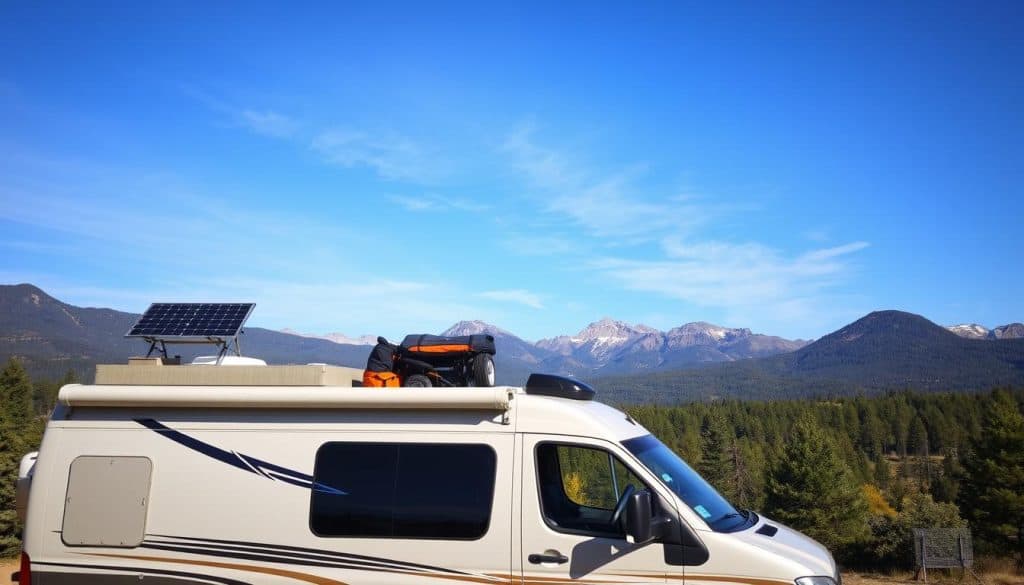
To make the most of your boondocking adventure, it’s essential to prepare your RV with the right gear and modifications. Boondocking, or dry camping, means you’ll be without the comforts of hookups for water, electricity, or sewage. Your RV needs to be self-sufficient to ensure a comfortable and enjoyable experience.
Water Conservation Modifications
One of the critical aspects of boondocking is managing your water resources. Installing low-flow showerheads and faucets can significantly reduce water consumption. Additionally, consider adding a water filtration system to ensure access to clean drinking water. These modifications not only conserve water but also make your boondocking experience more sustainable.
Power Generation Options
Reliable power generation is vital for boondocking. Consider investing in solar panels to recharge your batteries during the day. A battery monitor helps you keep track of your power levels, ensuring you don’t run out of electricity when you need it most. Energy-efficient appliances also play a crucial role in managing your power consumption.
Storage Solutions
Adequate storage is essential for boondocking, as you’ll need to carry all your supplies with you. Optimize your RV’s storage by using stackable containers and under-bed storage solutions. This will help you stay organized and ensure that you have everything you need for a comfortable stay.
Essential Gear and Supplies
When it comes to boondocking, having the right gear and supplies is crucial. Pack non-perishable food items and plenty of snacks to keep you fueled. A portable stove or campfire cooking equipment can make cooking more enjoyable. Don’t forget a comprehensive first aid kit and safety gear, including a cell signal booster, to stay safe in remote areas.
Safety Considerations for Boondocker Camping
Safety is paramount when boondocking, and being prepared can make all the difference. As you venture into remote areas, it’s essential to consider the unique safety challenges that come with this type of camping.
Emergency Preparedness
Being prepared for emergencies is critical when boondocking. This includes having the right equipment, such as a first aid kit, and knowing how to use it. You should also have a plan in place for emergency situations, such as knowing the location of the nearest medical facilities and having a means of communication. For more information on preparing for boondocking, you can visit The RVer’s Guide to Boondocking.
Emergency preparedness also involves being aware of your surroundings and potential hazards such as wildlife, steep drop-offs, and inclement weather. It’s crucial to stay informed about weather conditions and to have a plan for severe weather events.
Communication Options in Remote Areas
Maintaining communication capabilities while boondocking in remote areas is vital. Cellular networks often have limitations, so it’s essential to implement alternative solutions. Cell signal boosters can enhance weak signals, and satellite communication devices provide connectivity in areas completely beyond cellular coverage.
Understanding how to maximize existing cellular coverage is also important. Techniques such as finding high points, using directional antennas, and knowing which carriers work best in specific regions can significantly improve connectivity. Additionally, two-way radios provide reliable short-range communication between traveling companions, particularly useful when scouting potential camping spots or during outdoor activities away from camp.

Benefits of the Boondocking Lifestyle
As you explore the boondocking lifestyle, you’ll discover a multitude of advantages that make this way of camping truly special, from cost savings to unforgettable experiences under the night sky. Boondocking offers a unique blend of freedom, connection with nature, and financial practicality that appeals to many outdoor enthusiasts.
The benefits of boondocking are diverse and impactful. Let’s delve into some of the key advantages that make this lifestyle so appealing.
Financial Advantages
One of the most significant benefits of boondocking is the cost savings. By avoiding the fees associated with traditional campsites, boondockers can save money on their camping trips. Additionally, the self-sufficient nature of boondocking encourages campers to be more mindful of their resource usage, further reducing costs.
- Lower camping fees
- Reduced fuel consumption through careful planning
- Less money spent on amenities
Freedom and Flexibility
Boondocking provides an unparalleled sense of freedom and flexibility. Without being tied to a specific campsite or schedule, boondockers can change their plans on a whim, exploring new areas or staying longer in places they enjoy. This flexibility is a key aspect of the boondocking experience, allowing campers to truly live on their own terms.
Key aspects of this freedom include:
- The ability to change plans spontaneously
- Flexibility in choosing camping locations
- The opportunity to stay in one place for as long as desired
Connection with Nature
Perhaps the most profound benefit of boondocking is the deep connection it fosters with the natural world. By immersing themselves in pristine environments, boondockers can experience the beauty and tranquility of nature in a way that’s often not possible in more developed camping settings.
The sensory experiences of boondocking—such as stargazing on a clear night, listening to wildlife, or simply enjoying the peace and quiet—create lasting memories and a deeper appreciation for the natural world.
Common Challenges and How to Overcome Them
Boondocking presents several challenges that require careful planning and preparation. As you venture into the world of boondocking, you’ll need to be aware of the potential obstacles that can impact your camping experience. Two of the most significant challenges are resource management and weather and terrain issues.
Resource Management
Effective resource management is crucial when boondocking. This includes managing your water, power, and waste disposal. You need to be mindful of your consumption and ensure that you have the necessary equipment to sustain yourself for the duration of your trip. For instance, conserving water by taking shorter showers and using water-efficient appliances can significantly extend your boondocking stay. As“The Boondocker’s Guide”suggests, “A well-planned resource management strategy is key to a successful boondocking adventure.”
When it comes to power, you have several options, including solar panels, generators, and batteries. It’s essential to assess your power needs and choose the right equipment for your rig. Waste disposal is another critical aspect, and you should be aware of the facilities available at your campsite and plan accordingly.
Weather and Terrain Issues
Weather and terrain challenges are another significant consideration for boondockers. Road access issues, such as washouts, mud, and steep grades, can be particularly problematic. As one experienced boondocker notes,
“The road to your boondocking spot can be just as challenging as the camping itself.”
Seasonal weather patterns can also dramatically affect your boondocking plans, with extreme temperatures, high winds, and flash floods posing significant risks.
To overcome these challenges, it’s essential to plan ahead, check the weather forecast, and be prepared for changing conditions. This might involve choosing a different campsite, preparing your rig for extreme weather, or having a contingency plan in place. By being aware of these challenges and taking steps to mitigate them, you can enjoy a safe and fulfilling boondocking experience.
Conclusion
In conclusion, boondocking represents a significant shift in how we approach camping, emphasizing independence and a deeper connection with the outdoors. This unique approach to outdoor recreation offers unparalleled freedom and opportunities for self-sufficiency. While it presents challenges like resource management and finding suitable locations, many find the rewards far outweigh these considerations.
By adopting responsible boondocking practices, you can enjoy this transformative experience while preserving natural resources for future generations. Whether drawn to boondocking for solitude, scenery, or savings, it offers a new way to experience the outdoors on your own terms, making every moment on the road a valuable one.
FAQ
What does "boondocking" mean?
Boondocking refers to camping without hookups, such as water, electricity, or sewage, often on public lands managed by agencies like the Bureau of Land Management or Forest Service.
Where can I go boondocking?
You can go boondocking on public lands, including Bureau of Land Management areas, national forests, and some state trust lands. Make sure to check the rules and regulations for each location.
How long can I stay when boondocking?
Stay limits vary depending on the location and managing agency. Typically, you can stay for up to 14 days on Bureau of Land Management lands and some national forests.
How do I manage water when boondocking?
To manage water, conserve your usage, and consider installing water conservation modifications on your RV, such as low-flow fixtures.
What are some essential resources for boondocking?
Essential resources include water management strategies, power solutions like solar panels or generators, and proper waste disposal techniques.
How do I find boondocking spots?
You can find boondocking spots using online resources and apps, such as those that specialize in public land camping, and by scouting out locations in person.
What are some safety considerations for boondocking?
Safety considerations include being prepared for emergencies, having reliable communication options, and being aware of your surroundings and potential hazards like wildlife.
Can I boondock with a large RV?
Yes, you can boondock with a large RV, but you’ll need to plan carefully, considering factors like water and power needs, and choose locations that can accommodate your rig’s size.
Are there any rules or etiquette I should follow when boondocking?
Yes, follow Leave No Trace principles, respect wildlife and other campers, and adhere to stay limits and regulations to ensure a positive experience for yourself and others.