

The year 2024 was a remarkable one for the U.S. National Park Service, with a record-breaking 331.9 million recreation visits across its 433 units. This milestone not only surpassed the previous record set in 2016 but also underscored the enduring appeal of America’s natural treasures.
As someone who’s spent countless hours exploring these incredible spaces, I can attest to their significance in preserving our natural heritage and providing endless recreational opportunities. But have you ever wondered which national park attracts the most visitors?
In this article, we’ll explore not only the most visited national park but also other popular destinations within the national park system, highlighting what makes each one special.
Key Takeaways
- The U.S. National Park Service saw a record-breaking number of visitors in 2024.
- The most visited national park will be revealed, along with other popular national parks.
- Understanding visitation patterns helps appreciate the diverse appeal of America’s national parks.
- The top 10 most visited national parks and their unique features will be explored.
- National parks play a crucial role in preserving America’s natural heritage.
The Popularity of America’s National Parks
The U.S. National Park Service has been keeping records since 1904, and the numbers are staggering – over 16.4 billion visits. This statistic underscores the growing popularity of America’s national parks, which have been aptly termed “America’s best idea.”
The diversity of landscapes within the national park system is a significant draw. From the majestic mountain ranges to the serene coastlines and vast deserts, there’s something for every nature enthusiast. The national park system encompasses 85 million acres of land, including 150,000 miles of rivers and streams and over 21,000 miles of trails.
Visitation numbers have seen a historical trend of increase over the decades. In recent years, national parks have become even more popular as people seek outdoor experiences. The 63 designated national parks are part of the broader 433 units managed by the National Park Service.
| Year | Visits (in millions) |
|---|---|
| 1904 | 0.14 |
| 2023 | 325 |
Social media has also played a role in influencing park popularity and visitation patterns in recent years. For more information on the top national parks, you can visit enjoynationalparks.com.
Understanding the National Park Service
With a rich history dating back to 1916, the National Park Service has been the guardian of America’s most treasured landscapes. As the federal agency responsible for managing national parks, the NPS plays a crucial role in preserving the country’s natural and historical heritage.
The National Park Service manages 85 million acres across 433 different units, including famous national park sites like Yellowstone, as well as other protected areas such as parkways, battlefields, and historic sites. Notably, only 63 of these units are officially designated as “national parks.”
The NPS’s dual mission is to preserve these natural resources while making them available for public enjoyment. This involves tracking visitation statistics across all its sites and managing the diverse range of protected areas, from parks to national monuments and recreation areas.
Record-Breaking Visitation: 2024 Statistics
The National Park Service (NPS) has achieved a remarkable milestone in 2024, with a record-breaking 331.9 million recreation visits across its 433 units. This surpasses the previous record of 330.9 million visits set in 2016 and represents a 2% increase from 2023.
Notably, 28 individual sites within the National Park System set their own visitation records in 2024. Factors contributing to this surge include post-pandemic travel trends and a growing interest in outdoor recreation.

| Year | Recreation Visits (millions) | Change from Previous Year |
|---|---|---|
| 2024 | 331.9 | +2% |
| 2023 | 325.5 | – |
| 2016 | 330.9 | +1.5% |
While the total visitation increased, the distribution of visitors varies greatly among different national parks. The top 10 most visited parks account for a significant percentage of total visits, putting pressure on their infrastructure and creating management challenges.
What is America’s most visited national park?

In 2024, Great Smoky Mountains National Park topped the list as America’s most visited national park with 12.19 million visitors. This park, straddling the border between North Carolina and Tennessee, has consistently held the top position for many years.
One of the key factors contributing to its high visitation is its accessibility and free admission. The park’s proximity to population centers also makes it a favorite among tourists and locals alike.
What’s remarkable is that Great Smoky Mountains National Park receives more than twice the visitors of the second most popular park. Despite being the most visited, many Americans might not realize its popularity compared to more iconic parks.
The following sections will delve deeper into Great Smoky Mountains National Park and explore other top national parks, providing insights into their attractions and what makes them so appealing.
Great Smoky Mountains National Park: America’s Most Visited
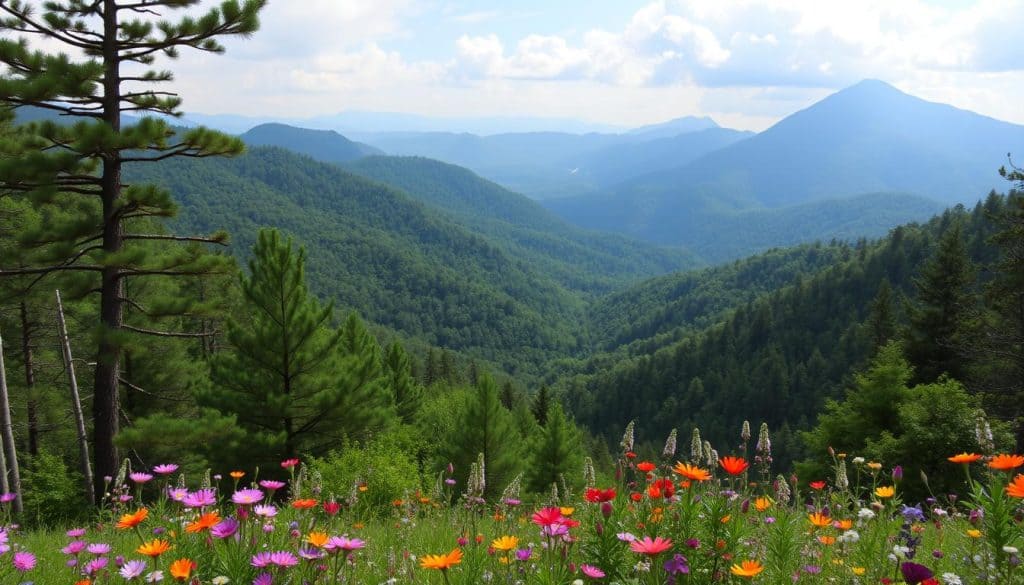
In 2024, Great Smoky Mountains National Park reached a new milestone with more than 12 million visits, solidifying its position as America’s most visited national park. This remarkable visitation can be attributed to several factors.
Location and Accessibility
The park’s strategic location and year-round accessibility make it a favorite among tourists. With multiple entrances and the scenic Newfound Gap Road connecting North Carolina and Tennessee, visitors can easily access the park’s numerous attractions.
Natural Features and Attractions
Great Smoky Mountains National Park boasts diverse recreational opportunities, including hiking, fishing, wildlife viewing, and scenic drives. The park’s historical and cultural attractions, such as preserved mountain homesteads and structures, add to its appeal. For more information on other great national parks, you can visit https://enjoynationalparks.com/what-are-the-best-national-parks/.
Why It Attracts Over 12 Million Visitors
The park’s free admission policy, unlike most other national parks that charge entrance fees, is a significant draw. Additionally, its proximity to popular tourist destinations like Gatlinburg and Pigeon Forge increases visitation. The park’s appeal during all four seasons, from spring wildflowers to fall foliage to winter snow scenes, ensures a steady stream of visitors throughout the year, contributing to its status as the most visited national park with over 12 million visitors annually.
Zion National Park: The Runner-Up
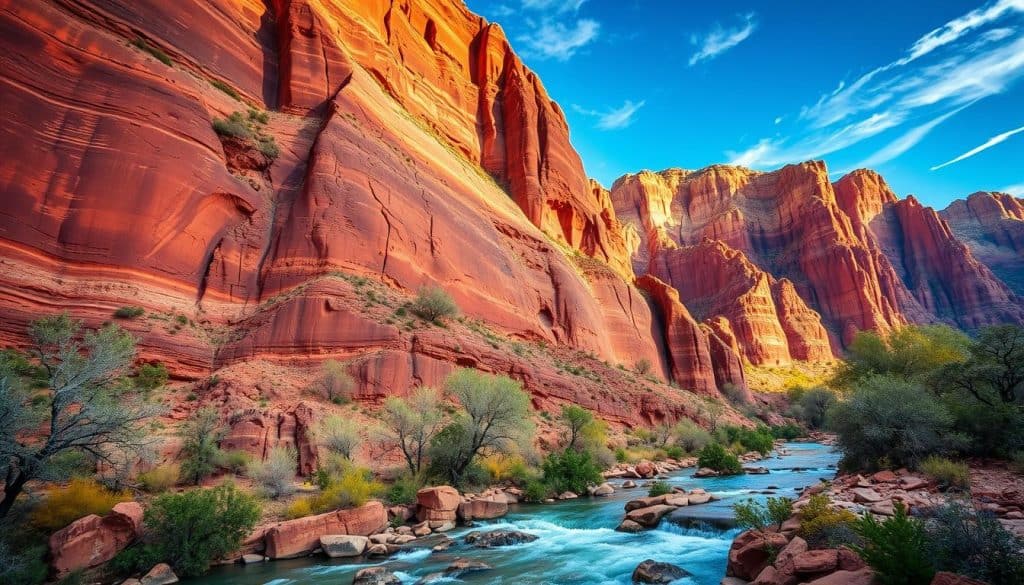
With its striking vertical topography, Zion National Park offers an unforgettable experience for visitors from around the world. Attracting 4,946,592 million visitors in 2024, this park is renowned for its unique geological features.
Utah’s Vertical Wonderland
Zion National Park is characterized by its towering sandstone cliffs rising up to 2,000 feet, creating a dramatic landscape. The park’s unique vertical nature is evident in areas like The Narrows, where hikers wade through the Virgin River between canyon walls sometimes only 20-30 feet apart.
The park’s geology represents 150 million years of sedimentation, uplift, and erosion, showcasing a diverse range of rock formations. Visitors can hike trails like Angels Landing, which climbs 1,488 feet and features a challenging final section with chains along a narrow ridge.
Zion’s unique color palette of cream, pink, and red sandstone changes dramatically with the angle of the sun, creating a breathtaking spectacle. The park’s diverse microclimates and habitats support a wide range of flora and fauna, making it a fascinating destination for nature enthusiasts.
Grand Canyon National Park: An American Icon
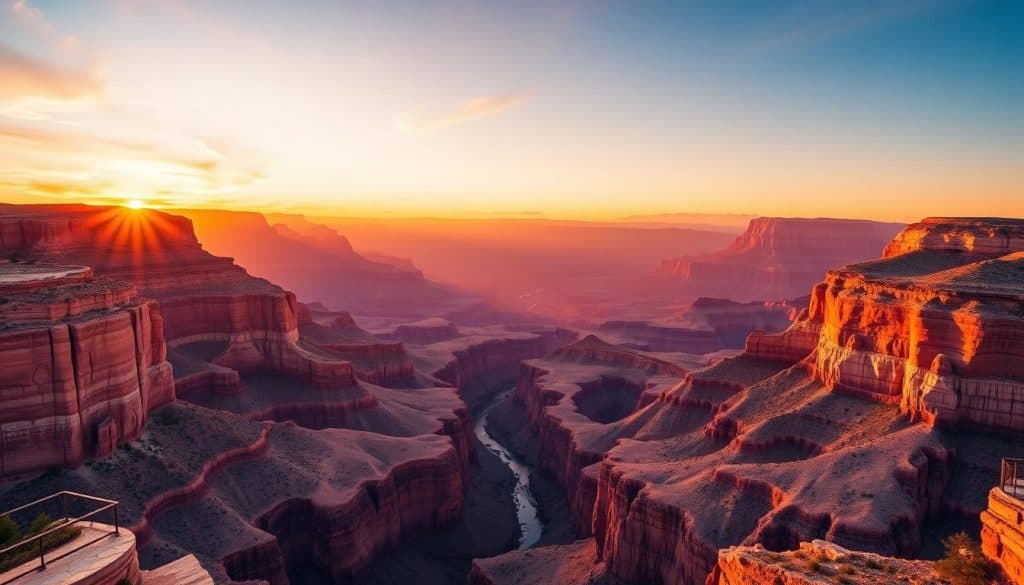
With nearly five million visitors annually, Grand Canyon National Park is not just a destination, but an experience that reshapes one’s perspective on nature’s grandeur. Attracting 4,919,163 million people, this natural wonder is a testament to the incredible forces that have shaped our planet.
The Magnificent Mile-Deep Canyon
The Grand Canyon is a marvel of scale and geological history. It stretches 277 miles long, up to 18 miles wide, and a mile deep, revealing nearly two billion years of Earth’s history in its exposed rock layers. The Colorado River has played a crucial role in carving this massive canyon over millions of years.
The canyon’s depth creates diverse ecological zones, equivalent to traveling from Mexico to Canada in terms of climate variation. This diversity supports a wide range of plant and animal species adapted to the unique environments within the canyon. As the sunlight shifts throughout the day, the canyon walls change colors, creating a living canvas of reds, oranges, and purples.
Famous viewpoints like Mather Point, Yavapai Observation Station, and Desert View offer different perspectives of the canyon, each revealing new aspects of its grandeur. The Grand Canyon is not just a natural wonder; it’s home to numerous species that call this unique environment their habitat.
Yellowstone National Park: The World’s First
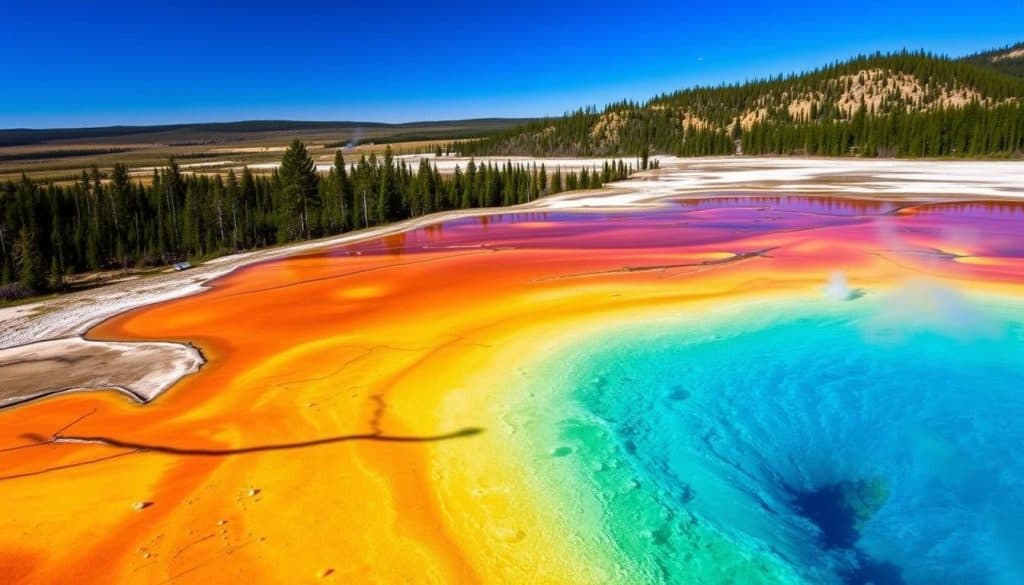
Yellowstone National Park, the world’s first national park, is a testament to the incredible diversity of America’s natural landscapes. Spanning 2.2 million acres across Wyoming, Idaho, and Montana, this vast reserve is home to an astonishing array of geothermal features, wildlife, and ecosystems.
Geysers, Wildlife, and Vast Wilderness
Yellowstone is renowned for its geothermal wonders, including over 10,000 thermal features and more than half of the world’s active geysers, such as the iconic Old Faithful. The park is also a wildlife enthusiast’s paradise, with an abundance of bison, bears, wolves, and other mammals. Its diverse ecosystems range from alpine meadows to dense forests, making it a unique destination for nature lovers.
Rocky Mountain National Park: Alpine Majesty

The stunning beauty of Rocky Mountain National Park drew 4.2 million visitors to its doors in 2024. Located in northern Colorado, this national park boasts 60 peaks over 12,000 feet high, including Longs Peak at 14,259 feet.
Trail Ridge Road, the highest continuous paved road in the United States, crosses the Continental Divide and reaches elevations over 12,000 feet, offering breathtaking views.
The park’s diverse ecosystems range from montane forests to subalpine forests and alpine tundra, hosting abundant wildlife such as elk, bighorn sheep, moose, and marmots. With 355 miles of hiking trails, Rocky Mountain National Park is a hiker’s paradise. For more information on national parks, visit best-rated national parks.
Yosemite National Park: John Muir’s Temple
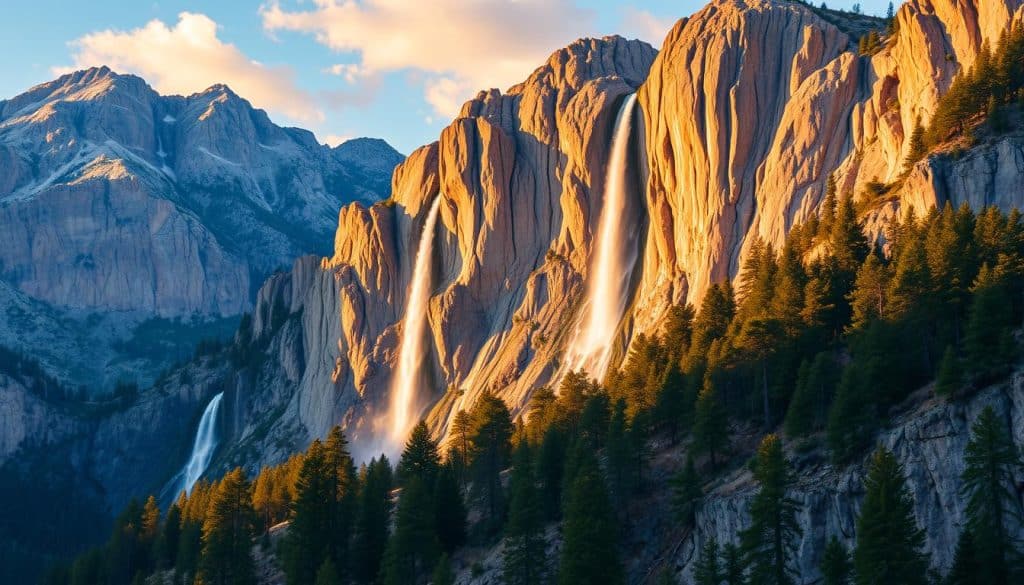
As John Muir once said, “No temple made with human hands can compete with Yosemite,” and in 2024, this natural wonder welcomed 4,121,807 visitors. Located in California’s Sierra Nevada mountains, Yosemite National Park is renowned for its granite formations like Half Dome and El Capitan.
Yosemite Valley, the park’s centerpiece, is a mile-wide, seven-mile-long canyon carved by a river and then widened by glacial action. It features Yosemite Falls, the tallest waterfall in North America. Beyond the valley, the park offers diverse landscapes, including high country meadows and giant sequoia groves.
The park’s natural beauty and diverse landscapes make it a haven for rock climbers, hikers, and photographers. As a UNESCO World Heritage Site, Yosemite’s historical significance in the conservation movement is undeniable.
Acadia National Park: Where Sea Meets Mountains

Nestled on Maine’s rugged Atlantic coast, Acadia National Park is a breathtaking destination where the mountains meet the sea. In 2024, it welcomed nearly 4 million visitors, making it America’s seventh most visited national park.
The park is primarily located on Mount Desert Island, a unique patchwork of parkland, private property, and waterside villages. This distinctive landscape creates dramatic coastal scenery, with park attractions like Cadillac Mountain, the highest point on the U.S. Atlantic coast, and Jordan Pond, famous for its tea house and picturesque surroundings.
One of the park’s highlights is the Park Loop Road, a scenic drive that takes visitors through some of Acadia’s most stunning landscapes. The park is also steeped in history, being the first national park east of the Mississippi River. Its 158 miles of hiking trails and 45 miles of carriage roads, built by John D. Rockefeller Jr., offer endless opportunities for exploration.
During the fall foliage season, Acadia National Park becomes a kaleidoscope of color as the maples, birches, and aspens turn, attracting many visitors who come to witness the natural spectacle. Whether you’re hiking, biking, or simply taking in the views, Acadia offers an unforgettable experience.
Olympic National Park: Three Parks in One

With over 3.7 million visitors in 2024, Olympic National Park stands out as America’s eighth most visited national park.
This vast park, spanning 922,651 acres, is renowned for its diverse ecosystems, often referred to as “three parks in one.”
It features a wild Pacific coastline with tide pools and sea stacks, an old-growth temperate rainforest like the Hoh Rainforest, and rugged glacier-capped mountains, including Mount Olympus at 7,980 feet.
The park’s isolation on Washington’s Olympic Peninsula has led to the evolution of unique species found nowhere else. Its designation as both a UNESCO World Heritage Site and International Biosphere Reserve underscores its natural significance.
Grand Teton National Park: Dramatic Peaks

Grand Teton National Park, with its stunning mountain vistas and abundant wildlife, is America’s ninth most visited national park, attracting over 3.6 million visitors in 2024. The Teton Range rises abruptly nearly 7,000 feet above the Wyoming valley floor, creating a dramatic landscape.
The park is home to iconic peaks, including the Grand Teton at 13,775 feet and twelve other peaks above 12,000 feet. Its pristine lakes, such as Jackson Lake and Jenny Lake, reflect the breathtaking mountain scenery.
Located near Yellowstone National Park, many visitors experience both parks in one trip. The park is also known for its abundant wildlife, including elk, moose, bison, bears, and wolves, making it a paradise for nature lovers and photographers.
Glacier National Park: Crown of the Continent
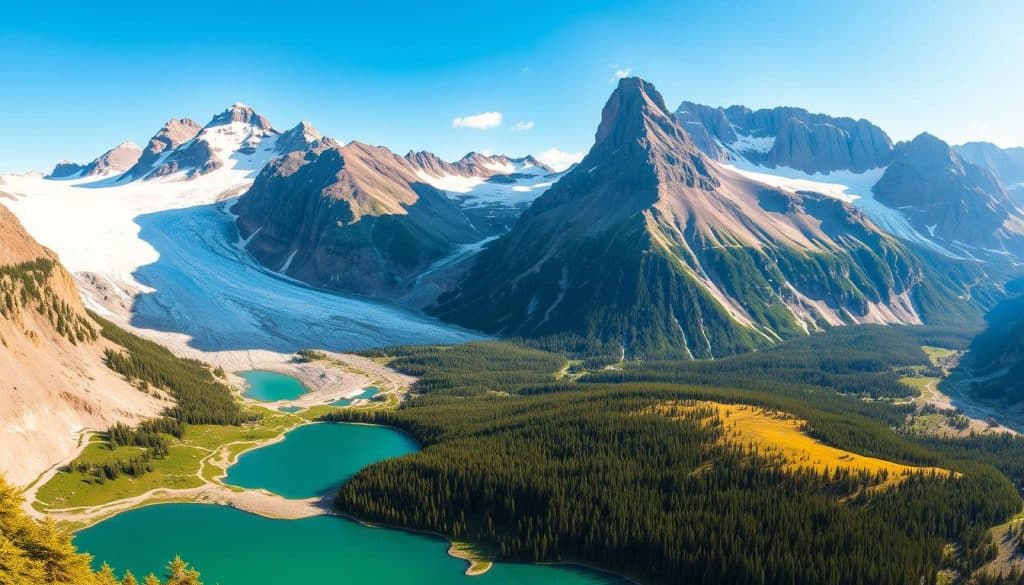
Glacier National Park, nestled in the heart of Montana’s Rocky Mountains, is a breathtaking destination that drew over 3.2 million visitors in 2024. Located along the Canadian border, this stunning park is renowned for its diverse ecosystems, featuring over 1,000 plant species and hundreds of animal species.
The park’s namesake glaciers, though rapidly disappearing due to climate change, are a significant attraction. The Going-to-the-Sun Road, an engineering marvel, crosses the Continental Divide at Logan Pass, offering breathtaking views and access to the park’s many wonders.
As part of the Waterton-Glacier International Peace Park, Glacier National Park holds international significance. With over 700 miles of hiking trails, visitors can explore alpine meadows, pristine lakes, and majestic mountain vistas, making it a paradise for outdoor enthusiasts.
What Makes These Parks So Popular?
The national parks in America are a treasure trove of natural beauty, attracting millions of visitors each year. So, what makes these national parks so appealing? For one, their vastness and variety are unmatched. The National Park Service’s 85 million acres encompass 150,000 miles of rivers and streams and over 21,000 miles of trails, offering endless opportunities for exploration.
Several factors contribute to their popularity. Accessibility plays a significant role, with many parks located near population centers. Iconic natural features and landmarks, such as those found in Grand Canyon National Park, also drive tourism. Infrastructure development, including roads and visitor centers, enhances the visitor experience.
Additionally, the influence of social media and photography cannot be overstated, as certain viewpoints become instantly popular. Park management strategies balance visitor access with resource protection, ensuring the preservation of these natural wonders for future generations.

Conclusion: The Enduring Appeal of America’s National Parks
The enduring appeal of America’s national parks is evident in the record-breaking visitation numbers. Great Smoky Mountains National Park remains the most visited national park, attracting millions of visitors each year. The National Park Service’s 85 million acres encompass a diverse range of landscapes and experiences, from the majestic grandeur of the Grand Canyon to the serene beauty of Acadia’s coastline.
As we explore beyond the most popular parks, we discover hidden gems and less-visited destinations. However, the challenges facing national parks, including overcrowding, climate change, and funding constraints, must be addressed to preserve these natural treasures for future generations. I encourage you to visit some of the lesser-known parks and experience the beauty of America’s national parks. You can find more information on planning your trip to the best national parks on our website: best national parks trips.
Let’s work together to ensure the long-term conservation of these precious natural resources.
FAQ
Which national park attracts the largest number of visitors each year?
The Great Smoky Mountains National Park is the most visited national park, with over 12 million visitors annually, due to its accessibility and diverse natural features.
What are the main reasons for the high visitation rate at Great Smoky Mountains National Park?
The park’s location on the border of North Carolina and Tennessee, its rich biodiversity, and numerous attractions like waterfalls and hiking trails make it a favorite among visitors.
How does the National Park Service manage the large number of visitors to these parks?
The National Park Service implements various strategies, including visitor education, infrastructure development, and conservation efforts, to manage the impact of tourism and preserve the parks’ natural resources.
Are there any other national parks that are nearly as popular as Great Smoky Mountains National Park?
Yes, parks like Grand Canyon National Park, Zion National Park, and Yellowstone National Park are also extremely popular, attracting millions of visitors each year with their unique landscapes and attractions.
What can visitors expect to experience at these national parks?
Visitors can enjoy a wide range of experiences, from hiking and camping to wildlife viewing and exploring historic sites, depending on the park’s specific features and attractions.
How has the visitation rate to national parks changed over the years?
The visitation rate to national parks has generally been increasing, with some fluctuations, as more people seek outdoor recreation and connection with nature.