

Imagine setting up your tent under the stars, surrounded by nature’s serenity, and waking up to a breathtaking sunrise. Wild camping offers a unique connection with the great outdoors, but it’s not without its risks.
Did you know that over 3.5 million people in the UK alone go camping each year, with many opting for wild camping on private land? However, the legality of pitching your tent for the night varies greatly depending on the location, and trespassing laws can be strict.
This comprehensive guide will explore the potential consequences of being caught wild camping and provide you with the knowledge to make informed decisions about your next adventure.
Key Takeaways
- Understand the legal status of wild camping in different regions.
- Learn about the potential consequences of being caught.
- Discover strategies to minimize risks when wild camping.
- Get insights into best practices for responsible wild camping.
- Find out how to make informed decisions about your next camping trip.
Understanding Wild Camping: Definition and Appeal
For many, the allure of wild camping lies in its freedom and connection to nature. Wild camping, also known as stealth camping, free camping, or rough camping, is the practice of sleeping outside in a place of your choosing, rather than in an officially-designated campsite.
What Exactly Is Wild Camping?
Wild camping involves setting up camp in areas not designated for camping, offering a more immersive outdoor experience. This type of camping allows individuals to connect with the natural environment on a deeper level.
Why People Choose to Wild Camp
Several factors contribute to the appeal of wild camping. Some of the key reasons include:
- The freedom to camp wherever you find yourself at the end of a day’s hiking or cycling.
- A deeper connection with nature that comes from sleeping in truly wild places.
- Cost savings compared to formal campgrounds or hotels.
These aspects make wild camping attractive to various types of campers, from budget-conscious travelers to adventure-seekers. The table below summarizes the main appeals of wild camping:
| Appeal | Description | Benefit |
|---|---|---|
| Freedom | Camp wherever you choose | Flexibility in travel plans |
| Connection to Nature | Sleep in truly wild places | Deeper appreciation for the natural world |
| Cost-Effective | No fees for campsites | Budget-friendly travel option |
The Legal Status of Wild Camping in the United States
The legality of wild camping in the U.S. varies significantly across different regions and types of land. As an outdoor enthusiast, understanding these regulations is key to avoiding legal issues while enjoying nature.
Public Lands: National Forests and BLM Land
National forests and Bureau of Land Management (BLM) lands offer vast opportunities for wild camping. Generally, these areas are more permissive, allowing dispersed camping outside of developed campsites. However, it’s essential to check local regulations as some areas may be closed due to environmental concerns or other issues.
National Parks and Their Regulations
National parks have stricter regulations regarding camping. Most require campers to use designated campsites, and some areas may be entirely off-limits to camping. Understanding the specific rules of the national park you plan to visit is crucial.
State and Local Restrictions
State and local laws regarding wild camping vary widely. Some states are more permissive, especially in less populated areas, while others have strict regulations. Checking with local authorities or park websites can provide the necessary information to camp legally.
| Land Type | Camping Regulations | Permissiveness Level |
|---|---|---|
| National Forests | Generally allows dispersed camping | High |
| BLM Land | Often permits dispersed camping | High |
| National Parks | Requires designated campsites | Low |
| State and Local Lands | Varies by state and locality | Variable |
Wild Camping Laws Around the World
Wild camping laws vary significantly around the globe, making it essential to know what to expect before you pitch your tent. Understanding these regulations can save you from potential legal issues and enhance your camping experience.
Countries Where Wild Camping Is Legal
Some countries offer more lenient laws regarding wild camping. For instance, Scotland is known for its relaxed attitude towards wild camping, thanks to the Land Reform (Scotland) Act 2003, which allows campers to pitch their tents in many rural areas. Similarly, countries like Norway and Sweden have “right to roam” laws, which permit camping on private land under certain conditions.
These countries not only provide legal camping opportunities but also offer breathtaking landscapes that make wild camping a memorable experience.
Countries With Strict Wild Camping Prohibitions
On the other hand, many countries have strict prohibitions against wild camping. For example, in many European countries such as France, Spain, Italy, and Portugal, wild camping is generally prohibited without the landowner’s permission. The Netherlands has particularly strict laws, with significant fines for violations.
| Country | Wild Camping Legality | Notes |
|---|---|---|
| Scotland | Generally Legal | Under the Land Reform (Scotland) Act 2003 |
| France | Generally Prohibited | Permission from landowner required |
| Norway | Legal under “Right to Roam” | Certain conditions apply |
As highlighted by the table, the legality of wild camping can vary significantly. It’s crucial to research the specific laws of the country you plan to visit. As a seasoned camper once said, “The great outdoors is for everyone, but it’s our responsibility to respect the land and its laws.” Understanding the distinction between civil and criminal offenses related to wild camping is also important, especially when traveling internationally.
What Happens If You’re Caught Wild Camping?
Being apprehended while wild camping is a scenario many campers hope to avoid. As an outdoor enthusiast, it’s essential to understand the potential consequences of getting caught.
Being Asked to Move On
If you’re caught wild camping, the most likely outcome is being asked to leave the area immediately. This is usually done by the landowner or someone acting on their behalf, such as a gamekeeper or security guard. You should comply with their request to avoid further action.
Potential Fines and Penalties
In some cases, wild camping can result in fines or penalties. The amount can vary depending on the location and the specific regulations in place. For instance, starting fires in prohibited areas can lead to significant fines, especially in fire-prone regions. It’s crucial to be aware of the local laws and regulations to avoid such consequences.
Rare but Serious Consequences
In rare cases, wild camping can lead to more serious consequences, such as being arrested for Aggravated Trespass if you refuse to leave when directed to do so and are “intentionally obstructing, disrupting, or intimidating others from carrying out lawful activities.” Other serious offenses include damaging protected environments or historical sites, which can result in significant legal penalties.
Understanding the potential consequences of wild camping can help you make informed decisions and avoid trouble with the law. By being respectful of the land and following local regulations, you can minimize the risk of facing serious consequences.
Trespassing: Civil vs. Criminal Offenses
As a wild camper, it’s essential to grasp the distinction between civil and criminal trespassing offenses. Trespassing laws vary significantly, and understanding these differences can help you avoid legal issues during your outdoor adventures.
Understanding Civil Trespass
Civil trespass occurs when someone enters or remains on a property without the owner’s permission. Typically, this is considered a civil matter, and the landowner may request that you leave. If you refuse, the situation can escalate, potentially leading to legal action against you. Civil trespass is usually resolved through compensation for any damages caused.
When Trespassing Becomes a Criminal Offense
However, trespassing can become a criminal offense under specific circumstances. For instance, if you cause damage to the property or refuse to leave when directed by the landowner or their representative, you may be committing a criminal offense. Aggravated trespass, which involves obstructing or intimidating others, can lead to arrest by the police. It’s crucial to be aware of these boundaries to avoid serious legal consequences.
Who Might Catch You Wild Camping?
Understanding who has the authority to confront you is crucial for wild campers. When you’re out in the wilderness, it’s not just the environment you need to be aware of, but also the people who manage and protect these areas.
Landowners and Their Representatives
Landowners or their representatives are among the first individuals you might encounter while wild camping. They have a vested interest in how their land is used and may check on campers to ensure compliance with local regulations.
Park Rangers and Forest Service Officers
 Park rangers and Forest Service officers play a significant role in managing public lands. They are responsible for enforcing rules and regulations, and their primary concern is often the safety and well-being of both the campers and the environment.
Law Enforcement and Their Authority
Law enforcement officers, such as local police and sheriff’s deputies, typically become involved in wild camping situations when called by landowners or when other issues arise. Their authority varies by jurisdiction, and they usually focus on public safety rather than enforcing camping regulations unless a criminal offence is committed.
- Local police are more likely to respond to complaints in urban or suburban areas.
- Their involvement is often limited on federal lands unless requested by federal agencies.
- Officers have discretion in handling wild camping situations, often preferring to resolve issues amicably.
How to Respond If You’re Confronted
Being confronted while wild camping can be intimidating, but knowing how to respond is key. If you’re caught off guard, it’s essential to remain calm and composed.
Maintaining a Respectful Attitude
When confronted, stay calm and respectful. Avoid being defensive or argumentative, as this can escalate the situation. Instead, be polite and courteous, acknowledging the landowner’s or authority’s concerns.
What to Say and Do
If asked to leave, comply promptly and pack up your gear efficiently. You can say, “I understand, I’ll leave immediately.” If it’s dark or weather conditions are poor, explain your safety concerns and ask for reasonable accommodation.
When to Pack Up and Leave
If you’re asked to move on, respect the landowner’s rights and leave their land quickly. Some key points to remember include:
- Packing up efficiently shows respect for the request and can prevent escalation.
- Leaving immediately is particularly important if you’re in a sensitive environmental area or private property.
- Thank the person for their understanding, even if they’ve been firm about asking you to move.
Strategies to Avoid Getting Caught
Wild camping can be a thrilling experience, but it requires some strategy to stay under the radar. Whether you’re a seasoned camper or just starting out, understanding how to minimize your visibility is crucial for a trouble-free adventure.
Choosing the Right Location
Selecting a secluded spot is vital. Using natural-colored gear like greens, browns, and tans helps your camp blend into the environment. Positioning your tent behind natural features that block lines of sight from trails or roads is also effective. This way, you can enjoy your camping experience without drawing unnecessary attention.
Timing Your Arrival and Departure
Arriving at your campsite late in the day and leaving early in the morning can significantly reduce the chances of being spotted. Minimizing movement around camp, especially at night, is also crucial as flashlights can be seen from far away.
Keeping a Low Profile
Keeping a low profile involves several practices, including keeping noise to a minimum, avoiding bright lights, and keeping campfires small or avoiding them altogether. Practicing leave-no-trace principles not only protects the environment but also reduces visible signs of your presence, making it less likely you’ll be caught wild camping.
By following these strategies, you can enjoy a peaceful and legal camping experience, even in areas where wild camping might be restricted.
Essential Gear for Stealth Camping
The art of stealth camping hinges on being prepared with the right equipment to blend into nature. Having the correct gear not only enhances your experience but also ensures that you leave a minimal footprint on the environment.
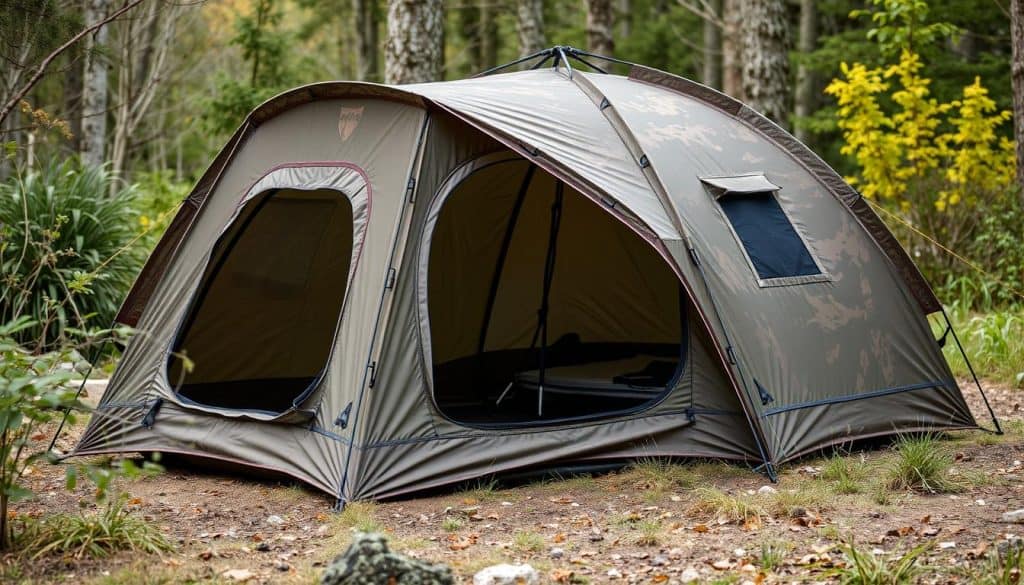
Low-Visibility Tents and Shelters
A crucial element for stealth camping is a tent or shelter that blends into its surroundings. Opt for low-visibility tents with camouflage patterns or muted colors that don’t stand out against the natural landscape.
Noise-Reducing Equipment
To minimize disturbance, it’s essential to have noise-reducing equipment. This includes items like silent camping gear and clothing that doesn’t rustle or make unnecessary sounds.
Leave-No-Trace Tools
When it comes to leave-no-trace camping, certain tools are indispensable. These include a lightweight trowel for digging catholes, sealable bags for packing out trash, and biodegradable soap for washing away from water sources.
- Carrying a lightweight trowel for digging catholes
- Bringing sealable bags for packing out trash
- Using biodegradable soap for washing
- Carrying a small whisk broom to remove tent footprint evidence
- Bringing microfiber towels to wipe away dew
Seeking Permission: The Legal Alternative
One way to ensure a stress-free camping experience is by getting permission from the landowner. When considering wild camping, one of the most significant concerns is the risk of getting caught.
While it can be challenging to find out who owns a specific piece of land, making the effort to do so can be rewarding. The nature of wild camping often means you won’t know where you’re going to pitch up on any given night.
How to Find Landowners
Finding landowners can be a daunting task, but it’s not impossible. You can start by researching public records or contacting local land management agencies to gather information about land ownership.
Approaching Landowners Effectively
When approaching landowners, be respectful and clear about your intentions. Explain that you’re looking for a place to camp and assure them that you will leave the land as you found it, following the principles of Leave No Trace.
Benefits of Getting Permission
Obtaining landowner permission can have numerous benefits. Some of these include reducing the risk of fines or penalties, gaining access to better camping locations, and receiving unexpected hospitality from friendly landowners.
- Reducing the risk of fines or penalties
- Gaining access to better camping locations
- Receiving unexpected hospitality from friendly landowners

Leave No Trace: Ethical Wild Camping
The beauty of nature is what draws us to wild camping, and it’s our duty to preserve it. As outdoor enthusiasts, we must adopt practices that minimize our impact on the environment.
Minimizing Your Impact
To minimize your impact, it’s essential to plan ahead and be prepared. This includes choosing the right gear and understanding the terrain you’ll be camping on. By being mindful of your surroundings, you can avoid causing unnecessary damage.
Proper Waste Disposal
When nature calls, make sure to find a spot at least 50 meters away from running water. Dig a hole, do your business, and cover it with earth when finished. Don’t forget to take toilet paper and wipes with you when you leave. Proper food storage is also crucial to avoid attracting wildlife.
Respecting Wildlife and Nature
Respecting wildlife is critical, especially at night when animals are most active. Keep a safe distance, store food properly, and avoid surprising animals. By doing so, you’ll not only protect yourself but also the wildlife and their habitats.
Real-Life Experiences: Wild Camping Encounters
As someone who has ventured into wild camping, I’ve learned that the outcome largely depends on how and where you camp. My experiences, like those of many others, have been a mix of positive interactions and negative encounters.
Stories of Positive Interactions
I’ve had the pleasure of experiencing serene and peaceful wild camping trips where people in the surrounding areas were friendly and welcoming. Keeping a low profile, respecting local regulations, and leaving no trace contributed to these positive experiences. For instance, camping in a secluded area and being mindful of noise levels helped me avoid any conflicts with nearby residents.
Lessons Learned from Negative Experiences
Not all my experiences have been positive, however. I’ve learned valuable lessons from situations that didn’t go as planned. For example, setting up camp too close to homes or businesses can lead to uncomfortable confrontations. Similarly, leaving trash or evidence of fires can create negative impressions that affect not just my experience but also that of future campers. These experiences have taught me the importance of careful planning and responsible camping practices when I’m out in my tent, enjoying the camping life with other people.
Conclusion
In conclusion, wild camping requires preparation and environmental respect. By following this guide, you can have a positive experience while minimizing risks. Practicing leave-no-trace enhances your camping adventure with the right mindset and a tent.
FAQ
Is wild camping allowed on private land?
No, wild camping is generally not allowed on private land without the landowner’s permission. Always seek permission before setting up your tent on private property to avoid potential issues.
Can I be fined for camping on public land?
Yes, you can be fined for camping on public land if you’re not following the regulations. Familiarize yourself with local laws and regulations regarding backpacking and camping in the area you plan to visit.
What should I do if a landowner asks me to leave their property?
If a landowner or their representative asks you to leave, it’s best to comply immediately to avoid any further issues or potential aggravated trespass charges.
Are there any areas where wild camping is completely prohibited?
Yes, some national parks and protected areas have strict rules against wild camping. Always check the local regulations before setting up your camping spot.
Can I be charged with a criminal offense for wild camping?
In some cases, trespassing can be considered a criminal offense, especially if you’re on private land without permission. Understand the laws in the area you plan to camp in to avoid any serious consequences.
How can I minimize my impact while wild camping?
To minimize your impact, follow the Leave No Trace principles, keep your gear and food stored properly, and be mindful of your surroundings to avoid disturbing wildlife and nature.
What are some strategies to avoid getting caught while wild camping?
To avoid getting caught, choose your camping spot carefully, keep a low profile, and be prepared to pack up quickly if needed. Also, consider the timing of your arrival and departure to minimize visibility.
Is it necessary to get permission from the landowner before camping?
Yes, getting permission from the landowner is the best way to ensure you’re camping legally and safely. It also shows respect for the land and its owner.