

The Appalachian region is home to some of the oldest mountains in the world, with a rich history and folklore that spans centuries. As I reflect on my own experiences hiking the Appalachian Trail, I’m reminded of the unwritten rules that have been passed down through generations to ensure safety and respect for the land.
These guidelines aren’t just mere superstitions; they’re practical wisdom that has helped people survive in these majestic mountains for centuries. As we explore the three primary rules of Appalachia, you’ll gain insight into the deep connection between the people and their environment.
Understanding these rules is not only essential for visitors but also offers valuable lessons about respecting nature and its mysteries.
Key Takeaways
- Appalachia’s ancient mountains hold a rich history and folklore.
- Unwritten rules ensure safety and respect for the land.
- Practical wisdom has been passed down through generations.
- The three primary rules offer insight into the local culture.
- Understanding these rules is essential for visitors and locals alike.
The Ancient Mountains of Appalachia
Stretching over 2,000 miles, the Appalachian Mountains are one of the oldest and most diverse mountain ranges in the world. This ancient chain of forested mountains, valleys, wetlands, and rivers has been shaped by natural forces over 400 million years ago, making it a resilient and productive place on Earth.
A 400-Million-Year-Old Mountain Range
The Appalachian Mountains represent one of Earth’s oldest mountain ranges, dating back over 400 million years. This makes them significantly older than the Rockies or Alps, with a unique geological history that has created diverse habitats across the eastern United States.
Home to Diverse Ecosystems and Communities
The Appalachians support incredibly diverse ecosystems, comparable in importance to the Amazon Rainforest for biodiversity and climate resilience. For thousands of years, Indigenous communities, including the Cherokee and Haudenosaunee, have stewarded this landscape, developing sustainable practices that maintained the health of the land and its natural resources.
The Cultural Significance of Appalachian Traditions
The history of Appalachia is a complex tapestry woven from the threads of Indigenous wisdom, European folklore, and practical survival knowledge. For thousands of years, various communities have called the Appalachian Mountains home, leaving an indelible mark on the region’s cultural landscape.
Some 16,000 years ago, Indigenous Peoples, including the Cherokee, Haudenosaunee, Powhatan, and Shawnee, began living in the Appalachian Mountains, stewarding this landscape with deep respect and understanding. The Appalachians, with their worn-down tops marked by millions of years of history, have been a place of spiritual significance and practical importance.
Indigenous Heritage and Stewardship
The Indigenous peoples of Appalachia established profound connections with the land, creating traditions that honored the mountains while ensuring survival. Many of the rules and customs observed along the Appalachian Trail today have their roots in Indigenous practices that recognized the mountains as living entities deserving of respect.
- Deep Connection to the Land: Indigenous communities developed a deep understanding of the natural world, which guided their interactions with the environment.
- Traditions and Practices: Their traditions were not just spiritual but also practical, encompassing knowledge about safe travel, sustainable foraging, and weather prediction.
Passing Down Knowledge Through Generations
Knowledge and traditions were carefully passed down through generations, often disguised as superstitions or folk tales. This oral tradition served as a guidebook for navigating the challenges of mountain life, helping communities adapt to environmental change while maintaining cultural continuity.
- Oral Tradition: Stories and beliefs were shared through generations, preserving history and cultural identity.
- Adaptation and Resilience: These traditions enabled communities to adapt to the changing environment, showcasing their resilience and resourcefulness.
Understanding these traditions provides hikers and visitors with a deeper appreciation for the cultural landscape they’re traversing when exploring the region. The mountains have shaped Appalachian culture, creating a distinct place-based identity that values self-reliance, resourcefulness, and deep ecological knowledge.
Why Unwritten Rules Matter in Appalachia
For those who venture into Appalachia, there’s an implicit understanding that certain rules, though unwritten, are essential to respect. These aren’t laws enforced by park rangers, but traditions and stories passed down through generations, born from a deep understanding of the delicate balance in these mountains.
These unwritten rules are more than just superstitions; they contain practical wisdom about navigating the Appalachian Trail, dealing with unpredictable weather, and encountering wildlife. By following these guidelines, hikers and explorers can ensure their safety in remote areas where help may be a long time coming.
Survival Knowledge Disguised as Superstition
The unwritten rules of Appalachia serve as encoded survival knowledge that has protected generations of mountain dwellers. What might seem like superstition to outsiders often holds practical advice for navigating the land safely. For instance, understanding the local folklore can help you avoid dangerous terrain and wildlife encounters, making your journey along the Appalachian Trail much safer.
Respecting the Land and Its Mysteries
These rules also create a framework for respecting the land and acknowledging that humans are visitors in ancient wilderness that deserves reverence. By respecting these guidelines, you’re not only ensuring your safety but also preserving the sensitive ecological lands for future generations. This way, the traditions are maintained, and the land remains protected.
What are the three rules of Appalachia?
The Appalachian mountains have a way of teaching you their rules, even if they’re not explicitly stated. Growing up in the foothills, you come to abide by an unspoken set of rules that have been passed down through generations of mountain families.
These rules are not written down in any book or signposted along the trails, but they’re taught to children before they’re allowed to explore the wilderness. The three fundamental rules are: never be in the woods from dusk till dawn, never leave the marked trail, and never answer unseen voices calling your name.
The Origins of Mountain Guidelines
The exact origins of these guidelines are difficult to trace, but they emerged from centuries of observation, tragedy, and the collective wisdom of people who intimately understood the mountains. For hikers on the Appalachian Trail, these rules aren’t just folklore but practical safety measures that can prevent dangerous situations in remote areas.
- The rules address both natural dangers such as disorientation, wildlife encounters, and exposure, as well as supernatural beliefs deeply embedded in Appalachian culture.
- Those who followed these rules tended to return safely from their mountain trips, which speaks to their effectiveness.
- Even skeptical visitors often find themselves instinctively following these guidelines after spending time in the mountains, sensing the ancient wisdom they contain.
Enduring Through Generations
The endurance of these rules across generations is a testament to their importance. They’ve been passed down through families and remain relevant today, serving as a guide for anyone venturing into the Appalachian wilderness, whether on a day trip or a longer hike.
By following these rules, visitors can better appreciate the beauty and mystery of the Appalachian mountains while minimizing their risk of encountering danger.
Rule #1: Never Be in the Woods from Dusk Till Dawn
As night falls in Appalachia, the mountains transform into a realm of mystery and danger. The allure of a nighttime hike on the Appalachian Trail can be tempting, but it’s a venture that comes with significant risks.
The woods at night are alive with sounds that are absent during the day. Animals like coyotes and owls are more active, and the presence of predators such as bear and bobcats increases. The dangers are real, from the risk of encountering wildlife to the challenges posed by weather changes and difficult navigation.
The Dangers That Come With Darkness
One of the primary concerns is the increased activity of nocturnal hunters. The drop in temperature, especially at higher elevations, can lead to hypothermia if hikers are not properly equipped. Moreover, predicting and preparing for weather changes becomes more complicated at night.
The “Hatching Hour” and Supernatural Beliefs
Local folklore speaks of “The Hatching Hour,” a period when the boundary between the natural and supernatural worlds supposedly thins. Many believe that between dusk and dawn, spirits or unexplained creatures roam the woods. While these beliefs are rooted in local legend, they contribute to the cautionary tales that advise against being in the woods at night.
To explore the Appalachian wilderness safely, it’s recommended to hike during the day and return before sunset. This approach minimizes the risks associated with night travel and allows for a more enjoyable and safer experience.
Places in Appalachia Known for Nighttime Dangers
There’s a reason why locals avoid certain areas in Appalachia after dark, where the night air is thick with mystery and danger. The region is dotted with places that have earned reputations for strange occurrences and unexplained phenomena.
Some of these locations are steeped in history and folklore. For instance, Brown Mountain in North Carolina is famous for its mysterious lights that appear to dance across the ridges after dark.
Brown Mountain and Its Mysterious Lights
Brown Mountain’s lights have been a subject of fascination for generations, with explanations ranging from swamp gas to electrical atmospheric effects.
Hanging Rock State Park’s Eerie History
Hanging Rock State Park in North Carolina has a disturbing history of disappearances. A notable incident occurred in 1961 when five young people vanished without a trace near the park’s famous rock face.
| Location | Notable Phenomenon |
|---|---|
| Brown Mountain, NC | Mysterious Lights |
| Hanging Rock State Park, NC | Disappearances |
| Dark Hollow, WV | Unusual Sounds and Sightings |
Wildlife Concerns After Dark in the Mountains
The darkness of the Appalachian night brings with it a heightened risk of encounters with wildlife, making it essential for hikers to be cautious. While supernatural beings often capture the imagination, it’s the real-life wild animals that pose a tangible threat to hikers after dark.
Nocturnal Predators of the Appalachians
The Appalachian forests are home to numerous nocturnal predators that become more active at night. Black bears, bobcats, and coyotes are among the animals that hikers might encounter. These creatures generally avoid humans but can become aggressive if surprised or if they feel threatened. For instance, black bear encounters are more likely at night when hikers may stumble upon their feeding or denning sites without warning.
Navigational Challenges in Mountain Darkness
Navigating the Appalachian Trail or other mountain paths at night is challenging due to the dense canopy that blocks moonlight and starlight, creating near-total darkness. Even with headlamps, the visibility is significantly reduced, making it difficult for hikers to stay on track. Weather conditions like fog and rain further complicate navigation, increasing the risk of getting lost or injured. According to experienced hikers, the combination of steep terrain, loose rocks, and poor visibility creates perfect conditions for serious falls and injuries during night hikes.
Rule #2: Never Leave the Marked Trail
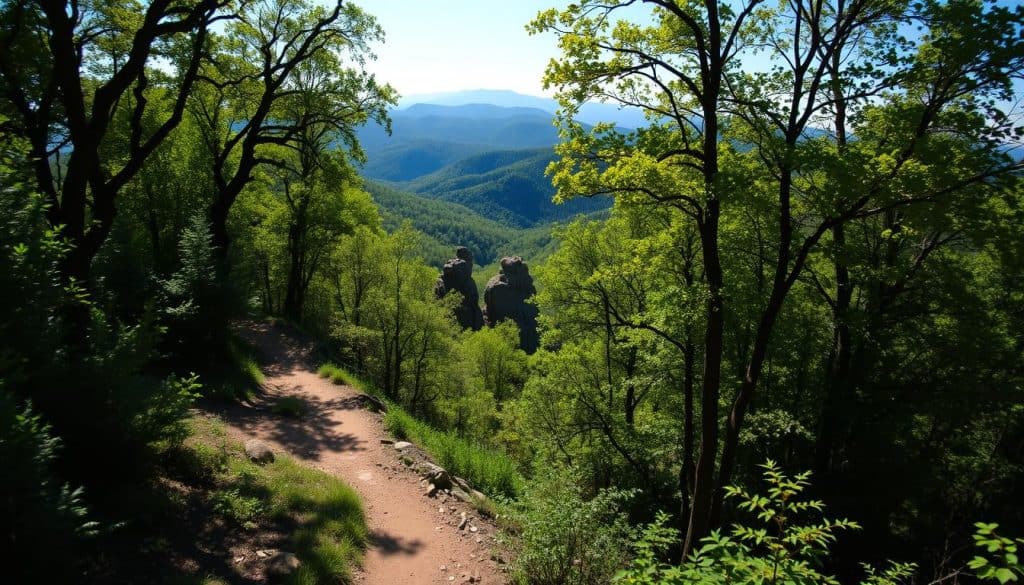
The Appalachian wilderness is full of hidden dangers, which is why staying on marked trails is essential. One minute you might be admiring a pretty wildflower, the next you’re neck-deep in brambles and briers. The thick Appalachian forests can get mighty dense in a hurry.
The trails are there to guide you around these dangers, and sticking to them is the best way to avoid a nasty surprise. Places like Linville Gorge Wilderness in North Carolina or Dolly Sods Wilderness in West Virginia are notorious for confusing terrain, and getting turned around there’s no fun adventure.
The Physical Dangers of Going Off-Trail
Besides getting lost, hidden dangers are lurking off the beaten path. Steep drop-offs might be disguised by thick undergrowth, waiting to surprise the careless explorer. The Appalachian Trail and other marked routes are carefully designed to guide hikers safely through terrain that may include unmarked cliffs, sinkholes, and unstable ground.
- The second rule of Appalachia exists because the wilderness beyond established paths contains numerous hidden dangers.
- Even experienced hikers can become completely disoriented within just a few hundred feet of a trail in the dense Appalachian forests.
- The region’s unique topography creates ‘terrain traps’ where similar-looking ridges and valleys can confuse hikers trying to find their way back.
Linville Gorge and Other Treacherous Terrains
Linville Gorge in North Carolina has claimed numerous lives when hikers ventured off-trail and became disoriented in the complex terrain. Search and rescue teams report that the vast majority of emergency operations involve people who left established trails, often underestimating the difficulty of off-trail navigation.
What might look like a shortcut or interesting side adventure can quickly turn into a dangerous situation miles from help. Modern GPS devices have limitations in deep gorges and under dense forest canopy, making traditional navigation skills essential for safety.
How Trails Protect Both Visitors and the Environment
As we explore the Appalachian Trail, it becomes clear that marked trails play a crucial role in maintaining the delicate balance between human access and environmental preservation. The trails are designed to guide hikers through the wilderness while minimizing their impact on the land.
Ecological Impact of Off-Trail Hiking
When hikers venture off-trail, they can unknowingly damage rare plant species, disturb wildlife habitats, and contribute to soil erosion that impacts water quality. This can have long-lasting effects on the ecosystem and the overall health of the nature in the area.
Trail Maintenance and Conservation Efforts
The Appalachian Trail is maintained by thousands of volunteers who work to ensure sustainable access to the mountains while preserving ecological integrity. Conservation partners carefully design trail systems to minimize environmental impacts while still allowing visitors to experience the natural beauty of the place. By staying on marked trails, hikers can help protect the environment for others and mitigate the effects of change.
Today, it’s more important than ever to concentrate human activity on resilient, well-designed trails to protect the sensitive environments for future generations.
Rule #3: Never Answer Unseen Voices Calling Your Name
For generations, people have reported strange occurrences in the Appalachian mountains, including the unsettling experience of hearing their name being called. This phenomenon has led to the third fundamental rule of Appalachia: never answer unseen voices calling your name in the wilderness, particularly at night.
The folklore surrounding these mysterious voices is rich and varied. Some stories speak of lost souls forever trapped in the mountains, while others tell of mischievous spirits that mimic the voices of loved ones to lure travelers astray. As someone who’s heard these tales, I can attest to their enduring power to unsettle and fascinate.
The Folklore Behind Mysterious Voices
Indigenous traditions speak of spirit beings that can take on the voices of family members or friends, testing whether travelers respect the boundaries between the physical and spiritual worlds. Some interpret these stories as warnings about the disorienting effects of natural phenomena, such as wind through rock formations or the calls of certain birds that can sound remarkably human.
“The mountains have a way of playing tricks on your mind, especially when you’re alone at night. I’ve heard stories of people responding to voices that sounded just like their loved ones, only to find themselves lost and disoriented in the woods.”
Locations Known for Disembodied Calls
Certain places in Appalachia are particularly notorious for these disembodied calls. Roan Mountain in North Carolina and Cheat Mountain in West Virginia are two locations that have a strong association with this phenomenon. Visitors to these areas are often warned about the potential dangers of responding to unseen voices.
| Location | State | Notoriety for Disembodied Calls |
|---|---|---|
| Roan Mountain | North Carolina | High |
| Cheat Mountain | West Virginia | High |
| Brown Mountain | North Carolina | Moderate |
Whether viewed as a supernatural warning or practical advice, this rule acknowledges the mountains’ capacity to confuse and disorient even experienced hikers. By heeding this warning, visitors can minimize their risk of becoming lost or disoriented in the wilderness.
Additional Appalachian Guidelines for Visitors
Beyond the three main rules of Appalachia, there are additional guidelines that visitors should be aware of to ensure a safe and respectful journey through the mountains. These supplementary rules reflect the Appalachian way of moving through the landscape with awareness and respect.
One such guideline is the prohibition against whistling or singing in the woods. It’s believed that these sounds can travel surprising distances, potentially attracting unwanted attention from both natural predators and supernatural entities. According to local tradition, whistles and songs carry on the wind, echoing through the hollows and valleys, and sometimes, what you put out into the universe might just answer back.
No Whistling or Singing in the Woods
Legends abound about strange creatures lurking in the Appalachian shadows, creatures said to be drawn to the sounds of human voices. By avoiding loud noises, hikers can prevent startling wildlife and maintain a safe distance.
Never Focus Your Gaze Too Long on Trees
Mountain communities have long warned against focusing your gaze too long on any single tree, especially during twilight hours when shadows play tricks on the mind. Some traditions suggest that certain ancient trees serve as doorways or gateways between worlds, and staring at them for extended periods can open perceptions to things better left unseen.
These guidelines are not just mere superstitions; they often contain practical wisdom. For instance, maintaining awareness of your surroundings rather than fixating on one spot improves your safety during the hike. Local guides still advise visitors to respect these traditions, noting that the mountains have their own rules that predate human understanding.
| Guideline | Practical Application | Traditional Belief |
|---|---|---|
| No whistling or singing | Avoid startling wildlife | Prevents attracting supernatural entities |
| Don’t stare at trees too long | Maintain awareness of surroundings | Avoids opening perceptions to unwanted experiences |
| Respect the land | Preserve natural environment | Honors the mountain’s own rules |
By following these guidelines, hikers can ensure a more enjoyable and respectful trip through the Appalachian mountains. Whether you’re a seasoned hiker or just starting out, being mindful of these traditions can enhance your experience and help you navigate the unique challenges of the mountain environment.
Respecting the Natural Environment
As you venture into the Appalachian wilderness, it’s essential to understand that your actions can have a lasting impact on the environment. The Appalachian region is home to diverse ecosystems and communities that have been preserved for generations.
One crucial aspect of respecting the natural environment is to avoid damaging or altering the landscape in ways that might seem harmless. For instance, carving initials or messages into trees is not only a superstition-driven prohibition but also a practical conservation measure.

Never Carve Initials on Trees
Carving into a tree is like knocking on the door of an unseen resident… and you never know who, or what might answer. More importantly, it damages the tree by creating scars that make it susceptible to disease and infection. Those carvings become permanent marks that can harm the tree for years to come.
Never Stack or Paint Rocks
The meticulously balanced rock formations you might see on social media might look cool, but they’re a big no-no in Appalachia. These rock formations can serve as habitats for small creatures like insects or snakes, and taking them apart disrupts their homes and the ecosystem’s balance.
Moreover, seemingly random piles of rocks often serve a purpose – they might be trail markers, historical landmarks, or memorials for lost loved ones. Toppling a rock formation could be disrespectful and confusing for other hikers.
By respecting these guidelines, you’re not only preserving the natural beauty of Appalachia but also ensuring that others can enjoy it in its pristine state.
The Science Behind the Superstitions
As we explore the science behind Appalachian superstitions, it becomes clear that many of these age-old traditions have roots in ecological wisdom. The Appalachian mountains, with their rich biodiversity and complex ecosystems, have provided a habitat for countless species over millions of years.
Ecological Foundations
Many Appalachian traditions dismissed as superstitions actually have sound scientific and ecological foundations. For instance, the rule against being in the woods after dark aligns with the activity patterns of predatory animals and the limitations of the human visual system in low-light conditions. This practice helps minimize encounters with wildlife, promoting both human safety and animal well-being.
Protecting Biodiversity
Staying on marked trails protects sensitive plant communities that may have taken hundreds of years to establish. The Appalachian mountains serve as critical climate change refugia, with varied elevations creating microhabitats that allow species to adapt to weather changes. By following traditional rules, visitors can help preserve the delicate balance of the ecosystem and maintain the health of the nature around them.
The region’s trees collectively store a significant amount of carbon, making their protection essential for climate stability. Modern conservation efforts have also created detailed map overlays showing biodiversity hotspots that align with areas traditionally considered special. By respecting these traditions, we can minimize our impacts on the environment and preserve the rich biodiversity of the Appalachian region for future generations.
Conservation Efforts in the Appalachian Region
Today, the Appalachian mountains are at the forefront of conservation initiatives. The region’s unique biodiversity and natural beauty are being protected through collaborative efforts between conservation organizations, local communities, and government agencies.
The Nature Conservancy’s Work
The Nature Conservancy is working across geographical and political boundaries to implement bold solutions to mitigate climate change, sustain biodiversity, and ensure the Appalachians remain a thriving ecosystem. They are reforesting lands for wildlife habitat, climate resiliency, and connectivity in a changing world.
The Nature Conservancy has launched a grant program across the Appalachians, providing grants of up to $100,000 for land protection projects. This initiative promotes resilience, connectivity, and communities in 18 states throughout the Appalachians.
Community-Based Conservation Initiatives
Community-based initiatives are creating sustainable economic opportunities through ecotourism, sustainable forestry, and other activities compatible with conservation. These efforts not only protect the environment but also benefit local communities economically.
Some key conservation strategies include:
- Creating connected corridors that allow wildlife to move freely across the landscape.
- Leveraging land and water conservation to provide critical natural climate solutions.
- Aiding the capacity of local conservation organizations and Indigenous Peoples to conserve high-priority lands and waters.
Conservation investments in the Appalachian region yield significant returns in ecosystem services, carbon sequestration, and disaster mitigation, as shown in annual report data.
| Conservation Strategy | Benefits |
|---|---|
| Connected Corridors | Wildlife mobility, biodiversity |
| Land and Water Conservation | Natural climate solutions, healthy communities |
| Community Capacity Building | Conservation outcomes, equitable benefits |
By working together, we can ensure the Appalachian region remains a vibrant and resilient ecosystem for generations to come.
Modern Challenges to Appalachian Traditions
The timeless wisdom of Appalachia is being challenged by modern influences. As I hike through these ancient mountains, I’m reminded that the region’s delicate balance is being disrupted.
Social media has dramatically changed how people interact with the Appalachian landscape. Geotagged photos on various media platforms have led to overcrowding at once-secret locations.
Social Media’s Impact on Mountain Etiquette
Conservation organizations report that many hikers now come to the mountains seeking perfect photo opportunities rather than meaningful connections with nature. This shift has led to increased trail damage and wildlife disturbance.
Balancing Tourism and Preservation
The influx of visitors unfamiliar with mountain etiquette has put a strain on the region’s resources. As we report on these changes, it’s clear that finding a balance between welcoming visitors and preserving the ecological and cultural integrity of the mountains is crucial.
The region is vulnerable to various impacts, from mining and forestry to development. Climate change further exacerbates these issues, altering habitats and causing plants and animals to shift their ranges.
Conclusion: Honoring the Wisdom of the Mountains
The Appalachian region’s unwritten rules represent a centuries-old wisdom that guides us toward a harmonious coexistence with nature. The three rules of Appalachia – never be in the woods from dusk till dawn, never leave the marked trail, and never answer unseen voices calling your name – have been passed down through generations, serving as a testament to the region’s rich cultural heritage.
These time-honored guidelines not only ensure our safety but also encourage us to respect the land, its history, and its inhabitants. As we traverse the Appalachian Trail or explore the surrounding mountains, we’re reminded of the importance of preserving the natural balance and protecting the trees and wildlife that call this region home.
By embracing these traditional rules, we connect with a way of life that values harmony with the environment. Whether you’re a day hiker or a through-hiker, incorporating these guidelines into your journey enriches your experience and fosters a deeper appreciation for the world around us.
FAQ
What does "Never Be in the Woods from Dusk Till Dawn" mean for hikers on the Appalachian Trail?
This rule advises hikers to avoid being in the woods during nighttime due to the increased risk of encountering wildlife, getting lost, and other dangers that come with darkness.
Why is it crucial to stay on marked trails while hiking in Appalachia?
Staying on marked trails helps protect both hikers and the environment. Off-trail hiking can lead to erosion, damage to habitats, and increased risk of accidents.
What are the potential dangers of answering unseen voices while hiking in Appalachia?
According to local folklore, answering unseen voices can attract unwanted attention, potentially from supernatural entities or wild animals, posing a risk to hikers’ safety.
How does social media impact mountain etiquette in Appalachia?
Social media can lead to increased tourism, which may put a strain on local environments and communities. It can also spread information about sensitive locations, potentially attracting more visitors than these areas can handle.
What conservation efforts are being made in the Appalachian region?
Organizations like The Nature Conservancy, along with community-based initiatives, are working to protect and preserve the natural environment, habitats, and biodiversity of the Appalachian region.
Why is it advised not to carve initials on trees or stack/paint rocks in Appalachia?
These actions can harm the environment, damage trees, and disrupt natural habitats. They are also considered disrespectful to the natural beauty and cultural heritage of the region.
How do the unwritten rules of Appalachia relate to respecting the land and its mysteries?
These rules, often rooted in local folklore and tradition, serve as a way to show respect for the land, its history, and the unknown, promoting a culture of caution and stewardship.