
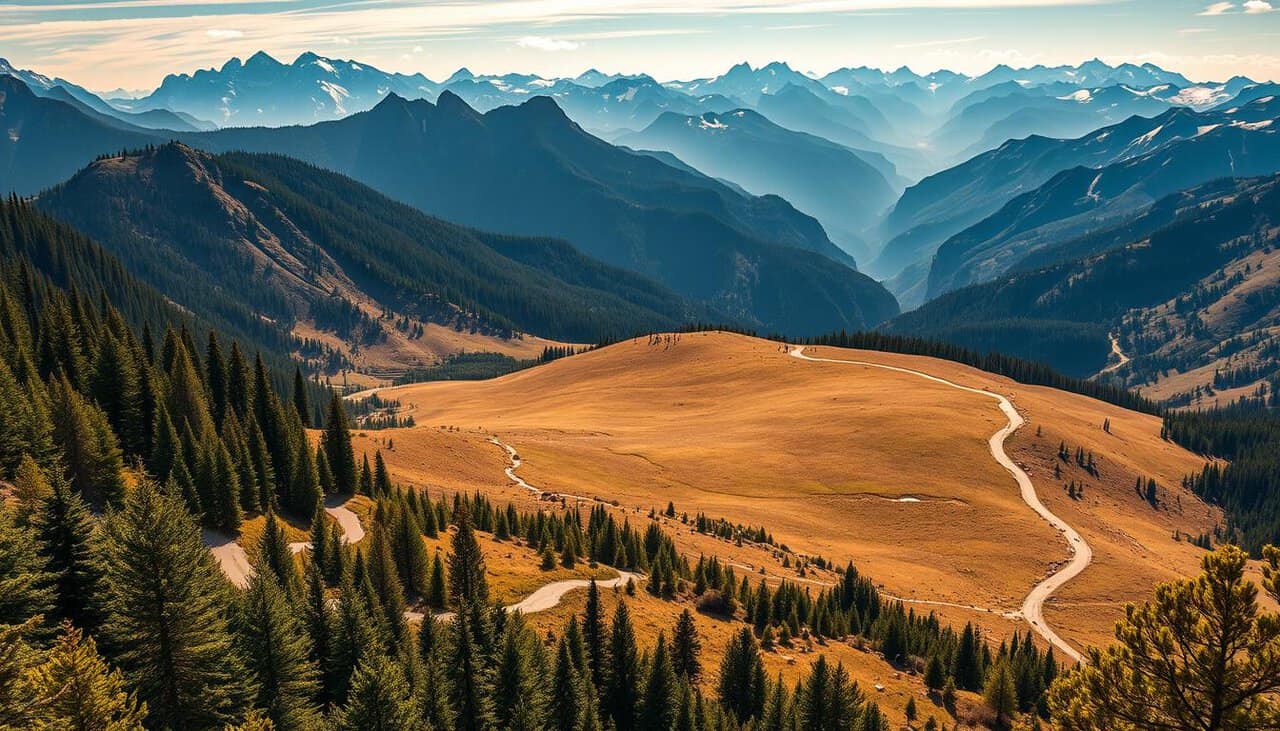
Imagine walking through some of America’s most breathtaking landscapes, surrounded by nature’s splendor. The United States is home to numerous iconic trails that attract adventurers from around the world. As someone who’s passionate about exploring the great outdoors, I’m excited to share with you the three big trails that stand out among the rest.
These trails offer more than just a hike; they provide a journey through diverse ecosystems and breathtaking vistas. For instance, the Appalachian Trail winds through the Great Smoky Mountains National Park, while others like the Bright Angel Trail in the Grand Canyon cater to families and beginners.
Key Takeaways
- Three major trails in the US offer unique hiking experiences.
- These trails are located in some of America’s most beautiful national parks.
- Each trail has its own distinct characteristics and challenges.
The Triple Crown of American Hiking
The United States is home to some of the world’s most spectacular hiking trails, known collectively as the Triple Crown. This prestigious title is reserved for three long-distance hiking trails that showcase the diverse natural beauty of America.
What Makes a Trail “Big”
A trail earns its place among the Triple Crown based on its length, difficulty, and the variety of landscapes it traverses. These trails are not just long; they are also characterized by their significant elevation changes, remote wilderness areas, and the physical and mental challenges they pose to hikers.
Key characteristics include: extensive length, diverse terrain, significant elevation gain, and the need for thorough preparation and physical endurance.
The Significance of the Triple Crown
Completing the Triple Crown is a significant achievement that represents the pinnacle of long-distance hiking. As hiking enthusiast and author, Cheryl Strayed, once said,
“The universe, I’d learned, was still made up of wonder, and sometimes that wonder was so great it almost hurt.”
This quote encapsulates the essence of the Triple Crown experience.
The significance of the Triple Crown lies not just in the personal challenge but also in the opportunity to experience America’s diverse landscapes and ecosystems. It’s a journey that fosters a deep connection with nature and a sense of accomplishment.
The Appalachian Trail (AT): America’s Historic Footpath
Stretching over 2,190 miles, the Appalachian Trail is a testament to the beauty and diversity of American landscapes. This trail is not just a path; it’s a journey through history, nature, and personal challenge.
Route and Key Statistics
The Appalachian Trail spans from Springer Mountain in Georgia to Mount Katahdin in Maine, passing through 14 states. It takes the average hiker about 5 to 7 months to complete the entire trail. Along the way, hikers experience a wide range of elevations, from sea level to over 6,600 feet at Clingmans Dome.
Key Statistics:
- Length: 2,190 miles
- Duration to complete: 5-7 months
- States traversed: 14
- Highest point: Clingmans Dome, 6,643 feet
Unique Features and Challenges
The Appalachian Trail is renowned for its diverse ecosystems, ranging from dense forests to open meadows. Hikers face various challenges, including rugged terrain, unpredictable weather, and wildlife encounters. As one hiker noted,
“The AT is not just a hike; it’s a test of endurance and a journey of self-discovery.”
Notable Sections
The Appalachian Trail has many notable sections, each with its unique charm and challenges.
Great Smoky Mountains National Park
This section is known for its beautiful fall foliage and diverse wildlife. The park’s terrain can be challenging, with steep climbs and descents.
White Mountains of New Hampshire
The White Mountains offer some of the most rugged terrain on the AT, with steep ascents and potentially hazardous weather conditions.
Best Time to Hike and Preparation Tips
The best time to start hiking the Appalachian Trail is in the spring, typically March or April, to avoid the summer heat and winter snow. Preparation is key; hikers should train beforehand, plan their itinerary, and pack accordingly. As “The Appalachian Trail Conservancy” advises, hikers should be prepared for the unexpected and respect the natural environment.
The Pacific Crest Trail (PCT): From Desert to Alpine Wilderness
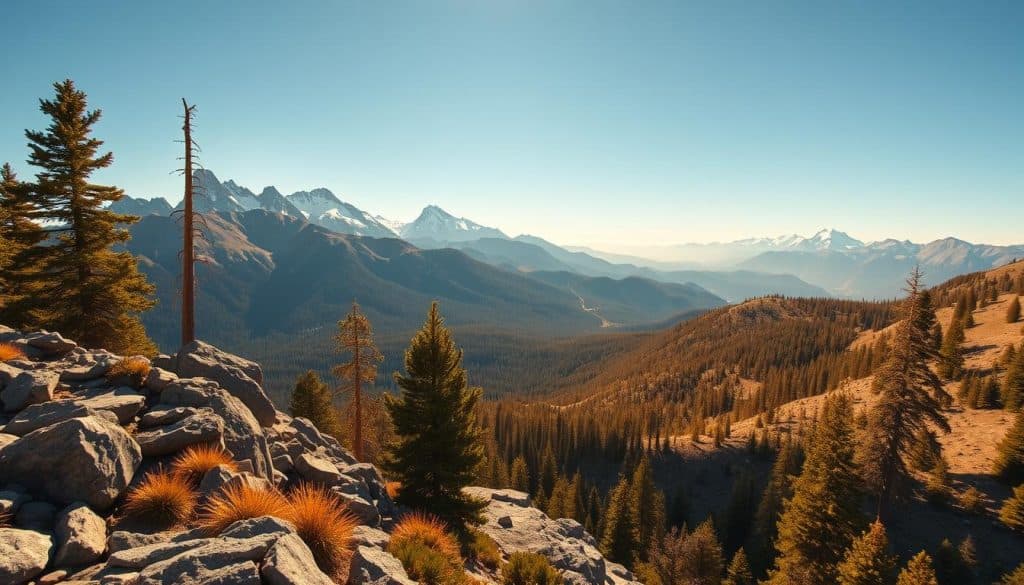
From the arid desert landscapes of Southern California to the snow-capped peaks of the Sierra Nevada and Cascade Ranges, the Pacific Crest Trail is a journey of a lifetime. Spanning over 2,659 miles, this trail is not just a path; it’s an experience that tests your endurance, challenges your perceptions, and leaves you in awe of nature’s splendor.
Route and Key Statistics
The Pacific Crest Trail stretches from the Mexican border to the Canadian border, passing through California, Oregon, and Washington. It takes most hikers about 5 months to complete the entire trail, covering a diverse range of terrains and climates. Key statistics include its total length of 2,659 miles, with elevations ranging from as low as 110 feet to as high as 13,153 feet at the highest point.
Unique Features and Challenges
One of the most unique features of the PCT is its diverse landscapes, from desert to alpine wilderness. Hikers face various challenges, including extreme temperatures, wildlife encounters, and difficult terrain. The trail is not just a physical challenge but also a mental one, requiring hikers to be prepared for the unexpected.
Notable Sections
The PCT is dotted with numerous notable sections, each offering its own unique experience. Two of the most remarkable sections include:
Sierra Nevada Range
The Sierra Nevada Range is a highlight for many hikers, offering breathtaking views of mountain peaks, alpine lakes, and lush forests. This section is particularly challenging due to its high elevations and potential for snow and ice.
Crater Lake National Park
Crater Lake National Park is another gem along the PCT. Hikers can marvel at the deep blue waters of Crater Lake, a lake known for its deep water and stunning clarity. The park offers several trails and viewpoints that are definitely worth exploring.
Best Time to Hike and Preparation Tips
The best time to hike the PCT depends on your direction. Northbound hikers typically start in late April or early May, while southbound hikers start in early June to avoid snow in the Sierra Nevada. Preparation is key, including training, gear selection, and planning for contingencies. It’s also crucial to check trail conditions before you start your journey.
The Continental Divide Trail (CDT): America’s Most Rugged Adventure
For those seeking a true wilderness experience, the Continental Divide Trail provides an unparalleled journey through diverse landscapes and ecosystems. As one of the Triple Crown trails, the CDT is renowned for its challenging route and the breathtaking vistas it offers to hikers.
Route and Key Statistics
The Continental Divide Trail stretches approximately 3,100 miles from New Mexico to Montana, passing through five states and various national forests and parks. It typically takes 4-6 months to complete the entire trail, with hikers facing a range of terrains and climates.
Key Statistics:
- Distance: Approximately 3,100 miles
- Duration: 4-6 months
- States Traversed: New Mexico, Colorado, Wyoming, Idaho, Montana
Unique Features and Challenges
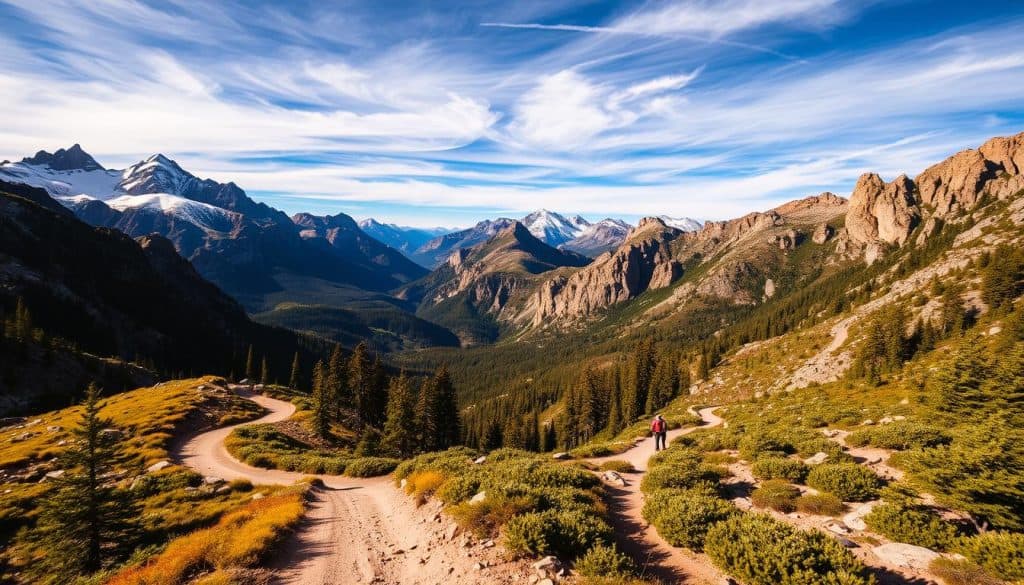
The CDT is characterized by its rugged terrain, diverse wildlife, and unpredictable weather conditions. Hikers must be prepared for high-altitude hiking, river crossings, and potential encounters with wildlife such as grizzly bears and mountain lions.
“The CDT is not just a hike; it’s an adventure that tests your limits and changes your perspective.”
Notable Sections
The CDT passes through some of the most spectacular landscapes in the United States. Two of the most notable sections include:
Glacier National Park
Glacier National Park offers some of the most breathtaking scenery on the CDT, with its towering peaks, pristine lakes, and abundant wildlife. Hikers can experience the park’s unique geology and enjoy the stunning vistas.
Gila Wilderness
The Gila Wilderness in New Mexico is another highlight of the CDT, providing a mix of desert landscapes and mountainous terrain. It’s known for its hot springs and rich cultural history.
“Hiking the CDT is a journey of self-discovery and connection with nature.”
Best Time to Hike and Preparation Tips
The best time to start hiking the CDT is in late spring to early summer, depending on snow conditions. Preparation is key, with hikers needing to plan for resupply points, accommodations, and potential hazards along the route.
Preparation Tips:
- Train extensively before embarking on the hike
- Plan your itinerary and resupply points carefully
- Bring appropriate gear for varying weather conditions
What are the three big trails in the United States? Comparing the Triple Crown
Comparing the Appalachian Trail, Pacific Crest Trail, and Continental Divide Trail reveals a diverse array of landscapes and hiking challenges. Each trail offers a unique experience, from the lush forests of the AT to the alpine wilderness of the PCT and the rugged terrain of the CDT.
Difficulty Comparison
The difficulty of the Triple Crown trails varies significantly. The Appalachian Trail is known for its steep climbs and descents, particularly in the Great Smoky Mountains. The Pacific Crest Trail features a range of challenges, including desert heat and snow-covered mountain passes. The Continental Divide Trail is considered the most rugged, with its rocky terrain and unpredictable weather.
- Appalachian Trail: Steep climbs and descents, varied terrain.
- Pacific Crest Trail: Desert heat, snow-covered passes, and mountainous terrain.
- Continental Divide Trail: Rocky terrain, unpredictable weather, and remote wilderness.
Time Commitment and Planning
Planning and time commitment are crucial for tackling the Triple Crown. Most hikers take 5-7 months to complete a thru-hike of any one trail. The Appalachian Trail typically takes 5 months, while the Pacific Crest Trail and Continental Divide Trail often require 6 months or more due to their longer distances and challenging conditions.
Which Trail to Choose First
Choosing which trail to hike first depends on your experience, physical condition, and personal preferences. If you’re new to long-distance hiking, the Appalachian Trail might be a good starting point due to its well-marked path and established hiker community. For those drawn to diverse landscapes, the Pacific Crest Trail offers a range from desert to alpine environments. If you’re looking for a true wilderness adventure, the Continental Divide Trail is an excellent choice.
Conclusion: The Enduring Appeal of America’s Big Trails
The Triple Crown of American hiking is more than just a series of trails; it’s an adventure that transforms you. As you consider embarking on this journey, remember that each trail – the Appalachian Trail, Pacific Crest Trail, and Continental Divide Trail – offers a unique experience.
The Appalachian Trail provides a historic and cultural immersion, while the Pacific Crest Trail takes you through diverse landscapes from desert to alpine wilderness. The Continental Divide Trail, with its rugged terrain, pushes your limits.
If you’re looking for more hiking options, you might want to explore some of the best hikes in national parks. Whatever your choice, the big trails of America promise an adventure that will stay with you forever.
FAQ
What is the Triple Crown of American Hiking?
The Triple Crown refers to completing three major long-distance hiking trails in the United States: the Appalachian Trail, the Pacific Crest Trail, and the Continental Divide Trail.
How long does it take to hike each of the big trails?
The time it takes to hike each trail varies; the Appalachian Trail typically takes 5-7 months, the Pacific Crest Trail takes 4-6 months, and the Continental Divide Trail takes 5-7 months to complete.
What is the highest elevation on the big trails?
The highest elevation is found on the Pacific Crest Trail at 13,153 feet at Richardson’s Pass in the Sierra Nevada mountain range.
What kind of gear do I need to hike these trails?
Hikers need to be prepared with essential gear including a backpack, tent, sleeping bag, and hiking boots, as well as safety items like a first aid kit and a means of communication.
Can I hike sections of the trails instead of thru-hiking?
Yes, many hikers choose to section hike, breaking the trail into manageable sections over several years or focusing on particularly scenic or challenging parts.
What are some of the most challenging sections of the big trails?
Challenging sections include the desert stretches on the Pacific Crest Trail, the mountainous terrain on the Continental Divide Trail, and the dense forests on the Appalachian Trail.
Are there any national parks along the big trails?
Yes, all three trails pass through numerous national parks and protected areas, including Great Smoky Mountains National Park and Rocky Mountain National Park.