

Imagine walking thousands of miles across some of North America’s most breathtaking landscapes, from deserts to mountains and forests. This is the reality for hikers who tackle the Triple Crown of Hiking, a challenge that only the most dedicated outdoor enthusiasts attempt to complete.
The United States is home to three iconic long-distance trails that offer vastly different experiences and challenges. The Appalachian Trail, Pacific Crest Trail, and Continental Divide Trail span multiple states, taking hikers through diverse landscapes that test their physical endurance and mental toughness.
Completing even one of these trails is considered a significant life achievement, requiring months of planning and physical preparation. In this guide, we’ll explore what makes each trail unique and what hikers can expect on these epic adventures.
Key Takeaways
- The Triple Crown of Hiking consists of three iconic long-distance trails in the US.
- Each trail offers a unique hiking experience with diverse landscapes and challenges.
- Completing one of these trails is a significant achievement that requires careful planning and physical endurance.
- The trails span multiple states, taking hikers through some of America’s most breathtaking landscapes.
- Hikers can expect unpredictable weather, complicated logistics, and physical demands on these trails.
The Triple Crown of Hiking in America
The Triple Crown of Hiking represents a pinnacle achievement for hikers in North America, symbolizing the completion of three of the most iconic long-distance trails in the United States: the Appalachian Trail (AT), the Continental Divide Trail (CDT), and the Pacific Crest Trail (PCT).
For the rare and dedicated hikers known as Triple Crowners, this accomplishment is the culmination of months, if not years, of planning, training, and perseverance. It requires tackling over 7,700 miles of diverse terrain, from dense forests to high deserts and alpine zones. As “The journey of a thousand miles begins with a single step”, the journey of the Triple Crown begins with a deep passion for hiking and a strong resolve to push through challenges.
What Makes These Trails Special
These three trails are not just remarkable for their combined length of over 7,700 miles but also for the diverse ecosystems and landscapes they traverse across North America. Each trail has its unique character: the AT is known for being the oldest and most developed, the PCT for its dramatic elevation changes, and the CDT for its remote and rugged terrain.
The trails are maintained by a mix of federal agencies, state organizations, and thousands of volunteers passionate about preserving these natural corridors. As a result, they have become cultural institutions, inspiring literature, films, and a community of hikers who share experiences and support one another.
“Hiking is not just about the destination; it’s about the journey, the people you meet, and the experiences you have along the way.” This sentiment is particularly true for those who undertake the Triple Crown, as it is as much about personal growth as it is about the trail itself.
What Are the Big Three Hiking Trails in the US?
The US is home to three iconic long-distance hiking trails that have captured the imagination of adventurers worldwide. These trails, known collectively as the Triple Crown of hiking, offer a unique challenge and experience for those who dare to take them on.
The Origin of the Triple Crown
The concept of the Triple Crown emerged as the Appalachian Trail, Pacific Crest Trail, and Continental Divide Trail became established national scenic trails. The American Long Distance Hiking Association – West officially recognizes hikers who complete all three trails, marking a significant achievement in the hiking community. The Appalachian Trail, established in 1937, is the oldest of the three, stretching approximately 2,190 miles from Georgia to Maine. The Pacific Crest Trail and Continental Divide Trail followed, each offering unique landscapes and challenges.
Completing the Triple Crown is a testament to a hiker’s endurance and dedication. It’s not just about the distance; it’s about immersing oneself in diverse ecosystems and experiencing the natural beauty of the US.
Comparing Trail Statistics
When comparing the three trails, statistics reveal interesting differences. The Continental Divide Trail is the longest at roughly 3,100 miles, with the most elevation gain, making it the most challenging. The Pacific Crest Trail features the highest point of any trail at 13,153 feet at Forester Pass. The Appalachian Trail, while the oldest and most frequented, poses its own challenges with frequent precipitation and demanding terrain.
Each trail has its unique logistical challenges. The Appalachian Trail has frequent resupply points but challenging terrain. The Pacific Crest Trail requires careful water management, especially in desert sections. The Continental Divide Trail demands superior navigation skills due to incomplete trail marking in some areas.
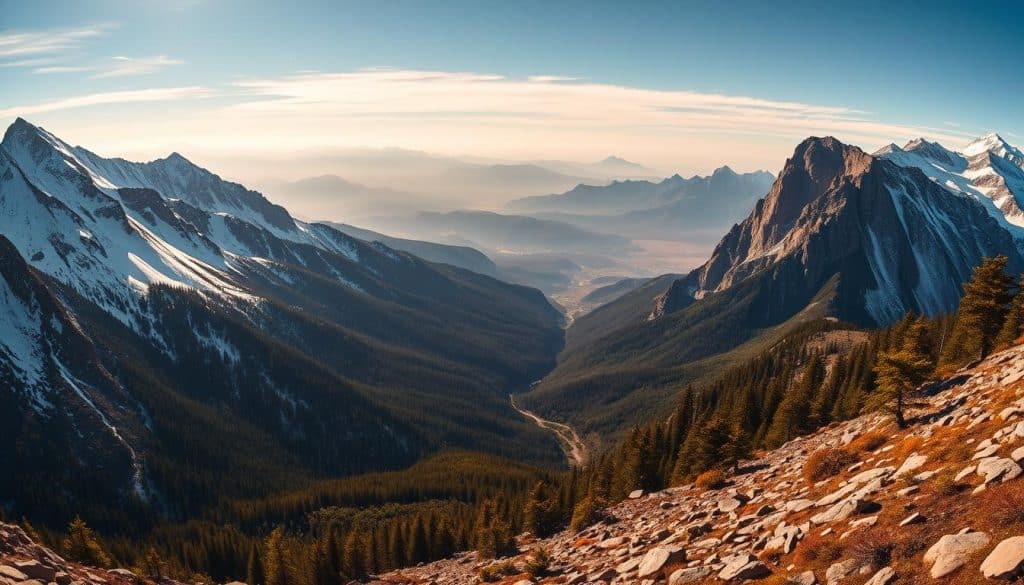
Understanding these differences is crucial for hikers planning to tackle the Triple Crown. Whether you’re drawn to the rugged beauty of the Rocky Mountains, the diverse landscapes of the Sierra Nevada, or the lush forests of the Appalachian Mountains, each trail offers an unforgettable experience.
The Appalachian Trail: America’s First Long-Distance Trail
Conceived in 1921 and completed in 1937, the Appalachian Trail pioneered the concept of long-distance hiking in America. As the first long-distance trail in the United States, it has set a benchmark for hikers and trail developers alike.
Trail History and Geography
The Appalachian Trail is a footpath that stretches approximately 2,200 miles along the Appalachian Mountain Range in the eastern United States. It begins at Springer Mountain in Georgia and ends at Mount Katahdin in Maine, traversing through 14 states and 75 different federal and state forests and park lands.
The trail largely passes through wooded areas along the mountain spines, ranging from oak-hickory forests to northern hardwoods. This diverse geography offers hikers a unique experience as they journey through various ecosystems.
Terrain and Difficulty Level
The terrain of the Appalachian Trail is characterized by constant ups and downs rather than extreme elevations. Hikers experience a cumulative elevation gain equivalent to climbing Mount Everest 16 times – approximately 464,000 feet throughout the journey.
The difficulty of the AT shouldn’t be underestimated. While it has lower elevations than western trails, its rocky terrain, frequent precipitation, and humidity create significant physical challenges for hikers.
The “Green Tunnel” Experience
Often referred to as the “Green Tunnel,” much of the AT winds through dense forests that create a canopy overhead. This unique hiking experience can feel both enchanting and occasionally monotonous compared to the more open vistas of western trails.
As you hike the Appalachian Trail, you’ll experience the beauty of nature, challenge your physical limits, and join a community of hikers who share stories and camaraderie along this historic route.
Must-See Sections of the Appalachian Trail
As you embark on the Appalachian Trail, you’ll discover that certain sections stand out for their breathtaking beauty and challenging terrain. The trail spans over 2,190 miles, offering diverse landscapes that captivate hikers. From the lush forests of the “green tunnel” to the rugged peaks of the White Mountains, each section has its unique charm.
Great Smoky Mountains National Park
The Great Smoky Mountains National Park section of the Appalachian Trail is a must-visit, with approximately 71 miles of trail that offer spectacular panoramic views of mist-covered valleys and ancient hemlock forests. This section is one of the most visited parts of the trail, taking hikers to Clingmans Dome, the highest point on the Appalachian Trail at 6,643 feet.
The views from Clingmans Dome can extend for over 100 miles across seven states on clear days, making it a truly unforgettable experience for hikers.
The White Mountains of New Hampshire
The White Mountains present what many consider the most technically challenging section of the entire trail, with exposed alpine zones, steep rock scrambles, and dramatic weather changes. Hikers can experience the unique Appalachian Mountain Club hut system, where eight high-mountain huts provide meals and accommodation.
This luxury is a welcome respite for long-distance hikers accustomed to tenting, and the huts offer a chance to rest and recharge for the challenges ahead.
McAfee Knob and Roan Highlands
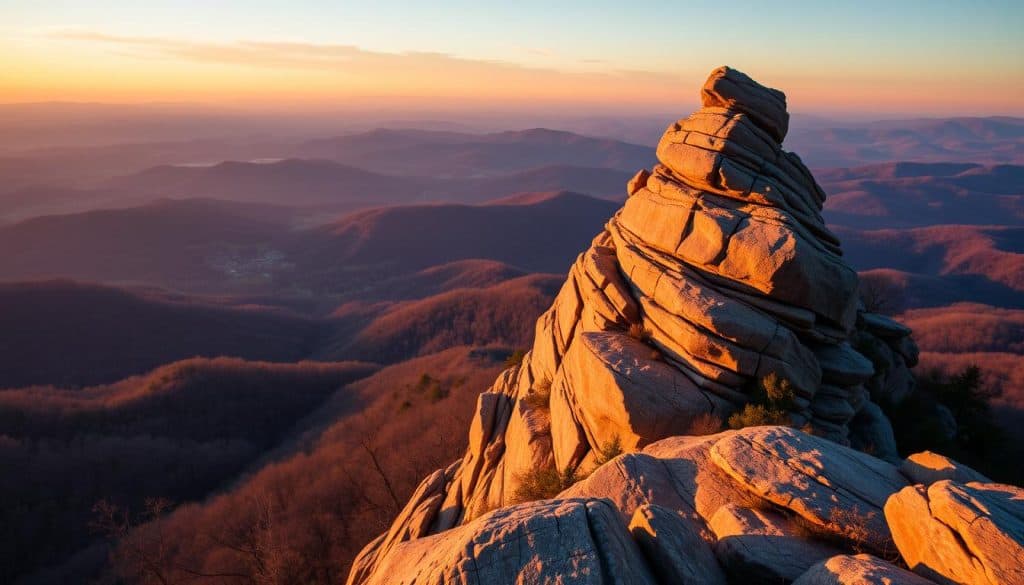
McAfee Knob in Virginia is often considered the most photographed spot on the Appalachian Trail, featuring a dramatic rock outcropping that extends over the Catawba Valley and offers a 270-degree panoramic view. The Roan Highlands section along the Tennessee/North Carolina border features a series of grassy balds with spectacular 360-degree views.
The vibrant displays of rhododendron blooms in June create a stark contrast to the “green tunnel” experience that characterizes much of the trail, making these sections truly unforgettable for hikers.
The Pacific Crest Trail: Desert to Mountain Majesty
The Pacific Crest Trail, spanning over 2,650 miles, is a test of endurance and a journey through some of the most stunning natural beauty in the United States. As part of the Triple Crown of hiking, it attracts adventurers from all over the world.
Trail History and Geography
The Pacific Crest Trail (PCT) has a rich history, dating back to 1926 when Catherine Montgomery first proposed the idea. It wasn’t until 1968 that it was officially designated as a National Scenic Trail. The trail runs along the Sierra Nevada and Cascade mountain ranges, passing through California, Oregon, and Washington. The PCT’s highest point is Forester Pass in California at 13,200 feet.
Ninety-five percent of thru-hikers begin at the southern trailhead near Campo, California, and end at the U.S. border at Manning Provincial Park in British Columbia. This route takes them through diverse landscapes, from the scorching desert to lush forests.
Diverse Ecosystems and Landscapes
One of the most striking features of the PCT is its diverse ecosystems. Hikers traverse through desert chaparral, old-growth forests, alpine meadows, and glaciated mountains. The trail is known for its dramatic and constantly changing landscapes – from the Mojave Desert in Southern California to the volcanic Cascade Range in Washington.
As hikers move through these different environments, they experience extreme temperature variations. The PCT offers hikers expansive views throughout much of the journey, making it a truly unique experience. For more information on other great hikes, you can visit best hikes in US national parks.
Permit System and Planning
Planning a PCT thru-hike requires careful attention to the permit system. The Pacific Crest Trail Association limits the number of long-distance permits to 50 per day from the southern terminus. This means that aspiring PCT hikers need to plan ahead, as only a limited number of permits are available each day.
To undertake the entire trail in a single season, hikers typically start in the spring and finish in the fall. Water management becomes a critical skill, particularly in the desert sections where hikers may need to carry several days’ worth of water.
Spectacular Segments of the Pacific Crest Trail
The Pacific Crest Trail boasts an array of spectacular segments that cater to different hiking preferences. From the rugged Sierra Nevada mountains to the arid landscapes of Southern California and the volcanic peaks of Northern California’s Cascade Range, each section offers a unique hiking experience.
The Sierra Nevada Section
The Sierra Nevada section is widely regarded as the crown jewel of the Pacific Crest Trail. Stretching over 500 miles, it features the trail’s highest point at Forester Pass, reaching an elevation of 13,153 feet. Hikers scale granite peaks to reach alpine lakes and meadows blanketed in wildflowers, creating a hiker’s paradise during the summer months.
Southern California Desert
The Southern California desert section offers a distinct and equally impressive experience. Characterized by otherworldly rock formations, Joshua tree forests, and expansive views across arid landscapes, this segment is a treat for hikers. Despite the challenges posed by intense heat and significant water carries, the desert section rewards hikers with unique ecosystems and spectacular night skies.
Cascade Range in Northern California
The Cascade Range in Northern California features a series of volcanic peaks, including Mount Shasta and Lassen Peak. Surrounded by dense evergreen forests, this segment offers hikers breathtaking views of these impressive mountains from various points along the way. It’s an ideal section for those looking to experience the diverse ecosystems and scenic beauty of the Pacific Crest Trail.
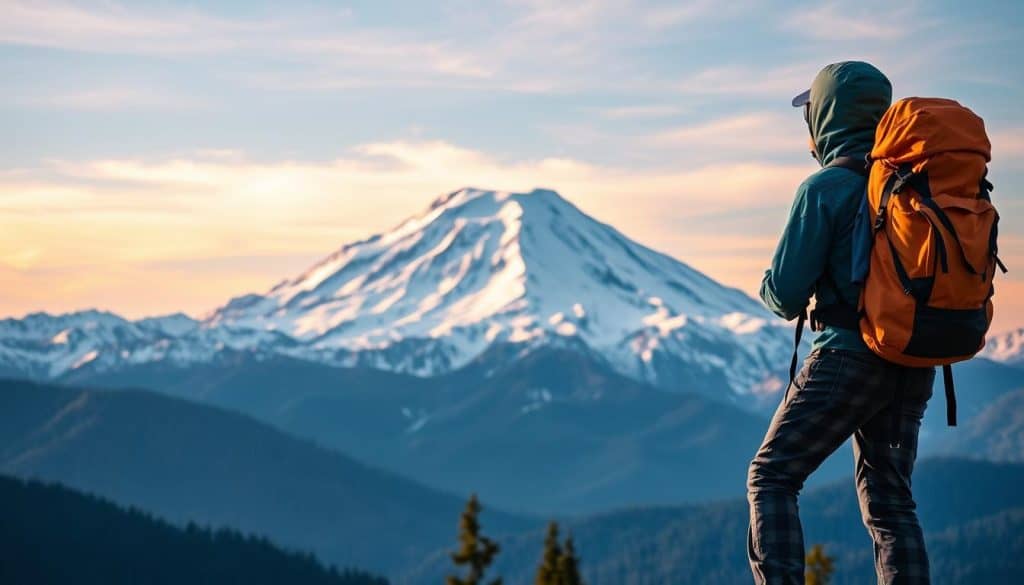
The Continental Divide Trail: America’s Most Rugged Adventure
For seasoned hikers, the Continental Divide Trail represents the ultimate adventure, a journey through diverse ecosystems and remote wilderness areas that demands skill, resilience, and determination. Spanning approximately 3,100 miles from the Mexican border in New Mexico to the Canadian border in Montana, this trail is a true test of endurance.
Trail History and Geography
The Continental Divide Trail is the longest of the Triple Crown hiking trails in the United States, weaving through the rugged terrain of the Rocky Mountains. Established in 1962 with the first section in Colorado and formally designated as a National Scenic Trail in 1978, the CDT remains a work in progress. It passes through five states: New Mexico, Colorado, Wyoming, Idaho, and Montana.
Unlike more established trails like the Appalachian Trail and the Pacific Crest Trail, the CDT is about 70% complete as an official trail. Hikers often navigate a mix of established paths, dirt roads, and cross-country routes, requiring advanced navigation skills.
Navigation Challenges and Remote Wilderness
Navigation on the Continental Divide Trail presents significant challenges. Hikers must be proficient in using maps, compasses, and GPS devices to follow the often unmarked or minimally marked route. The trail traverses remote wilderness areas far from civilization, with long stretches between resupply points and limited cell service.
To successfully complete the CDT, hikers must be self-sufficient and prepared for emergencies. The trail’s remoteness and lack of infrastructure mean that hikers need to be skilled in wilderness survival and navigation.
The Ultimate Test for Experienced Hikers
The Continental Divide Trail is considered the most challenging of the Triple Crown trails due to its length, remoteness, and extreme weather conditions. Many sections are above 10,000 feet, and the mental fortitude required to navigate its less-defined route is substantial.
For those looking for more information on hiking trails and national parks, visit https://enjoynationalparks.com/best-hikes-in-national-parks/ for guides and resources.
Unforgettable Portions of the Continental Divide Trail
One of the most epic long-distance hikes in the US, the Continental Divide Trail, boasts sections that are truly unforgettable. As you traverse this trail, you’ll encounter diverse landscapes that range from the rugged mountains of Montana to the desert mesas of New Mexico.
Glacier National Park in Montana
The Continental Divide Trail culminates in the breathtaking Glacier National Park in Montana, offering hikers dramatic alpine scenery with jagged peaks, turquoise lakes, and remaining glaciers. The CDT route follows the Highline Trail along the Garden Wall, providing panoramic views of glacial valleys and opportunities to spot wildlife such as mountain goats and grizzly bears. The trail ends at Waterton Lakes, straddling the US-Canadian border, creating a fitting conclusion to the journey.
The Gila Wilderness in New Mexico
In contrast, the Gila Wilderness in New Mexico offers a unique desert canyon ecosystem experience. As the first designated wilderness area in the US, it features ancient cliff dwellings and natural hot springs. Hikers on this section of the CDT follow the Gila River through narrow canyons, crossing the river multiple times and enjoying the opportunity to soak in the hot springs.
The Bob Marshall Wilderness
The Bob Marshall Wilderness complex in Montana is another highlight, encompassing over a million acres of pristine wilderness. It features vast meadows, river valleys, and the dramatic Chinese Wall, a limestone cliff that extends 22 miles along the Continental Divide. For more information on planning your CDT hike, you can check out this Continental Divide Trail map and explore the top national parks along the route.
Conclusion: Choosing Your Triple Crown Adventure
The Triple Crown trails offer diverse experiences for hikers, and selecting the right one depends on your preferences, experience level, and available time. When deciding which trail to tackle first, consider the unique characteristics of each.
The Appalachian Trail (AT) is ideal for those who value a social experience, with frequent town stops and a well-established shelter system. It’s a good choice for beginners due to its relatively easier access to amenities. In contrast, the Pacific Crest Trail (PCT) offers spectacular views with its diverse landscapes, but requires careful planning around water sources and snow conditions. The Continental Divide Trail (CDT) presents the ultimate wilderness challenge, best suited for experienced hikers.
Each trail has its unique physical challenges. The AT features lower elevations but constant ups and downs with rocky terrain, while the PCT has higher elevations, including passes over 13,000 feet. The CDT combines high elevation with undeveloped trail sections, making it a rugged adventure. Consider your fitness level and hiking experience when choosing a trail.
Many hikers find that completing one long-distance hike sparks the desire to tackle another. Whether you choose to hike just one trail or pursue the Triple Crown over time, the experience of long-distance hiking is often transformative. It changes perspectives and creates lasting connections to America’s wild places and the community of hikers who cherish them.
In conclusion, choosing the right Triple Crown trail is a personal decision based on your preferences, experience, and time available. Take the time to research, prepare, and choose the trail that best fits your adventure goals.
FAQ
What are the Triple Crown hiking trails in the US?
The Triple Crown consists of the Appalachian Trail, Pacific Crest Trail, and Continental Divide Trail, considered among the most iconic long-distance hiking routes in the US.
How long does it take to complete the Triple Crown trails?
Completing all three trails can take several years, with the total distance covering over 7,000 miles and requiring extensive planning, preparation, and physical endurance.
What is the highest point on the Triple Crown trails?
The highest point is Forester Pass on the Pacific Crest Trail, reaching an elevation of 13,153 feet in the Sierra Nevada mountain range.
Are there any sections of the trails that are particularly challenging?
Yes, sections like the Sierra Nevada on the Pacific Crest Trail, the Gila Wilderness on the Continental Divide Trail, and the White Mountains on the Appalachian Trail are known for their rugged terrain and demanding conditions.
Can I hike the Triple Crown trails solo?
While many hikers complete the trails solo, it’s essential to be well-prepared, have experience with long-distance hiking, and inform someone about your itinerary and expected return time.
What kind of terrain can I expect on the Triple Crown trails?
The trails cover diverse landscapes, including deserts, forests, and mountain ranges, with varying elevations, climates, and ecosystems.
Are permits required for the Triple Crown trails?
Yes, some sections require permits, especially for the Pacific Crest Trail, where a long-distance permit is necessary for thru-hikers.
How do I prepare for hiking the Triple Crown trails?
Preparation involves physical training, gear selection, planning your itinerary, and understanding the challenges associated with long-distance hiking, such as navigating remote areas and dealing with unpredictable weather.