

This monumental challenge is not for the faint of heart; it involves hiking the entire length of three major U.S. National Scenic Trails: the Appalachian Trail, Pacific Crest Trail, and Continental Divide Trail.
As you consider taking on this ultimate hiking adventure, you might wonder what makes these trails so special and why they’re considered the pinnacle of long-distance hiking in North America.
Completing all three trails is a feat that requires years of dedication, planning, and physical endurance, but the experiences and landscapes along the way are truly life-changing.
Key Takeaways
- The Triple Crown of Hiking includes the Appalachian Trail, Pacific Crest Trail, and Continental Divide Trail.
- These trails span over 7,875 miles and cover 22 states.
- Each trail offers unique landscapes and challenges.
- Completing the Triple Crown is considered the ultimate achievement in American long-distance hiking.
- It requires years of dedication, planning, and physical endurance.
The Triple Crown of Hiking: America’s Premier Long-Distance Trails
For many hikers, the ultimate goal is to achieve the Triple Crown of Hiking, a feat that requires traversing three of America’s most iconic long-distance trails: the Appalachian Trail, the Pacific Crest Trail, and the Continental Divide Trail. This prestigious achievement is not just about the distance; it’s about experiencing the diverse landscapes and ecosystems that these trails offer.
Origin and Recognition
The concept of the Triple Crown of Hiking emerged as these three major trails gained prominence. The American Long Distance Hiking Association-West (ALDHA-West) is the only organization that recognizes this hiking feat. At the ALDHA-West gathering, held each fall, the Triple Crown honorees are recognized and awarded plaques noting their achievement.
The origin of the Triple Crown recognition dates back to when the National Trails System Act of 1968 established the Appalachian and Pacific Crest Trails as the first National Scenic Trails, with the Continental Divide Trail following in 1978. As of the end of the application period in 2024, 775 hikers have been designated Triple Crowners by ALDHA-West since 1994.
Significance in the Hiking Community
The Triple Crown represents not just physical achievement but also a deep connection to America’s diverse landscapes and wilderness areas. Eric Ryback was the first person to achieve this feat, completing the Appalachian Trail in 1969, the Pacific Crest Trail in 1970, and the Continental Divide Trail in 1972.
“Completing the Triple Crown is a testament to a hiker’s endurance and dedication. It’s an experience that transforms you, fostering a profound appreciation for nature’s beauty and complexity.”
| Trail Name | Approximate Distance (miles) | Notable Features |
|---|---|---|
| Appalachian Trail | 2,190 | Mountains, forests, and rural landscapes |
| Pacific Crest Trail | 2,659 | Diverse ecosystems, mountain peaks, and desert landscapes |
| Continental Divide Trail | 3,100 | Rugged terrain, alpine lakes, and vast wilderness areas |
The Triple Crown of Hiking is more than just a hiking achievement; it’s a journey that connects people with nature and fosters a community among hikers. With only 775 hikers having completed this feat since 1994, it’s clear that achieving the Triple Crown is a remarkable accomplishment.
The Appalachian Trail: The Eastern Classic
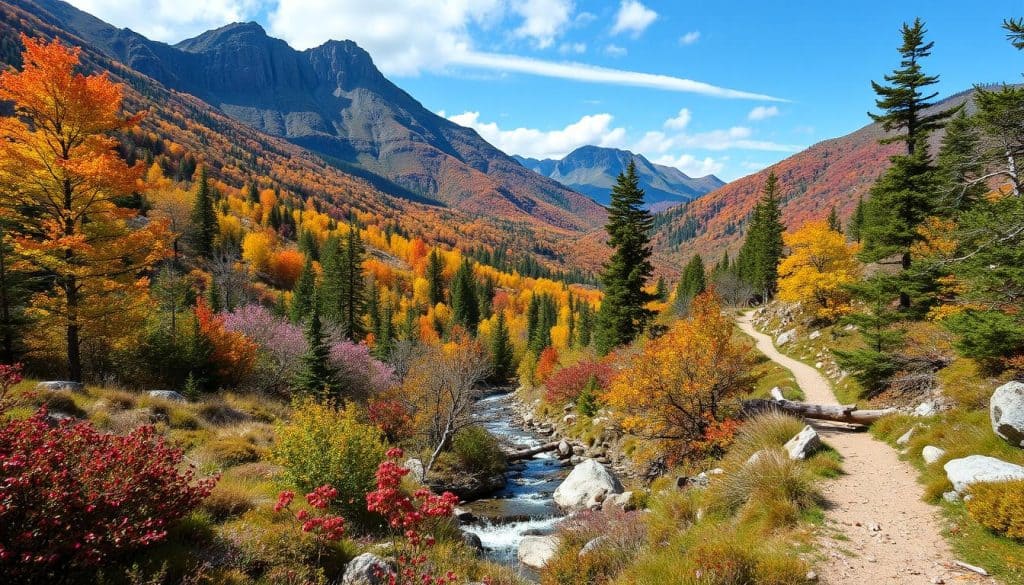
The Appalachian Trail, affectionately known as the “Green Tunnel,” is a 2,190-mile journey through the heart of the Appalachian Mountains. As you embark on this adventure, you’ll traverse through 14 eastern states, from Springer Mountain in Georgia to Mount Katahdin in Maine.
Trail Overview and History
The Appalachian Trail (AT) was conceived by forester Benton MacKaye in 1921 and completed in 1937. It became an official national scenic trail in 1968. Spanning approximately 2,190 miles, it’s the oldest of the Triple Crown trails. If you’re planning to hike the AT, understanding its history and significance can enhance your experience.
For more information on national parks along the East Coast that you might visit before or after your hike, check out the best national parks on the East.
Terrain and Geographic Features
The terrain of the Appalachian Trail features constant elevation changes, with a cumulative climbing equivalent to scaling Mount Everest 16 times, totaling about 464,000 feet. The trail’s elevation ranges from 124 feet at Bear Mountain State Park in New York to 6,643 feet at Clingmans Dome in Tennessee’s Great Smoky Mountains National Park.
The trail’s diverse geography includes rolling mountains, forests, and scenic vistas, making it a visually stunning hiking experience.
Unique Challenges and Highlights
As you hike the Appalachian Trail, you’ll face unique challenges such as unpredictable weather, rocky terrain, particularly in Pennsylvania, known as “Rocksylvania,” and crowded conditions during peak hiking seasons. However, the trail also offers spectacular highlights, including the fall foliage, abundant wildlife like black bears, and historic trail towns with a strong hiking culture.
The social experience on the AT is also noteworthy, with many hikers describing it as the most community-oriented of the three Triple Crown trails.
The Pacific Crest Trail: The Western Wonder

Embarking on the Pacific Crest Trail is a journey of a lifetime, taking you through some of the most spectacular landscapes the western United States has to offer. As you hike along this incredible trail, you’ll experience the diverse beauty of America, from the scorching desert landscapes of Southern California to the snow-capped peaks of the Sierra Nevada and Cascade mountain ranges.
Trail Overview and History
The Pacific Crest Trail spans an impressive 2,650 miles from the Mexican border near Campo, California, to the Canadian border at Manning Park, British Columbia. Conceived in the 1920s and 1930s by visionaries like Catherine Montgomery and Clinton Clarke, the trail wasn’t officially completed until the 1990s, despite being designated as a National Scenic Trail in 1968.
This Pacific Crest journey takes you through California, Oregon, and Washington, showcasing the highest portions of the Sierra Nevada and Cascade mountain ranges.
Terrain and Geographic Features
The Crest Trail is renowned for its dramatic elevation changes and diverse ecosystems. You’ll traverse through volcanic peaks, alpine lakes, and lush rainforests, experiencing the full spectrum of western America’s natural beauty. The trail’s highest point is Forester Pass in California, standing at 13,200 feet, offering hikers views that are simply breathtaking.
As you hike along the route, be prepared for varying conditions, including potential snow in the higher elevations and encounters with water sources like rivers and lakes.
Unique Challenges and Highlights
Hiking the Pacific Crest Trail is not without its challenges. Hikers must contend with extreme desert heat, dangerous snow conditions, and potential wildfire detours. However, the rewards are well worth the effort, with iconic sections like the John Muir Trail and the High Sierra providing some of the most spectacular views in North America.
As you complete your journey, you’ll have experienced the full range of what the trail has to offer, from the rugged terrain to the serene beauty of the natural landscapes.
The Continental Divide Trail: The Rugged Backbone

Embarking on the Continental Divide Trail is a journey like no other, testing hikers’ resolve across the rugged landscapes of the American West. This trail is not for the faint of heart; it demands preparation, resilience, and a deep love for the wilderness.
Trail Overview and History
The Continental Divide Trail spans approximately 3,100 miles from New Mexico to Montana, tracing the Continental Divide along the Rocky Mountains. Established in 1978, though initial sections were proposed as early as 1962 in Colorado, this trail passes through five states: New Mexico, Colorado, Wyoming, Idaho, and Montana. It’s a journey that takes you through diverse landscapes, from desert terrains to alpine tundras.
Terrain and Geographic Features
The CDT is characterized by its high elevations, with the highest point being Gray’s Peak at 14,270 feet. Hikers experience a variety of terrains, including snow-capped mountains, forests, and desert regions. The trail follows the Continental Divide, separating watersheds that flow to the Atlantic and Pacific Oceans. This diverse geography makes the CDT a unique and challenging adventure.
Unique Challenges and Highlights
The Continental Divide Trail is known for its remoteness and the challenges it poses, including high elevations, limited water sources in certain sections, and encounters with wildlife such as grizzly bears. Despite these challenges, hikers are rewarded with spectacular views of the Wind River Range, San Juan Mountains, and Glacier National Park. The trail’s incomplete sections, earning it the nickname “Choose Your Own Adventure,” add to its allure, offering a true wilderness experience.
What are the Big 3 trails USA? Comparing the Triple Crown
As you consider tackling the Big 3 trails USA, understanding the nuances between them is crucial for a successful hiking experience. The Triple Crown of Hiking, comprising the Appalachian Trail (AT), Pacific Crest Trail (PCT), and Continental Divide Trail (CDT), is a prestigious achievement that requires careful planning and preparation.

Length, Elevation, and Difficulty Comparison
The Big 3 trails vary significantly in terms of length, elevation, and difficulty. The CDT stands out as the longest at approximately 3,100 miles, followed by the PCT at 2,650 miles, and the AT at 2,190 miles. The elevation profiles also differ dramatically, with the CDT reaching the highest point at 14,270 feet on Gray’s Peak, and the PCT peaking at 13,200 feet at Forester Pass. In contrast, the AT’s highest point is 6,643 feet at Clingmans Dome, but it compensates with relentless up and down terrain.
Weather and Seasonal Considerations
Weather considerations play a crucial role in planning your hike. The PCT’s desert sections require early starts to avoid extreme heat, while the CDT’s high elevations bring dangerous afternoon thunderstorms. The AT is notorious for unpredictable rainfall and humidity. Understanding these weather patterns is essential to prepare accordingly and ensure a safe hiking experience.
Wildlife and Natural Features
The Big 3 trails also differ in terms of wildlife encounters and natural features. The AT is known for black bears and occasional moose, while the PCT features rattlesnakes and marmots. The CDT presents the additional challenge of grizzly bear territory in Montana and Wyoming. Each trail offers unique views and challenges, making the hiking experience diverse and exciting.
When hiking the Big 3 trails USA, it’s essential to be prepared for the unique challenges of each trail. This includes having the right gear for the terrain and weather conditions you’ll encounter. Whether you’re hiking the AT, PCT, or CDT, being aware of the challenge ahead will help you stay safe and enjoy the experience.
Conclusion: The Ultimate Hiking Challenge
The Triple Crown of Hiking represents the pinnacle of long-distance hiking in the United States, challenging hikers to traverse over 7,700 miles of diverse terrain.
Completing the Appalachian Trail (AT), the Pacific Crest Trail (PCT), and the Continental Divide Trail (CDT) is an extraordinary achievement that signifies a hiker’s unwavering commitment to their craft.
Many hikers approach this feat as a lifelong journey, often starting with the more forgiving AT before progressing to the PCT and finally tackling the remote and challenging CDT.
If you’re considering which trail to start with, you can find more information on choosing the right Triple Crown trail for your adventure.
Beyond the physical challenge, hikers often report profound personal transformation, changing their perspective on life and their relationship with nature.
The Big 3 trails offer adventures that will test your limits and potentially change your life.
FAQ
What does it mean to hike the Triple Crown?
Hiking the Triple Crown means completing all three of America’s premier long-distance trails: the Appalachian Trail, the Pacific Crest Trail, and the Continental Divide Trail.
How long does it take to complete the Triple Crown?
Completing the Triple Crown can take several months to a few years, depending on your hiking schedule, experience, and the sections you choose to hike.
What is the total distance of the Triple Crown trails?
The total distance of the three trails is approximately 7,700 miles, with the Appalachian Trail covering around 2,190 miles, the Pacific Crest Trail spanning about 2,659 miles, and the Continental Divide Trail stretching over 3,100 miles.
How difficult are the Big 3 trails?
The Big 3 trails are considered challenging due to their length, elevation gain, and varied terrain, requiring hikers to be well-prepared and experienced.
What kind of gear do I need for the Triple Crown?
You’ll need high-quality hiking gear, including a backpack, tent, sleeping bag, and other essentials, as well as safety equipment and navigation tools.
Can I hike the Triple Crown in sections?
Yes, many hikers choose to hike the Triple Crown in sections, allowing them to complete the trails over several years or during specific seasons.
What are some of the unique challenges I might face on the Big 3 trails?
Hikers on the Big 3 trails may encounter harsh weather conditions, wildlife encounters, and challenging terrain, such as snow, ice, and steep mountain passes.
How do I prepare for the physical demands of hiking the Triple Crown?
To prepare, start by building your endurance through regular hiking and cardiovascular exercise, and make sure to acclimatize to high elevations if necessary.