

Imagine walking over 7,875 miles, climbing more than 1,000,000 feet, and traversing 22 states. This is the monumental task that awaits hikers who take on the Triple Crown of Hiking, comprising the Appalachian Trail, Pacific Crest Trail, and Continental Divide Trail.
These three iconic trails are not just any ordinary hiking trails; they are the first designated National Scenic Trails in the United States, offering breathtaking landscapes and unforgettable experiences.
As you embark on this incredible journey, you’ll be part of an exclusive group of hikers who have achieved this prestigious feat. The “Big 3” trails are a true test of endurance, but the rewards are immeasurable.
Key Takeaways
- The Triple Crown of Hiking consists of three major U.S. National Scenic Trails: Appalachian Trail, Pacific Crest Trail, and Continental Divide Trail.
- The combined distance of these trails is approximately 7,875 miles, with over 1,000,000 feet of elevation gain.
- The trails span across 22 states, offering diverse landscapes and experiences.
- Completing the Triple Crown is considered one of the most prestigious achievements in the long-distance hiking community.
- The “Big 3” trails were the first designated National Scenic Trails in the United States.
Understanding the Big 3 Trails of American Thru-Hiking
The Triple Crown of Hiking, comprising the Appalachian Trail, Pacific Crest Trail, and Continental Divide Trail, is the holy grail for long-distance hikers. This prestigious achievement is not just about completing three long hikes; it’s about experiencing the diverse beauty and challenges of the United States through its most iconic trails.
The Triple Crown of Hiking Explained
The American Long Distance Hiking Association-West (ALDHA-West) is the only organization that officially recognizes the Triple Crown achievement. As of 2024, only 775 hikers have been designated Triple Crowners since record-keeping began in 1994. The first person to achieve this feat was Eric Ryback, who completed the Appalachian Trail in 1969 and the Pacific Crest Trail in 1970.
To become a Triple Crown hiker, one must complete all three trails in their entirety, a journey that requires immense dedication, physical endurance, and mental toughness.
Why These Trails Define Long-Distance Hiking in America
The Big 3 trails are more than just long hikes; they represent a journey through some of America’s most stunning and varied landscapes. From the lush forests of the Appalachian Trail to the rugged peaks of the Sierra Nevada along the Pacific Crest Trail, and the remote wilderness of the Rocky Mountains on the Continental Divide Trail, these hikes offer a comprehensive experience of the country’s natural beauty.
As such, they have become aspirational goals for hikers worldwide and have significantly influenced backpacking culture, gear development, and conservation efforts across the United States.
The Appalachian Trail (AT): The East Coast Classic

The Appalachian Trail, stretching from Springer Mountain in Georgia to Mount Katahdin in Maine, is an epic journey that attracts hikers from around the world. As you consider thru-hiking this iconic trail, it’s essential to understand its unique characteristics, challenges, and highlights.
Geography and Trail Overview
The AT spans 2,190 miles, passing through 14 states along the eastern coast of the U.S. It traverses the scenic, wooded, pastoral, wild, and culturally resonant lands of the Appalachian Mountains. This extensive footpath is considered a right of passage for many hikers, offering a diverse range of landscapes and ecosystems.
Challenges and Highlights
Hikers on the AT face various challenges, including unpredictable weather, significant elevation changes, and the mental challenge of the “green tunnel” effect. Despite these challenges, the trail offers numerous highlights, such as the Great Smoky Mountains, Shenandoah National Park, the White Mountains, and the 100-Mile Wilderness. For more information on hiking in national parks, you can visit Enjoy National Parks.
Planning Your AT Thru-Hike
To successfully thru-hike the AT, careful planning is crucial. This includes deciding on the optimal time to start (typically northbound from March-April), developing resupply strategies, and understanding navigation considerations. Additionally, hikers should be aware of the extensive shelters system along the trail, which provides support and community for those on the journey.
The Pacific Crest Trail (PCT): From Mexico to Canada
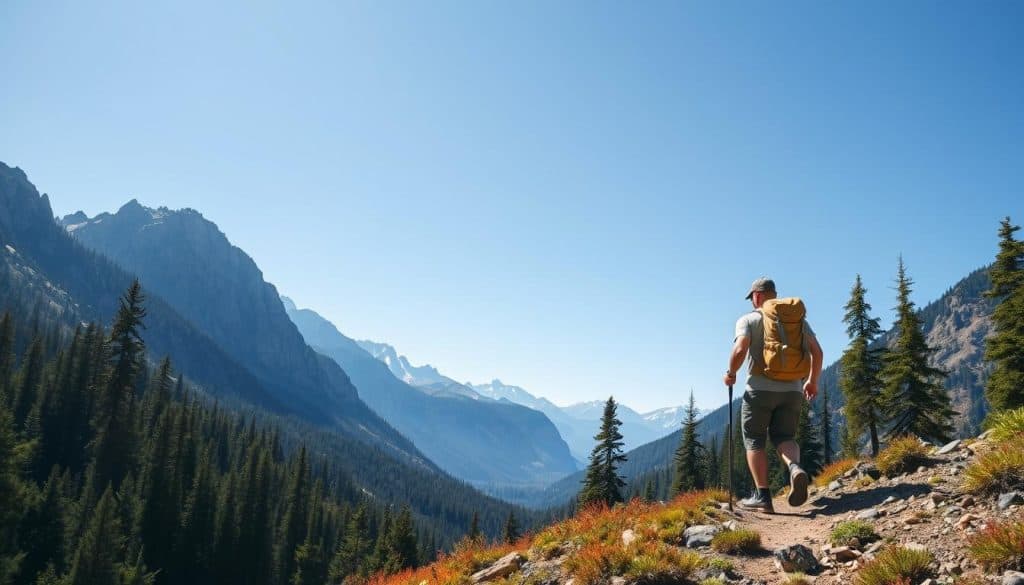
As one of America’s most iconic long-distance trails, the Pacific Crest Trail beckons hikers with its diverse landscapes and challenging terrain. Spanning 2,650 miles from the U.S./Mexico border in California to the U.S./Canada border in Washington, this trail is a test of endurance and a journey through some of the most spectacular wilderness areas in the country.
Geography and Trail Overview
The Pacific Crest Trail passes through California, Oregon, and Washington, covering a vast array of ecosystems. It traverses 25 national forests and 7 national parks, including the Mojave Desert, the Sierra Nevada mountain range, and the Cascade Range. This diverse geography means hikers experience a wide range of climates and terrains.
Challenges and Highlights
Hiking the PCT is not without its challenges. Hikers face extreme desert heat, dangerous river crossings, and high-altitude snow navigation. The trail’s dramatic elevation changes, from the low-lying deserts to the high alpine mountains, demand a high level of physical fitness and mental toughness. Despite these challenges, the PCT is dotted with iconic highlights such as Mount Whitney, Crater Lake, and the North Cascades.
Planning Your PCT Thru-Hike
For those planning to thru-hike the PCT, preparation is key. The permit application process is complex and requires careful planning. Most hikers choose to hike northbound, starting in April or May, to take advantage of the summer weather. Gear considerations are also crucial, as hikers need to be prepared for a variety of conditions, from the scorching heat of the desert to the freezing temperatures of the high mountains.
The Continental Divide Trail (CDT): America’s Most Challenging Thru-Hike
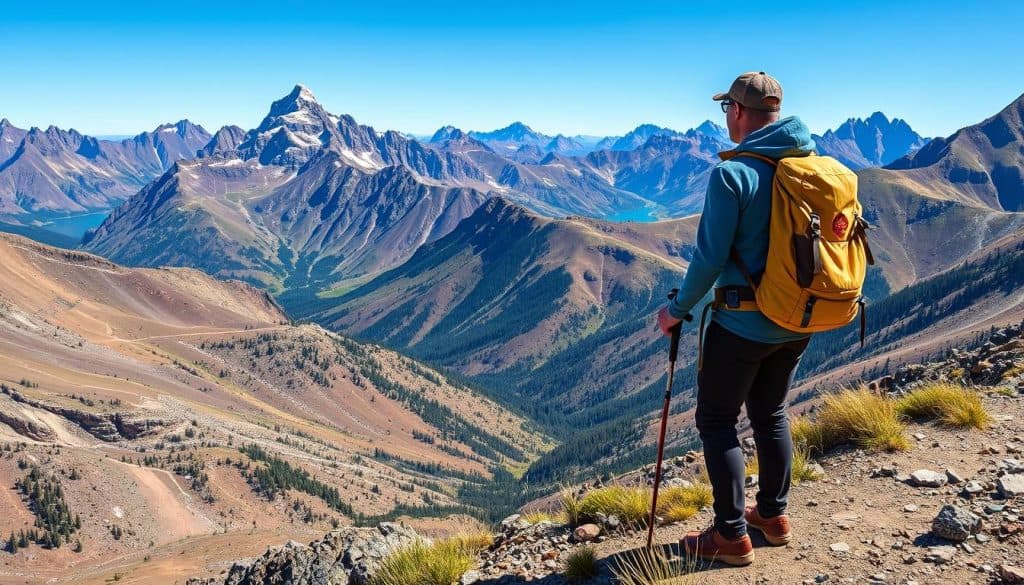
For those seeking the ultimate hiking challenge, the Continental Divide Trail offers an unparalleled experience. Spanning 3,100 miles from the deserts of New Mexico to the alpine peaks of the Northern Rockies, this trail is not for the faint of heart.
Geography and Overview
The CDT follows the Continental Divide of the Americas, passing through five states: Montana, Idaho, Wyoming, Colorado, and New Mexico. This trail is a ribbon that ties together many of the defining moments and movements in our nation’s history, as noted by the U.S. Forest Service.
The diverse landscapes along the CDT are as stunning as they are challenging. From the high deserts of New Mexico to the towering peaks of Colorado and the rugged wilderness of Montana, hikers experience the raw beauty of America.
Challenges and Highlights
The CDT is considered the most challenging of the Triple Crown trails due to its remote nature, limited infrastructure, and high elevation, often above 8,000 feet. Hikers face extreme weather conditions, navigation difficulties, and encounters with wildlife.
Despite the challenges, the CDT offers iconic highlights such as Glacier National Park, the Wind River Range, and the unique desert landscapes of New Mexico. These experiences make the journey worthwhile for those who “embrace the brutality” of the trail.
Planning Your CDT Thru-Hike
To successfully thru-hike the CDT, one must be well-prepared. This includes developing strong navigation skills, planning a flexible itinerary, and packing specialized gear for high-altitude conditions.
Understanding the trail’s demands and being prepared for its challenges is key to a successful thru-hike. The CDT represents the pinnacle achievement for many long-distance hikers, and with the right preparation, you can join their ranks.
Preparing for the Big 3: Essential Knowledge for Aspiring Thru-Hikers
For aspiring thru-hikers, understanding the dual meaning of ‘Big 3’ is crucial for a successful long-distance hiking experience. In the thru-hiking world, the term ‘Big 3’ refers not only to the three major trails – the Appalachian Trail, Pacific Crest Trail, and Continental Divide Trail – but also to the three heaviest and most critical gear items: backpack, shelter, and sleep system.

Critical Gear Considerations
When it comes to gear, the Big 3 items are crucial. Your backpack should balance volume needs with comfort; consider frame vs. frameless options and prioritize carrying comfort for multi-month journeys. For shelter, tent considerations vary from ultralight single-person shelters to more spacious options for those hiking with partners. Your sleep system should be chosen based on temperature rating considerations for different trails and seasons, weighing the pros and cons of quilts vs. sleeping bags.
Training and Physical Preparation
Physical preparation for thru-hiking goes beyond fitness. It’s about building mental resilience and adaptability. Aspiring thru-hikers should train by gradually increasing their hiking distance and intensity, while also acclimating to varying weather conditions and terrains. This preparation will help hikers develop the necessary endurance and mental toughness for the challenges they’ll face on the trail.
The Triple Crown Achievement
Achieving the Triple Crown is a prestigious milestone for thru-hikers, requiring completion of all three Big 3 trails. As of 2024, 775 hikers have accomplished this feat, with some achieving it within a calendar year. Inspirational stories of diverse hikers, including young adventurers like Reed Gjonnes and Christian “Buddy Backpacker” Geiger, as well as trailblazers like Elsye “Chardonnay” Walker and Will “Akuna” Robinson, demonstrate the accessibility and appeal of this achievement. The American Long Distance Hiking Association-West provides an official recognition process for Triple Crown completions.
Conclusion
The Big 3 trails – the Appalachian Trail, Pacific Crest Trail, and Continental Divide Trail – represent the pinnacle of long-distance hiking in America.
Each of these trails offers a unique hiking experience, showcasing diverse geographic regions across the country.
The Appalachian Trail traverses the Eastern United States, with its lush forests and rolling hills.
In contrast, the Pacific Crest Trail spans the Western coast, featuring rugged mountain landscapes and deserts.
Together, these trails form the prestigious Triple Crown achievement for thru-hikers.
The popularity of these trails continues to grow, inspiring new generations to challenge themselves on America’s most iconic long-distance routes.
Thru-hiking any of these trails is a transformative experience, representing a significant life achievement.
These trails have a rich history and continue to evolve, adapting to the increasing number of hikers and environmental challenges.
They not only connect hikers to America’s natural beauty but also to a supportive community, fostering a deeper understanding of personal capabilities.
As you consider your next adventure, remember that these trails are more than just a route – they’re a journey through time and way of life.
FAQ
What is thru-hiking, and how does it differ from regular hiking?
Thru-hiking involves hiking an entire long-distance trail from end to end, often taking several weeks or months to complete. Unlike regular hiking, thru-hiking requires extensive planning, preparation, and physical endurance.
How long does it take to complete one of the Big 3 trails?
The time it takes to complete one of the Big 3 trails varies depending on the trail and the hiker’s experience level. The Appalachian Trail typically takes 5-7 months, the Pacific Crest Trail takes 4-6 months, and the Continental Divide Trail takes 5-7 months.
What kind of gear do I need for a thru-hike?
Essential gear for thru-hiking includes a backpack, tent, sleeping bag, and hiking boots. Ultralight gear is popular among thru-hikers, as it can help reduce the overall weight of the pack. Other important considerations include a water filter or treatment, first aid kit, and navigation tools.
How do I prepare physically for a thru-hike?
Physical preparation is crucial for a successful thru-hike. Start training at least 3-6 months in advance by hiking with a loaded pack, building cardiovascular endurance, and incorporating strength training into your routine.
What are some of the unique challenges associated with each of the Big 3 trails?
Each of the Big 3 trails has its unique challenges. The Appalachian Trail is known for its rugged terrain and unpredictable weather. The Pacific Crest Trail features extreme elevation changes and potential snowstorms. The Continental Divide Trail is notorious for its remote wilderness and limited access to amenities.
Can I thru-hike with kids or pets?
While it’s possible to thru-hike with kids or pets, it’s essential to carefully consider their needs and limitations. Thru-hiking with kids requires careful planning, and some trails may have specific regulations or restrictions on pets.
How do I stay safe while thru-hiking?
Safety is a top priority when thru-hiking. Be prepared for emergencies by carrying a first aid kit, knowing basic first aid techniques, and staying informed about weather conditions and potential hazards along the trail.
What is the Triple Crown of Hiking, and how do I achieve it?
The Triple Crown of Hiking involves completing all three of the Big 3 trails: the Appalachian Trail, Pacific Crest Trail, and Continental Divide Trail. To achieve this prestigious award, hikers must complete each trail in its entirety, following the guidelines set by the relevant trail organizations.