

Did you know that Virgin Islands National Park protects over 14,000 acres of stunning landscapes, including coral reefs, historic ruins, and pristine beaches? Located on St. John, this park is a treasure trove of natural beauty and cultural history. Whether you’re a hiker, snorkeler, or history buff, there’s something here for everyone.
The park is home to some of the most breathtaking spots in the Caribbean. From the powdery sands of Trunk Bay to the lush trails of Reef Bay, every corner offers a new adventure. You can explore ancient sugar plantations, swim in crystal-clear waters, or simply relax under the sun.
With over 20 hiking trails and vibrant marine life, this park is a paradise for outdoor enthusiasts. It’s also a sanctuary for endangered species like sea turtles, making it a vital part of the region’s ecosystem. Ready to dive into this tropical wonderland? Let’s get started!
Key Takeaways
- Explore over 14,000 acres of natural and cultural wonders.
- Discover pristine beaches like Trunk Bay and Cinnamon Bay.
- Hike through lush trails and explore historic sugar plantations.
- Snorkel in vibrant coral reefs teeming with marine life.
- Learn about the park’s role in protecting endangered species.
Discover the Beauty of Virgin Islands National Park
Step into a world where history and nature intertwine in the most breathtaking way. This park is a treasure trove of cultural heritage and scenic wonders, offering something for every type of traveler. From the bustling hub of Cruz Bay to the serene beauty of Caneel Bay Resort, you’ll find endless opportunities to explore and relax.
Overview and Park Highlights
The park’s history dates back to pre-Columbian times, with influences from Danish colonial rule still visible today. Ancient sugar plantations and historic ruins dot the landscape, offering a glimpse into the past. These sites are not just relics but stories waiting to be discovered.
One of the park’s main highlights is its diverse natural landscapes. Tropical forests stretch across the island, while vibrant coral reefs teem with marine life. Whether you’re hiking through lush trails or snorkeling in crystal-clear waters, every moment here is unforgettable.
Natural Landscapes and Scenic Views
The park’s natural beauty is unmatched. From the rolling hills to the pristine beaches, every view is a postcard-worthy moment. The tropical forests are home to unique flora and fauna, while the coral reefs offer a kaleidoscope of colors beneath the waves.
For those seeking adventure, the trails provide a mix of easy walks and challenging hikes. Each path leads to a new discovery, whether it’s a hidden beach or a panoramic vista. The park’s commitment to conservation ensures these landscapes remain unspoiled for generations to come.
If you’re looking for an ideal destination for outdoor enthusiasts, this park is a must-visit. Its combination of natural beauty and cultural richness makes it a standout among national parks.
Explore the Best Beaches, Snorkeling, and Water Activities
From crystal-clear waters to vibrant reefs, the beaches here are unforgettable. Whether you’re looking to relax on soft sand or dive into thrilling water sports, St. John offers endless opportunities for fun and adventure.
Trunk Bay and Cinnamon Bay: Must-Visit Spots
Trunk Bay is a standout destination, known for its iconic underwater snorkel trail. This 300-foot trail is marked with informative plaques, making it perfect for beginners and experienced snorkelers alike. The $5 entrance fee is a small price for access to one of the most beautiful beaches in the Caribbean.
Cinnamon Bay is another gem, offering more than just pristine sand. Here, you can try kayaking, paddleboarding, or even windsurfing. The calm waters make it ideal for families and those new to water sports.
Snorkeling and Underwater Adventures
The clear waters around St. John are teeming with marine life. At Maho Bay, you might spot green sea turtles, especially in the early morning or late afternoon. For a unique experience, visit Waterlemon Cay, where a short swim takes you to vibrant coral reefs.
If you’re a beginner, Francis Bay is a great choice. Its calm waters are perfect for practicing snorkeling while enjoying views of pelicans and other wildlife.
Kayaking, Paddleboarding, and More
For those who love staying active, the park offers a variety of water activities. Kayaking along the coastline lets you explore hidden coves and secluded beaches. Paddleboarding is another popular option, offering a fun way to enjoy the serene waters.
Scuba diving enthusiasts can explore deeper sites like The Wall, where the ocean floor drops dramatically. Always remember to respect the fragile marine habitats and follow eco-friendly practices.
Whether you’re snorkeling among colorful fish or paddling through calm bays, the beaches of St. John promise an unforgettable experience. Plan your visit to make the most of these stunning coastal treasures.
Hiking Trails and Outdoor Adventures
Lace up your boots and get ready to explore the diverse hiking trails of St. John. Whether you’re seeking a challenging trek or a leisurely walk, the island offers something for everyone. Each trail combines stunning natural scenery with fascinating historical sites, making every hike an unforgettable experience.
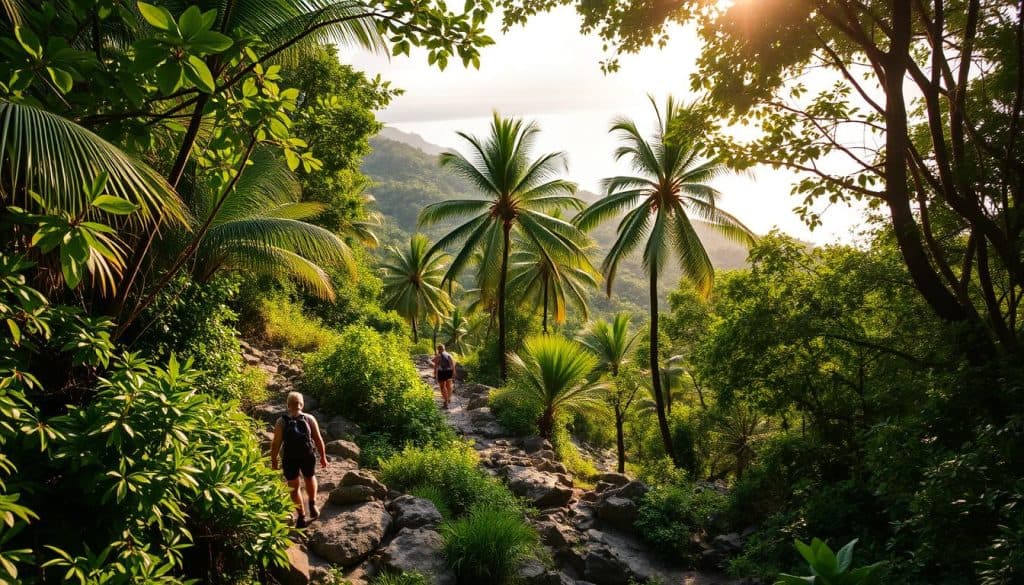
Reef Bay Trail and Historical Ruins
The Reef Bay Trail is a must for history buffs and nature lovers alike. This 3-mile trail takes you through lush forests, past ancient sugar plantation ruins, and to the Taíno petroglyphs carved into the rocks. The descent to Reef Bay is steep, so wear sturdy shoes and bring plenty of water.
Along the way, you’ll encounter remnants of the island’s colonial past, including old stone structures and a historic sugar mill. The trail ends at the bay, where you can relax by the water before heading back. It’s a challenging hike, but the blend of history and nature makes it worth the effort.
Family-Friendly and Leisure Hikes
If you’re traveling with kids or prefer a more relaxed pace, St. John has plenty of family-friendly options. The Lind Point Trail is a 2.3-mile loop that offers stunning views of Honeymoon Beach. It’s an easy hike, perfect for beginners or those looking for a shorter adventure.
For a wheelchair-accessible option, try the Cinnamon Bay Nature Loop. This short trail winds through tropical forests and offers interpretive signs about the island’s flora and fauna. It’s a great way to enjoy the outdoors without a strenuous climb.
| Trail Name | Length | Difficulty | Highlights |
|---|---|---|---|
| Reef Bay Trail | 3 miles | Strenuous | Ruins, petroglyphs, bay views |
| Lind Point Trail | 2.3 miles | Easy | Honeymoon Beach, scenic vistas |
| Cinnamon Bay Nature Loop | 0.09 miles | Easy | Wheelchair accessible, educational signs |
No matter which trail you choose, remember to bring water, sunscreen, and a camera. St. John’s trails are a perfect way to connect with nature and uncover the island’s rich history. For more outdoor adventures, check out the best national parks in North Carolina for inspiration.
Accommodations, Dining, and Local Amenities
Whether you prefer camping under the stars or indulging in resort-style comfort, St. John has it all. From eco-friendly tents to beachfront villas, the island offers a range of lodging options to suit every traveler’s needs. Pair your stay with delicious local cuisine and convenient amenities for a truly memorable experience.

Camping Options and Resort Stays
For those who love the outdoors, Cinnamon Bay Campground is a top choice. Located on the island’s longest beach, it offers eco-tents and bare sites for a rustic yet comfortable stay. Wake up to the sound of waves and enjoy breakfast at the Raintree Café, just steps away.
If luxury is more your style, consider Caneel Bay Resort. This beachfront property combines modern comforts with stunning views. Enjoy on-site dining, spa services, and direct access to pristine beaches. Both options provide a unique way to experience the island’s natural beauty.
Dining and Local Cuisine
St. John’s dining scene is as diverse as its landscapes. At Trunk Bay Café and Bar, savor fresh seafood while overlooking the turquoise waters. For a more casual meal, try the food truck at Cinnamon Bay, offering local favorites like jerk chicken and plantains.
Many accommodations also feature kitchen rentals, allowing you to prepare your own meals. This is a great option for families or those looking to save on dining costs. Don’t miss the chance to explore local markets in Cruz Bay for fresh produce and spices.
Practical Tips for Your Stay
- Book early, especially during peak seasons like winter and spring.
- Consider your budget and preferences when choosing between camping and resorts.
- Take advantage of amenities like kitchen rentals and on-site dining for added convenience.
- Explore nearby beaches and water activities, easily accessible from most accommodations.
Whether you’re seeking adventure or relaxation, St. John’s accommodations and dining options ensure a comfortable and enjoyable stay. Plan ahead to make the most of your island getaway.
Planning Your Visit to St. John and Surrounding Attractions
Planning a trip to St. John? Here’s everything you need to know to make your visit seamless and unforgettable. From transportation tips to seasonal advice, we’ve got you covered.
Transportation and Getting There
Getting to St. John is an adventure in itself. Most visitors fly into Cyril E. King Airport on St. Thomas. From there, take a short taxi ride to Red Hook or Charlotte Amalie to catch a ferry to Cruz Bay, St. John’s main town. Ferries run frequently, with rides lasting about 20-45 minutes depending on the departure point.
For those who prefer flexibility, renting a car or Jeep is a great option. The island’s rugged terrain is best navigated with a sturdy vehicle. Keep in mind that car ferries from St. Thomas to St. John are limited, so plan accordingly.
Seasonal Tips and Visitor Information
St. John’s tropical climate makes it a year-round destination, but timing your visit can enhance your experience. The peak season runs from December to April, offering ideal weather but larger crowds. For a quieter trip, consider visiting during the off-peak months of May to November. Be mindful of hurricane season, which typically spans June to November.
Entry to the park is free, but some beaches like Trunk Bay charge a small fee. Accessibility is straightforward, with shared taxis and rental cars available for local travel. Downloading the park’s app can provide live updates and helpful maps for your trip.
| Transportation Option | Details |
|---|---|
| Ferry from Red Hook | 20 minutes, $8.15 (non-residents) |
| Ferry from Charlotte Amalie | 45 minutes, $13 (non-residents) |
| Car Rental | Recommended for exploring, ~$600/week |
With these tips, you’re ready to explore St. John’s stunning beaches, trails, and historic sites. Plan ahead to ensure a hassle-free and memorable adventure!
Conclusion
Discover a place where nature’s beauty meets rich history, offering endless adventures for every traveler. St. John is a treasure trove of lush trails, pristine beaches, and fascinating historical sites. Whether you’re hiking through tropical forests or snorkeling in crystal-clear waters, every moment here is unforgettable.
The park’s commitment to conservation ensures that its unique ecosystems and cultural heritage remain protected. From ancient ruins to vibrant coral reefs, this destination is a testament to the seamless blend of nature and history. Plan your visit in advance to make the most of your time on this stunning island.
Thank you for exploring this guide to one of the most remarkable destinations in the Caribbean. Use it as your go-to resource for planning an unforgettable trip. Share your experiences and inspire others to explore this incredible place. Happy travels!
FAQ
What are the must-visit beaches in the area?
Trunk Bay and Cinnamon Bay are top spots for their crystal-clear waters and pristine sand. Both are perfect for swimming, snorkeling, and relaxing.
Are there family-friendly hiking trails?
Yes, the Reef Bay Trail offers a mix of history and nature, while shorter, easier paths like the Cinnamon Bay Nature Trail are great for families.
Can I camp overnight in the park?
Absolutely! Cinnamon Bay Campground provides tent sites and eco-tents, making it a fantastic way to stay close to nature.
What’s the best way to get around St. John?
Renting a car or using taxis are popular options. Ferries from St. Thomas are the main way to reach the island.
Are there dining options near the park?
Cruz Bay has a variety of restaurants and cafes. Many resorts also offer on-site dining with stunning views.
What’s the best time to visit?
The dry season, from December to April, is ideal. However, the park is beautiful year-round, and off-season visits mean fewer crowds.
Can I explore historical sites in the park?
Yes, the Annaberg Sugar Plantation ruins provide a glimpse into the island’s past and are easily accessible along the trails.
Is snorkeling equipment available for rent?
Yes, you can rent gear at Trunk Bay and other beaches. Many local shops also offer rentals for a full day of underwater exploration.