
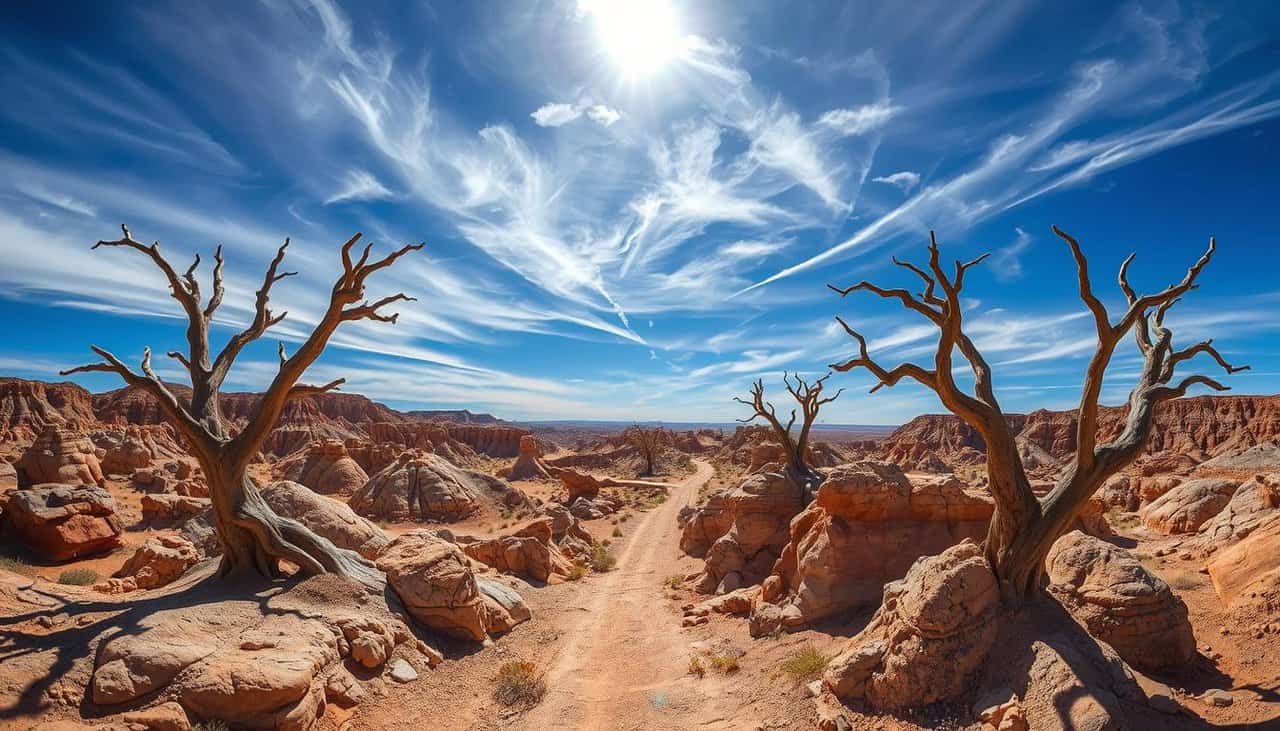
Did you know that Petrified Forest National Park holds the world’s largest concentration of petrified wood? This unique destination offers a glimpse into a landscape that feels almost otherworldly. With its vibrant hills, ancient logs, and stunning desert views, it’s a place where history and nature collide.
The park is divided into two main sections: the Painted Desert in the north and the Rainbow Forest in the south. Each area boasts its own charm, from colorful badlands to trails lined with fossilized trees. Whether you’re a history buff, a nature lover, or just looking for a quick day trip, this park has something for everyone.
Visitors can explore archaeological sites like Puerco Pueblo and marvel at the petroglyphs on Newspaper Rock. The park’s trails, such as the Blue Mesa and Giant Logs, are perfect for capturing breathtaking photos. Best of all, many highlights can be enjoyed in just a few hours, making it an ideal stop for travelers.
Key Takeaways
- Home to the world’s largest concentration of petrified wood.
- Features two distinct areas: the Painted Desert and Rainbow Forest.
- Offers scenic trails, archaeological sites, and stunning desert views.
- Perfect for a day trip with many highlights accessible in a short time.
- Great for photography, history, and nature enthusiasts.
Overview of Petrified Forest National Park
Step into a world where ancient trees turned to stone tell a story millions of years in the making. This park is a geological wonder, offering a glimpse into a prehistoric world frozen in time. From the vibrant hues of the Painted Desert to the fossilized logs of the Rainbow Forest, every corner of this landscape is a testament to Earth’s incredible history.
Park History and Geology
Established as a national monument in 1906 and later designated a national park in 1962, this area has long been recognized for its unique beauty. The park’s geology is a fascinating tale of ancient forests, volcanic activity, and tectonic shifts. Over 200 million years ago, fallen trees were buried under sediment and mineral-rich water, slowly transforming into the colorful petrified wood we see today.
The uplift of the Colorado Plateau exposed these ancient treasures, while erosion sculpted the iconic badlands of the Painted Desert. This interplay of natural forces has created a geo-museum unlike any other, where visitors can walk among the remnants of a prehistoric world.
What Makes the Park Unique
What sets this park apart is its dual attraction: the Painted Desert in the north and the petrified wood concentration in the south. The Painted Desert is a canvas of red, orange, and purple hues, while the Rainbow Forest showcases logs that shimmer with quartz and other minerals. This combination of natural beauty and geological significance makes the park a must-visit destination.
Trails like the Blue Mesa and Giant Logs allow visitors to explore these wonders up close. Whether you’re marveling at the petroglyphs on Newspaper Rock or hiking through the colorful badlands, every step reveals a new layer of the park’s story. For more activities, check out the official guide to make the most of your visit.
| Feature | Description |
|---|---|
| Painted Desert | A vibrant landscape of colorful badlands and scenic viewpoints. |
| Rainbow Forest | Home to the world’s largest concentration of petrified wood. |
| Blue Mesa Trail | A 1-mile loop through striking blue and purple hills. |
| Giant Logs Trail | Features some of the largest and most colorful petrified logs. |
Must-See Activities: Things To Do At Petrified Forest National Park
Exploring this unique destination offers a blend of history and natural beauty. From the vibrant hues of the Painted Desert to the fossilized logs of the Rainbow Forest, every stop along the way is a new adventure. Whether you’re planning a quick visit or a full day of exploration, the park’s scenic road and iconic viewpoints make it easy to enjoy its highlights.
Top Attractions and Viewpoints
Start your journey at Tawa Point, where the sweeping views of the Painted Desert will leave you in awe. This spot is perfect for capturing photos of the colorful badlands. Just a short drive away, Kachina Point offers another stunning perspective of the desert landscape. Both locations are easily accessible and provide ample parking.
As you travel south, don’t miss the Blue Mesa area. Its unique blue and purple hills create a surreal backdrop for a short hike. The Giant Logs Trail is another must-see, showcasing some of the largest and most colorful petrified wood in the park. These stops are ideal for a relaxed exploration, allowing you to take in the beauty at your own pace.
Highlights from Visitor Experiences
Visitors often rave about the quiet, uncrowded trails and breathtaking scenes. Many recommend setting aside enough time to fully appreciate each stop. The park’s main road connects all the key attractions, making it easy to navigate. For a seamless experience, plan your day to include both the northern and southern sections of the park.
One visitor shared, “The views from Chinde Point were absolutely stunning. It’s a great place to sit and soak in the beauty of the desert.” Another highlight is the Painted Desert Inn, a historic building that offers a glimpse into the park’s past. For more tips on making the most of your visit, check out this guide to one day in the.
Explore Iconic Trails and Scenic Hikes
Hiking through this park reveals a landscape shaped by time and nature’s artistry. With trails ranging from easy loops to more challenging routes, there’s something for every level of adventurer. Whether you’re looking for a quick stroll or a deeper exploration, these paths offer stunning views and fascinating geological features.
Blue Mesa and Blue Forest Trails
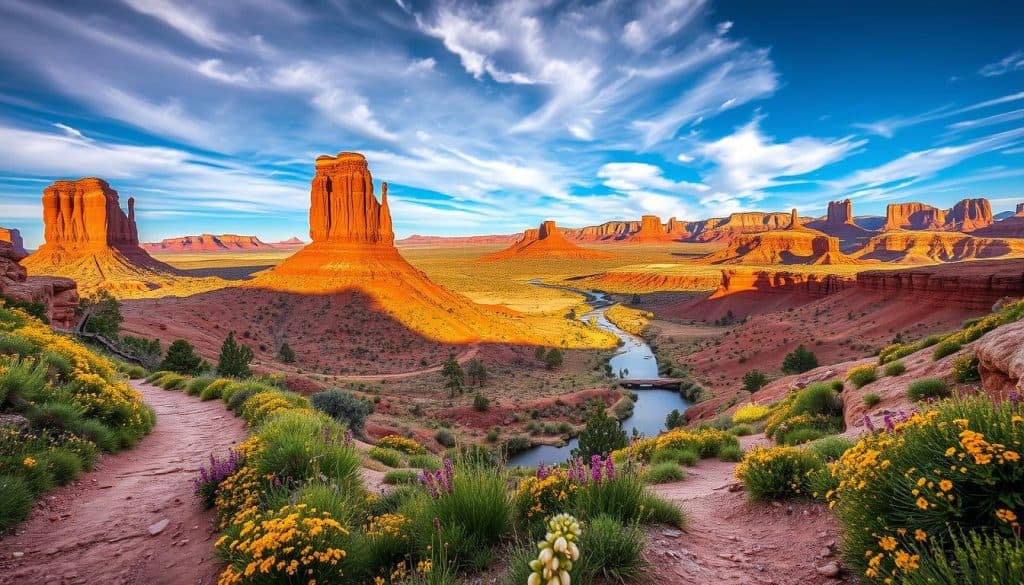
The Blue Mesa Trail is a must-see, offering a 1-mile loop through striking blue and purple hills. This easy hike is perfect for families and casual walkers. The trail begins with a steep descent but quickly levels out, providing breathtaking views of the surrounding badlands.
Nearby, the Blue Forest Trail is equally captivating. This area showcases the park’s unique geology, with petrified wood and colorful rock formations. Both trails are easily accessible and can be completed in under an hour, making them ideal for a quick adventure.
Crystal and Giant Logs Trails
For a closer look at the park’s famous petrified wood, head to the Crystal Forest Trail. This 0.75-mile loop is lined with shimmering logs that sparkle in the sunlight. It’s a short but rewarding hike, offering plenty of photo opportunities.
The Giant Logs Trail is another highlight, featuring some of the largest and most colorful petrified wood in the park. At just 0.4 miles, it’s a quick walk that packs a punch. Both trails are family-friendly and provide a fascinating glimpse into the park’s ancient history.
Before starting your hike, stop by the visitor center for maps and safety tips. The staff can help you choose the best trails based on your interests and time. For more outdoor adventures, explore the diverse landscapes of New Mexico’s national parks, known for their unique beauty and rich biodiversity.
Discover Cultural and Historical Insights
Uncover the rich cultural tapestry woven into the heart of this ancient landscape. From ancient Pueblo ruins to iconic Route 66 landmarks, this destination offers a unique blend of natural beauty and human history. Explore the stories of early inhabitants and the enduring marks they’ve left behind.
Pueblo Ruins and Petroglyphs
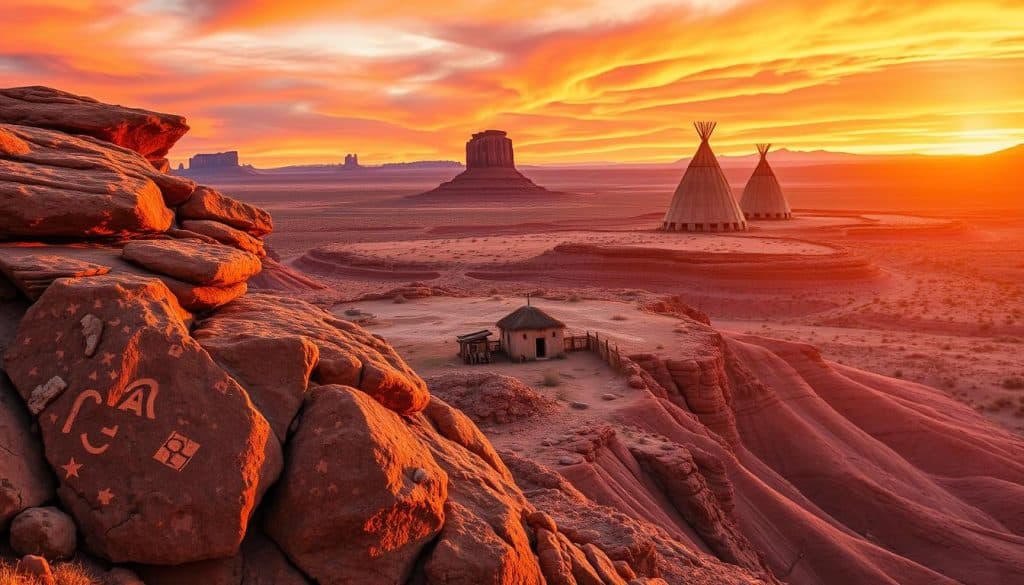
Step back in time at Puerco Pueblo, a site that once housed a thriving community of around 200 people. This 0.3-mile trail leads to the ruins of a village dating back to A.D. 1250. Wander through the remnants of over 100 rooms and kivas, imagining life in this ancient settlement.
Nearby, Newspaper Rock showcases over 650 petroglyphs etched into the stone. These intricate designs, created by the Puebloan people, offer a glimpse into their daily lives and spiritual beliefs. Each carving tells a story, making this site a must-see for history enthusiasts.
Route 66 Landmarks and Historic Sites
The park also holds a piece of Americana with its connection to Route 66. This historic highway, once a symbol of freedom and adventure, passes through the area. Stop by the Painted Desert Inn, a museum that preserves the legacy of this iconic road and the region’s cultural history.
For a deeper understanding, visit the Rainbow Forest Museum. This visitor center provides insights into the park’s geology and the ancient civilizations that once thrived here. It’s a perfect starting point for your journey through time.
Whether you’re exploring ancient ruins or marveling at petroglyphs, the park’s cultural sites offer a unique and immersive experience. Take the time to connect with the stories of the past and appreciate the rich heritage of this extraordinary place.
Plan Your Visit: Tips, Timing, and Logistics
Planning a trip to this unique destination requires a bit of preparation to make the most of your visit. From understanding the park’s operating hours to finding the best nearby accommodations, a little planning goes a long way. Here’s everything you need to know to ensure a smooth and enjoyable experience.
Operating Hours, Fees, and Permits
The park’s operating hours vary by season, so it’s important to check ahead. From January to March, the park is open from 8 a.m. to 5 p.m., while summer months extend hours until 7:30 p.m. Always confirm the schedule to avoid missing out.
Entrance fees are $25 per vehicle, valid for seven days. For frequent visitors, the America the Beautiful Pass is a great investment at $80, granting access to over 2,000 federal recreation sites. Permits for wilderness camping are available at visitor centers, so plan accordingly if you’re staying overnight.
Getting Here and Nearby Accommodations
The park is easily accessible via Interstate 40, with Holbrook, Arizona, just 25 miles west. This charming town offers a variety of hotel options for those looking to stay nearby. If you prefer camping, the park allows wilderness camping with a permit, though there are no designated campgrounds within the area.
For those driving from major cities, the park is approximately 1.5 hours from Flagstaff and 3 hours from Phoenix. The scenic 30-mile drive through the park connects Interstate 40 with U.S. 180, offering stunning views along the way.
| Season | Operating Hours |
|---|---|
| January – March | 8 a.m. – 5 p.m. |
| March – May | 7 a.m. – 7 p.m. |
| May – August | 7 a.m. – 7:30 p.m. |
| August – September | 7 a.m. – 7 p.m. |
| September – October | 7 a.m. – 6 p.m. |
| October – December | 8 a.m. – 5 p.m. |
To make the most of your visit, plan ahead. Arrive early to secure parking, especially during peak seasons. With a little preparation, you’ll be ready to explore this ancient landscape and its fascinating history.
Hidden Gems and Off-the-Beaten-Path Spots
Beyond the well-trodden paths, the park hides treasures waiting to be discovered. For those who crave a quieter, more intimate experience, these lesser-known spots offer a chance to connect with the landscape in a unique way. Whether it’s a secret viewpoint or a trail less traveled, these hidden gems are worth the extra effort.
Secret Scenic Viewpoints
While the main viewpoints draw crowds, there are quieter spots that offer equally stunning views. One such place is the Dead Wash Overlook, a 4-mile round trip hike that rewards you with panoramic vistas of the badlands. Another hidden gem is First Forest Point, a 4.2-mile trail that takes you through a landscape dotted with petrified wood and vibrant rock formations.
For a shorter stop, the Jasper Forest area provides a peaceful retreat. This 2.5-mile loop is perfect for those looking to escape the crowds while still enjoying the park’s natural beauty. These spots are ideal for photography or simply soaking in the serene atmosphere.
Lesser-Known Trails and Local Tips
If you’re up for a challenge, the Red Basin Clam Beds Hike is an 8.5-mile trek that takes you through some of the park’s most remote areas. This trail is known for its unusual rock formations and fossilized clam beds, offering a glimpse into the region’s ancient past.
For a more relaxed trip, the Blue Forest Trail is a 3-mile loop that winds through colorful hills and petrified wood. Originally constructed in the 1930s, this trail was re-established in 2013 and remains a favorite among locals. Don’t forget to visit Puerco Pueblo, where you can explore ancient ruins and petroglyphs that tell the story of the area’s early inhabitants.
These hidden spots are perfect for those looking to make their visit a truly personal thing. Take the time to explore beyond the main attractions, and you’ll discover a side of the park that many visitors never see.
Conclusion
From vibrant desert landscapes to ancient fossilized wood, this destination offers a unique blend of natural and cultural wonders. Whether you’re exploring scenic trails, marveling at newspaper rock, or discovering hidden gems, there’s a lot to experience. Planning your visit as a road trip is a great way to make the most of your time here.
Remember to respect the park’s natural and cultural resources by following guidelines. This ensures these treasures remain for future generations. With accessible trails and diverse attractions, it’s perfect for a day trip or a longer stay.
We hope this guide inspires you to explore this incredible place. Share your experiences and revisit this guide for future adventures. Your journey through this ancient landscape awaits!
FAQ
What’s the best time to visit the park?
Spring and fall are ideal, with mild weather and fewer crowds. Summer can be hot, while winter offers a quieter experience.
Are there guided tours available?
Yes, ranger-led programs and self-guided tours are offered. Check the visitor center for schedules and details.
Can I bring my pet to the trails?
Pets are allowed only in developed areas and must stay on a leash. They’re not permitted on trails or in wilderness zones.
How long does it take to explore the park?
A full day is perfect to see the highlights, but you can enjoy a shorter visit by focusing on key spots like Blue Mesa or Rainbow Forest.
Is there an entrance fee?
Yes, there’s a fee per vehicle. Annual passes and discounts for seniors or military are also available.
What should I bring for a hike?
Bring water, sunscreen, sturdy shoes, and a hat. The desert climate can be harsh, so staying prepared is essential.
Are there places to eat inside the park?
No restaurants are inside, but nearby towns like Holbrook offer dining options. Pack snacks or a picnic for convenience.
Can I camp overnight in the park?
Backcountry camping is allowed with a permit, but there are no developed campgrounds. Nearby towns have lodging options.
What’s the significance of the petrified wood?
The wood is over 200 million years old, fossilized by minerals. It’s a rare glimpse into prehistoric ecosystems.
Are there wheelchair-accessible trails?
Yes, several trails and viewpoints, like the Giant Logs Trail, are accessible. The visitor centers also accommodate all guests.