
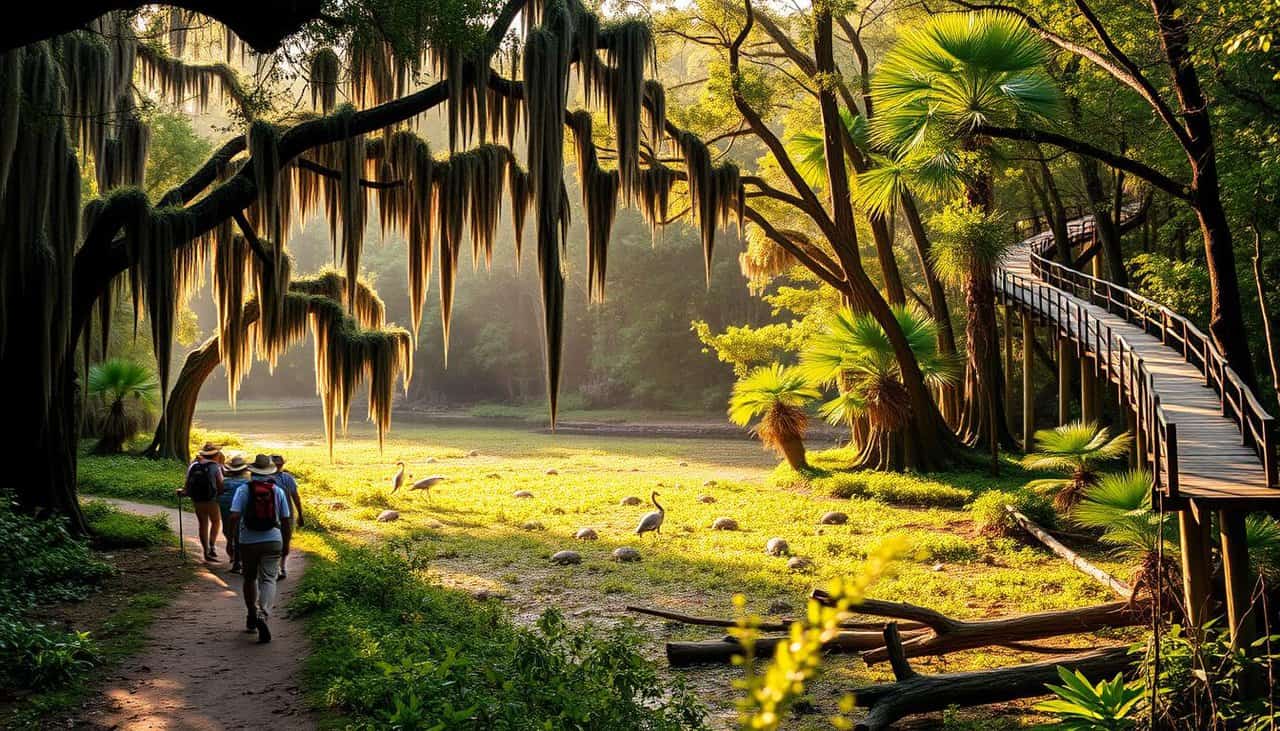
Did you know that Congaree National Park is home to the largest old-growth bottomland hardwood forest in the southeastern United States? This hidden gem spans over 26,000 acres, offering a breathtaking mix of towering bald cypress trees, serene waterways, and diverse wildlife. Whether you’re an avid hiker, a kayaking enthusiast, or simply someone who loves nature, this park has something special for everyone.
From the iconic Boardwalk Loop Trail to the tranquil waters of Cedar Creek, the park is a haven for outdoor adventures. You can explore lush trails, spot rare species like synchronous fireflies, or paddle through the scenic waterways. The park’s unique ecosystem is a treasure trove of natural wonders, making it a must-visit destination for nature lovers.
Ready to discover more? Let’s dive into the best activities and experiences this stunning national park has to offer.
Key Takeaways
- Explore the largest old-growth bottomland hardwood forest in the Southeast.
- Walk the iconic Boardwalk Loop Trail for stunning views.
- Kayak or canoe along the serene Cedar Creek.
- Witness the rare phenomenon of synchronous fireflies in late spring.
- Spot diverse wildlife, including turtles, birds, and golden orb weaver spiders.
- Enjoy accessible trails and facilities for all visitors.
- Plan your visit during optimal seasons for the best experience.
Overview of Congaree National Park
Step into a world where ancient trees and vibrant ecosystems thrive. Congaree National Park is a treasure trove of natural wonders, offering a glimpse into one of the most unique landscapes in the Southeast. From its rich history to its diverse habitats, this park is a haven for nature enthusiasts and history buffs alike.
Park History and Unique Ecosystem
Congaree’s story begins thousands of years ago, with indigenous peoples who first inhabited the area. In 2003, it was designated as a national park, recognizing its significance as the largest intact expanse of old-growth bottomland hardwood forest in the Southeast. Its UNESCO Biosphere Reserve status further highlights its global importance.
The ecosystem here is shaped by the Congaree and Wateree Rivers, which flood the area, bringing nutrients that sustain towering bald cypress and tupelo trees. These ancient giants create a canopy that supports a diverse array of wildlife, from turtles to golden orb weaver spiders.
“The floodplain’s nutrient-rich soil fosters a biodiversity that’s rare and remarkable.”
Location and Accessibility
Located just 30 minutes from Columbia, South Carolina, the park is easily accessible for visitors. The Harry Hampton Visitor Center serves as the main hub, offering exhibits, maps, and helpful staff to guide your adventure. Whether you’re arriving by car or plane, the journey is straightforward and rewarding.
Here’s a quick guide to getting there:
| Starting Point | Distance | Travel Time |
|---|---|---|
| Columbia, SC | 18 miles | 30 minutes |
| Charlotte, NC | 90 miles | 1.5 hours |
| Charleston, SC | 120 miles | 2 hours |
With well-maintained trails and accessible facilities, the park ensures that everyone can enjoy its beauty. Whether you’re exploring Weston Lake or paddling along Cedar Creek, the experience is unforgettable.
Things To Do At Congaree National Park
This unique destination offers a variety of activities for every type of adventurer. Whether you’re seeking a peaceful stroll or an exhilarating paddle, there’s something for everyone. From lush trails to winding waterways, the natural beauty here is unmatched.
One of the most popular activities is hiking. The Boardwalk Loop Trail is a must-see, offering stunning views of the forest canopy. For a longer adventure, the Weston Lake Loop Trail takes you deeper into the wilderness. These trails showcase the park’s towering trees and vibrant ecosystem.
Water enthusiasts will love exploring Cedar Creek. This 15-mile waterway is perfect for canoeing or kayaking. Paddling along the creek, you’ll encounter serene landscapes and diverse wildlife. It’s a peaceful way to connect with nature.
For history buffs, the Bates Ferry Trail offers a glimpse into the past. This short trail follows an old ferry route, blending natural beauty with historical significance. It’s a great option for those looking to learn while they explore.
Here’s a quick guide to some of the top activities:
| Activity | Highlights | Duration |
|---|---|---|
| Hiking | Boardwalk Loop Trail, Weston Lake Loop | 1-3 hours |
| Canoeing | Cedar Creek, scenic waterways | 2-4 hours |
| Wildlife Spotting | Turtles, birds, fireflies | Varies |
| Historical Trails | Bates Ferry Trail | 30 minutes |
For more ideas on exploring this remarkable park, check out this guide. If you’re planning a road trip, don’t miss the chance to include this unique destination in your itinerary.
Hiking Trails and Scenic Walks
Discover the beauty of lush trails and serene walks in this stunning natural haven. Whether you’re a casual stroller or an avid hiker, the paths here offer something for everyone. From accessible boardwalks to challenging loops, each trail provides a unique way to connect with nature.
Boardwalk Loop Trail Highlights
The Boardwalk Loop Trail is a must-visit for all visitors. This 2.6-mile path is fully accessible, making it perfect for families and those with mobility challenges. As you walk, you’ll be surrounded by towering trees and vibrant wildlife. Informative signs along the way offer insights into the ecosystem, making it both educational and enjoyable.
This trail is ideal for a leisurely stroll during the day. You’ll have the chance to spot turtles, birds, and even golden orb weaver spiders. The elevated boardwalk ensures you stay dry, even during wet seasons. It’s a great way to experience the park’s beauty without venturing too far.
Weston Lake Loop Trail and Overlooks
For a more extended adventure, the Weston Lake Loop Trail is a fantastic choice. This 4.5-mile loop takes you deeper into the forest, offering stunning views of the lake and creek. The trail connects to Cedar Creek, providing opportunities for scenic overlooks and peaceful moments by the water.
Along the way, you’ll encounter old-growth trees and diverse wildlife. It’s a moderate hike, so be sure to wear comfortable shoes and bring water. During the day, the trail is alive with the sounds of nature, making it a truly immersive experience.
“The trails here are more than just paths—they’re gateways to understanding the beauty and complexity of this ecosystem.”
Before you head out, check for trail conditions, especially during flood seasons. Staying prepared ensures a safe and enjoyable adventure. Whether you choose the Boardwalk Loop or the Weston Lake Loop, you’re in for an unforgettable journey.
Kayaking, Canoeing and Other Water Adventures
Glide through calm waters surrounded by towering bald cypress trees. Cedar Creek offers a serene escape for paddlers of all skill levels. Whether you’re a beginner or an experienced adventurer, this waterway provides a peaceful way to connect with nature.
Paddling on Cedar Creek
Cedar Creek’s gentle flow makes it ideal for kayaking and canoeing. The 15-mile waterway winds through lush forests, offering stunning views of the surrounding landscape. You’ll paddle past ancient trees and spot wildlife like turtles and birds along the way.
For a more structured experience, guided tours are available. These trips last about 3 hours and cover 4 miles of the creek. Morning tours are recommended for better wildlife viewing opportunities. Reservations are required, so plan ahead to secure your spot.
Rental Options and Safety Tips
Local outfitters in Columbia provide kayak and canoe rentals, along with convenient drop-off services. Single and tandem options are available, with weight limits of 300 and 500 pounds, respectively. Youth life jackets are also provided for children weighing 50-90 pounds.
Safety is key when paddling. Check water levels before heading out, as they can vary with the seasons. Be mindful of obstacles like fallen trees and stay alert for changing conditions. Always wear a life jacket and bring plenty of water.
Here are a few tips to maximize your experience:
- Start early in the day for calmer waters and better wildlife sightings.
- Use the calm sections of the creek for a more relaxed paddle.
- Bring a waterproof bag for your belongings to keep them dry.
With its tranquil waters and breathtaking scenery, Cedar Creek is a must-visit for anyone looking to explore the park’s natural beauty. Whether you’re on a guided tour or paddling solo, the experience is unforgettable.
Wildlife Encounters and Firefly Viewing
Experience the magic of nature’s light show and the vibrant wildlife in this serene South Carolina destination. From the mesmerizing synchronous fireflies to the diverse local fauna, the park offers unforgettable moments for nature lovers.
Synchronous Fireflies Experience
Every spring, the park becomes a stage for one of nature’s most enchanting displays—the synchronous fireflies. These tiny creatures light up the night in unison, creating a breathtaking spectacle. The best time to witness this phenomenon is between 9 pm and 10 pm, typically from mid-May to mid-June.
To ensure a memorable experience, visitors must secure a permit through a lottery system. Only 145 vehicle passes are issued each night, so planning ahead is essential. Remember to maintain a respectful distance to protect these delicate creatures and their habitat.
Spotting Local Fauna
Beyond the fireflies, the park is home to a variety of wildlife. Deer, birds, and turtles are commonly spotted along the trails and near cedar Creek. Early mornings and late afternoons are the best times for wildlife viewing, offering a chance to observe these animals in their natural habitat.
Here are a few tips for a successful wildlife encounter:
- Move quietly and avoid sudden movements to prevent startling the animals.
- Bring binoculars for a closer look without disturbing the wildlife.
- Stay on designated trails to protect both the ecosystem and yourself.
“The park’s wildlife is a testament to the beauty and balance of nature. Observing it respectfully ensures it thrives for generations to come.”
Whether you’re marveling at the fireflies or spotting deer in the forest, these experiences highlight the park’s unique charm. Plan your visit during the optimal seasons to make the most of your adventure.
Cultural and Historical Highlights
Step back in time and uncover the stories woven into the trails and trees of this serene landscape. The Bates Ferry Trail and the General Greene Tree are two remarkable highlights that bring the park’s history to life. These sites offer a glimpse into the past, blending natural beauty with cultural significance.
Bates Ferry Trail Story
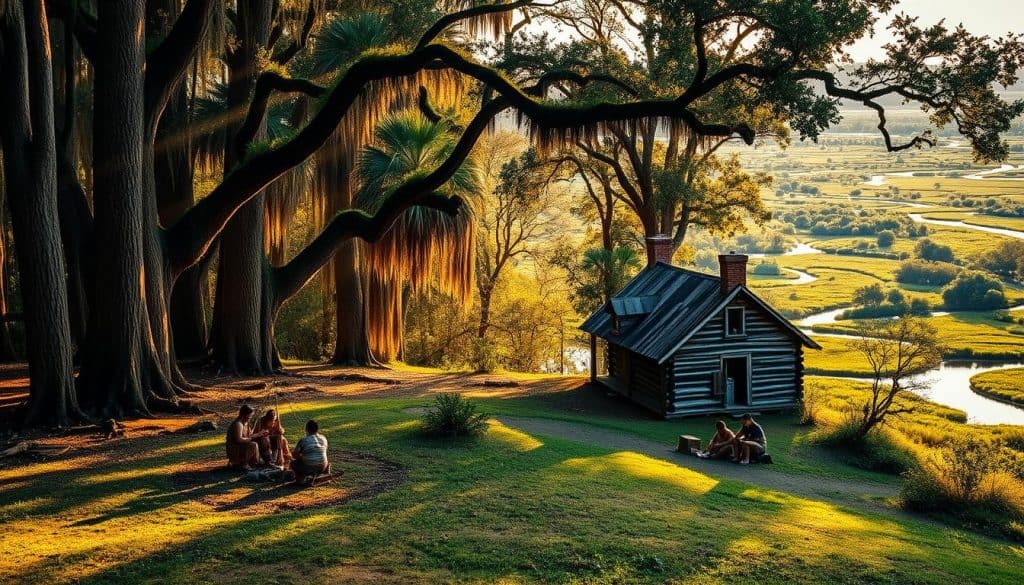
The Bates Ferry Trail is a 2.2-mile path that follows an old colonial road. This trail was once a vital transportation route, connecting travelers across the region. Walking here, you’ll feel the echoes of history beneath your feet.
This trail is a modest journey, taking about an hour to complete. Along the way, you’ll encounter lush forest scenery and learn about the trail’s role in early travel. It’s a perfect blend of nature and history.
Exploring the General Greene Tree
At the end of the trail, you’ll find the General Greene Tree, a South Carolina Heritage Tree. This towering giant is named after General Nathanael Greene, a Revolutionary War hero. Its impressive size and age make it a living monument to the past.
Standing beneath its canopy, you’ll feel a deep connection to the history of this land. The tree’s story is a testament to the enduring legacy of the forest and its role in shaping the region’s heritage.
“The Bates Ferry Trail and the General Greene Tree are more than just landmarks—they are windows into the past, offering a unique perspective on the park’s cultural roots.”
For more insights into South Carolina’s natural and historical treasures, explore this guide to the best national parks in the state. These destinations showcase the rich tapestry of history and nature that defines the region.
Tips and Insider Advice for Your Visit
Planning a visit to this natural wonder? Here’s how to make the most of your trip. With its unique bottomland ecosystem and seasonal changes, a little preparation goes a long way. From timing your adventure to managing unexpected weather, these tips will ensure a smooth and enjoyable experience.
Best Times to Explore the Park
Spring and fall are the ideal seasons to visit. In spring, the park comes alive with blooming flora and the mesmerizing display of synchronous fireflies. Fall offers cooler temperatures, vibrant foliage, and fewer crowds. Both seasons provide the perfect balance of pleasant weather and active wildlife.
Summer can be hot and humid, with temperatures often exceeding 90°F. Winter is quieter but can be chilly, with occasional hard freezes. For a comfortable and crowd-free experience, aim for October or early November.
Managing Weather and Flood Conditions
The park’s bottomland ecosystem is shaped by seasonal flooding. Spring rains can cause the Congaree River to overflow, covering low-lying trails. Always check the National Park Service website for current flood conditions before your trip. Here’s a quick guide to help you plan:
| Season | Flood Risk | Tips |
|---|---|---|
| Spring | High | Check trail closures and bring waterproof gear. |
| Summer | Moderate | Stay hydrated and watch for thunderstorms. |
| Fall | Low | Enjoy dry trails and mild weather. |
| Winter | Low | Layer up for cooler temperatures. |
Parking can fill up quickly, especially during peak seasons. Arrive early to secure a spot and visit the Harry Hampton Visitor Center for the latest updates. A flexible mindset and proper preparation will ensure your adventure is both safe and memorable.
Planning Your Visit and Lodging Options
Ready to explore this natural gem? Let’s dive into the logistics. From transportation to lodging, we’ve got you covered. Whether you’re planning a quick day trip or a longer stay, these tips will help you make the most of your adventure.
Getting There and Parking
Located just 18 miles from Columbia, South Carolina, the park is easily accessible by car. From Columbia, take Bluff Road and follow signs to the Harry Hampton Visitor Center. The drive takes about 30 minutes, making it a convenient escape from the city.
If you’re traveling from further away, here’s a quick guide to distances and travel times:
| Starting Point | Distance | Travel Time |
|---|---|---|
| Charlotte, NC | 90 miles | 1.5 hours |
| Charleston, SC | 120 miles | 2 hours |
Parking is free but can fill up quickly, especially on weekends. Arrive early to secure a spot and avoid the crowds.
Nearby Accommodations and Local Dining
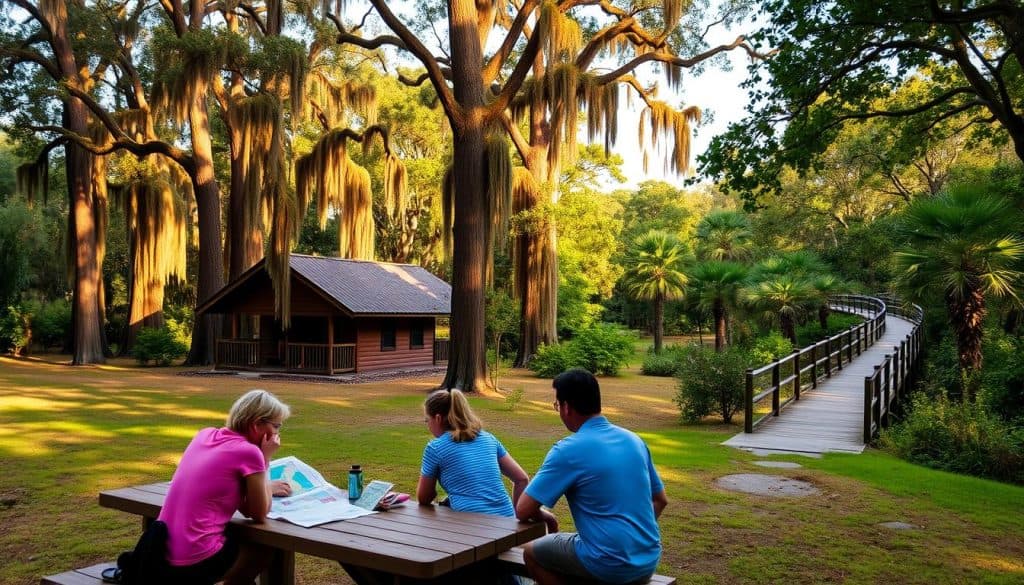
While the park offers tent camping, nearby Columbia provides a range of lodging options. From budget-friendly motels to cozy bed-and-breakfasts, there’s something for every traveler. Popular choices include the Inn at USC and the Hampton Inn Columbia-Downtown.
For dining, Columbia’s vibrant food scene won’t disappoint. Try local favorites like Motor Supply Co. Bistro for farm-to-table dishes or Blue Marlin for fresh seafood. After a day of exploring, these spots are perfect for refueling.
“The combination of natural beauty and urban convenience makes this destination truly unique.”
Whether you’re staying for a day or a week, planning ahead ensures a smooth and enjoyable experience. From scenic drives to cozy stays, every part of your trip can be tailored to your preferences.
Conclusion
From towering tupelo trees to the mesmerizing synchronous firefly displays, this destination offers a unique blend of natural wonders. Whether you’re hiking the iconic Boardwalk Trail or paddling along Cedar Creek, every moment here is unforgettable.
The park’s rich cultural history and modern amenities make it a perfect getaway for all seasons. Witness the bald cypress trees reflected in the calm water, or explore the trails that weave through this vibrant ecosystem. Each visit reveals something new and inspiring.
Plan your trip today and experience the magic for yourself. Share your adventures and return for more travel ideas. This remarkable place awaits your discovery!
FAQ
What are the must-see trails in the park?
The Boardwalk Loop Trail and Weston Lake Loop Trail are top picks. Both offer stunning views of the forest, waterways, and wildlife.
Can I kayak or canoe in the park?
Yes! Cedar Creek is perfect for paddling. You can bring your own gear or rent from nearby outfitters.
When is the best time to see the synchronous fireflies?
The synchronous fireflies usually appear in late May to early June. Check the park’s website for exact dates and viewing tips.
Are there any historical sites to explore?
Absolutely! The Bates Ferry Trail and the General Greene Tree offer fascinating glimpses into the area’s history.
What should I know about visiting during flood season?
The park can flood, especially in spring. Check conditions before your trip and wear waterproof gear if needed.
Where can I stay near the park?
There are several lodging options in Columbia, South Carolina, just a short drive away. Camping is also available within the park.
Is the park family-friendly?
Yes! With easy trails, wildlife spotting, and educational programs, it’s a great spot for families.
What wildlife might I see?
Keep an eye out for deer, otters, and a variety of birds. The bottomland forest is teeming with life!
Are there guided tours available?
The visitor center often offers ranger-led programs. Check the schedule when you arrive.
What’s the best time of year to visit?
Spring and fall are ideal for mild weather and fewer crowds. Summer is great for fireflies, but it can be hot and humid.