

Did you know that Joshua Tree National Park attracts over 3 million visitors each year? With its unique rock formations and stunning desert landscapes, it’s a haven for outdoor enthusiasts. As you plan your visit, understanding the entrance fees and pass options is essential.
When visiting Joshua Tree National Park, you have multiple entrance fee and pass options depending on your mode of arrival and whether you’re part of a commercial tour group. The most common entrance fee is the Private Vehicle Pass, valid for 7 days, covering the cost for all occupants.
I’ll guide you through the various pass options, including standard entrance fees, annual passes, and specialized discounts. This will help you plan your visit with accurate cost information and make the most of your time in the park.
Key Takeaways
- Understand the different types of passes available for Joshua Tree National Park.
- Learn about the costs associated with private vehicle fees, motorcycle entrance fees, and individual entrance options.
- Discover where to purchase your passes, including visitor centers, entrance stations, and online options.
- Find out about fee-free days and essential visitor information.
- Understand how entrance fees support park maintenance and visitor services.
Joshua Tree National Park Overview
The vast expanse of Joshua Tree National Park is home to not one, but two desert ecosystems, each with its unique characteristics. As you explore the park, you’ll notice the distinct differences between these ecosystems, shaped by elevation and geography.
Park Size and Location
Joshua Tree National Park covers a significant area, making it a substantial destination for nature lovers and adventurers. Located at the intersection of the Mojave and Colorado Deserts, the park’s size and location create a unique environment.
The park spans over 790,635 acres, providing ample opportunities for exploration and discovery. Its location in southeastern California makes it an accessible destination for those in the western United States.
| Park Feature | Description |
|---|---|
| Location | Southeastern California |
| Size | 790,635 acres |
| Ecosystems | Mojave and Colorado Deserts |
Two Desert Ecosystems
The park is so large that it spans two desert ecosystems – the division is primarily delineated by elevation – and roughly divides the park down the middle. The Mojave Desert, located in the western part of the park, is characterized by higher elevations and is home to the iconic Joshua trees.
In contrast, the Colorado Desert, which covers the eastern part of the park, is lower in elevation and features different plant and animal species. This diversity creates a fascinating biological richness that makes Joshua Tree unique among national parks.
Understanding these two ecosystems helps visitors appreciate the changing landscapes they’ll encounter as they travel through different areas of the park. The transition zone between the Mojave and Colorado Deserts is particularly noteworthy, with distinct microclimates and a wide range of flora and fauna.
Standard Entrance Fees for Joshua Tree National Park
Joshua Tree National Park offers various entrance fee options depending on your mode of arrival. Understanding these fees is crucial for planning your visit and making the most of your time in the park.
Private Vehicle Entrance Fees
The standard entrance fee for private vehicles ranges from $15 to $30. This fee grants access to the park for a 7-day period, allowing you to explore the park’s wonders without worrying about daily entrance fees.
Motorcycle Entrance Fees
If you’re arriving on a motorcycle, the entrance fee is a more budget-friendly option. While the exact fee isn’t specified, it’s generally lower than that for private vehicles, making it an attractive choice for solo travelers or couples.
Individual Entrance Fees (Walking/Bicycling)
For those who prefer to explore on foot or by bicycle, the individual entrance fee is $15 per person for a 7-day pass. Here are some key points to consider:
- Individuals aged 16 and older are required to pay the entrance fee.
- Children under 15 can enter for free when accompanied by a paying adult.
- This fee allows for multiple entries during the 7-day period, giving you the flexibility to explore the park at your own pace.
- Cycling through Joshua Tree can be challenging due to the desert heat and limited water sources, so be sure to prepare accordingly.
Annual Pass Options
If you’re planning to visit Joshua Tree National Park multiple times or explore other national parks, considering an annual pass is a great idea. Annual passes can offer significant savings and convenience for frequent visitors.
Joshua Tree Annual Pass
The Joshua Tree Annual Pass is a great option for those who plan to visit the park multiple times within a year. While the specifics of this pass are not detailed here, it’s worth exploring if you’re a frequent visitor to Joshua Tree.
America the Beautiful Pass Benefits
The America the Beautiful Pass is another excellent choice, offering access to more than 2,000 federal recreation sites across the country for a full year from the month of purchase. This pass costs $80 and covers entrance fees at sites managed by six federal agencies, including the National Park Service, U.S. Forest Service, and Bureau of Land Management.
- The pass admits the pass holder and all passengers in a private, non-commercial vehicle at sites that charge per vehicle.
- At per-person fee sites, it covers the pass holder and three additional adults.
- You can purchase the America the Beautiful Pass at any national park entrance station, many federal recreation sites, online through the USGS store, or by calling 1-888-ASK-USGS.
Discounted and Specialized Passes
Beyond the standard entrance fees, Joshua Tree National Park offers various discounted and specialized passes for different groups of visitors. These passes not only make visiting the park more affordable but also reflect the National Park Service’s commitment to inclusivity and appreciation for specific groups.
Senior Passes
U.S. citizens or permanent residents 62 years old or older can obtain a Senior Pass, which grants lifetime access to national parks and federal recreational lands. This pass is a great value for seniors who plan to visit multiple sites throughout their retirement.
Military and Veteran Passes
Current military members and veterans can benefit from the America the Beautiful Annual Pass for Military and Veterans, available at a discounted rate or sometimes for free. This pass is a token of appreciation for their service.
Access Pass for Permanent Disabilities
The Access Pass is available for U.S. citizens or permanent residents with a permanent disability. It provides free lifetime access to national parks and federal recreational lands, making it easier for everyone to enjoy these beautiful sites.
4th Grade and Volunteer Passes
As part of the Every Kid Outdoors program, all U.S. fourth-grade students can obtain a free annual pass to national parks and federal lands. Additionally, volunteers who contribute 250 hours of service to federal recreation sites can receive a free Volunteer Pass, valid for one year. These passes encourage young people to engage with nature and recognize the valuable contributions of volunteers.

How Much to Enter Joshua Tree National Park for Groups
When planning a trip toJoshua Tree National Parkwith a group, understanding the entrance fees is crucial. The park has different fee structures for commercial and non-commercial groups.
Commercial Tour Group Fees
Commercial tour groups are charged based on the type and size of their vehicles. The fees for these groups can vary significantly, so it’s best to check with the park’s official website or contact their administration directly for the most up-to-date information. This will help you plan your visit and budget accordingly.
Non-Commercial Group Rates
For non-commercial groups entering the park in vehicles with a capacity of 16 or more passengers, the entrance fee is $15 per person. However, children 15 and under enter for free. Additionally, drivers hired solely for transportation are typically exempt from paying the entrance fee. It’s also worth noting that the total fee will not exceed the equivalent commercial fee for that vehicle size. Some groups, like school groups, may qualify for an academic fee waiver, which should be applied for in advance.
Where to Purchase Park Passes
To ensure a smooth entry into Joshua Tree National Park, understanding your pass purchase options is key. You have multiple convenient choices to obtain your park pass, catering to different preferences and needs.
Visitor Centers and Entrance Stations
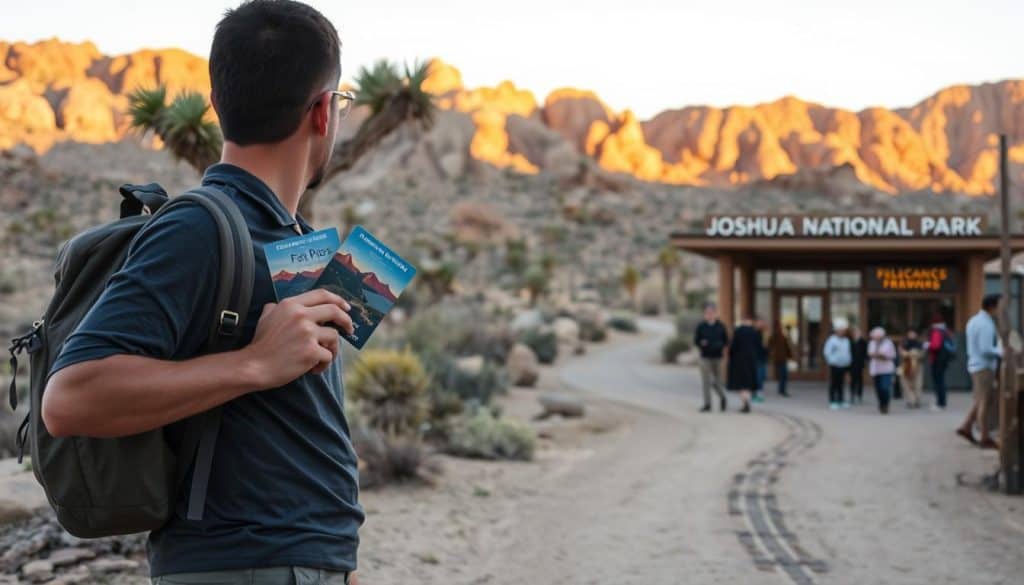
You can purchase your park pass in person at any of the visitor centers or entrance stations. This method is great if you’re near the park or prefer a more traditional approach. The staff will be happy to assist you with your purchase and provide any additional information you might need for your trip.
Online Purchase Options
For those planning ahead, Joshua Tree National Park offers the convenience of buying your pass online. You can visit the official recreation.gov website to make your purchase, saving you time when you arrive at the park.
Electronic Passes
An even more convenient option is the electronic pass. You can buy it online and save it to your mobile device. This is particularly useful since cell service is limited within the park. Having your pass digitally can expedite your entry and make your visit more enjoyable.
| Purchase Method | Convenience Level | Recommended For |
|---|---|---|
| In-Person | Medium | Those near the park or preferring traditional methods |
| Online | High | Visitors planning ahead |
| Electronic Pass | Very High | Tech-savvy visitors or those short on time |
Fee-Free Days at Joshua Tree National Park
You can enjoy the beauty of Joshua Tree National Park without the entrance fee on certain days throughout the year. As someone who’s visited the park multiple times, I can attest that planning your trip around these fee-free days can make a big difference.
Annual Fee-Free Days
The park offers several fee-free days annually. These are special days when you can enter the park without paying the usual entrance fee. It’s a great opportunity to experience the park’s unique landscapes and attractions without the added cost.
Planning Your Visit on Free Days
If you’re planning to visit on a fee-free day, be prepared for larger crowds. Consider arriving early or later in the afternoon to avoid congestion. Using the North Entrance can also help you avoid long lines at the more popular West Entrance. Additionally, have a backup plan for parking and activities, as popular spots fill up quickly on free days.
Essential Information for Visiting Joshua Tree
As you plan your visit to Joshua Tree National Park, it’s essential to be aware of some crucial details to make the most of your trip. The park offers a unique blend of natural beauty and adventure, but being prepared is key to a safe and enjoyable experience.
Park Hours and Accessibility
The park is open 24 hours a day, but the visitor centers and some facilities have limited hours. It’s a good idea to check the park’s website for up-to-date information on accessibility and any road closures.
Water and Supply Considerations
When visiting Joshua Tree, it’s crucial to bring enough water and supplies. The desert environment can be harsh, and services are limited within the park. Make sure to pack accordingly, especially if you plan on camping or hiking.
Cell Phone Reception
Cell phone reception can be spotty within the park, so it’s a good idea to download maps and plan your itinerary before you arrive.
Wildlife Safety
Be aware of the wildlife, including coyotes and desert tortoises. When exploring the park, watch your step, especially around rock formations and underbrush, where creatures like rattlesnakes and scorpions might be hiding. Drive slowly, particularly at dawn and dusk, to avoid collisions with animals.
Conclusion: Making the Most of Your Joshua Tree Visit
The Joshua Tree experience is one you won’t soon forget, with its breathtaking desert vistas and fascinating rock formations. As you plan your visit to Joshua Tree National Park, consider the best times to visit and how to make the most of your trip. I recommend visiting during the spring or fall when temperatures are mild, making it ideal for hiking and exploring the park’s unique landscapes.
To avoid long lines, especially on weekends, use the Twentynine Palms (North) Entrance instead of the West entrance. The park offers a diverse range of activities, from hiking and rock climbing to stargazing and wildlife watching. Remember, your entrance fee supports park maintenance and conservation efforts, ensuring that Joshua Tree National Park remains a natural wonder for generations to come.
With its unique blend of desert ecosystems and stunning rock formations, Joshua Tree is a must-visit destination. So pack your water, plan your trip, and get ready to experience the natural beauty of this incredible national park.
FAQ
What are the entrance fees for a private vehicle?
The entrance fee for a private vehicle is valid for seven days and grants access to the park.
Are there any discounts available for seniors or military personnel?
Yes, the park offers discounted passes for seniors and free or discounted passes for certain military personnel and individuals with disabilities.
Can I purchase an annual pass for frequent visits?
Yes, an annual pass is available for visitors who plan to visit the park multiple times within a year.
What are the park’s operating hours?
The park is open 24 hours a day, but the visitor centers have limited hours, so it’s best to check the park’s website for the most up-to-date information.
Is cell phone reception available throughout the park?
Cell phone reception can be limited in certain areas of the park, so it’s a good idea to bring a map and other essential supplies.
Can I camp in the park, and what are the associated fees?
Yes, camping is available in designated campsites, and fees vary depending on the campsite and time of year.
Are there any fee-free days at the park?
Yes, the park offers several fee-free days throughout the year, including during certain holidays and special events.
Can I bring my bicycle into the park?
Yes, bicycles are allowed on park roads and designated bike paths, and an individual entrance fee applies for bicyclists.
What should I bring with me when visiting the park?
It’s essential to bring plenty of water, sunscreen, and other supplies, as services can be limited within the park.
Where can I purchase park passes or get more information?
Park passes can be purchased at visitor centers, entrance stations, or online through the park’s website or the National Park Service website.