
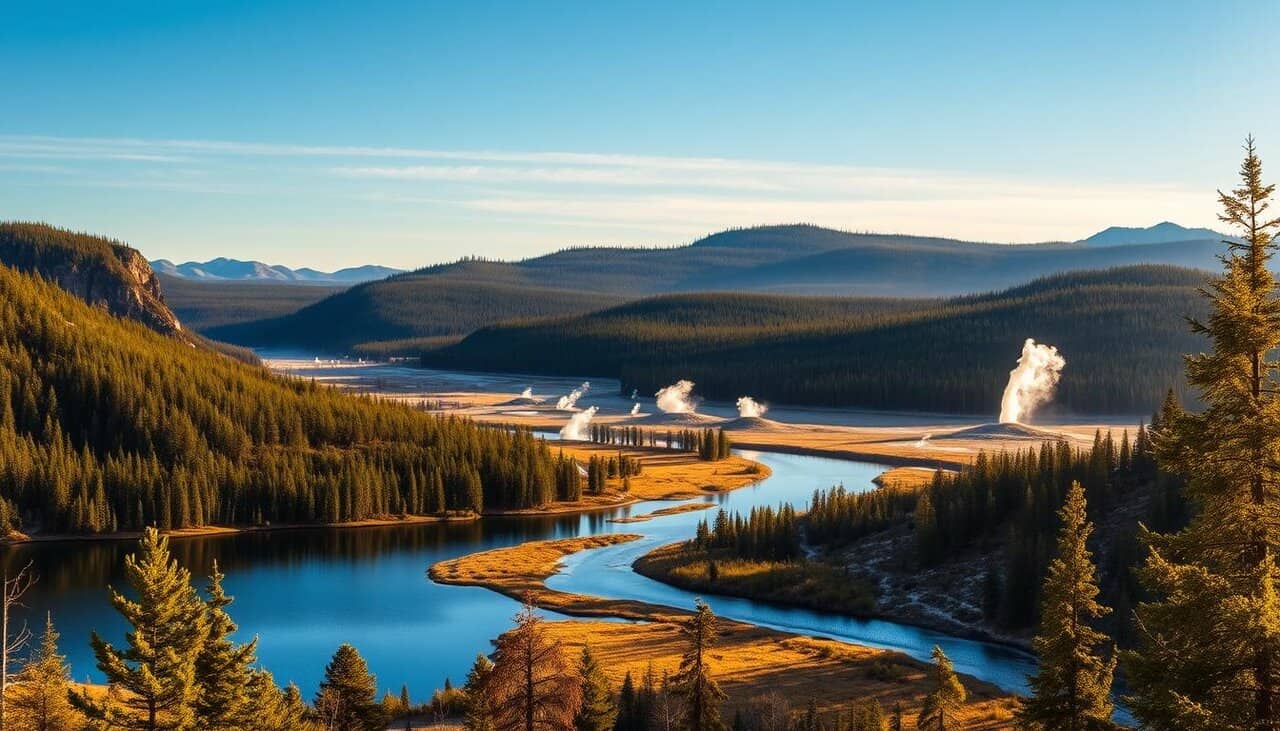
With over 2 million acres to explore, Yellowstone is a vast and wondrous destination that can leave first-time visitors wondering where to start.
From the majestic geothermal features to the abundant wildlife and stunning canyons, the park offers a diverse range of attractions that can be challenging to fit into a single trip.
Determining the right amount of time for your Yellowstone adventure is crucial to making the most of your visit and avoiding a rushed experience.
In this guide, we’ll help you figure out the perfect trip length based on your interests and travel style.
Key Takeaways
- Understand the park’s layout to plan your trip effectively.
- Identify must-see attractions to prioritize your itinerary.
- Explore various itinerary options to suit your time frame.
- Get insider tips to maximize your time in Yellowstone.
- Make informed decisions about your trip duration.
Planning Your First Trip to Yellowstone National Park
To truly experience the beauty and wonder of Yellowstone, it’s essential to plan your trip with an understanding of what makes this national park so unique. As the world’s first national park, Yellowstone offers a diverse array of attractions that require thoughtful planning to fully appreciate.
What Makes Yellowstone Unique
Yellowstone National Park stands out for its incredible concentration of geothermal features, including Old Faithful and the Grand Prismatic Spring. The park’s vast size and diverse landscapes, from the Grand Canyon of the Yellowstone to abundant wildlife viewing areas, make it a complex destination to explore. Unlike other national parks that focus primarily on scenic landscapes, Yellowstone offers a combination of geysers, hot springs, wildlife viewing, canyons, and waterfalls that require thoughtful planning to experience properly.
- Unique geothermal features like Old Faithful and Grand Prismatic Spring
- Diverse wildlife and ecosystems
- Vast size with significant driving times between attractions
Why Proper Planning Matters
Proper planning is crucial for a successful trip to Yellowstone. The park’s massive size means that attractions are spread out, with driving times between major sites often taking an hour or more. Many first-time visitors make the mistake of treating Yellowstone like a “drive-through” park, but its treasures require getting out of your car and exploring on foot to truly appreciate. Understanding the park’s distinct regions and seasonal variations will help you create a realistic itinerary that allows enough time to enjoy the park without feeling rushed.
| Planning Aspect | Importance |
|---|---|
| Understanding Park Layout | Essential for efficient travel between attractions |
| Accommodation Booking | Critical as options fill up months in advance |
| Itinerary Creation | Helps in managing time effectively and avoiding crowds |
As emphasized by park rangers and seasoned visitors, “The key to a great Yellowstone trip is not just seeing the sights, but experiencing the park’s natural beauty and wonders without the stress of a rushed itinerary.” Proper planning ensures that your trip is both enjoyable and memorable.
Understanding Yellowstone’s Layout
To make the most of your visit to Yellowstone, understanding the park’s layout is essential. Yellowstone National Park is a vast wilderness area, and its size can be overwhelming for first-time visitors.
The Figure-Eight Road System
The park’s road system is designed in a distinctive figure-eight pattern, with the Grand Loop Road forming the primary circuit. Norris Canyon Road bisects the middle, creating a dual-loop system that connects the park’s main attractions. This unique layout means that visitors can easily access various parts of the park, but it also requires careful planning to avoid long drives between stops.
Key features of the figure-eight road system include:
- A primary circuit that covers the main attractions
- Norris Canyon Road connecting the two loops
- Multiple access points to different areas of the park
Main Areas of the Park
Yellowstone is divided into distinct areas, each with its own character and attractions. These areas include Mammoth Hot Springs in the north, Tower-Roosevelt in the northeast, Canyon Village in the center, Lake/Fishing Bridge in the east, West Thumb/Grant Village in the south, Old Faithful/Upper Geyser Basin in the southwest, Madison in the west, and Norris in the northwest.
Understanding these areas is crucial for efficient trip planning. For example, staying in centrally located accommodations like Canyon Village can minimize driving time. However, many visitors choose to change their lodging location during longer stays to access different areas more efficiently.
The five park entrances (North, Northeast, East, South, and West) provide access to different areas, with the West Entrance being the most popular and the Northeast Entrance offering access to the wildlife-rich Lamar Valley.
Must-See Attractions in Yellowstone
As you step into Yellowstone, you’re immediately immersed in a world of breathtaking geothermal features, majestic canyons, and abundant wildlife. This section will guide you through the must-see attractions that make Yellowstone National Park so unique.
Geothermal Features
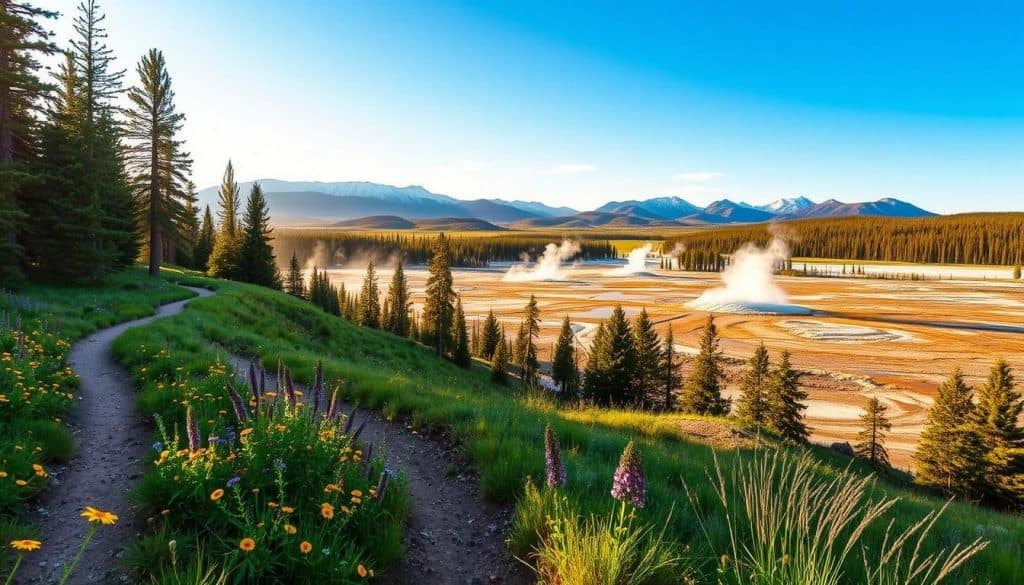
Yellowstone is renowned for its geothermal wonders, with Old Faithful being the most iconic. Erupting approximately every 90 minutes, it’s a centerpiece of the Upper Geyser Basin, which boasts the highest concentration of geysers in the world. The Grand Prismatic Spring is another marvel, displaying stunning rainbow colors that are best viewed from the boardwalk at Midway Geyser Basin and the Grand Prismatic Spring Overlook on the Fairy Falls Trail.
Other notable geothermal areas include Mammoth Hot Springs, featuring unique terraced limestone formations created by hot water rising through ancient limestone deposits. Norris Geyser Basin is known for being the hottest and most acidic thermal area, while West Thumb Geyser Basin offers a glimpse into geothermal activity on the shore of Yellowstone Lake.
Canyons and Waterfalls
The Grand Canyon of the Yellowstone is a breathtaking sight, with colorful canyon walls and the powerful Lower and Upper Falls. Artist Point provides the most iconic vista of the 308-foot Lower Falls, making it a must-visit location for anyone exploring the park.
| Location | Notable Feature |
|---|---|
| Grand Canyon of the Yellowstone | Lower and Upper Falls |
| Artist Point | Iconic vista of Lower Falls |
Wildlife Viewing Areas
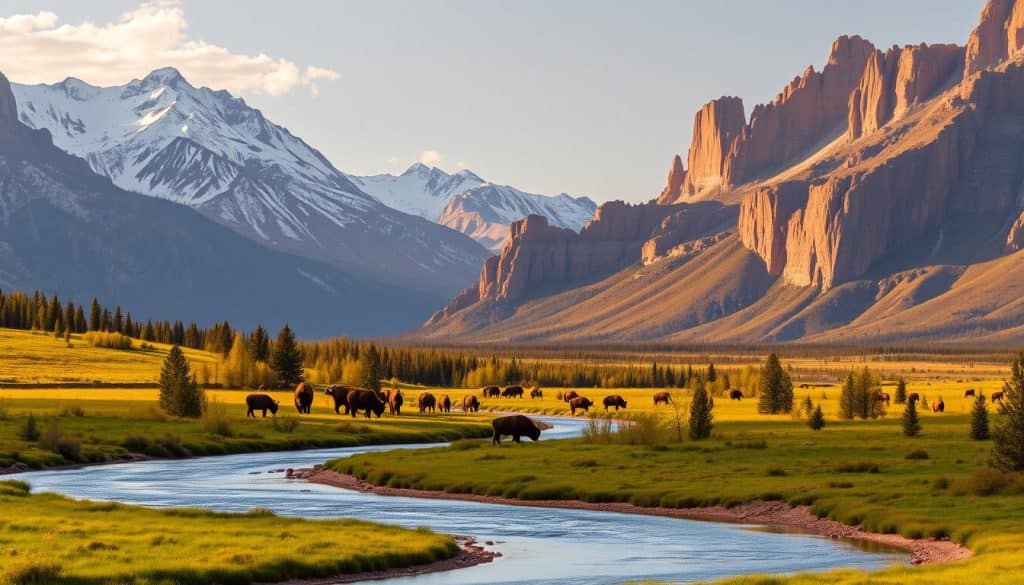
Yellowstone is a wildlife enthusiast’s paradise, with areas like Hayden Valley and Lamar Valley offering exceptional viewing opportunities. Visitors can regularly spot bison herds, elk, and occasionally bears and wolves, especially during early morning or evening hours.
“The wildlife viewing in Yellowstone is incredible. We’ve seen bison, elk, and even a rare sighting of a wolf pack in Hayden Valley.” –
How Many Days in Yellowstone is Enough?
Yellowstone, with its vast array of geothermal features and diverse wildlife, poses a question for many visitors: how long is enough? The answer depends on several factors, including your travel style, interests, and whether you prefer a rushed tour or a more leisurely exploration of the park’s highlights.
Minimum Recommended Time
The absolute minimum recommended time for visiting Yellowstone National Park is 2-3 days. This duration allows visitors to see the major highlights without feeling completely rushed, though it still requires efficient planning. With just 1-2 days, it’s advisable to focus on the southern loop, prioritizing attractions like Old Faithful, Grand Prismatic Spring, and the Grand Canyon of the Yellowstone. However, this means many other areas of the park will be missed.
For a more comprehensive experience, consider the following breakdown:
| Duration | Highlights | Experience |
|---|---|---|
| 1-2 days | Southern loop: Old Faithful, Grand Prismatic Spring, Grand Canyon of the Yellowstone | Rushed, limited to main southern attractions |
| 2-3 days | Major highlights, some northern loop attractions | Better coverage, still somewhat rushed |
| 3-4 days | Both southern and northern loops, multiple geothermal areas, wildlife viewing | Ideal for first-time visitors, good balance |
Ideal Duration for First-Time Visitors
For first-time visitors, 3-4 days is considered ideal. This duration provides enough time to explore both the southern and northern loops of the park, experience the major geothermal areas, and have multiple opportunities for wildlife viewing. With 3-4 days, you can enjoy a more relaxed pace, take several hikes, and potentially revisit favorite locations or explore less-visited areas.
As Yellowstone National Park is vast and filled with numerous attractions, planning your trip according to your interests and time available is crucial. Whether you’re looking to see the highlights or dive deeper into the park’s natural wonders, understanding the time you have can make all the difference in your national park experience.
As one Yellowstone enthusiast noted, “The park is a place where time stands still, and the natural world is allowed to thrive.” Taking the time to appreciate the park’s beauty and diversity is essential to a fulfilling visit.
“True Yellowstone enthusiasts often recommend 7 days for the perfect visit, allowing time to thoroughly explore all eight main areas of the park, take several hikes, and potentially include a side trip to nearby Grand Teton National Park.”
Ultimately, the ideal duration for your trip to Yellowstone will depend on your time constraints and what you hope to get out of your visit. Whether you have a lot of days or just a few, planning ahead and prioritizing your interests will help ensure a memorable experience in this incredible park.
One-Day Yellowstone Itinerary
Visiting Yellowstone in one day is a challenge, but with a well-planned itinerary, you can experience the park’s most iconic attractions. To make the most of your day, you’ll need to prioritize and plan efficiently.
Morning: Old Faithful and Upper Geyser Basin
Start your day early at Old Faithful to beat the crowds. Check the geyser prediction schedule the night before to time your arrival perfectly. After watching the eruption, explore the Upper Geyser Basin boardwalks, where you’ll discover other geothermal wonders like Riverside Geyser and Morning Glory Pool. Be sure to stop by the Old Faithful Inn and visitor center to wrap up your morning.
Afternoon: Grand Prismatic Spring
By mid-morning, head to the Fairy Falls Trailhead for a 1.6-mile round-trip hike to the Grand Prismatic Spring Overlook. This vantage point offers an iconic aerial view of the spring. Afterwards, visit the Midway Geyser Basin boardwalk for an up-close experience of Grand Prismatic Spring, feeling the heat and steam from this natural wonder.
Evening: Grand Canyon of Yellowstone and Hayden Valley
In the afternoon, drive to the Grand Canyon of Yellowstone and visit Artist Point on the South Rim for a classic view of the Lower Falls. If time allows, stop at Lookout Point or Brink of the Lower Falls on the North Rim. End your day with a scenic drive through Hayden Valley around sunset, when wildlife is most active, and you’re likely to see bison, elk, and possibly bears or wolves.
As
“The clearest way into the Universe is through a forest wilderness.” – John Muir
, a day in Yellowstone is a step into a universe of natural wonders, and with this itinerary, you’ll experience the best of it.
Two to Three-Day Yellowstone Itinerary
With a two to three-day itinerary, you can discover the highlights of Yellowstone National Park without feeling rushed. This duration allows you to explore both the southern and northern loops of the park at a more reasonable pace.
Day 1: Southern Loop Highlights
Start your day early with a visit to Old Faithful and the Upper Geyser Basin in the morning, allocating about 2-3 hours to explore the area. In the early afternoon, head to Grand Prismatic Spring and Midway Geyser Basin, spending around 1-2 hours taking in the breathtaking views. Continue your day with visits to other thermal areas such as Biscuit Basin, Black Sand Basin, or the Fountain Paint Pot Trail. End your day with a visit to Norris Geyser Basin in the late afternoon when the crowds have typically diminished.
Day 2: Grand Canyon and Yellowstone Lake
Begin your second day with an early morning wildlife drive through Hayden Valley, a renowned area for wildlife viewing. Next, explore both rims of the Grand Canyon of the Yellowstone, dedicating 3-4 hours to this natural wonder. Continue your day with visits to Yellowstone Lake, West Thumb Geyser Basin, and potentially Mud Volcano, enjoying a mix of geothermal features and scenic lake views.
Day 3: Northern Loop Highlights
On your third day, explore the northern loop by starting with a visit to Mammoth Hot Springs in the morning. Then, head to Tower Fall and the Tower-Roosevelt area midday. End your day with wildlife watching in Lamar Valley during the prime evening hours, maximizing your chances of spotting wildlife in their natural habitat.
For a more detailed itinerary, you can refer to the three-day Yellowstone itinerary provided by Yellowstone National Park Lodges.
| Day | Morning | Afternoon | Evening |
|---|---|---|---|
| Day 1 | Old Faithful & Upper Geyser Basin | Grand Prismatic Spring & Midway Geyser Basin | Norris Geyser Basin |
| Day 2 | Hayden Valley Wildlife Drive | Grand Canyon of the Yellowstone | Yellowstone Lake & West Thumb Geyser Basin |
| Day 3 | Mammoth Hot Springs | Tower Fall & Tower-Roosevelt Area | Wildlife Watching in Lamar Valley |
Four to Five-Day Yellowstone Itinerary
A four to five-day itinerary for Yellowstone allows for a more relaxed pace, giving you time to enjoy the park’s major attractions and hidden gems. This duration provides the ideal balance between seeing all the iconic landmarks and having time to explore at a relaxed pace, with opportunities for hiking and wildlife viewing during optimal times.
Day 1-2: Southern Loop at a Leisurely Pace
Days 1-2 follow a similar pattern to the two-day itinerary but at a more leisurely pace. On Day 1, focus on Old Faithful, Upper Geyser Basin, and Grand Prismatic Spring, but add time for exploring lesser-visited thermal features like Black Sand Basin, Biscuit Basin, and the Fountain Paint Pots without feeling rushed.
Day 2 centers on the Grand Canyon of the Yellowstone with time to explore both rims thoroughly, hike to viewpoints like Red Rock Point or Brink of the Lower Falls, and enjoy a scenic drive through Hayden Valley during both morning and evening wildlife hours.
Day 3-4: Northern Loop and Wildlife Viewing
Days 3-4 are dedicated to the northern loop. Day 3 includes a substantial hike like Mount Washburn (6.8 miles round trip) in the morning and extended time in Lamar Valley for wildlife viewing in the afternoon and evening.
Day 4 explores Norris Geyser Basin and Mammoth Hot Springs thoroughly, with time to walk all the boardwalks, visit the historic Fort Yellowstone area, and potentially enjoy the Boiling River Hot Springs (when open).
| Day | Main Attractions | Activities |
|---|---|---|
| 1 | Old Faithful, Upper Geyser Basin, Grand Prismatic Spring | Hike to lesser-visited thermal features |
| 2 | Grand Canyon of the Yellowstone, Hayden Valley | Hike to viewpoints, wildlife viewing |
| 3 | Mount Washburn, Lamar Valley | Hiking, wildlife viewing |
| 4 | Norris Geyser Basin, Mammoth Hot Springs | Explore boardwalks, visit Fort Yellowstone |
Day 5: Hiking and Off-the-Beaten-Path Experiences
With a fifth day, you can either take a scenic drive on the spectacular Beartooth Highway or enjoy additional hiking on trails like Beaver Ponds Loop, Bunsen Peak, or Elephant Back Mountain. This longer itinerary allows you to visit major attractions during less crowded early morning or late afternoon hours, take multiple wildlife viewing excursions at optimal times, and still have flexibility for weather changes or unexpected wildlife sightings.
Where to Stay During Your Yellowstone Trip
To make the most of your Yellowstone adventure, selecting the right place to stay is vital. If you’re planning to visit Yellowstone National Park, one of the first decisions you’ll need to make is whether to stay inside the park or in nearby towns.
Lodging Inside the Park
Staying inside Yellowstone National Park offers significant advantages. It reduces daily driving time and allows you to access attractions during early morning and late evening when wildlife is most active and crowds are thinnest. Canyon Village is particularly convenient, providing relatively easy access to both the northern and southern loops.
Lodging inside the park includes nine hotels/lodges and twelve campgrounds. However, these accommodations book up extremely quickly—often 12-18 months in advance for peak summer dates. If you’re planning your trip less than six months out, you’ll likely need to stay outside the park.
Nearby Towns and Accommodations
If staying inside the park isn’t feasible, the best external options are West Yellowstone, Gardiner, or Cooke City. West Yellowstone is the closest to Old Faithful and the geyser basins, offering the most services and dining options. Gardiner provides easy access to Mammoth Hot Springs and the northern range.
When staying outside the park, be prepared for 1-2 hours of additional driving each day. Plan to enter the park very early (before 7 AM in summer) to avoid entrance gate lines that can exceed an hour during peak season.
Best Times to Visit Yellowstone
Whether you’re looking for a bustling summer vacation or a serene winter wonderland, Yellowstone National Park has a season that’s just right for you. The park’s diverse wildlife, geothermal features, and natural beauty can be enjoyed in various ways throughout the year.
Peak Season vs. Shoulder Season
The peak season for Yellowstone National Park runs from mid-June through August, when all roads, facilities, and attractions are open. However, this period also attracts the largest crowds, with over 4 million annual visitors concentrated during these summer months. In contrast, the shoulder seasons – late May to early June and September to early October – offer a great compromise. You’ll encounter fewer crowds, generally good weather, and the added bonus of more active and visible wildlife. As one park visitor noted,
“September is my favorite time to visit Yellowstone; the elk are bugling, and the crowds have thinned out.”
Weather Considerations and Road Closures
Weather in Yellowstone can be unpredictable, with rapid changes possible in any season. The park’s high elevation (6,500-8,500 feet in most areas) means snow is possible even in July and August. It’s crucial to pack layers and be prepared for varying conditions. Additionally, road closures are a significant consideration, with most park roads closing from mid-October through November and reopening from mid-April through May. Checking the status of road openings and closures before your visit is highly recommended, especially if you’re planning to visit in May or October.
Tips for Maximizing Your Time in Yellowstone
Maximizing your time in Yellowstone requires some insider knowledge. With its vast landscapes, diverse wildlife, and numerous attractions, planning is crucial to making the most of your visit. Here are some strategies to help you navigate the park efficiently and enjoy a fulfilling experience.
Avoiding Crowds
Yellowstone can get crowded, especially during peak season. To avoid the crowds, start your day early, before 7:00 AM if possible. Visiting popular attractions like Old Faithful and Grand Prismatic Spring during the early morning or late afternoon can also help you avoid the peak tourist hours. Additionally, structuring your day to avoid driving during midday hours (11:00 AM to 3:00 PM) can reduce your time stuck in traffic and make your trip more enjoyable.
- Beat the crowds by starting your day early.
- Visit popular spots during off-peak hours.
- Plan your driving schedule around midday traffic.
Wildlife Viewing Strategies
For an unforgettable wildlife experience, focus on Hayden Valley and Lamar Valley during the golden hours of early morning and evening. Bringing binoculars or a spotting scope can enhance your viewing experience, allowing you to observe animals from a safe distance. Always carry bear spray when hiking and be aware of the park’s wildlife safety guidelines.
- Visit Hayden Valley and Lamar Valley during early morning and evening.
- Use binoculars or a spotting scope for better viewing.
- Carry bear spray and follow safety guidelines.
Essential Items to Pack
Packing the right items can make a significant difference in your Yellowstone experience. Essentials include layers for changing weather, a refillable water bottle, snacks, binoculars, sunscreen, and insect repellent. Downloading offline maps and the NPS Yellowstone app before entering the park can also be incredibly helpful due to the limited cell service.
- Pack layers and essentials for comfort and safety.
- Download necessary apps and maps before entering the park.
- Consider the America the Beautiful Pass for multiple park visits.
Conclusion: Making the Most of Your Yellowstone Adventure
The magic of Yellowstone lies not just in its iconic landmarks but in the subtle details and unexpected moments that make a visit truly special. With this guide, you’re now equipped to plan your trip effectively, whether you’re there for one day or several.
To make the most of your Yellowstone National Park visit, balance your itinerary between major highlights like Old Faithful and Grand Prismatic Spring, and allow time for wildlife encounters and moments of quiet appreciation. Early planning is crucial—book your accommodations well in advance and research seasonal road closures.
For more inspiration on national park trips, consider exploring other amazing destinations through our guide on the best national parks trips. With patience, flexibility, and a sense of wonder, your Yellowstone experience will be unforgettable.
FAQ
What’s the best way to navigate Yellowstone’s roads and avoid crowds?
To avoid crowds, consider visiting during the shoulder season, and use the park’s road system strategically. The Figure-Eight Road System connects major attractions, but be prepared for traffic. Utilize the park’s app or website for real-time updates on road conditions and crowd density.
Can I see all of Yellowstone’s main attractions in one day?
While it’s possible to visit some of the main attractions in one day, such as Old Faithful and the Grand Prismatic Spring, you’ll likely feel rushed and miss out on the park’s other natural wonders. I recommend spending at least two to three days exploring the park.
What’s the best time to visit Yellowstone for wildlife viewing?
For optimal wildlife viewing, visit during the early morning or late evening when animals are most active. Lamar Valley and Hayden Valley are known for their abundant wildlife, including grizzly bears, wolves, and elk.
Are there any hiking trails suitable for beginners in Yellowstone?
Yes, Yellowstone has many trails suitable for beginners. The boardwalk trails around geothermal areas like Old Faithful and the Grand Prismatic Spring are paved and relatively flat. Other easy trails include the Mystic Falls Trail and the Natural Bridge Trail.
Can I visit Yellowstone’s geothermal features, like Norris Geyser Basin, in the winter?
Some geothermal areas, like the Upper Geyser Basin, remain accessible during winter, but others may be closed due to snow and ice. Norris Geyser Basin is accessible via snowcoach or snowmobile tour during the winter months.
What’s the best way to experience Yellowstone’s Grand Canyon?
To experience the Grand Canyon of the Yellowstone, hike one of the many trails, such as the South Rim Trail or the North Rim Trail. You can also take in the views from the various viewpoints along the canyon’s rim.
Are there guided tours available in Yellowstone?
Yes, Yellowstone offers various guided tours, including ranger-led programs, wildlife viewing tours, and private guided tours. These can be a great way to gain insight into the park’s natural and cultural history.