
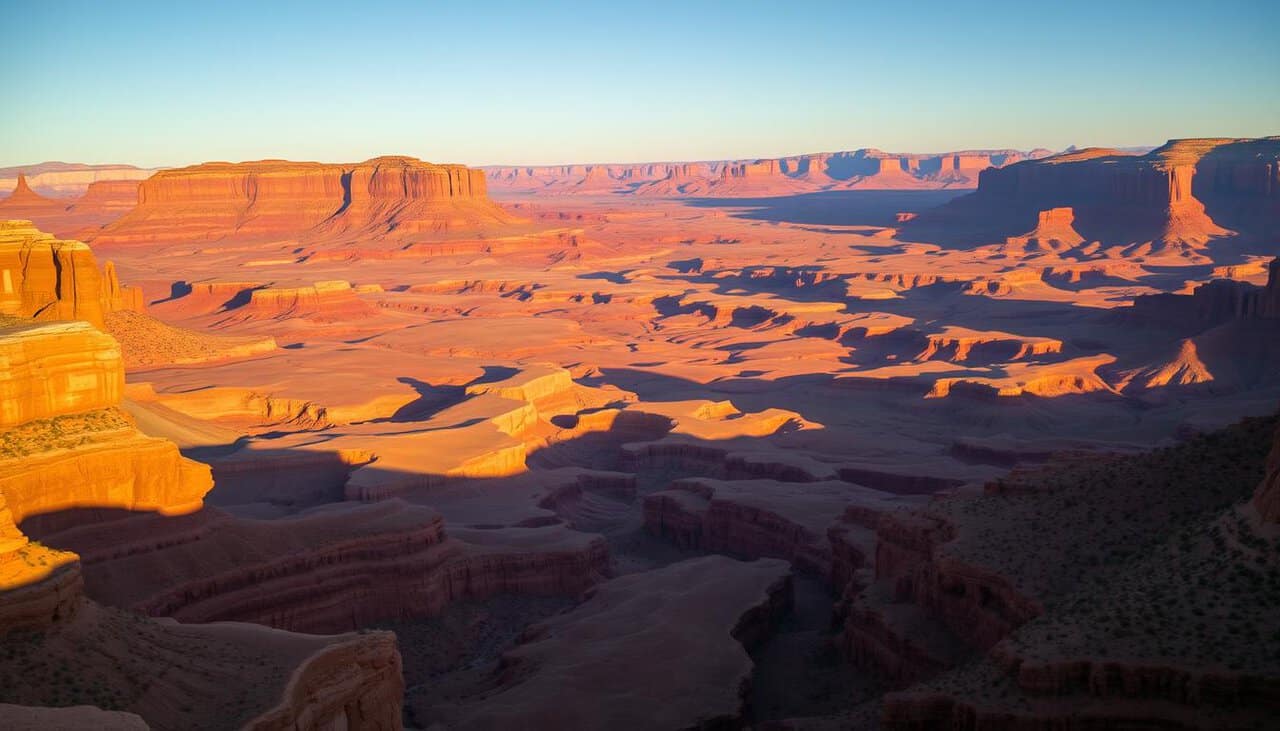
Have you ever thought about what’s hidden behind the breathtaking views of Canyonlands National Park? It’s the biggest national park in Utah and not many people go there. It’s full of amazing geological shapes, stunning views, and deep history. This guide shows you how to plan your trip. You’ll learn about its four areas: Island in the Sky, The Needles, The Maze, and Horseshoe Canyon. You’ll know the best times to go and the must-see spots. This guide will make your trip to this fascinating place even better.
Key Takeaways
- Canyonlands National Park comprises three distinct sections: Island in the Sky, The Needles, and The Maze.
- Island in the Sky is known for its accessibility and popularity among visitors.
- The Needles district offers a beautiful but less trafficked experience.
- The Maze district requires a high-clearance, 4WD vehicle to access.
- Spring and fall are ideal times to visit due to mild temperatures and lower crowds.
- Camping options are limited to campgrounds within and around the park.
- Guided hiking and backpacking tours can enhance your experience with expert knowledge.
Overview of Canyonlands National Park
Canyonlands National Park is in Utah’s heart, showing off unique Canyonlands features. It covers over 337,598 acres. Deep canyons, rock formations, and diverse ecosystems await visitors. They offer breathtaking views and invite you on an adventure.
What Makes Canyonlands Unique?
Canyonlands is a hidden gem next to more famous parks. It has four areas: Island in the Sky, The Needles, The Maze, and the Colorado River. Each area shows off the park’s geological wonders and wildlife in its own way. Island in the Sky sits at 6,000 feet, offering amazing broad views. The Maze is remote and tough, needing at least three days to explore properly. These places offer both fun adventures and peaceful moments.
Key Facts and Figures
Here are some key facts about Canyonlands National Park:
| Attribute | Details |
|---|---|
| Establishment Date | September 12, 1964 |
| Size | 337,598 acres (527 square miles) |
| Annual Visitors | Approximately 1 million |
| Average Rainfall | 8 inches |
| Elevation of Island in the Sky | 6,000 feet |
| Distance from Moab to Island in the Sky | 35 miles |
| Wildlife | Deer, foxes, bighorn sheep, coyotes, lizards |
These facts show the park’s size and importance as an outdoor spot. It boasts high rock formations and a variety of animals. Canyonlands National Park is a unique adventure and a must-see for those who love nature.
Best Times to Visit
Planning when to go to Canyonlands National Park can make your trip much better. This is because the park has a special climate and different things to see in each season. By learning about these, you can pick the perfect time for your adventure in Canyonlands.
Seasonal Highlights
The best times to visit Canyonlands are during spring and fall. These seasons, specifically from late March to early June and from mid-September to October, are the most popular. They offer excellent weather, stunning views, and memorable experiences. You’ll see the park filled with beautiful flowers and seasonal waterfalls during these times.
- Spring (March – May): The park comes alive with wildflowers and bright landscapes.
- Fall (September – November): Enjoy cooler weather and the soft light, perfect for taking photos.
- Winter (December – February): It’s quiet, with snowy scenes, but some areas might be hard to get to.
- Summer (June – August): It can get very hot, over 100°F, so start your activities early in the day.
Weather Considerations
It’s important to know about the weather at Canyonlands before your visit. The best time to go has daytime temperatures from 60°F to 80°F. At night, it cools down to between 40°F and 50°F. Weather changes throughout the year can affect what you can do and see in the park.
| Month | Avg. High (°F) | Avg. Low (°F) | Precipitation (inches) |
|---|---|---|---|
| January | 44 | 22 | 0.49 |
| February | 52 | 28 | 0.45 |
| March | 64 | 35 | 0.71 |
| April | 71 | 42 | 0.73 |
| May | 82 | 51 | 0.79 |
| June | 93 | 60 | 0.44 |
| July | 100 | 67 | 1.02 |
| August | 97 | 66 | 1.00 |
| September | 88 | 55 | 0.93 |
| October | 74 | 42 | 1.21 |
| November | 56 | 30 | 0.73 |
| December | 45 | 23 | 0.63 |
Plan carefully to enjoy Canyonlands fully. Whether the spring flowers or the cool autumn air draw you, knowing the best time to visit can make your trip unforgettable.
Getting There
Starting your adventure means figuring out how to get to Canyonlands. It’s reachable from major airports that are your gateway to its beauty. The nearest airports are Salt Lake City International and Grand Junction Regional, 230 miles and 100 miles away, respectively. Most people drive to Moab, Utah, as it’s a great spot to stay while exploring Canyonlands and Arches National Park.
Major Airports and Transportation Options
Considering how to get to Canyonlands, you’ll likely need to rent a car. There’s no public transportation to the park, so having a car is key to explore. From Moab, getting to different parts of the park is easy. For example, Islands in the Sky is a 30-minute drive, but the Needles District is about an hour away.
Navigating to the Park
Your trip might include beautiful drives through Utah. The ride from Arches National Park to Canyonlands is only 26 miles and takes half an hour. You should also plan to visit trails like the 2-mile round trip Grand View Point Overlook Trail for amazing views. Or the Mesa Arch Trail, a short 0.5-mile hike that’s not too hard.
When planning, remember that permits are needed for day and overnight trips, especially on busy trails. Knowing how far things are and the rules makes your trip better, making sure you enjoy Canyonlands to the fullest.
Park Entrances and Access Points
Canyonlands National Park has three main access points. Each one offers unique experiences and amazing views. Learning about the entrances and access points at Canyonlands will make your visit better. The Island in the Sky District is the most visited. It’s a scenic drive from Moab. Here, you’ll find amenities, viewpoints, and trails that showcase the beautiful landscapes. The Needles District offers colorful rock formations and plenty of trails. The Maze District is for those ready for adventure with a high-clearance vehicle. It’s remote and rugged.
Island in the Sky District
The Island in the Sky is easy to reach with a 30-mile drive from Moab. You’ll see the entrance sign 18.9 miles from US-191 via UT-313. A bit further, 1.1 miles, and you’re at the entrance station. Here, you can pay a $30 fee for vehicles, good for seven days.
Inside, you’ll find lots to see and do:
- 1.3 miles to Shafer Trail Road — a steep, narrow four-wheel drive road
- 2.3 miles to the Island in the Sky Visitor Center, offering water and restrooms
- 2.8 miles to Shafer Canyon Viewpoint where parking is available
- 4.3 miles to Lathrop Trailhead for hiking
- 13.7 miles to White Rim Overlook Trailhead for amazing views
The Needles District
The Needles District is about 50 miles south from Moab. This area is famous for its varied landscapes. It’s easy to get to from a visitor center one mile from the entrance. The center provides restrooms and water for your adventures. In the Needles District, you’ll be excited by the colorful rocks and unique trails.
Remember, the camping spots in the Needles fill up fast, especially from late March through June and early September to mid-October. So, make plans early.
The Maze District
The Maze District is the most remote but offers stunning landscapes. You’ll need to drive 74 miles on paved roads and 46 miles on dirt roads to reach Hans Flat Ranger Station. There’s no fee to enter, which is great for those seeking adventure.
Since there’s no drinkable water, make sure to come prepared. This area offers solitude and beautiful scenery for those looking for a real wilderness experience.
Entrance Fees and Permits
When you go to Canyonlands National Park, knowing about entry costs and permits is key. The entrance fees change based on how you travel and the size of your group. Although a reservation is not needed to get into the park, you might need a permit for some activities and areas.
Overview of Costs
The table below shows the fees for entering Canyonlands and for different permits:
| Type | Fee | Details |
|---|---|---|
| Vehicle Entrance Fee | $30 | Valid for seven days; covers up to 15 people. |
| Motorcycle Entrance Fee | $25 | Valid for seven days. |
| Individual Entrance Fee (Bicycle/Hiking) | $15 | Valid for seven days. |
| America the Beautiful Pass | $80 | Gives access to all federal recreation lands for one year. |
| Nightly Camping Fee (Island in the Sky) | $15 | Per night per campsite. |
| Nightly Camping Fee (The Needles) | $20 | Per night per campsite. |
Reservation Information
Even though you don’t need reservations to get into the park, getting a permit is important for activities in Canyonlands like camping in the backcountry and driving in specific areas. You can book day-use permits at 8 am mountain time, the day before your visit. This makes sure your trip goes smoothly. Permits for staying overnight in the backcountry are available four months prior to each season, with reservation dates set throughout the year.
Also, remember that all river trips and pack-and-saddle stock activities need a river permit. If you’re part of a big group or planning a special event, you might need a special use permit, too. Always check the latest reservation info for Canyonlands to make sure your trip follows all the rules.
Must-See Attractions in Canyonlands
Canyonlands National Park is filled with amazing landscapes and geological wonders. It attracts visitors from everywhere. There are several key spots in Canyonlands that you shouldn’t miss. They offer unique experiences and show off the park’s natural beauty and geological past.
Mesa Arch
Mesa Arch is a famous landmark in the park, stretching over 90 feet. It gives an amazing view at sunrise. The rising sun lights up the arch and the vast canyon below. Photographers love this spot for capturing the sunrise. It creates a perfect setting for breathtaking photos.
The Green River Overlook
This viewpoint offers a wide view of the Green River winding through the canyons. It shows the sharp difference between the green riverbed and the dry, rough terrain around it. It’s great for photos and thinking. Make sure to spend some time here to really enjoy the view.
Upheaval Dome
Upheaval Dome is either from a meteorite or an ancient salt dome. This special spot shows how Canyonlands was formed over millions of years. Walking up to the rim gives you amazing views. It’s a must-visit for those into geology and earth sciences.
| Attraction | Key Features | Best Time to Visit |
|---|---|---|
| Mesa Arch | Breathtaking sunrise views, iconic photography spot | Early morning |
| Green River Overlook | Panoramic vistas, contrasting landscapes | Sunrise and sunset |
| Upheaval Dome | Unique geological formation, hiking opportunities | Spring and fall for mild weather |
Hiking Trails for Every Skill Level
Canyonlands National Park is full of hiking trails for everyone. It has amazing views and different kinds of paths. Whether you want an easy walk or a tough hike, you’ll find a trail that suits you.
Easy Trails for Families
Canyonlands has many easy trails great for families or those who prefer gentle walks. Some top family-friendly trails include:
- Mesa Arch Trail: A short 0.7-mile walk with only 88 feet of climbing. It takes under 30 minutes.
- White Rim Overlook: A 1.8-mile trail with 160 feet of climbing, perfect for a relaxing 1-2 hour walk.
- Grand View Point: This smooth, paved 1.8-mile path takes you to stunning views in 1-2 hours.
- Gooseneck Overlook: A simple 0.6-mile stroll that’s great for families with little kids.
Moderate Hiking Options
For a bit more challenge, Canyonlands has moderate trails too. These are good picks:
- Upheaval Dome Overlook: A 1.3-mile hike gaining 226 feet in elevation. Enjoy beautiful views in 1-2 hours.
- Aztec Butte: A 1.6-mile walk where you climb 249 feet. Perfect for a scenic 1-2 hour hike.
Challenging Treks
For those seeking adventure, Canyonlands has tough hikes with beautiful scenery. Here are some hard trails:
- Cresler Park Loop: A long 10.2-mile hike climbing 1,749 feet. It’s for serious hikers, taking up to 5 hours.
- Druid Arch: An 8.8-mile trail gaining 540 feet in elevation. It offers incredible views in 3.5-5 hours.
Scenic Drives in Canyonlands
Canyonlands National Park offers breathtaking views and unique formations through its scenic drives. The Island in the Sky and Needles drives let you enjoy stunning landscapes without much walking. These routes are perfect for outdoor adventure seekers who love comfort.
Island in the Sky Scenic Drive
The Island in the Sky drive is a 34-mile loop offering mesmerizing vistas atop a plateau. It has many overlooks and trailheads with panoramic views. Along the way, you can stop to admire the vast landscape and rugged canyons.
This drive highlights Canyonlands’ beauty, making it great for families.
The Needles Scenic Drive
The Needles drive is a 20-mile journey through colorful, unique formations in the Needles District. Unlike Island in the Sky, it offers close-up views of vibrant rocks and desert scenes. It guides you on narrow, winding roads.
This route is perfect for those wanting to see Canyonlands’ fascinating lands by car.
| Drive | Distance | Key Features | Best For |
|---|---|---|---|
| Island in the Sky Drive | 34 miles | Panoramic overlooks, accessible trailheads | Families, casual visitors |
| The Needles Drive | 20 miles | Colorful rock formations, narrow roads | Nature lovers, scenic photography |
Choosing either the Island in the Sky or the Needles drive offers spectacular Canyonlands views. Each trip gives a unique and beautiful look at the park’s terrain.
Wildlife Viewing Opportunities
Canyonlands National Park is a top spot for seeing wildlife in the southwest U.S. It’s home to many species, making it a great place for nature lovers. Knowing when to visit can help you see these amazing animals.
Species to Look For
Look out for 273 types of birds, like golden eagles and peregrine falcons. Birdwatchers should visit during migration for the best view. You might also see mule deer and desert bighorn sheep, as well as black-tailed jackrabbits.
Reptiles, including collared lizards and gopher snakes, bath in the sun when it’s warm. Beware of the midget-faded rattlesnake, though, it’s venomous. The park’s animals and birds make it a rich place.
Best Times for Wildlife Watching
Early mornings and late afternoons are prime times for wildlife spotting in Canyonlands. These “golden hours” are when animals are most active. Season changes also affect when and where you can see wildlife, like black bears in late summer.
In summer, lizards are more active, and mammals might move to cooler places. Different seasons mean different wildlife experiences in Canyonlands.

| Wildlife Species | Typical Viewing Months | Habitat |
|---|---|---|
| Desert Bighorn Sheep | Year-round | Rocky and steep terrains |
| Mule Deer | Year-round | Open and wooded areas |
| Black Bears | Late August – September | Higher elevations |
| Golden Eagles | Year-round | Skies and cliffs |
| Peregrine Falcons | Year-round | Rock faces and cliffs |
| Collared Lizards | Summer | Sunny, rocky areas |
Camping and Lodging Options
Exploring Canyonlands National Park offers lots of camping choices for everyone. You can choose an adventurous spot or a comfy one. The campgrounds inside the park let you stay close to nature with important amenities nearby.
Campgrounds Inside the Park
Willow Flat Campground in the Island in the Sky district and Needles Campground in the Needles District are main spots. These areas have sites for tents and RVs, available on a first-come, first-served basis. You can book places like White Crack Campground up to a year in advance. For overnight trips in the backcountry, remember to get permits well ahead, sometimes six months early.
Nearby Lodging Alternatives
Not into camping? Moab has lots of lodging close to Canyonlands. You’ll find hotels, motels, and vacation rentals to match what you like and can afford. In Monticello, there are good places to stay if you’re visiting the Needles District. These options offer comfort and convenience after a day filled with adventure.
Nearby Attractions and Activities
Canyonlands National Park is already amazing with its stunning landscapes and adventures. But, nearby attractions add even more to your experience. Places like Arches National Park and Dead Horse Point State Park make your adventure richer.
Arches National Park
Arches National Park is close to Canyonlands. It wows visitors with its iconic sandstone arches and amazing rock formations. The park has activities for all outdoor fans, like beautiful views and tough hikes. Some famous trails are the Delicate Arch and Landscape Arch trails, showing off the park’s cool geological features.
Dead Horse Point State Park
Just 14 miles from Canyonlands, Dead Horse Point State Park offers stunning views of the Colorado River. The park has many outdoor activities, like hiking, biking, and photography. Visitors love the gorgeous sunsets, making it a great place for photos. Dead Horse Point has easy to tough trails for everyone.
Visiting Arches National Park or Dead Horse Point State Park makes your Canyonlands trip better. You get to see diverse landscapes and have lots of adventures nearby.
Safety Tips for Your Visit
When you visit Canyonlands National Park, it’s crucial to be well-prepared for safety. It’s important to stay hydrated in the desert and move through the park carefully. Having the right info helps you enjoy your visit more and stay safe. Here are the top safety tips for your adventure.
Staying Hydrated in the Desert
Staying hydrated is key in Canyonlands. You should drink at least a gallon (4 liters) of water daily, especially in the summer. Water stations are at the Island in the Sky and The Needles Visitor Centers all year. The Needles Campground has water from spring to fall. Be sure to watch for signs of dehydration and heat exhaustion.
Navigating Canyonlands Safely
Navigating Canyonlands safely means knowing the park well, especially The Maze District. Use high-clearance vehicles for tough terrains. Always have maps and proper gear with you. Avoid getting separated from your group to prevent getting lost. Be ready for sudden weather changes, including storms and flash floods. Cell service is spotty, so plan your routes in advance.
For more detailed safety tips Canyonlands, check out reliable sources before your trip. This will ensure you have a great and safe time in this amazing park.
Photography Tips for Stunning Shots
Canyonlands National Park is a photographer’s dream with ever-changing landscapes. The best shots come during the sunrise and sunset golden hours. Mesa Arch and Grand View Point are top spots for amazing photos. To avoid the crowds and savor the park’s tranquility, arrive early or linger after sunset.
Best Views and Locations
Iconic spots like Mesa Arch and Upheaval Dome are perfect for photos. The short hike to Mesa Arch rewards you with incredible views at sunrise. Upheaval Dome offers unique angles over its vast area after a 1.7-mile hike. Places like Green River Overlook offer different views, key for a photography adventure.
Timing for Sunrise and Sunset
The right timing is key for Canyonlands photography. Best light happens early morning or late afternoon. After 2 p.m. at Grand View Point, you’ll get great light with fewer shadows. Filters can improve colors and reduce glare. Quick weather changes mean adjusting your settings fast. Keep a large memory card ready for all the shots you’ll take.
Plan your visit to dodge busy times, like when Mesa Arch’s parking fills up. Tripods make a huge difference for stable photos, and they’re not expensive. For expert advice on national park photography, check out this Canyonlands photography guide.
To really capture Canyonlands, know the beauty and have the right gear. Dive into the scene, try different angles, and use light to make your photos stand out. This park offers endless opportunities for breathtaking photography.
Park Regulations and Guidelines
Knowing the Canyonlands park rules helps protect its beauty. It also makes your visit safe. By following these rules, we can enjoy Canyonlands without harming it. These include not leaving trash behind and following safety guidelines.
Leave No Trace Principles
The Leave No Trace principles guide us in enjoying nature responsibly. Here’s what you need to do:
- Dispose of waste properly: Carry out all trash and leftover food.
- Respect wildlife: Observe animals from a distance and never feed them.
- Stay on designated trails: This minimizes environmental impact and protects vulnerable areas.
- Leave natural and cultural features undisturbed: Do not remove rocks, plants, or artifacts that you may find.
- Camp responsibly: Use existing campsites when possible to minimize your impact.
Safety Rules to Follow
For safety and to keep the park pristine, follow these rules:
| Rule | Description |
|---|---|
| Fires | Permitted only at designated campgrounds and along rivers. Fires are prohibited in backcountry areas. |
| Campgrounds | Camping is not allowed within 300 feet of archaeological or historical sites. |
| Firearms | Prohibited in the park, except for those who hold valid permits under state laws. |
| Vehicles | Must remain on designated roads, operated by licensed drivers only. |
| Pets | Allowed only in developed campgrounds and paved scenic drives, kept on a leash at all times. |
| Waste disposal | River runners must carry out human waste and use portable toilet systems at designated campsites. |
| Professional Assistance | Rangers spend significant time removing graffiti; respect the natural environment. |
Planning Your Itinerary
When you visit Canyonlands National Park, plan to stay two days. You’ll fully enjoy the park’s beauty. Start with a day in the Island in the Sky district for amazing views and walks. Then spend a day in the Needles district, where the rock formations and paths amaze everyone. This plan lets you see the park’s top sights.
Sample Itinerary for Your Visit
Begin your Canyonlands trip with a sunrise at Mesa Arch. It’s a magical start. Follow this with a short 0.5-mile-loop hike. Spend your afternoon at Grand View Point and Green River Overlook for more beauty.
For those who seek adventure, try the challenging Syncline Loop. Or, drive the scenic White Rim Road with a permit. In the Needles district, explore trails and the Big Spring Canyon Overlook. With extra time, the Elephant Hill offers more views.
Must-Do Activities and Experiences
Hiking is a top activity in Canyonlands, along with watching wildlife. Don’t miss the park’s breathtaking sunrises and sunsets. Evening photography is best at the Colorado River Overlook or Shafer Trail. These spots are perfect for capturing the golden hour.
For a complete experience, consider camping. It lets you hike more and truly feel the wilderness. Camping provides an authentic way to enjoy Canyonlands.
FAQ
What are the main attractions in Canyonlands National Park?
Must-see spots include Mesa Arch, the Green River Overlook, and Upheaval Dome. Each offers amazing views and shows the park’s beauty.
When is the best time to go hiking in Canyonlands?
Hiking is best in spring (March to May) and fall (September to November). Milder temperatures make it perfect. Summer hikes are cooler in early mornings.
Are there any guided tours available in Canyonlands National Park?
Yes, many tour companies have guided tours. They offer hiking, 4WD adventures, and photography tours. This lets you learn more about the park’s geology and history.
What wildlife can I expect to see while visiting Canyonlands?
You might see mule deer, bighorn sheep, coyotes, and many birds. Look for them early in the morning or late in the afternoon.
Can I camp inside Canyonlands National Park?
Yes, there are two main campgrounds: Willow Flat in the Island in the Sky and the Needles Campground. They don’t require reservations and welcome tents and RVs.
What are some tips for photography in Canyonlands?
For great photos, shoot during sunrise and sunset’s golden hours. Know the scenic spots and use a polarizing filter for better colors.
Do I need a permit for backcountry activities?
Yes, permits are a must for camping and some backcountry activities. This includes hiking, rafting, and driving on certain roads.
What types of hiking trails are available in Canyonlands?
The park has trails for all, from easy walks like Mesa Arch Trail to tough hikes like Druid Arch Trail. It’s great for both families and experienced hikers.
How much does it cost to enter Canyonlands National Park?
Entry costs per vehicle for seven days. Options for motorcycles and pedestrians exist. An annual pass is .
What should I pack for my visit to Canyonlands?
Pack a lot of water (a gallon per person each day), sunscreen, and sturdy shoes. Also, bring clothing for weather changes, a map, and safety gear.