
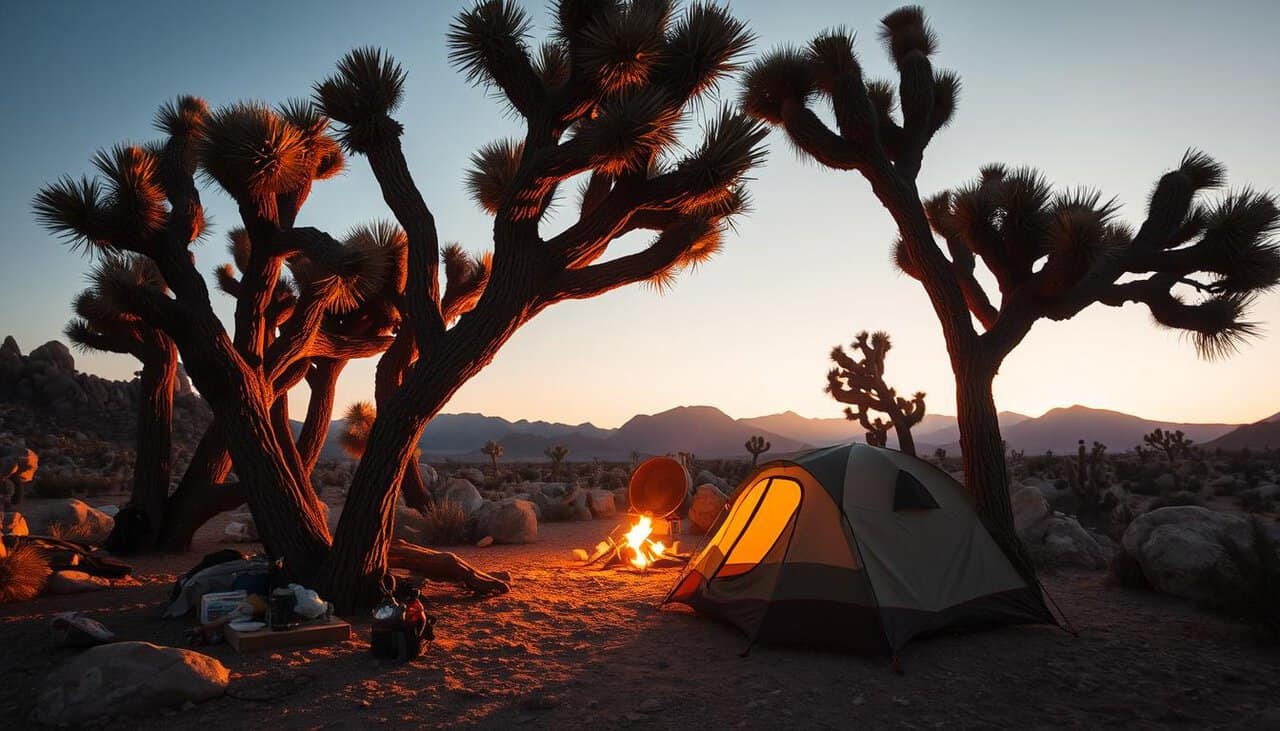
Imagine waking up to a surreal desert landscape, surrounded by towering Joshua trees and vast expanses of nothingness. Joshua Tree National Park is a unique camping destination where two distinct desert ecosystems meet, creating a fascinating landscape of rock formations and diverse wildlife.
Camping is one of the best ways to experience the park’s beauty, allowing visitors to witness stunning sunrises, sunsets, and night skies. With over 500 campsites available, Joshua Tree National Park offers various camping options, from primitive sites to those with amenities. Whether you’re looking for a serene escape or an adventure-filled vacation, Joshua Tree has something for everyone.
Key Takeaways
- Joshua Tree National Park offers a unique camping experience amidst its surreal desert landscape.
- The park has over 500 campsites, with various options for different needs.
- Camping allows visitors to witness stunning sunrises, sunsets, and night skies.
- The park is designated as an International Dark Sky Park, making it perfect for stargazing.
- Campgrounds like Hidden Valley, Cottonwood, and Jumbo Rocks provide opportunities for both tent and RV camping.
Camping Options in Joshua Tree National Park
With its eight campgrounds and three group camps, Joshua Tree National Park provides a variety of camping experiences for visitors. The park’s diverse landscapes, from iconic Joshua trees to massive boulder formations, offer a unique backdrop for camping adventures.
Overview of the Park’s Campgrounds
Joshua Tree National Park has a total of eight campgrounds, each with its own character and amenities. Most of these campgrounds are primitive, with basic amenities such as pit toilets, fire rings, and picnic tables, but no running water or RV hookups. The campgrounds are divided between reservation-required and first-come, first-served sites, catering to different planning preferences.
The layout of the campgrounds is spread throughout the park, offering access to various attractions and hiking trails. This dispersal allows visitors to choose a campground that best suits their itinerary and preferences.
What Makes Joshua Tree Camping Unique
Camping in Joshua Tree is a unique experience due to the park’s otherworldly landscape. The desert environment, dotted with Joshua trees and massive rock formations, creates a surreal atmosphere. Additionally, the park’s remote location means that it has some of the darkest night skies in Southern California, making it an ideal spot for stargazing.
The popularity of camping in Joshua Tree National Park, especially during peak season from October to May, necessitates advance planning. Visitors are required to camp only in designated campgrounds, a rule that helps preserve the desert ecosystem. This combination of natural beauty and regulated camping practices makes for a memorable and responsible camping experience.
Can you camp at the Joshua Tree? Understanding Your Options
If you’re wondering whether you can camp at Joshua Tree, the answer is a resounding yes, with multiple options to suit your needs. Joshua Tree National Park offers a diverse range of camping experiences, from reservation-based campgrounds to first-come, first-served sites, group camping areas, and wilderness backpacking opportunities.
Types of Camping Available
The park caters to different camping preferences with its various camping options. You can choose from reservation campgrounds like Black Rock, Indian Cove, Jumbo Rocks, Ryan, and Cottonwood, which offer a total of around 500 campsites, with the majority available by reservation through recreation.gov. For those who prefer a more spontaneous trip, there are first-come, first-served campgrounds such as Hidden Valley, Belle, and White Tank. Additionally, group sites are available for larger parties, and wilderness backpacking is an option for the more adventurous.
Best Times of Year for Camping
The best time to camp at Joshua Tree depends on your preference for temperature and crowd. Spring (March-May) and fall (October-November) are considered the best seasons, offering pleasant temperatures. Summer can be extremely hot, while winter nights can drop below freezing. It’s essential to plan ahead, especially during peak season (November-May), when campgrounds fill up quickly, particularly on weekends and holidays.
| Season | Weather Conditions | Camping Tips |
|---|---|---|
| Spring (March-May) | Mild temperatures | Book campsites in advance |
| Summer | Extremely hot | Bring plenty of water and sun protection |
| Fall (October-November) | Pleasant temperatures | Enjoy the fall foliage |
| Winter | Cold nights | Bring warm clothing and gear |

To ensure a smooth camping experience, it’s highly recommended to book your campsite before entering the park, as cell service is unreliable within Joshua Tree National Park.
Reservation Campgrounds: Planning Ahead
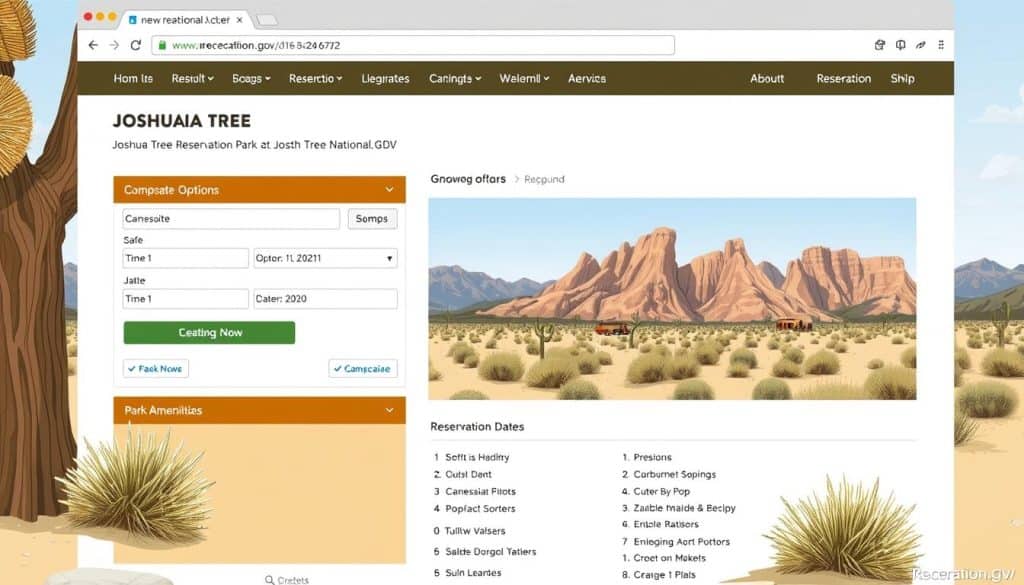
Securing a spot at one of Joshua Tree’s beautiful campgrounds starts with understanding the reservation system. Reservations for Joshua Tree National Park campgrounds can be made up to six months in advance through recreation.gov, and they’re essential during peak season to ensure you get a spot.
Jumbo Rocks Campground
Jumbo Rocks Campground is the largest in Joshua Tree National Park, offering 124 campsites at an elevation of 4,400 feet. The cost is $20 per night, making it an affordable option for campers. This campground is particularly suitable for medium to large-sized RVs and is known for its proximity to iconic landmarks like Skull Rock.
Black Rock Campground
Black Rock Campground features 99 campsites at an elevation of 4,000 feet and costs $25 per night. It’s one of the few campgrounds in Joshua Tree that offers running water and flush toilets, along with amenities like tables, fire grates, and a dump station. Its location outside the main park boundary makes it a convenient “first night” option for campers.
Indian Cove Campground
Indian Cove Campground is nestled among gorgeous boulders and offers 101 campsites at an elevation of 3,000 feet. The nightly fee is $25. One of the unique aspects of Indian Cove is its separate entrance, which means you don’t need to pay the main park entrance fee to access it.
Ryan Campground
Ryan Campground is a smaller, more intimate option with 31 campsites at an elevation of 4,300 feet. It’s priced at $20 per night and is centrally located near popular hiking trails, including the trail to Ryan Mountain. This makes it an ideal choice for those looking to explore the park’s hiking opportunities.
First-Come, First-Served Camping: Tips for Success
Securing a campsite at Joshua Tree’s first-come, first-served campgrounds requires strategy and flexibility. To increase your chances of getting a site, consider arriving mid-week and getting to the campground between 9 am and noon when other campers are checking out.
Here’s how the process works: you find an open site, set up your camp, and then immediately register and pay at an entrance station. It’s essential to have a backup plan in case your preferred campground is full.
Hidden Valley Campground
Hidden Valley Campground is a favorite among rock climbers, with 44 campsites at an elevation of 4,200 feet. The campground operates year-round and costs $15 per night. Amenities include pit toilets, tables, and fire grates, but there is no water available. It’s a great spot for those who love climbing, with numerous routes within walking distance.

White Tank Campground
White Tank Campground is much smaller, with only 15 campsites, and is closed during the summer months. It’s a favorite among star gazers and astrophotographers due to its dark skies. The fee is $15 per night, and like other campgrounds, it has pit toilets, tables, and fire grates, but no water. If you’re looking for a quiet, secluded spot, White Tank is worth considering.
Belle Campground
Belle Campground offers 18 campsites and is also closed during the summer. It’s quieter and more secluded than some of the larger campgrounds, making it ideal for those seeking a more mellow camping experience. The nightly fee is $15, and amenities are similar to the other campgrounds, with pit toilets, tables, and fire grates. It’s perfect for campers looking for a peaceful retreat.
For all first-come, first-served campgrounds, it’s crucial to be prepared and flexible. By understanding the process and having backup plans, you can enjoy a successful and stress-free camping experience at Joshua Tree.
Group Camping Sites for Larger Parties
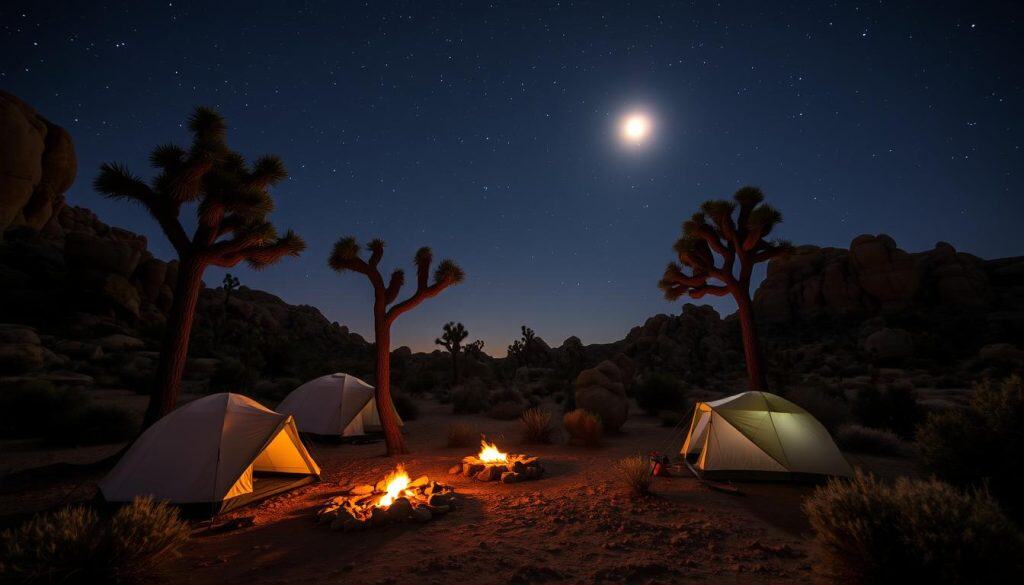
If you’re planning a trip to Joshua Tree with a large group, you’ll be happy to know that the park offers several dedicated group camping areas. These sites are perfect for family reunions, hiking clubs, or birthday celebrations, accommodating groups of 10 to 60 people.
Reservations for these group sites can be made up to 6 months in advance through recreation.gov. The park offers three main group camping areas: Cottonwood Group Sites, Indian Cove Group Sites, and Sheep Pass Group Sites.
Cottonwood Group Sites
Cottonwood Group Sites are located near the south entrance of the park at a lower elevation. These sites are for tents only and offer basic amenities like picnic tables, fire rings, and pit toilets. Note that there is no potable water available at these sites.
Indian Cove Group Sites
Indian Cove Group Sites can accommodate small RVs or trailers up to 25 feet in length. Located in a beautiful area with impressive rock formations, these sites offer the same basic amenities as Cottonwood. Again, be sure to bring your own water as none is provided.
Sheep Pass Group Sites
Sheep Pass Group Sites are centrally located within the park and are ideal for those who want to be close to popular hiking trails. Like Cottonwood, Sheep Pass is a tent-only campground with picnic tables, fire rings, and pit toilets. Remember to pack your own water and supplies.
All group sites require reservations in advance, so be sure to plan ahead to secure your spot.
Essential Camping Regulations and Guidelines
Before setting up camp in Joshua Tree, familiarize yourself with the park’s essential camping regulations and guidelines. Understanding and following these rules is crucial for ensuring a safe and enjoyable camping experience, as well as preserving the delicate desert ecosystem of Joshua Tree National Park.
Campfire Rules and Restrictions
Campfires are a beloved part of the camping experience, but they must be used responsibly. In Joshua Tree National Park, campfires are allowed in designated fire rings within campsites. However, during periods of high fire danger, typically in the summer or fall, fire bans may be implemented. When you do have a campfire, make sure to fully extinguish it before leaving it unattended: dump water on it, stir the ashes, and check for heat. This not only prevents wildfires but also ensures the safety of other campers and the park’s wildlife.
Food Storage and Wildlife Protection
Protecting the park’s wildlife is a top priority, and proper food storage is key. Campers are required to store all food and trash in secure containers or their vehicles. Leaving food or trash out can attract rodents and ravens, habituating them to human food and potentially harming both humans and animals. By storing your food properly, you’re helping to maintain the natural balance of the ecosystem. For more information on camping rules, you can visit national park camping rules.
Quiet Hours and Campground Etiquette
Respect for fellow campers is essential in maintaining a positive camping environment. Quiet hours are typically observed from 10 pm to 6 am. During this time, keep noise to a minimum to allow others to rest. Additionally, be mindful of your campsite’s surroundings and keep it clean by disposing of waste properly. Following these guidelines helps ensure that all campers have a pleasant stay.
| Regulation | Description |
|---|---|
| Campfire Restrictions | Fires allowed only in designated rings; may be banned during high fire danger |
| Food Storage | Store food and trash in secure containers or vehicles |
| Quiet Hours | Typically 10 pm to 6 am; minimize noise during this time |
Seasonal Camping Considerations
To make the most of your camping trip in Joshua Tree, understanding the seasonal considerations is crucial. Experienced campers know that the park offers a unique experience throughout the year, but being prepared for the dramatically different conditions is key to a safe and enjoyable trip.
Summer Camping: Dealing with Heat
Summer in Joshua Tree National Park can be brutally hot, with daytime temperatures often exceeding 100°F. To cope with the heat, campers should bring abundant water (at least 1 gallon per person per day) and shade structures. Be aware of the risk of sudden thunderstorms and flash floods during this time.
Winter Camping: Preparing for Cold Nights
Winters in Joshua Tree can be bitter cold, especially at night, with temperatures often below freezing. Campers should be prepared with proper cold-weather gear, including warm sleeping bags and insulated pads. Higher elevation campgrounds like Black Rock can experience snow, making road conditions treacherous.
Peak Season Strategies
During the spring and fall, Joshua Tree National Park experiences peak camping season due to the pleasant temperatures. Campgrounds are at their busiest, making advance reservations or weekday visits essential. Understanding how elevation affects temperatures throughout the park can also help campers choose the best campsite for their needs.
Checking the weather forecast before your trip and being prepared for sudden changes in desert conditions is vital. Knowing your personal limits when it comes to extreme temperatures will ensure a safe and enjoyable camping experience in Joshua Tree National Park.
- Bring appropriate gear for the season, whether it’s shade for summer or warm clothing for winter.
- Plan ahead for peak season by making reservations or visiting during the week.
- Be aware of the elevation of your campsite and how it may affect the temperature.
RV Camping in Joshua Tree

For those considering RV camping in Joshua Tree, understanding the park’s rules and facilities is essential. RV camping in Joshua Tree National Park can be a fantastic experience, with its unique landscapes and camping options.
Size Restrictions and Campground Suitability
When planning your RV trip to Joshua Tree, it’s crucial to know the size restrictions at the various campgrounds. White Tank and Hidden Valley campgrounds have a length limit of 25 feet combined for RVs and trailers. In contrast, Belle campground can accommodate RVs up to 35 feet, although most sites are suitable for RVs between 25-30 feet.
Checking the size restrictions before making a reservation is vital to ensure that your RV fits within the campground’s limits. You can find the most up-to-date information on recreation.gov.
Dump Stations and Water Fill Locations
Since there are no hookups available in Joshua Tree National Park’s campgrounds, RV campers need to be prepared for “dry camping” or “boondocking.” To manage your resources effectively, it’s good to know the locations of dump stations and water fill stations. Dump stations are available at Black Rock and Cottonwood campgrounds, with a $5 fee for use. Water fill stations can be found at Black Rock campground near campsite 6 and at Cottonwood between the visitor center and the campground.
To make the most of your RV camping experience, arrive with full water tanks, empty waste tanks, charged batteries, and sufficient propane. Conserving resources is key to a comfortable dry camping experience.
Additionally, be aware of the generator use regulations: generators are only permitted to operate between 7-9 am, noon-2 pm, and 5-7 pm to minimize noise pollution.
Camping Outside the Park: Alternatives When the Park is Full
When Joshua Tree National Park’s campgrounds are full, there are still plenty of alternative camping options to consider. If you’re planning a trip during peak season, it’s essential to have a backup plan.
BLM Land Camping Options
The Bureau of Land Management (BLM) land surrounding Joshua Tree National Park offers free dispersed camping with few amenities. This option provides greater flexibility in terms of availability and stay duration. You can enjoy the serene desert landscapes without the crowds.
Private Campgrounds Near Joshua Tree
For those seeking more amenities, private campgrounds like Joshua Tree Lake RV & Campground and JT RV and Campground are great alternatives. Located in the town of Joshua Tree, these campgrounds offer a range of services at a higher price point.
RV Parks with Full Hookups
RV parks in nearby communities such as Twentynine Palms, Yucca Valley, and Desert Hot Springs offer full hookups. Twentynine Palms RV Resort and Palm Springs/Joshua Tree KOA are popular choices. Remember, sleeping in your vehicle along park roads or at pullouts is prohibited and can result in citations.
It’s crucial to plan ahead and consider these alternatives to ensure a smooth camping experience.
Wilderness Backpacking for the Adventurous
For those seeking adventure beyond developed campgrounds, Joshua Tree National Park offers wilderness backpacking opportunities. This experience allows you to immerse yourself in the park’s unique desert landscape, far from the crowds.
Permit Requirements and Regulations
To backpack in Joshua Tree’s wilderness areas, you’ll need to obtain a free backcountry permit. These permits are self-issued at 13 backcountry board locations throughout the park. To comply with park regulations, park your vehicle in one of the designated backcountry parking lots, fill out the permit, and deposit it in the metal box. Remember to display the yellow permit on your backpack at all times within the park.
The park has specific rules to protect both you and the environment. For instance, dogs are not allowed, you must hike at least a mile from the road, and your campsite must be 500 feet away from trails or water sources. It’s also recommended to use established camping areas when possible.
Safety Tips for Desert Backpacking
Desert backpacking comes with unique challenges. One of the most critical safety considerations is hydration. Carry at least one gallon of water per person per day, plus emergency reserves. Other essential safety tips include being prepared for extreme temperatures, having proper navigation tools (maps, compass, GPS), and being aware of wildlife.
| Safety Consideration | Preparation |
|---|---|
| Hydration | 1 gallon per person per day |
| Extreme Temperatures | Appropriate clothing, shelter |
| Navigation | Maps, compass, GPS |
As Mark Twain once said, “The reports of my death are greatly exaggerated.” Similarly, with proper preparation, the risks associated with desert backpacking can be greatly mitigated. Always share your itinerary with someone not in your group and be prepared for emergencies, as help can be hours or days away in the backcountry.
Conclusion: Making the Most of Your Joshua Tree Camping Experience
As we conclude our exploration of camping in Joshua Tree National Park, it’s clear that this unique desert landscape offers an unforgettable experience. Throughout this article, we’ve covered the various camping options available, from developed campgrounds like Jumbo Rocks and Indian Cove to wilderness backpacking for the more adventurous.
To make the most of your Joshua Tree camping experience, advance planning is crucial, especially during peak season from October to May. Making reservations in advance and having backup plans for camping outside the park can ensure a smooth trip.
When camping in Joshua Tree National Park, remember to take time to stargaze under the dark skies and explore the park during the golden hours of sunrise and sunset. It’s also essential to respect the fragile desert ecosystem and follow the park’s regulations, such as campfire rules and food storage guidelines.
For a more peaceful experience, consider camping during less crowded times, like weekdays or shoulder seasons. Don’t forget to pack the essentials: plenty of water, sun protection, and clothing suitable for temperature fluctuations.
Camping in Joshua Tree National Park offers a unique connection to this remarkable desert landscape. By being prepared and mindful of the park’s environment, you can have a truly immersive and memorable experience.
FAQ
What are the camping options available within Joshua Tree National Park?
Joshua Tree National Park offers several campgrounds, including Jumbo Rocks, Black Rock, Indian Cove, and Ryan Campground, with varying amenities and services.
How far in advance should I make a reservation for a campsite?
Reservations for popular campgrounds like Jumbo Rocks and Black Rock can be made up to six months in advance, and it’s highly recommended to book early, especially during peak season.
Are there any first-come, first-served campgrounds available in the park?
Yes, some campgrounds like Hidden Valley and White Tank are available on a first-come, first-served basis, but be prepared to arrive early, as sites fill up quickly.
What are the rules regarding campfires in Joshua Tree National Park?
Campfires are allowed in designated fire pits or rings, but be sure to check for any fire restrictions before starting a fire, as they can change depending on weather conditions.
Are there any group camping sites available for larger parties?
Yes, Joshua Tree National Park offers several group camping sites, including Cottonwood Group Sites, Indian Cove Group Sites, and Sheep Pass Group Sites, which can accommodate larger groups.
What are the elevation levels like in Joshua Tree National Park?
The park’s elevation ranges from 2,000 to 5,000 feet above sea level, which can impact the temperature and climate during your camping trip.
Is there potable water available at the campgrounds?
Some campgrounds have potable water available, but it’s always a good idea to bring your own water, especially during peak season when water may be scarce.
What are the quiet hours in Joshua Tree National Park campgrounds?
Quiet hours are typically observed from 10 PM to 6 AM, and campers are expected to keep noise levels down during these hours to respect other campers.