
Did you know the United States has over 400 national parks? Each park offers stunning landscapes and diverse ecosystems that thrill photographers. From rugged mountains to serene coastlines, these parks are perfect for capturing breathtaking images.
Whether you’re new to photography or a seasoned pro, these parks have something for everyone. This guide will show you the top spots for photography in national parks. Get ready to be inspired and amazed.
Key Takeaways
- Explore diverse landscapes across more than 400 national parks.
- Discover the ideal photography destinations that cater to all skill levels.
- Capture stunning wildlife and vibrant natural features.
- Learn tips and techniques to optimize your photography experience.
- Find the top photography locations that will enrich your portfolio.
Discover the Beauty of National Parks
Exploring national parks is a great chance for photography lovers to capture stunning nature shots. These parks are home to diverse ecosystems and offer unique views that change with the seasons. They are perfect for photographers, with their vibrant landscapes and awe-inspiring environments.
Why National Parks Are Perfect for Photographers
National parks are ideal for photographers for many reasons. They protect stunning views from human impact, keeping nature beautiful. These parks offer a wide range of subjects for photographers to show their skills. Here are some reasons to choose a national park for your photography:
- Vast open spaces for creative shots.
- Dramatic lighting that changes all day.
- Rich wildlife for capturing.
- Unique colors and textures in the landscapes.
The Diverse Landscapes You’ll Encounter
National parks have varied landscapes, from calm lakes to rugged mountains. Each park has its own unique features, such as:
| Park Name | Landscapes | Unique Features |
|---|---|---|
| Yosemite | Massive granite cliffs, waterfalls | El Capitan, Half Dome |
| Yellowstone | Geysers, hot springs | Old Faithful, colorful pools |
| Grand Canyon | Vast canyon views | Layered rock formations, light contrasts |
| Zion | Red rock formations, canyons | Angels Landing, The Narrows |
The national parks you visit will offer landscapes that are both mesmerizing and great for your photography portfolio.
Yosemite National Park: A Photographer’s Paradise
Yosemite National Park is a top choice for photographers. It has stunning landscapes and iconic spots. From granite cliffs to waterfalls, it’s perfect for your photos.
Iconic Views: El Capitan and Half Dome
El Capitan and Half Dome are Yosemite’s stars. El Capitan’s vertical rock changes with the day’s light. Half Dome’s silhouette is breathtaking at dusk. These spots capture Yosemite’s essence.
Best Times to Capture Stunning Shots
The golden hour, just after sunrise and before sunset, is best for photos. The soft light makes the park’s beauty shine. It’s the perfect time to capture Yosemite’s grandeur.
Must-See Locations Within the Park
Yosemite has more than El Capitan and Half Dome. Tunnel View offers a stunning valley view at sunrise. Glacier Point gives a high view of the valley. Each spot showcases Yosemite’s beauty.
| Location | Best Time for Photography | Key Features |
|---|---|---|
| El Capitan | Sunrise/Sunset | Vertical granite formation |
| Half Dome | Sunrise/Sunset | Distinctive silhouette |
| Tunnel View | Sunrise | Panoramic view of Yosemite Valley |
| Glacier Point | Sunset | Elevated valley view |
Yellowstone National Park: A Colorful Wonderland
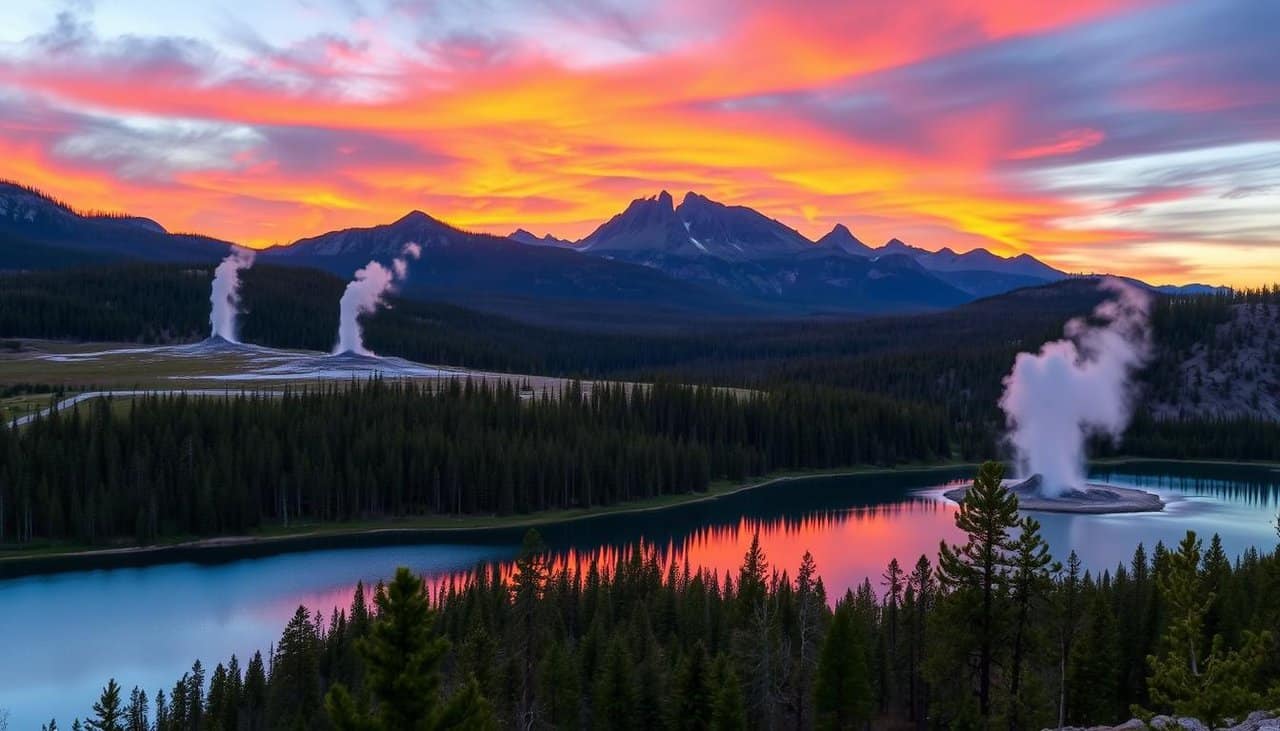
Yellowstone National Park is a photographer’s dream. It’s known for its unique geothermal features and diverse wildlife. The park’s vibrant landscapes offer many photography opportunities. You can capture both its geological wonders and its ecosystems through your lens.
Unique Geothermal Features
Yellowstone’s geothermal features are a big draw for photographers. Places like Old Faithful and Grand Prismatic Spring show off the park’s most colorful sights. The early morning or sunset light makes these features even more stunning.
The steam from the hot springs adds a magical touch to your photos. It creates a dreamlike atmosphere.
Wildlife Photography Opportunities
Yellowstone is a paradise for wildlife photographers. You can see bison, elk, bears, and wolves here. The best times to take photos are early morning or late afternoon.
Being patient and aware will help you capture amazing shots. This way, you can take unforgettable photos of wildlife in their natural home.
Seasonal Changes in the Park
The seasons in Yellowstone change the park’s mood and look. In winter, it’s a peaceful snowscape. Spring brings vibrant wildflowers and streams.
Summer is green and lush, while autumn shows off beautiful foliage. Knowing these changes helps you plan your visits. This way, you can get the best photos in one of the most scenic national parks.
| Season | Key Features | Best Photography Tips |
|---|---|---|
| Winter | Snow-covered landscapes, geothermal steam | Use a polarizing filter to reduce glare |
| Spring | Wildflowers, waterfalls | Capture early morning light for soft images |
| Summer | Lush greenery, wildlife activity | Follow wildlife rules for safe photographing |
| Autumn | Vibrant fall colors, migrating animals | Utilize warm tones in the evening for stunning shots |
Grand Canyon National Park: Awe-Inspiring Views
The Grand Canyon is a breathtaking natural wonder. It’s perfect for photographers who want to capture stunning moments. With many photography spots in US national parks, it’s a top spot for any photography lover.
Best Viewpoints for Photography
Visiting popular viewpoints is key to experiencing the canyon’s beauty. Mather Point offers wide views of the canyon’s depths. Yavapai Observation Station lets you see the rock formations up close. Other great spots include:
- Grandview Point – Great for seeing the canyon’s bright colors.
- Pima Point – Ideal for panoramic shots, especially in the late afternoon.
- Hopi Point – Known for its amazing sunset views.
Light and Shadow: Capturing the Canyon
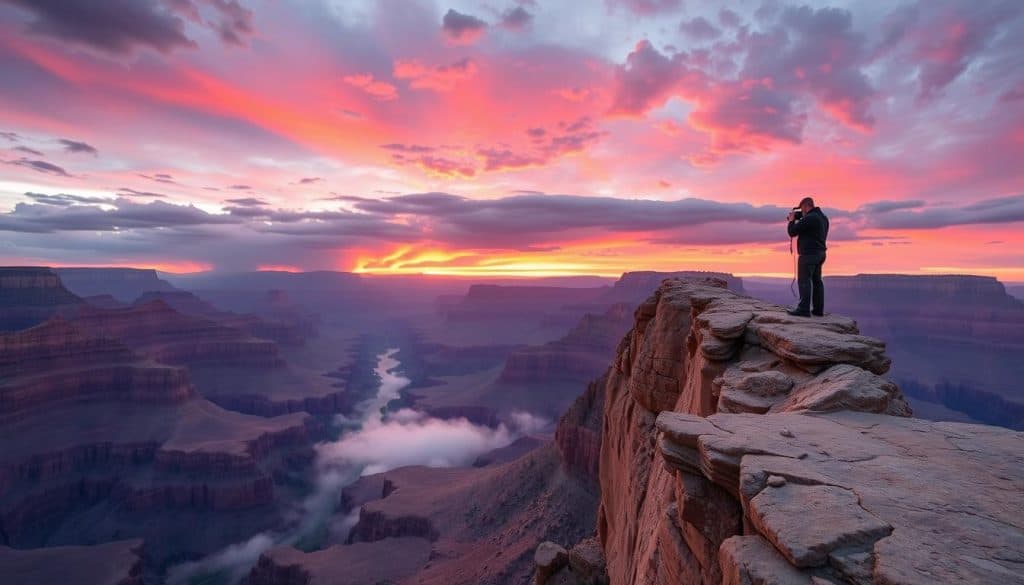
The Grand Canyon changes with the light. Early mornings have soft light that highlights the rock textures. This is a great time for photos. By midday, shadows create dramatic contrasts, perfect for expressive shots. Knowing when to take photos can make a big difference.
Sunrise and Sunset Photography Tips
Photographing during sunrise and sunset can capture the most striking images. Here are some tips:
- Get there early to set up and find your spot.
- Use a tripod for stable shots in low light.
- Try longer exposures to make the sky colors pop.
With these tips, capturing stunning shots at the Grand Canyon is within reach. Make sure to capture the beauty of this iconic landscape.
Zion National Park: Red Rock Wonders
Zion National Park is a top spot for photography, with its stunning red rock formations and landscapes. It’s a great place for photographers to capture the unique geology. You’ll see towering sandstone cliffs and narrow canyons that are truly enchanting.
Dramatic Landscapes and Unique Geology
Zion’s dramatic scenery is filled with impressive rock structures. These offer endless photo opportunities. The varied geology creates compelling compositions with vibrant colors and textures that change with the day.
Photographers can test their skills by capturing the light and shadows on canyon walls. It’s a beautiful sight to see.
Recommended Trails for Photographers
When you visit, check out these iconic trails for amazing views:
- The Narrows: This water-filled slot canyon is perfect for photos, especially in spring when the water is high.
- Angels Landing: The hike here is thrilling, and the view from the top is incredible. It’s great for panoramic shots.
- Observation Point: This trail offers a wide view of the park. It’s perfect for landscape photography.
Ideal Times for Capturing the Scenery
Timing is key for great photos in Zion. The ‘golden hour’ in early mornings and late afternoons is best. The soft light enhances the colors and contours of the rocks.
Plan your shoots during these times for the most stunning images. Capturing Zion’s beauty during these hours is essential for photographers.
Glacier National Park: Majestic Peaks and Glacial Lakes
Glacier National Park is a paradise for photographers. It has towering mountains and calm glacial lakes. Learning different photography techniques will help you capture its beauty. Knowing how to compose landscapes, photograph wildlife, and find the best spots will make your visit unforgettable.
Landscape Composition Techniques
Mastering landscape composition is key to capturing Glacier National Park’s beauty. Here are some tips to keep in mind:
- Use the Rule of Thirds: Place elements on the grid lines for balance in your photos.
- Incorporate Foreground Interest: Add depth by including elements like rocks or flowers in the foreground.
- Experiment with Leading Lines: Use trails, rivers, or other natural lines to guide the viewer’s eye.
Wildlife and Nature Photography
Glacier National Park is home to diverse wildlife. While exploring, be patient and observant. Aim to capture animals in their natural setting. A zoom lens is handy for getting close shots without disturbing them.
Best Photography Locations
Choosing the right spots is crucial for great photos. Here are some must-see locations:
| Location | Highlights |
|---|---|
| Lake McDonald | Stunning reflections of the surrounding mountains on the crystal-clear water. |
| Going-to-the-Sun Road | Iconic views throughout the drive, perfect for capturing sweeping landscapes. |
| Many Glacier Area | Magnificent glacial lakes and opportunities to photograph wildlife. |
For more tips on visiting, check out essential guidelines. Exploring national parks with breathtaking scenery will create lasting memories.
Acadia National Park: Coastal Charm
Acadia National Park is a top spot for photographers. It boasts stunning coastal views with rugged cliffs and charming lighthouses. Whether you love ocean scenes or autumn colors, Acadia has it all.
Lighthouses and Ocean Views
The park has many historic lighthouses against the Atlantic Ocean. Bass Harbor Head Lighthouse is a must-see. It’s perfect for sunset shots, showing off the coast’s beauty.
Autumn Foliage: A Colorful Experience
Autumn turns Acadia into a colorful world. The changing leaves against the blue ocean are breathtaking. Visiting during peak foliage makes your photos unforgettable.
Photography Tips for Capturing the Coast
Here are some tips for your Acadia photos:
- Manage your exposure to get the best of both light and dark. A polarizing filter can reduce water glare.
- Use long exposure for smooth water shots, especially with waves.
- Try different angles to show the coastline’s rugged side.
- Catch movement in the waves for lively photos.
Olympic National Park: Diverse Ecosystems
Olympic National Park is a paradise for photographers. It offers everything from lush rainforests to stunning beaches. This mix of landscapes gives you endless chances to capture nature’s beauty.
Rainforests, Mountains, and Beaches
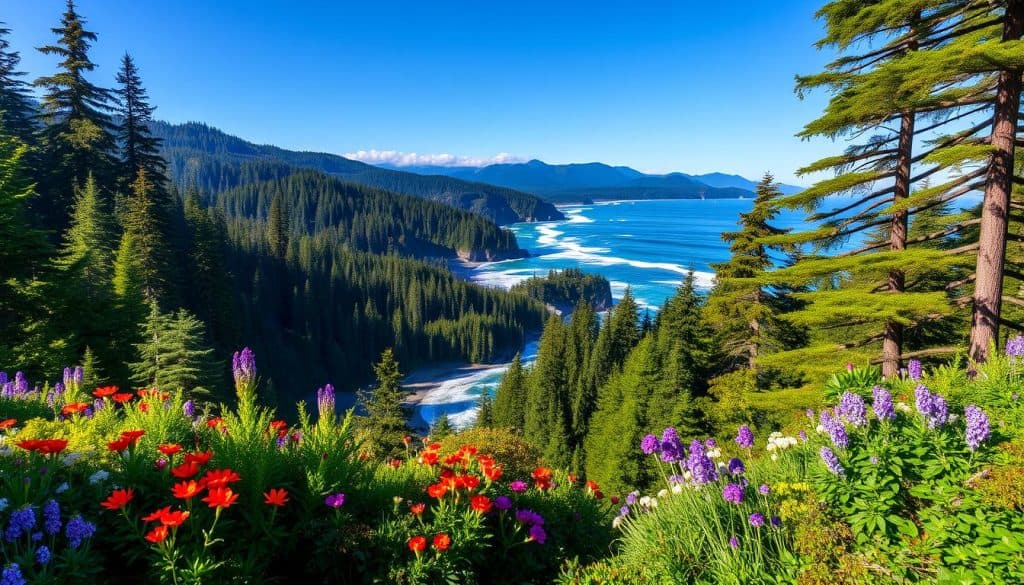
The park is home to dense rainforests, towering mountains, and a rugged coastline. Each area has its own unique beauty. The rainforests are magical, with mist and light creating enchanting scenes.
The coastal areas are perfect for sunset shots. They feature rocky shores and dynamic waves. These backdrops are dramatic and unforgettable.
Unique Flora and Fauna to Photograph
Olympic National Park is home to many unique species. You can find iconic Olympic marmots and vibrant wildflowers. These subjects offer endless inspiration for nature photography.
The park’s diverse flora and fauna are a photographer’s dream. You’ll find colors and textures that inspire. Every corner of the park offers something new and exciting to capture.
Best Times to Explore and Shoot
When you plan your visit, timing is key. The best times vary depending on what you want to capture:
- Spring: Wildflowers bloom, creating vibrant colors against green backdrops.
- Summer: Accessible trails and clear skies make for ideal landscape photography.
- Fall: Autumn foliage offers a spectacular palette of warm colors, particularly in the rainforests.
- Winter: Snow-dusted mountains create breathtaking vistas and unique photo opportunities.
Olympic National Park is a top spot for photographers all year round. Each season brings new and exciting opportunities to capture nature’s beauty.
| Season | Highlights | Photography Tips |
|---|---|---|
| Spring | Wildflower blooms and vibrant landscapes | Utilize macro photography for close-ups |
| Summer | Clear skies and accessible trails | Capture golden hour for dramatic light |
| Fall | Autumn foliage and changing colors | Explore reflection shots in calm waters |
| Winter | Snow-covered mountains and quiet trails | Use a tripod to stabilize in low light |
Rocky Mountain National Park: High Elevation Beauty
In Rocky Mountain National Park, you’ll find breathtaking landscapes that show nature’s beauty. The park has stunning alpine lakes and tall peaks. It’s a top spot for photography in national parks. Let’s explore the amazing features and opportunities waiting for you.
Majestic Peaks and Alpine Lakes
Bear Lake and Trail Ridge Road are iconic spots. They offer incredible views for capturing mountain scenery. Bear Lake, with its wildflowers and clear water, is great for sunrise photos.
Wildlife Photography at High Altitudes
The park is home to diverse wildlife at high elevations. Look out for elk, moose, and mountain goats. Use a telephoto lens to capture them without disturbing them.
Seasonal Photography Opportunities
Each season offers unique photo chances. Spring and summer show off wildflowers, while autumn brings colorful foliage. Winter turns the park into a peaceful wonderland. No matter when you go, Rocky Mountain National Park is a photographer’s dream.
Joshua Tree National Park: Desert Dreamscapes
Joshua Tree National Park is a photographer’s dream. It’s filled with stunning rock formations and iconic Joshua trees. This park is perfect for capturing the beauty of the desert.
Unique Joshua Trees and Rock Formations
The Joshua trees are unlike any other. Their spiky leaves and strange shapes make for great photos. The best time to shoot is during the golden hours of dawn or dusk.
This light adds depth and texture to your photos. Look for ways to combine the trees with the rock formations for amazing shots.
Night Sky Photography in the Desert
Joshua Tree is famous for its dark skies. It’s perfect for capturing the Milky Way. To get great shots, use a sturdy tripod and a wide-angle lens.
Long exposure shots can make the stars shine brighter. For tips, check out Joshua Tree photography tips.
Tips for Capturing the Desert Landscape
To show the desert’s vast beauty, use leading lines. They guide the viewer’s eye. Also, play with contrasts between the desert plants and rocks.
Try different angles to find the best view. The best light is during sunrise and sunset. It changes the colors of the scene dramatically.
Tips for Capturing Stunning Nature Photography
Going on a photography trip in national parks is a great chance to see amazing landscapes and animals. But, knowing how to do it right can make your trip even better. We’ll share tips on gear, how to be ethical, and editing to make sure your photos show nature’s beauty without harming it.
Essential Gear for National Park Photography
Before you go, think about what you need for great photos. A good camera, like a DSLR or mirrorless, is key. You’ll also need different lenses for wide shots and close-ups of animals. Remember to bring tripods, remote shutters, and filters to get creative.
Best Practices for Ethical Photography
When you’re in national parks, follow the rules for taking photos. Keep a safe distance from animals and don’t feed them. Also, follow the “Leave No Trace” rule by not stepping on plants and staying on paths. This helps protect the parks and shows respect for nature.
Post-Processing Tips for Your Images
After your trip, it’s time to make your photos even better. Use software like Adobe Lightroom or Photoshop to tweak brightness, contrast, and colors. But, be careful not to change your photos too much. This way, you’ll keep the real feel of your adventure in your photos.
FAQ
What are the best national parks for photography?
Top spots for photography include Yosemite, Yellowstone, Grand Canyon, and Glacier National Parks. Each offers unique views and amazing photo opportunities.
What should I bring for photography in national parks?
Bring a good camera, lenses, tripod, batteries, memory cards, and a weatherproof bag. Don’t forget filters to manage light, especially during sunrise and sunset.
When is the best time to visit these parks for photography?
The best times vary by park. Early mornings and late afternoons, known as golden hours, are ideal. Autumn in Acadia and spring in Yosemite are also great for photos.
Are there specific photography spots in US national parks I should know about?
Yes! Each park has famous spots. Yosemite’s Tunnel View and Glacier Point, and Grand Canyon’s Mather Point are must-sees. Researching these spots can lead to amazing photos.
How can I improve my nature photography techniques in the parks?
Improve by mastering composition, like the rule of thirds. Focus on natural lighting, especially during golden hours. Experiment with angles and perspectives for dynamic images.
Can I find wildlife photography opportunities in national parks?
Absolutely! Parks like Yellowstone and Rocky Mountain are great for wildlife photos. Be patient and quiet to capture stunning wildlife moments.
What are some ethical photography practices I should follow?
Ethical photography is key. Keep a safe distance from wildlife, stay on trails, and avoid disturbing nature. Leave no trace to preserve the parks for others.
Are there any post-processing tips for enhancing my nature photography?
Yes! Post-processing can enhance your photos. Use Adobe Lightroom or Photoshop to adjust exposure and color. Keep edits realistic to preserve the natural beauty.