

Have you ever thought about the ancient secrets hidden beneath Badlands National Park in South Dakota, USA? This breathtaking area, with dramatic land shapes and lively wildlife, is more than a beautiful view. It keeps the remains of animals that lived millions of years ago. Every year, nearly one million people visit to explore the park’s secrets. With this guide, you’ll learn everything you need for a great trip to Badlands National Park.
Badlands National Park covers around 244,000 acres. It offers some of the most unique sights you’ll ever see. The park’s history stretches over an amazing 75 million years. When you wander through, you’ll see not just the impressive buttes and spires. You’ll also learn about the events that made this place so special. This guide will help you understand the park’s ancient fossil beds and its various ecosystems. It’s all you need for a memorable visit to Badlands.
Key Takeaways
- Nearly 1 million visitors annually enjoy the beauty of Badlands National Park.
- The park is famous for its fossils, some dating back to the Oligocene epoch.
- Two distinct regions, the North Unit and South Unit, offer varied landscapes and experiences.
- The Badlands Loop Road is ideal for a scenic drive, best enjoyed over two days.
- Visiting is most enjoyable from mid-May to mid-June when wildlife and vegetation are at their peak.
- Essential visitor information can be found at the seasonal White River Visitor Center.
Overview of Badlands National Park
Badlands National Park is a rare gem in South Dakota, known for its breathtaking landscapes and a rich past. Covering about 244,000 acres, it has a variety of ecosystems and striking geological formations. Knowing about its location, how to get there, and its importance will make your visit even more special.
Location and Accessibility
In southwestern South Dakota, Badlands National Park is easy to get to via Interstate 90. It’s close to Rapid City, just 60 miles to the west, which is handy for visitors. Rapid City Regional Airport is the closest major airport, roughly an hour away from the North Unit of the park.
The park has several trails and viewing spots that are easy to access, so everyone can take in its beauty. Be sure to use park maps while exploring, as you might not get much GPS or mobile signal in these remote spots.
Park History and Significance
The park’s story is as compelling as its views. Native Americans have lived in the area for over 11,000 years, making it a place full of cultural history. In 1978, it was declared a national park, combining natural history with cultural heritage. It has a strong connection to the Oglala Sioux Tribe.
Unique Geological Features
Badlands National Park’s geological features are some of the most amazing in the U.S. Erosion has sculpted incredible shapes like buttes and pinnacles from the softer rocks. The park is also famous for its fossil beds, home to many fossils from the Oligocene epoch, about 23 to 35 million years old.
Planning Your Visit
When you plan to visit Badlands National Park, it’s crucial to think about several things for a great trip. You need to know the best time for visiting, about the entrance fees, and how to use the visitor center. This guide will help you get ready for an adventure you won’t forget.
Best Times to Visit
Badlands National Park is always open, but the shoulder seasons of April/May and September/October are the best times to go. The weather is mild then, and there aren’t as many people. It makes your visit more peaceful. The summer brings hot days over 100°F and the most visitors. Fall, especially after Labor Day in September, has nice weather in the mid-70s. It’s a good time to plan your visit.
Entrance Fees and Passes
The current entrance fees for Badlands National Park are:
- Private Vehicle: $30 (valid for seven days)
- Motorcycle: $25
- Pedestrian/Hiker/Cyclist: $15
If you visit often, an annual pass is $55. It lets you in for a year from when you buy it. The America the Beautiful pass costs $80. It gets you into all U.S. national parks.
Essential Visitor Center Information
The Ben Reifel Visitor Center is key for info in the North Unit. It tells you about the park’s history and geology. There are also ranger-led programs. A big draw is the fossil preparation lab. The center is open 8 a.m. to 5 p.m. from May through September. From October through April, it’s open 9 a.m. to 4 p.m. For the South Unit, the White River Visitor Center is open seasonally. It gives you important info to make sure your visit is fun and informative.
Activities in Badlands National Park
Visiting Badlands National Park offers unique experiences. You can explore various hiking trails and enjoy scenic drives. There are also chances to see wildlife up close.
Hiking Trails for Every Skill Level
The Badlands has trails for everyone. You can choose an easy walk or a challenging hike. This means everyone can find a trail they’ll enjoy.
- Fossil Trail: A 0.4-mile easy hike requiring about 15-30 minutes to complete.
- Door Trail: A 0.75-mile roundtrip hike featuring an accessible boardwalk.
- Cliff Shelf Nature Trail: A 0.5-mile roundtrip path with minimal elevation gain, taking around 30 minutes.
- Notch Trail: This 1.5-mile trail has a moderate difficulty level and includes a log ladder climb.
- Castle Trail: The longest maintained trail at 5.4 miles, rated as easy to moderate, offering stunning views of the surrounding badlands.
Scenic Drives and Overlooks
Take scenic drives to see the park’s beauty. The famous Badlands Loop Road covers 38 miles along Hwy. 240. It passes by amazing overlooks like Pinnacles Overlook and Big Badlands Overlook.
Outside the park, there’s a 70-mile drive through the Black Hills. It’s perfect for several days of exploration with many places to stop.
Wildlife Viewing Opportunities
Watching wildlife in Badlands National Park is special. You might see 1,200 bison in Sage Creek. The park also hosts bighorn sheep, prairie dogs, and birds. Spotting these animals adds to the memories of your visit.
| Trail Name | Distance | Difficulty | Estimated Time |
|---|---|---|---|
| Fossil Trail | 0.4 miles | Easy | 15-30 minutes |
| Door Trail | 0.75 miles | Easy | 30-45 minutes |
| Cliff Shelf Nature Trail | 0.5 miles | Easy | 30 minutes |
| Notch Trail | 1.5 miles | Moderate | 1-2 hours |
| Castle Trail | 5.4 miles | Easy to Moderate | 2-3 hours |
Essential Gear and Packing Tips
Getting ready for an adventure in Badlands National Park means you need the right stuff. The weather there can change fast, and you’ve got to be prepared for the park’s tricky landscape. Here are some key things to keep in mind for your trip.
Clothing for Varying Weather
Since the weather in Badlands can be all over the place, dressing in layers is a smart move. Begin with a Smartwool Classic All-Season Merino T-shirt to stay comfy and dry. You might also want to pack the Arc’teryx Beta LT jacket, which keeps you dry without being heavy. The REI Co-op zip-off Sahara convertible pants are perfect for when it gets hot, turning into shorts easily. And don’t forget things like hats and sunscreen to protect you from the sun on your hikes.
Recommended Hiking Gear
Good hiking gear is key for tackling Badlands’ rough paths. Choose strong and comfy hiking boots like the Danner Mountain 600 Leaf GORE-TEX for steady footing. A tough backpack is a must to carry all you need, including the Osprey Hydraulics reservoir for easy drinking. For longer hikes, the BearVault BV475 Trek bear canister is great for safely storing food. And the LifeStraw Peak Series Gravity Purifier will clean your drinking water, keeping you safe from germs.
Photography Equipment Suggestions
To capture the stunning views of Badlands National Park, you’ll need the right camera gear. A camera with a zoom lens gives you flexibility to shoot from various spots. A solid tripod can help you get amazing photos of sunsets or the night sky. Just make sure to follow the park’s rules, as flying drones is usually not allowed. With the correct equipment, you can take incredible photos that’ll remind you of your adventure for years.
| Item | Description | Use |
|---|---|---|
| Smartwool Classic All-Season Merino T-shirt | Lightweight merino wool blend | Comfort and moisture management |
| Arc’teryx Beta LT jacket | 3-layer GORE-TEX shell | Waterproof, lightweight protection |
| Danner Mountain 600 Leaf GORE-TEX | Durable hiking boots | Stability on diverse trails |
| Osprey Hydraulics reservoir | 3-liter capacity hydration pack | Hands-free water access |
| LifeStraw Peak Series Gravity Purifier | 8-liter capacity filtration system | Ensures safe drinking water |
| Photography Tripod | Sturdy camera support | Steady shots in low light |
Camping and Lodging Options
Badlands National Park has many options for camping and staying nearby. You can choose from campgrounds in the park or hotels and motels close by. It’s important to plan ahead, especially when it’s busy, so you can get the spot you want.
Campgrounds Within the Park
There are two main campgrounds in the park: Cedar Pass Campground and Sage Creek Campground. Cedar Pass has 96 spots, including places for RVs with electric hookups. Tent spots are $23 per night for two people, and RV spots are $38. Both have water and restrooms.
Sage Creek Campground has 22 sites and doesn’t take reservations. It’s first-come, first-served. You can also camp in the backcountry without a permit. Just stay half a mile away from roads and trails.
Nearby Accommodations
The town of Wall, close to the park, has motels, RV parks, and cabins. Cedar Pass Lodge inside the park offers rooms with air conditioning, TVs, and fridges. Book early, especially for spring and summer. Rapid City, about an hour away, has even more choices.
Reservation Recommendations
Book your camping and lodging early at Badlands National Park. The summer is very busy, and spots fill up fast. If you’re coming during the Sturgis Motorcycle Rally, it’s really important to book in advance to avoid any trouble finding a spot.
Exploring the Landscape
Badlands National Park is an amazing place to explore landscapes. It shows different landforms and ecosystems. These tell a story of the earth’s history over millions of years. The park’s features let you see famous formations, discover ancient fossils, and enjoy the beautiful prairie ecosystems.
Iconic Landforms: Buttes and Pinnacles
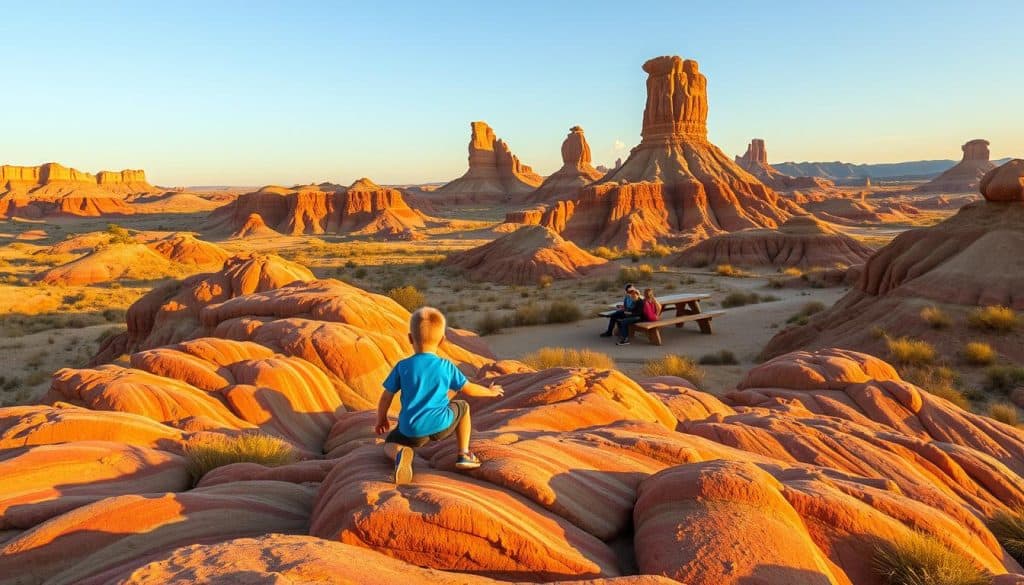
The buttes and pinnacles in Badlands National Park show how powerful erosion can be. They offer beautiful views and are great for photos. While exploring, you’ll see rocks with many colors and textures. They tell the earth’s formation story.
Fossil and Archaeological Sites
If you like paleontology, you’ll love the park’s fossil spots. The Fossil Discovery Trail teaches you about ancient creatures. This trail is short but full of information about significant fossil sites. It connects you to the park’s deep history. Exploring here feeds your curiosity and helps you learn about nature’s history.
Prairie Ecosystems and Flora
In Badlands National Park, you’ll find large prairie ecosystems with different plants. There are colorful wildflowers and vast grasslands. These plants support many animals. As you walk, notice the ecosystems that make the park so beautiful. They make your visit even better.
To really enjoy the park, use this guide. It gives you the best experiences and tips for a great visit. You’ll have fun with the landforms, fossils, and unique ecosystems. Your time in Badlands National Park will be unforgettable and educational.
Safety Guidelines for Visitors
Visiting Badlands National Park is amazing with its beautiful views. But, knowing how to stay safe makes it better. Being aware of animals, ready for weather changes, and following park rules are key. These steps make sure your trip is fun and safe.
Wildlife Safety Tips
Keep a safe distance from animals, at least 100 yards, especially from fast bison. Never get close or feed them. Be careful of prairie rattlesnakes in tall grass or under boardwalks. They’re usually hidden. Staying aware keeps you and the animals safe.
Weather Precautions
Badlands weather can change fast, so always check the forecast. It gets really hot in the summer, so drink lots of water, about 1 gallon per day, to stay hydrated. Use sunscreen with at least SPF 15 to protect from the sun. If a storm looks like it’s coming, find a safe place right away because of lightning.
Trail and Area Regulations
Following safety rules is important for keeping the park beautiful and you safe. Stick to the trails and slow down on wet, unpaved roads. Wear closed-toed shoes to prevent injuries from cactus and snakes. Most injuries happen from falls, so wearing the right shoes is critical. Following these rules makes your visit safer and protects the park.
Family-Friendly Activities
Badlands National Park offers a wide range of activities suitable for families. It’s a great place whether you’re looking for adventure or learning. Families can dive into the beauty of nature while finding activities that kids will love.
Kid-Friendly Trails
The park has trails like Cliff Shelf and Fossil Exhibit Trail that are perfect for families. They’re easy to walk and packed with learning opportunities about the park’s unique geology. Kids will enjoy these short hikes and learn cool facts about the world around them.
Educational Programs and Workshops
The Ben Reifel Visitor Center hosts exciting educational programs for both kids and adults. These programs cover local geology, wildlife, and the history of the Badlands. Families can participate in interactive workshops, learning about nature’s importance through fun activities.
Junior Ranger Program
Children can explore the park and learn through the Junior Ranger program. Completing activities and earning badges, kids grow to love the outdoors more. This program helps young visitors feel connected to nature and encourages them to protect it.
| Activity | Age Recommendation | Duration |
|---|---|---|
| Kid-Friendly Trails | All ages | 1-2 hours |
| Educational Programs | 6 and up | 1-3 hours |
| Junior Ranger Program | 5 and up | Varies |
In summary, Badlands National Park is perfect for family outings. It offers trails, programs, and the Junior Ranger program that kids will love. Your family will have fun and leave with a deeper appreciation of nature.
Nearby Attractions and Day Trips
Exploring Badlands National Park unlocks many exciting places nearby. It makes your trip even better. You can find more national parks, cultural spots, and local happenings around. They all offer adventures and learning chances.
Other National Parks in South Dakota
Consider adding Wind Cave National Park and Custer State Park to your trip. They’re not far from the Badlands. Each park has unique views and fun activities. They’re some of the best places to visit near the Badlands. Custer State Park is famous for its 1,300 wild bison.
Local Cultural and Historical Sites
Learn about the area’s history at places like the Oglala Lakota Heritage Center. These spots give insights into Native American culture and history. This makes your Badlands visit more meaningful. Visiting local cultural places shows the rich background of this region.
Community Events and Festivals
The local area hosts many events and festivals all year. These add a special touch to your Badlands trip. The Sturgis Motorcycle Rally is one big event that attracts people from everywhere. It shows the lively spirit of the area. Try to plan your visit when these events happen. It’s a great way to see the local customs and community life.
Photography Highlights
Badlands National Park offers stunning photography chances all year. Anyone with a camera can find the best times and places to shoot. This makes the park a great spot for beautiful photos.
Best Light for Photography
Golden hours bring out the best in Badlands’ landscapes. This happens just after sunrise and right before sunset. The light at these times is vibrant and full of contrast.
Early mornings and late afternoons have a softer light. This makes the natural beauty of the area stand out more.
Top Locations for Stunning Shots
There are several key spots in Badlands for amazing photos:
- Pinnacles Overlook: This high point on Badlands Loop Road is amazing at sunset.
- Conata Basin: It’s a large area that shows off unique rock formations and wide views.
- Panorama Point: From here, you can get a wide view of the dramatic landscapes.
Badlands National Park covers over 244,000 acres. It offers endless spots for capturing beautiful photos all year.
Tips for Capturing the Landscape
Here are some tips for great photography:
- Shooting in RAW format keeps your photos high quality for editing later.
- Wide-angle lenses are best for capturing large landscapes and interesting rocks.
- Try different compositions by experimenting with focal lengths. You have lots of space on memory cards.
- Don’t forget about the plants. The greens in May and June and the colorful flowers make photos pop.
Health and Accessibility Info
Badlands National Park welcomes everyone. It focuses on health and making the park easy for all to explore. You’ll find visitor services that focus on safety and making sure resources are available.
Accessibility in the Park
The park has paved roads leading to beautiful overlooks and simple trailheads. This is great for people who find moving around tough. In the North Unit, all trails are easy to get on, offering many ways to see nature. However, Bigfoot Pass Overlook is closed for construction.
Health Precautions and Services
It’s key to know the health rules of the park for a safe trip. Learning about where pets can go and how to act around wild animals keeps you safe. At the Ben Reifel Visitor Center, you can get first aid. It’s open daily from 9:00 a.m. to 4:00 p.m. MDT, ready to help visitors.
Resources for Visitors with Disabilities
If you need extra help, the visitor centers have information on accessibility. They make sure all guests can fully enjoy their visit. Being in the Badlands is good for your health and lets you connect with the outdoors.
Understanding the Ecosystem
Badlands National Park is a place where many plants and animals live together. This park helps keep the balance in nature and is home to lots of wildlife. Learning about this area shows why it’s important to protect these natural treasures.
Flora and Fauna of Badlands
The park has prairies with many kinds of plants, including flowers and bushes. Animals like bison and birds also live here. Knowing about the living things here helps us see why the Badlands are special.
Importance of Preservation
It’s key to protect the unique landscapes of Badlands National Park. The land here has developed over millions of years. To keep this place safe for others to see, we need to follow the park’s rules and learn about its past and importance.
Ongoing Conservation Efforts
There are many projects aimed at keeping the park safe for animals and teaching visitors about the park’s delicate balance. Working together with groups and local people helps tackle problems, such as diseases that affect wildlife. To understand more about these efforts, check ongoing conservation challenges and see how you can help.

Visitor Feedback and Reviews
Understanding visitor feedback can make your visit to Badlands National Park better. Insights from those who have visited can help you know what to expect and guide you. Here, you’ll find advice from travelers who have experienced the park’s beauty.
Planning Tips from Fellow Travelers
Visiting Badlands National Park early in the morning helps avoid crowds. This can make your experience more peaceful, especially at famous sites. Remember to stop regularly at the overlooks for amazing views and a deeper appreciation of the land.
Personal Experiences and Recommendations
Many travelers love the park’s peacefulness, especially in areas with fewer visitors. These places are perfect for quiet thought and alone time. They also recommend visiting both park units to see everything, from challenging hikes to beautiful views.
What to Know Before You Go
Check the National Park Service website before you go for any updates on park conditions, fees, and closures. Being informed will help make your visit smooth and enjoyable. Useful tips and feedback from other visitors can also make your trip better.
Exploring Badlands Through the Seasons
Visiting Badlands National Park each season brings new experiences. Every season has its own beauty and activities to offer. It’s key to know what each season brings when you plan your trip.
Spring Blooms and Wildlife
In spring, flowers bloom and animals come out, making your visit picture-perfect. The park is full of life with wildflowers and baby animals. It’s great for seeing the lush greenery and many plants.
Rain and storms add to the vibrant colors, perfect for those who love photos or nature. For more details, check out seasonal exploration.
Summer Activities and Heat Precautions
Summer is when most people visit Badlands for its stunning views in warm weather. But, it can get really hot. To stay cool, visit in the early morning or evening.
Drink plenty of water and find shade to beat the desert heat. Plan well to make the most of your summer visit.
Fall Colors and Wildlife Migration
Fall turns the park into a canvas of colors, perfect for quiet moments with nature. With fewer people, you get to enjoy peaceful times and wildlife sightings. Birds migrate here in fall, adding to the beauty.
Walking in the cooler air while enjoying amazing views is special in fall. This season offers an unforgettable experience in the park.
Interactive Adventures
Badlands National Park offers exciting interactive adventures. You can connect deeply with the stunning environment. Enjoy guided tours, adventure sports, or stargazing evenings. The park has something for all explorers.
Guided Tours and Programs
Guided tours are a great way to learn about the park’s history and wildlife. Experts lead these tours. They share facts about the park’s unique geology, formed over millions of years. Fossil Talks and night sky programs run from Memorial Day to Labor Day. These activities make you appreciate the Badlands’ beauty even more.
Adventure Sports Opportunities
For thrill-seekers, the park’s adventure sports are a must-try. Climbers can tackle the rugged terrain in certain areas. Backcountry camping offers a peaceful escape. It’s perfect for those wanting to discover the park’s hidden spots.
Stargazing and Night Programs
Badlands is ideal for stargazing, due to its dark skies. Rangers teach about stars and planets at night programs. These activities, starting between 8:00 PM and 9:30 PM, make your visit unforgettable.
| Program Type | Start Time | Duration |
|---|---|---|
| Evening Programs | 9:00 PM (May – July) | 30 minutes |
| Night Sky Programs | 9:30 PM (May – July) | 30 minutes |
| Fossil Talks | 10:30 AM and 1:30 PM | 20-30 minutes |
| Junior Ranger Program | Varies | 30-45 minutes |
Sustainable Tourism Practices
Sustainable tourism keeps the Badlands beautiful and protects its culture. When you explore, using responsible actions makes your visit better and helps the area. You help the environment and local people by understanding your visit’s effect.
Leave No Trace Principles
It’s important to follow the Leave No Trace principles in the Badlands. These rules help reduce our effect on nature. This makes sure the park stays beautiful for others. Key practices include:
- Properly disposing of waste, including food scraps.
- Staying on marked trails to protect habitats.
- Respecting wildlife by observing from a distance.
- Planning ahead to reduce the need for last-minute decisions.
Supporting Local Communities
Working with local communities makes your trip better and helps their economy. By choosing local businesses, you support the area’s sustainability. You can:
- Choose local guides for an authentic and educational experience.
- Support artisans and markets that showcase regional products.
- Participate in community events to build connections and understanding.
Engaging in Eco-Friendly Activities
Doing eco-friendly activities helps you value the Badlands’ ecosystem. Look for nature walks or workshops on conservation. Great experiences include:
- Joining Painted Warriors to learn traditional hunting methods and sustainable foraging.
- Exploring plant and medicine walks with Mahikan Trails, focusing on conservation.
- Visiting Métis Crossing to understand Alberta’s indigenous heritage and culture.
Conclusion and Final Thoughts
Badlands National Park is a unique place full of wonder. It’s known for its stunning landscapes, special rock formations, and diverse wildlife. Highlights include the scenic Badlands Loop Road, the Notch and Castle Trails, and incredible overlooks. These spots encourage you to dive deeper into the park’s 240,000 acres of beauty.
When you go through this wild area, it’s important to be a thoughtful visitor. The future of the park is in our hands. By following the rules, leaving nature as you find it, and learning about the area, we help others enjoy it too.
Badlands National Park is a call to adventure for both families and solo explorers. It doesn’t matter if it’s your first visit or you’re coming back, the experience is always unforgettable. With each visit, you create lasting memories in this mesmerizing place.
FAQ
What are the park’s operating hours?
Badlands National Park is always open, every day and night. However, the visitor centers operate on seasonal schedules.
Are pets allowed in the park?
Yes, you can bring pets, but they need to be on a leash. They’re also only allowed in certain spots. Be sure to check where pets can go.
What is the best way to experience the park’s wildlife?
The best way to see animals is by driving through the park and stopping at scenic views. The early morning or late afternoon are the best times to spot wildlife.
Can I collect fossils in the park?
No, you can’t take fossils. This rule helps keep the park’s history and nature safe.
Are there ranger-led programs available?
Yes, you can join educational programs and talks led by park rangers. These happen all year at the visitor centers.
How should I prepare for hiking in Badlands?
Make sure you wear tough shoes for hiking and bring plenty of water. Checking trail conditions and being ready for weather changes is crucial, too.
Are there any accessibility options in the park?
Badlands National Park offers paved roads and trails for easy access. Visitor centers can provide more help and information for planning.
What should I do in case of an emergency while in the park?
If there’s an emergency, call 911 right away. You can find first aid at the visitor centers, and park rangers are there to help.
Is camping allowed in the park?
Yes, there are special campgrounds for camping. Booking early is a good idea, especially in the busy summer months.
What types of facilities are available at the visitor centers?
The visitor centers have exhibits, help desks, bathrooms, and places to have a picnic. Some centers also offer a look at how fossils are prepared and educational activities.