
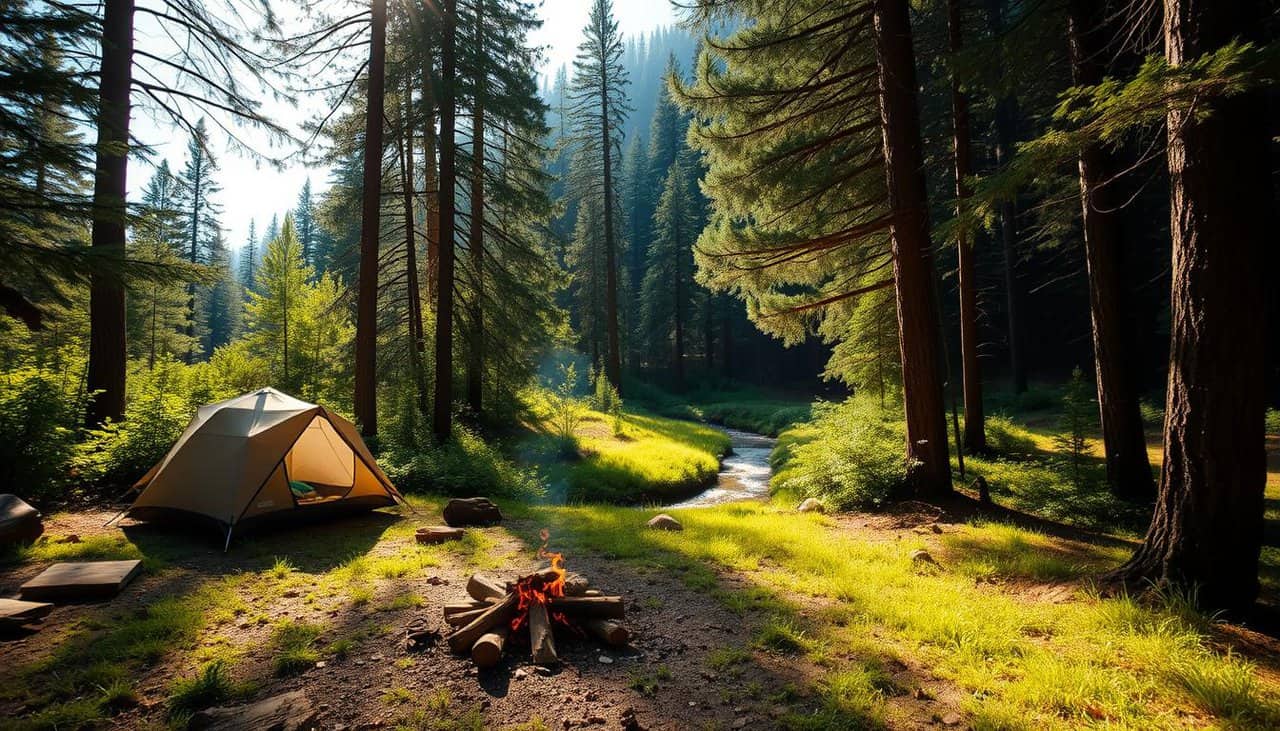
I still remember the thrill of setting up my tent in a secluded spot, surrounded by nature’s splendor. Free camping, or dispersed camping, is a treasure trove for outdoor enthusiasts looking to save on travel expenses.
The US is home to over 640 million acres of public land, managed by federal agencies like the Bureau of Land Management and the US Forest Service. This vast expanse offers numerous opportunities for dispersed camping, allowing you to experience the wilderness without the luxuries of traditional campgrounds.
While free campsites lack amenities like restrooms and running water, they provide a chance to connect with nature and enjoy solitude. As you venture into the world of dispersed camping, it’s essential to be self-sufficient and prepared.
Key Takeaways
- Free campsites are available on public lands managed by federal agencies.
- Dispersed camping offers a budget-friendly alternative to traditional campgrounds.
- Over 640 million acres of public land are available for free camping.
- Free campsites typically lack basic amenities, requiring campers to be self-sufficient.
- Understanding the rules and regulations is crucial for a successful free camping experience.
Understanding Free Camping in America
America’s vast public lands offer a unique camping experience that’s both free and fulfilling. For those who crave adventure and solitude, dispersed camping is an attractive option. Dispersed camping, also known as boondocking, involves setting up camp outside of developed campgrounds on public lands, often without amenities.
What is Dispersed Camping?
Dispersed camping is about “roughing it.” When you choose this type of camping, be prepared for dirt roads and the absence of amenities like picnic tables, garbage cans, running water, and restrooms. However, you’ll be rewarded with solitude, scenic landscapes, and a genuine connection with nature. Dispersed campsites can be found on national forests and Bureau of Land Management (BLM) lands, offering a primitive and self-reliant outdoor experience.
The Difference Between Free and Paid Camping
The primary difference between free and paid camping lies in the level of amenities provided. Paid campgrounds typically offer facilities like restrooms, showers, and electrical hookups, whereas free camping areas do not. However, free camping on public lands offers significant advantages, including cost savings, greater privacy, and more scenic locations.
| Camping Type | Amenities | Cost |
|---|---|---|
| Free Camping | No amenities | Free |
| Paid Camping | Restrooms, showers, electrical hookups | Varies |
Are there free campsites in the US?
The quest for a perfect campsite can be challenging, but what if I told you there’s a way to camp for free in the US? As outdoor enthusiasts, we’re often drawn to the beauty of nature, and free camping allows us to immerse ourselves in it without the hefty price tag associated with traditional campgrounds.
There are thousands of free campsites across the United States, primarily located on public lands managed by federal agencies like the Bureau of Land Management (BLM) and the US Forest Service. These lands offer a unique opportunity for dispersed camping, where you can set up your tent or park your RV in a secluded spot, surrounded by nature.
Types of Free Camping Available
The main types of free camping available include:
- Dispersed camping on BLM land and National Forests
- Primitive camping in Wildlife Management Areas
- Limited free camping options in some National Grasslands and Recreation Areas
- Overnight parking for self-contained vehicles at businesses like Walmart, Cabela’s, and truck stops (though these aren’t traditional campsites and often have restrictions)
What to Expect at Free Campsites
At free campsites, you can expect minimal to no amenities. This means no restrooms, running water, trash collection, designated fire rings, or picnic tables. You’ll need to be completely self-sufficient, bringing your own water, managing your waste, and following campfire restrictions. Most free campsites are unmarked and undeveloped, often located along dirt roads or forest service roads, requiring more effort to locate than developed campgrounds.
However, the benefits of free camping far outweigh the challenges. You’ll enjoy greater privacy and more natural settings, with many sites offering spectacular views and solitude not found in developed campgrounds. Just be aware that weather protection, cell service, and emergency assistance are limited or non-existent at most free campsites, so proper preparation is essential.
Bureau of Land Management (BLM) Lands

For those who love the great outdoors, the Bureau of Land Management (BLM) lands are a treasure trove of free camping options. The BLM administers approximately 245 million acres of public lands, primarily in 12 western states, making it the largest provider of free camping opportunities in the United States.
Where to Find BLM Land for Camping
BLM lands offer some of the most scenic free camping locations, including iconic areas like Alabama Hills in California, Valley of the Gods in Utah, and numerous locations throughout Nevada and Arizona. Finding BLM land for camping has become easier with online resources like the BLM’s interactive maps, apps such as Campendium and iOverlander, and traditional paper maps available at local BLM offices and visitor centers.
To locate BLM lands, you can visit the official BLM website and use their land and mineral records system. This tool allows you to search by state, county, or specific location to determine if the land is managed by the BLM and if it’s open to camping.
BLM Camping Rules and Regulations
The standard camping limit on BLM land is 14 days within any 28-day period, after which campers must relocate at least 25 miles away from their previous site. It’s essential to understand that the 14-day rule is not consecutive days but 14 total days in a 28-day period. The count begins on the first day the camper occupies a site.
Some popular BLM areas have implemented permit systems due to overuse. For example, Alabama Hills in California now requires a free permit for overnight stays. Additionally, campers are required to camp in previously disturbed areas when possible, stay at least 200 feet from water sources, and follow all fire restrictions, which vary by season and location.
While most BLM camping is free, some high-use areas have developed campgrounds with minimal fees ($5-15 per night) that offer basic amenities like vault toilets and fire rings. It’s also important to note that BLM lands are multi-use areas where you may encounter mining, grazing, or other activities. Always respect all posted signs and be aware that not all BLM land is open to camping.
National Forest Service Lands
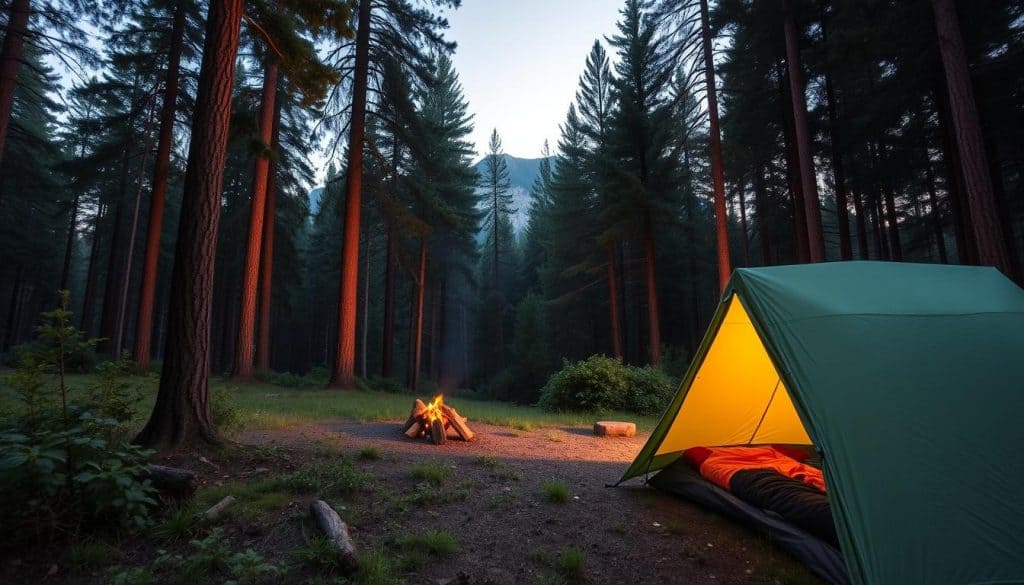
For those who love the outdoors, national forests across the US offer a treasure trove of free camping experiences. With 154 national forests managed by the United States Forest Service (USFS), covering 188 million acres, the opportunities for dispersed camping are vast.
Locating Dispersed Camping in National Forests
Finding the perfect spot for dispersed camping in national forests requires some research. One of the best resources is the Motor Vehicle Use Maps (MVUMs), which display areas open to motorized vehicles and roadside dispersed camping. You can also utilize the Forest Service’s Interactive Visitor Map or download relevant apps like Avenza Maps for offline use.
Local ranger stations are another excellent source of information. Rangers can provide insights into current conditions, road closures, and recommended dispersed camping areas based on your vehicle type and camping preferences.
National Forest Camping Guidelines
While national forests offer more flexibility than national parks, there are still guidelines to follow. Generally, camping is allowed for up to 14 consecutive days, though this can vary by forest. It’s essential to set up camp at least 100-200 feet away from any water source, main road, or trail to protect the environment.
Fire regulations also vary seasonally and by location. Always check the current fire restrictions before your trip and obtain any necessary permits for campfires. By being mindful of these guidelines, you can enjoy a safe and enjoyable free camping experience in our national forests.
Other Public Lands for Free Camping
Free camping isn’t limited to just BLM and National Forest lands; there are numerous other public lands to explore. As you venture into these lesser-known areas, you’ll discover a wealth of opportunities for budget-friendly camping.
When it comes to free camping, many campers immediately think of Bureau of Land Management (BLM) lands and National Forests. However, there are several other types of public lands that offer free or low-cost camping options. Let’s dive into some of these alternatives.
State Forests and Wildlife Management Areas
State forests are often overlooked, but they can be a great option for free camping. Unlike state parks, state forests frequently allow dispersed camping, although the regulations can vary significantly. Some state forests require a permit or have designated dispersed sites, while others follow rules similar to those of national forests. For example, some states require campers to purchase a permit to stay at campsites and use recreational biking and hiking trails, or pay a nightly dispersed camping fee.
- State forests allow dispersed camping with varying regulations.
- Some require permits or have designated dispersed sites.
- Rules can be similar to those of national forests.
Wildlife Management Areas (WMAs) are another option for free camping. Managed by state wildlife departments or the U.S. Fish and Wildlife Service, WMAs provide free camping in many states. However, it’s essential to be aware of hunting seasons and consider wearing blaze orange during these times, as hunting is a primary activity in these areas. Camping rules vary by area; for instance, Virginia WMAs require campers to obtain free written authorization, while Vermont allows free WMA camping for up to three consecutive nights.
National Grasslands and Recreation Areas
National Grasslands, managed by the U.S. Forest Service, encompass 20 different grasslands across 12 states, primarily in the Great Plains region. They generally follow the same dispersed camping rules as national forests, making them an excellent option for those looking for free camping.
Some National Recreation Areas, managed by various federal agencies, including the National Park Service, Forest Service, and Bureau of Land Management, also offer free camping opportunities. However, each area has its specific regulations.
Other public lands that offer free camping include Army Corps of Engineers lands and Bureau of Reclamation lands. Army Corps of Engineers lands surrounding lakes and waterways sometimes permit free camping in designated primitive areas, particularly in the Midwest and South. Bureau of Reclamation lands, especially around reservoirs in western states, often have free camping areas with minimal or no facilities.
Research is crucial when planning to camp on these alternative public lands, as regulations can vary significantly between different management areas and states. By understanding the rules and regulations, you can enjoy a stress-free and enjoyable camping experience.
Alternative Free Camping Options
When traditional campsites aren’t an option, alternative free camping spots can be a lifesaver. As a seasoned camper, I’ve discovered that there are numerous businesses and public areas across the United States that allow you to park your RV or campervan overnight for free.
Parking Lot Camping
Many retail chains and businesses offer free overnight parking in their lots. Some of the most well-known spots include Walmart, Cabela’s, and Cracker Barrel. However, it’s crucial to ask permission before settling in for the night, as policies can vary greatly between locations. For instance, some Walmarts may allow overnight parking, while others may not. When utilizing parking lot camping, remember to keep a low profile, support the business with purchases, and limit your stay to one night unless otherwise specified.
- Walmart: Historically known for allowing overnight parking, though policies vary by store.
- Cabela’s and Bass Pro Shops: Often permit overnight parking for RVers.
- Cracker Barrel: Some locations allow overnight parking, but always check first.
Rest Stops, Truck Stops, and Casino Parking
Other alternative camping options include rest stops along highways, truck stops like Flying J, and casino parking lots. Rest areas provide basic facilities like restrooms and trash cans, and some allow overnight parking, though regulations vary by state. Truck stops often offer more amenities, including showers and food services, making them a more comfortable option for overnight stays. Casino parking lots, particularly in states like Nevada, welcome RVs and campervans, sometimes with dedicated parking areas.

- Rest stops: Basic facilities, varying regulations on overnight stays.
- Truck stops: Amenities like showers and food services, more comfortable than basic parking lots.
- Casino parking lots: Often welcome RVs, sometimes with dedicated parking areas.
These alternative camping options are best suited for self-contained vehicles with onboard facilities. While they may lack the natural setting of traditional campsites, they offer convenience and safety when traveling between destinations.
Essential Tools for Finding Free Campsites
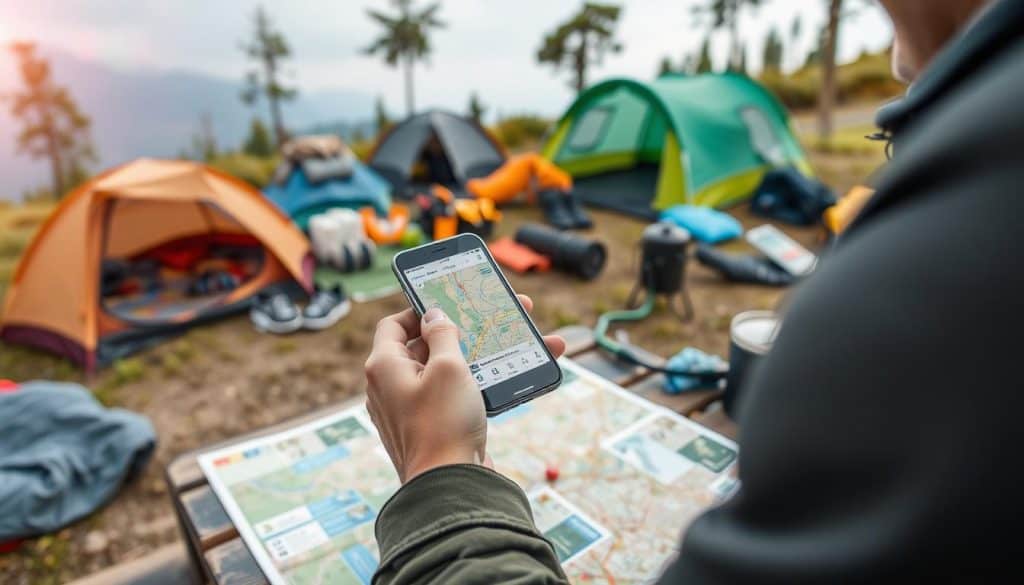
With the rise of specialized apps and websites, locating free campsites has never been more straightforward. As someone who’s spent countless hours searching for the perfect spot, I can attest to the game-changing impact of these tools. Whether you’re a seasoned camper or just starting out, having the right resources at your fingertips can make all the difference.
Apps and Websites for Free Camping
Several apps and websites have become indispensable for finding free campsites. Popular options include iOverlander, Campendium, and The Dyrt, which offer comprehensive databases of camping areas, including those that are free. These platforms allow users to filter results based on amenities, cell service, and more, making it easier to find a site that suits your needs.
For instance, Campendium provides detailed reviews and information on campsites across the US, while iOverlander focuses on user-generated content, allowing campers to share their experiences and tips. The Dyrt offers a free version with robust features, making it a great starting point for those on a budget.
Maps and Resources from Land Management Agencies
In addition to third-party apps, official resources from land management agencies are invaluable. The Forest Service’s Interactive Visitor Map and the Bureau of Land Management’s (BLM) online maps provide authoritative information on public lands and camping areas. These resources often include crucial details on road conditions, fire restrictions, and other regulations.
For example, the Motor Vehicle Use Maps (MVUMs) from the Forest Service are essential for identifying roads that allow dispersed camping. You can also find physical maps at ranger stations and visitor centers, which are great for getting a tangible understanding of the area. Combining these official resources with digital tools ensures you’re well-prepared for your camping adventure.
Preparing for Your Free Camping Trip
As you prepare for your free camping trip, it’s essential to understand the importance of being self-sufficient in the great outdoors. Dispersed camping, or free camping, requires a different mindset and preparation compared to traditional campsites. You’ll need to be ready for the challenges that come with camping in remote areas without access to amenities like water, toilets, and trash disposal.
Essential Gear for Dispersed Camping
Having the right gear is crucial for a successful dispersed camping trip. You’ll need a reliable water storage system and a way to purify additional water to ensure you have enough for drinking, cooking, and hygiene. Bringing more water than you think you’ll need is always a good idea. For bathroom needs, pack a trowel for digging catholes, toilet paper, hand sanitizer, and sealable bags for packing out used toilet paper. Navigation tools like physical maps, a compass, and downloaded offline maps on your phone or GPS device are also essential, as cell service is typically unavailable at remote campsites.
Emergency preparedness items should include a well-stocked first aid kit, an emergency communication device like a satellite messenger, extra food, and clothing for unexpected weather changes. For car camping at dispersed sites, consider bringing a portable toilet system, extra fuel for your vehicle, recovery gear if traveling on rough roads, and sufficient battery power or solar chargers for electronic devices.
Planning for No Amenities
When you’re free camping, you’re responsible for taking care of your waste and leaving the campsite as you found it. This means packing out all trash and waste, following fire bans and guidelines, and being mindful of your impact on the environment. Plan your food storage carefully, using bear-resistant containers in bear country and secure coolers or storage boxes in all areas to prevent wildlife encounters.
Researching your destination thoroughly before departing is also crucial. Check recent reviews on camping apps, call ranger stations for current conditions, and have backup locations in mind if your first choice is inaccessible or full. Being prepared for complete self-sufficiency is key to a successful free camping trip – there will be no running water, no garbage service, no electrical hookups, and often no cell service at free campsites.
Leave No Trace Principles for Free Camping
As you venture into the great outdoors for free camping, it’s essential to remember that your actions have a lasting impact on the environment. The Leave No Trace principles are a set of guidelines that help campers minimize their footprint on public lands.
When you’re free camping, you’re likely to be in areas without the infrastructure of developed campgrounds. This means you need to be more mindful of your impact. The seven Leave No Trace principles are: Plan Ahead and Prepare, Travel and Camp on Durable Surfaces, Dispose of Waste Properly, Leave What You Find, Minimize Campfire Impacts, Respect Wildlife, and Be Considerate of Other Visitors.
Minimizing Your Impact on Public Lands
To minimize your impact, it’s crucial to choose your campsite wisely. Opt for previously used areas on durable surfaces like gravel, dry grass, or established clearings. Avoid creating new campsites that can damage vegetation. When camping, keep a safe distance from lakes, streams, and trails to protect water sources and allow wildlife unobstructed access to water.
Choosing the right campsite is the first step in minimizing your impact. By selecting a site that has been used before, you help preserve the natural environment. Remember, the goal is to leave the area as you found it, or even in better condition.
Proper Waste Disposal and Fire Safety
Proper waste disposal is critical when free camping. Since there are no trash services at dispersed campsites, you must pack out everything you bring in. Bring extra bags for garbage and be prepared to carry it all out with you. Human waste must also be properly managed by digging catholes 6-8 inches deep at least 200 feet from water sources, or using a portable toilet system and packing out waste in high-use areas.
| Waste Disposal Method | Best Practice |
|---|---|
| Human Waste | Dig catholes 6-8 inches deep, 200 feet from water sources |
| Trash | Pack out all garbage, use extra bags if necessary |
| Fire Safety | Use established fire rings, fully extinguish fires |
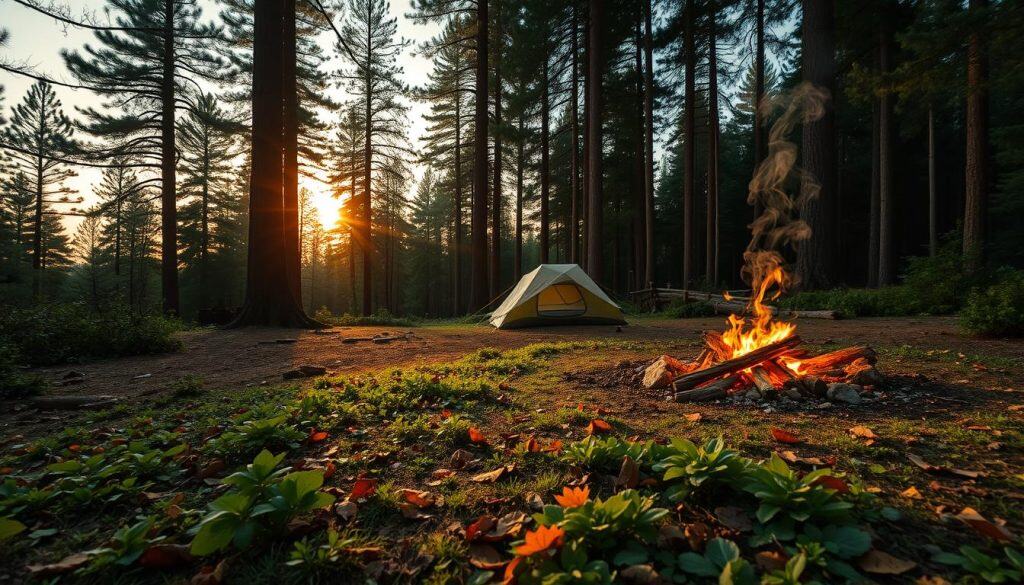
Fire safety is another critical aspect of free camping. Use established fire rings when available, and create a proper fire pit with a fire pan or ring of rocks if necessary. Always check fire restrictions before your trip, as many areas implement seasonal fire bans due to wildfire danger.
By following these guidelines and being mindful of your impact, you can enjoy the beauty of free camping while preserving it for future generations.
Regional Guide to Free Camping Across the US
The US is home to diverse free camping opportunities across different regions. As you plan your next adventure, understanding the various options available in different parts of the country can help you make the most of your trip.
Western States: The Best Free Camping
The Western states are renowned for their abundant free camping opportunities. California, Oregon, Washington, Arizona, Utah, Colorado, Wyoming, Montana, Idaho, and Nevada all have extensive public lands open to dispersed camping. In California, popular spots include Alabama Hills near Lone Pine, where a permit is required, and numerous BLM lands in the eastern Sierra and desert regions. Utah features spectacular free camping with views of red rock formations at places like Muley Point near Mexican Hat.
- Explore Alabama Hills near Lone Pine, California, with its unique rock formations and stunning views of Mount Whitney.
- Discover Summit Rock in Fremont-Winema National Forest, Oregon, just a few miles from Crater Lake National Park.
- Visit Quinault Ridge Road in Olympic National Forest, Washington, for dispersed camping opportunities.
Midwest and Eastern Free Camping Options
While the Midwest and Eastern states have fewer public lands compared to the West, they still offer plenty of free camping opportunities. Michigan’s national forests in the Upper Peninsula, Minnesota’s Superior National Forest, and Wisconsin’s Chequamegon-Nicolet National Forest all permit dispersed camping. In the East, national forests like Pennsylvania’s Allegheny National Forest and North Carolina’s Pisgah National Forest provide free camping options, often with more restrictions and designated dispersed camping areas.
- Enjoy dispersed camping in Michigan’s Upper Peninsula national forests.
- Explore the scenic beauty of Minnesota’s Superior National Forest.
- Camp in Pennsylvania’s Allegheny National Forest for a serene experience.
Southern States Free Camping Spots
The Southern states offer free camping primarily in national forests. Notable options include Florida’s Ocala National Forest, Arkansas’s Ouachita National Forest, and Georgia’s Chattahoochee National Forest. Texas, despite being mostly private land, has free camping opportunities in Big Bend National Park with a permit and on some Army Corps of Engineers lands around lakes.
- Visit Florida’s Ocala National Forest for a mix of camping and exploration.
- Experience the natural beauty of Arkansas’s Ouachita National Forest.
- Camp in Georgia’s Chattahoochee National Forest for a memorable trip.
Conclusion
As we wrap up our journey through America’s free camping landscape, it’s clear that the US offers an incredible array of options for outdoor enthusiasts. With plenty of free campsites available, you can experience the natural beauty of the country while keeping your travel budget intact for other adventures.
From the vast Bureau of Land Management (BLM) territories in the west to national forests spread across the country, there’s ample opportunity for dispersed camping and car camping. Whether you’re a weekend warrior or a full-time nomad, free camping opens up a world of possibilities, allowing you to connect with nature on a deeper level.
The variety of free camping options means there’s something for everyone – from easily accessible roadside pullouts perfect for one-night stays to remote backcountry sites for those seeking solitude. While free camping requires more self-sufficiency and preparation than staying at developed campgrounds, many travelers find the trade-offs worthwhile for the privacy and authentic outdoor experiences.
As you explore America’s free campsites, remember that these public lands belong to all of us. Their continued availability depends on each visitor treating them with respect and care. By practicing responsible stewardship and following Leave No Trace principles, we can ensure that these incredible resources remain available for generations to come.
With proper planning, the right equipment, and a commitment to preserving our natural heritage, free camping can provide some of the most memorable and rewarding outdoor experiences available in America. So pack up, hit the road, and discover the joy of camping on public lands.
FAQ
What is dispersed camping, and how does it differ from traditional camping?
Dispersed camping refers to camping outside of developed campsites, often without amenities like water, toilets, or trash disposal. Unlike traditional camping, which typically involves designated campsites with facilities, dispersed camping allows you to camp in more remote areas, often for free.
How do I find Bureau of Land Management (BLM) lands for camping?
You can find BLM lands for camping by visiting the BLM website, using online maps, or contacting local BLM offices. BLM lands offer numerous opportunities for dispersed camping and are a great resource for those looking to camp for free or at a low cost.
What are the rules and regulations for camping on National Forest Service lands?
Camping regulations on National Forest Service lands vary by forest and location. Generally, you can camp for 14 days within a 30-day period before you’re required to move. It’s essential to check with the specific forest’s website or contact their office for detailed information on rules and regulations.
Can I camp for free at rest stops or truck stops?
While some rest stops and truck stops allow overnight parking, it’s not always permitted. Be sure to check with the specific location and follow any posted signs or guidelines. Some businesses, like Walmart, also allow overnight parking in their lots, but it’s always best to ask permission first.
What are Leave No Trace principles, and why are they important for free camping?
Leave No Trace principles are guidelines for minimizing your impact on the environment when camping or recreating outdoors. They include practices like packing out trash, using biodegradable soap, and being mindful of wildlife and other campers. Following these principles helps preserve public lands for future generations.
How can I prepare for camping without amenities like water, toilets, or trash disposal?
To prepare for camping without amenities, bring essential gear like a water filter or purification tablets, a portable toilet, and a trash bag. Plan ahead by packing enough food, water, and supplies, and be prepared to follow proper waste disposal practices.
What are some essential tools for finding free campsites?
Essential tools for finding free campsites include online resources like Campendium and FreeCampsites.net, as well as maps and guides from land management agencies. Using these tools can help you discover new camping spots and plan your trip with ease.
Are there any specific camping regulations I should be aware of when camping on public lands?
Yes, camping regulations on public lands vary by location and agency. Be sure to check with the specific land management agency, such as the BLM or US Forest Service, for information on rules and regulations, including any necessary permits or restrictions.