

As I reflect on my visit to Yosemite National Park, I’m reminded of the 300 to 500 American black bears that call this stunning landscape home. The thrill of spotting a bear in its natural habitat is an experience many visitors cherish, but it also raises important questions about safety and wildlife conservation.
Contrary to their name, many of Yosemite’s black bears aren’t actually black; they can be brown, blond, or even reddish-brown, which often surprises visitors. For more information on bear behavior and safety tips, you can visit the official National Park Service website. Additionally, Yosemite National Park’s wildlife is a fascinating topic that offers insights into the ecosystem and the importance of coexisting with these magnificent creatures.
Key Takeaways
- Yosemite National Park is home to approximately 300-500 American black bears.
- Black bears in Yosemite can vary in color, including brown, blond, and reddish-brown.
- Grizzly bears are no longer found in California, having been hunted to extinction by the early 1920s.
- Understanding bear behavior is crucial for both human safety and wildlife protection.
- Visitors can take steps to prevent encounters with bears by following park guidelines.
Are there bears in Yosemite? The Facts
If you’re planning a visit to Yosemite, you might wonder if bears are present in the park. Yosemite National Park is renowned for its natural beauty and diverse wildlife, and bears are an integral part of that ecosystem.
Black Bears vs. Grizzly Bears in Yosemite
Yosemite is home to black bears, not grizzly bears. The last known grizzly bear in the Yosemite region was shot in the early 1920s, and the species has been extinct in California since then. Black bears are more adaptable to human presence and have different habitat requirements compared to grizzly bears.
| Bear Characteristics | Black Bears | Grizzly Bears |
|---|---|---|
| Physical Characteristics | Generally smaller, black fur | Larger, brown or blonde fur |
| Behavior | More adaptable to humans | More aggressive, less tolerant of humans |
| Historical Presence in Yosemite | Present | Extinct since the 1920s |
Bear Population in Yosemite National Park
There are approximately 300 to 500 black bears in Yosemite National Park. The population has been relatively stable due to conservation efforts and management practices. Visitors can sometimes spot these bears, especially in Yosemite Valley and other lower elevation areas.
Where You Might Encounter Bears in the Park
Bears are commonly reported in Yosemite Valley, but they can be active throughout much of the park’s lower elevations. Visitors should be aware of their surroundings and take necessary precautions to avoid encounters with bears.
Black Bear Biology and Behavior
The biology and behavior of black bears in Yosemite are as captivating as they are complex, revealing intriguing insights into their survival strategies. As we explore their characteristics, feeding habits, and hibernation patterns, we gain a deeper understanding of these fascinating creatures.
Physical Characteristics of Yosemite Black Bears
Most Yosemite black bears are not actually black; they vary in color, with many being brown, blond, or reddish-brown. Truly black-colored bears are relatively rare in the western United States. The size of these bears can also vary significantly, with the largest recorded black bear in Yosemite weighing around 690 pounds, while the average male typically weighs about 250 pounds.

Feeding Habits and Diet
Black bears are known for their impressive feeding capabilities, especially during the fall when they gorge on acorns and other seasonal foods. They can consume up to 20,000 calories a day, which is equivalent to a human eating 40 Big Mac sandwiches in a day. This feeding frenzy allows them to gain fat reserves necessary for surviving the winter.
Hibernation and Reproduction
Bears hibernate in hollow trees, under the root mass of a tree, or in caves formed by large rocks. During hibernation, their body temperature, pulse rate, and respiration decrease, conserving energy. They do not defecate or urinate during this time but can metabolically extract energy from body wastes. Female black bears typically have two cubs per litter, though litter sizes can range from one to four. The cubs stay with their mothers for about 16-17 months, and females usually become sexually mature between three to four years of age.
| Characteristics | Description |
|---|---|
| Color Variation | Brown, blond, reddish-brown; truly black is rare |
| Size Range | Average male: 250 pounds; largest recorded: 690 pounds |
| Feeding Habits | Up to 20,000 calories/day during fall |
| Hibernation Sites | Hollow trees, under tree roots, rock caves |
| Litter Size | Average: 2 cubs; range: 1-4 cubs |
For more detailed information on Yosemite’s black bears, you can visit the National Park Service’s website.
Bear Safety for Yosemite Visitors
As you explore Yosemite, understanding how to share the space with its black bear population is crucial for both your safety and theirs. Yosemite is home to a thriving population of black bears, and while encounters are rare because bears naturally avoid people, being prepared is key.
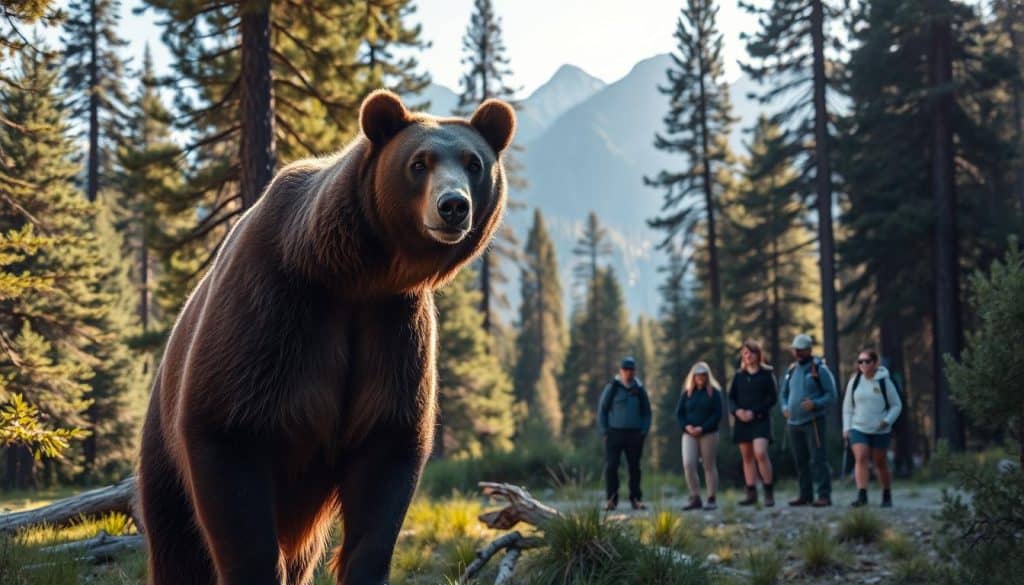
What to Do If You Encounter a Bear in Developed Areas
If a bear approaches you in a developed area such as a campground, picnic area, or parking lot, act immediately to scare it away. Yell aggressively and as loudly as possible until the bear leaves. Stand your ground and be persistent; the bear is intruding on your personal space. If you’re with other people, stand together to appear more intimidating, but avoid surrounding the bear.
Bear Encounters in Wilderness Areas
In wilderness areas, it’s essential to keep distance from bears. Maintain at least a 50-yard distance, about the length of four shuttle buses parked end to end. Getting too close can make bears lose their natural fear of humans, potentially leading to aggressive behavior. For more information on wildlife viewing and safety, you can visit other national parks that offer similar experiences.
Food Storage Requirements and Bear-Proofing
Proper food storage is critical in preventing bears from becoming food-conditioned. Always store food and trash in bear-proof containers, and never leave food out of arm’s reach. In campgrounds, use the provided bear-proof lockers. Rangers patrol public areas and use non-lethal aversive tactics to manage bear encounters, ensuring both human safety and bear welfare.
Conclusion: Respecting Yosemite’s Bears
Yosemite’s bear population is a vital part of the park’s ecosystem, and understanding how to respect these animals is crucial for both humans and bears. The park is home to approximately 300-500 black bears, which play a significant role in maintaining the balance of nature.
Over time, bear management in Yosemite has evolved dramatically, from maintaining feeding areas for visitor entertainment to implementing strict protocols to keep bears wild. As visitors, we have a shared responsibility to protect Yosemite’s bears by driving within speed limits, properly storing food, and maintaining a safe distance from wildlife.
It’s essential to be aware of the intelligence and determination of bears when seeking food, as they can break into vehicles and other structures. To learn more about Yosemite’s bear management programs and how to report bear sightings, visit the National Park Service website. By working together, we can ensure a safe and enjoyable experience for both humans and bears in Yosemite National Park.
FAQ
What type of bears can be found in Yosemite National Park?
Yosemite is home to black bears, a species that is common in many parts of North America. These bears are generally smaller than grizzly bears and have a more varied diet.
How many black bears are estimated to live in Yosemite?
The National Park Service estimates that between 300 to 500 black bears inhabit Yosemite National Park. Their population is influenced by factors like food availability and habitat quality.
What do black bears in Yosemite typically eat?
Black bears in Yosemite are omnivores and their diet includes a wide range of foods such as plants, insects, honey, fish, and acorns. They may also be attracted to human food if it’s not stored properly.
What should I do if I encounter a black bear in a developed area of Yosemite?
If you encounter a black bear in a developed area, stay calm and keep a safe distance. Back away slowly and do not run. Make yourself look bigger by standing up straight and making loud noises.
How can I prevent attracting black bears to my campsite or picnic area?
To avoid attracting bears, store all food and trash in bear-proof containers or hang food and trash bags at least 10 feet off the ground and 4 feet out from the trunk. Keep a clean campsite and do not leave food or scented items unattended.
Can I feed black bears in Yosemite?
No, feeding black bears or any wildlife in Yosemite is strictly prohibited. Feeding bears can make them dependent on humans and lead to aggressive behavior, posing a risk to both humans and bears.
How do Yosemite rangers manage the black bear population?
Yosemite’s bear management program includes educating visitors about bear safety, monitoring bear activity, and enforcing regulations related to food storage and trash disposal to minimize encounters between humans and bears.