

Have you ever wanted to stand under a natural arch that took millions of years to form? Welcome to Arches National Park. Here, over 2,000 amazing rock formations await, including the famous Delicate Arch. This guide is your go-to source for exploring the park’s stunning scenery near Moab, Utah. It’s packed with travel tips, hiking advice, and ways to help preserve this place. You’ll be ready to dive into one of Utah’s “Mighty 5” national parks.
Learn the best times to visit and where to camp. Discover the park’s incredible geological features and the animals that live here. This guide aims to deepen your appreciation of Arches National Park. It’s more than just beautiful views. It’s about understanding the rich history and fragile ecosystems that make it special. Get set for your adventure with everything you need to respect and enjoy this natural treasure.
Key Takeaways
- Arches National Park spans approximately 76,000 acres, featuring over 2,000 natural rock formations.
- The park was designated as a national park in 1971, previously serving as a national monument.
- Hydration is crucial; you should aim to consume at least a gallon of water per day, especially in the summer.
- Camping at Devils Garden is popular and reservations are recommended during peak seasons.
- The park operates year-round, although peak visitation typically occurs from April to October.
- Landscape Arch, spanning 306 feet, is the longest natural arch in North America.
- The park’s guidelines advocate for responsible exploration to protect its fragile ecosystems.
Introduction to Arches National Park
Arches National Park is famous for its unique rock shapes. It has over 2,000 natural stone arches, more than anywhere else. Landscape Arch and Delicate Arch are some of the most famous ones. Delicate Arch is even a symbol of Utah. These arches show the amazing beauty nature can create over millions of years.
Overview of the Park’s Unique Features
This park covers 120 square miles and has heights ranging from 4,000 to 5,600 feet. You’ll find huge fins, Balanced Rock, and the Windows Section here. It’s a dream place for those who love nature and taking photos. But, it gets very hot in summer, often over 100 °F. So, planning your visit is key.
Importance of Preservation
Keeping this park safe is very important. It’s home to special plants and animals that can live in dry places. We need to protect it from climate change and too many visitors. This means future generations can also see its amazing landscapes and wildlife.
Visitor Statistics and Information
Every year, lots of people visit the park, especially during holidays and summer. To make visits better, there’s a timed entry system from April to October. You need a ticket to enter from 7 am to 4 pm. This helps with the crowds. And Moab is only three miles away for a great place to stay.
How to Get to Arches National Park
Planning a trip to Arches National Park? It’s helpful to know how to get there. The park is near Moab, Utah, just 5 miles north. This makes it easy to reach by different means of transport.
Best Routes for Different Regions
If you’re coming from big cities, there are good roads to take. Coming from Salt Lake City? It’s about 236 miles, a 4-hour drive. From Denver, it’s a longer 360 miles, needing 6 to 7 hours. Flying in?
Canyonlands Regional Airport and Grand Junction Regional Airport are close by. They are 11 and 109 miles from the entrance, making your arrival smooth.
Transportation Options and Availability
Renting a car is often the best way to go. Public transport isn’t readily available. With a car, you can easily visit the park and nearby sights.
In Moab, consider going on guided bus tours. Many local companies offer them. This lets you see the area without driving yourself.
Seasonal Considerations for Travel
The time of year affects your visit. Winter means fewer people and unique views. Spring and fall usually have great weather.
But summer brings heat above 100°F, impacting hiking. Spring to fall is very busy. Expect full parking and possible road work delays then.
When to Visit Arches National Park
Choosing the right time to visit Arches National Park can make your visit better. Knowing about the seasons, weather, and special events helps you pick the best time.
Best Seasons for Weather and Crowds
April, May, late September, and October are the best times for a visit. The weather is nice then, with temperatures between 70 and 80 degrees Fahrenheit in spring. And 60 to 80 degrees in fall. The summer’s heat, which can hit 100 degrees, is gone. Plus, there are fewer people during these times, except on big holidays.
Winter is calm, with fewer visitors and temperatures between 30 to 50 degrees Fahrenheit. The park is busiest from Memorial Day to Labor Day because of school vacations. So, planning ahead is essential. April and May get busier as summer begins.
Special Events and Programs
Arches National Park has many special events and ranger-led programs all year. These include workshops and tours, mostly in spring and summer. Ranger programs, focusing on the park’s natural beauty, are mainly in March, April, and summer. Joining these events can make your visit even more special.
No matter when you visit, considering the best time will ensure a great trip.
| Month | Average High Temperature (°F) | Crowd Level |
|---|---|---|
| January | 50 | Low |
| April | 68 | Mid/High |
| July | 92 | High |
| October | 70 | High |
| December | 50 | Low |
Entrance Fees and Park Passes
It’s important to know about the different entrance fees and park passes for Arches National Park. This will help you plan your visit better. There are various options to meet everyone’s needs and make sure you have a great time.
Overview of Fees Structure
For cars entering Arches National Park, it costs $30. This fee lets you visit for seven days in a row. There are several options available, depending on what you need:
| Pass Type | Price | Eligibility |
|---|---|---|
| Standard Entrance Pass | $30 | Valid for vehicle entry |
| America the Beautiful Pass | $80 (Free options available) | Access to all federal recreation lands for one year |
| Annual Pass | $55 | Admits one vehicle to multiple parks |
| Military Annual Pass | Free | Active military and dependents |
| Senior Annual Pass | $20 | Citizens and residents aged 62+ |
From April 1 to October 31, 2025, you’ll need a Timed Entry Ticket to drive into the park from 7 a.m. to 4 p.m. If you don’t have this ticket, you won’t be allowed in during these hours. There are also free admission days, like April 19 and June 19.
How to Purchase Passes
There are many easy ways to buy your entrance pass. You can get it online through the National Park Service website or buy it when you arrive at the park. If you’re coming during busy times, don’t forget about the timed-entry ticket. You can book these tickets months before your trip. Remember, these spots go fast, so plan ahead.
Accommodations Near Arches National Park
Make your trip to Arches National Park even better by picking the right place to stay. You can choose from camping in the park, staying in Moab, or trying unique accommodations. There’s something for everyone, no matter your budget.
Camping Options Inside the Park
Devils Garden Campground is the only official camping spot in Arches National Park. It has 51 sites, including options for groups and those who need accessible facilities. To camp during busy months from March to October, book early. Spots fill up fast, six months ahead of time.
Looking for something more off the grid? Try Horsethief Campground. It offers 85 sites on a first-come, first-served basis.
Lodging Suggestions in Moab
Moab has many lodging choices, from budget motels to fancy resorts. You can stay at places like the SpringHill Suites by Marriott or the Holiday Inn Express & Suites. They are just a short drive from the park.
For a unique stay, Moab Springs Ranch has cozy bungalows. Red Cliffs Lodge offers stunning views, about 25 minutes from Arches. Comfort Suites has rooms starting at $120 for those watching their wallets.
Alternative Accommodations and Amenities
Looking for something different? Try glamping at Under Canvas Moab for a fancy camping experience. Moab is also great for dining and shopping, perfect for grabbing gear or relaxing after hiking. Spanish Valley gives you more stay options, just a bit farther from the park.
Essential Packing List for Your Visit
Planning your trip to Arches National Park should include a packing list. The right clothes and hiking gear make your trip comfortable and exciting. You’ll see amazing rock formations.
Clothing and Footwear Recommendations
Wear layers that remove sweat and can adjust to changing weather. In cold months, you’ll need a base layer, a warm fleece, and a jacket that keeps out wind and rain. Good hiking boots are a must for the rocky paths. Wear a hat and sunglasses for sun protection. Stay away from white clothes; the park’s red dust can stain them.
Gear for Hiking and Exploration
Carrying the right gear in your backpack, like trekking poles and a water filter, is key. Look for light gadgets, like the Jetboil Flash, to quickly boil water for eating. Don’t forget a camera to capture the beauty of the park.
Safety and Emergency Supplies
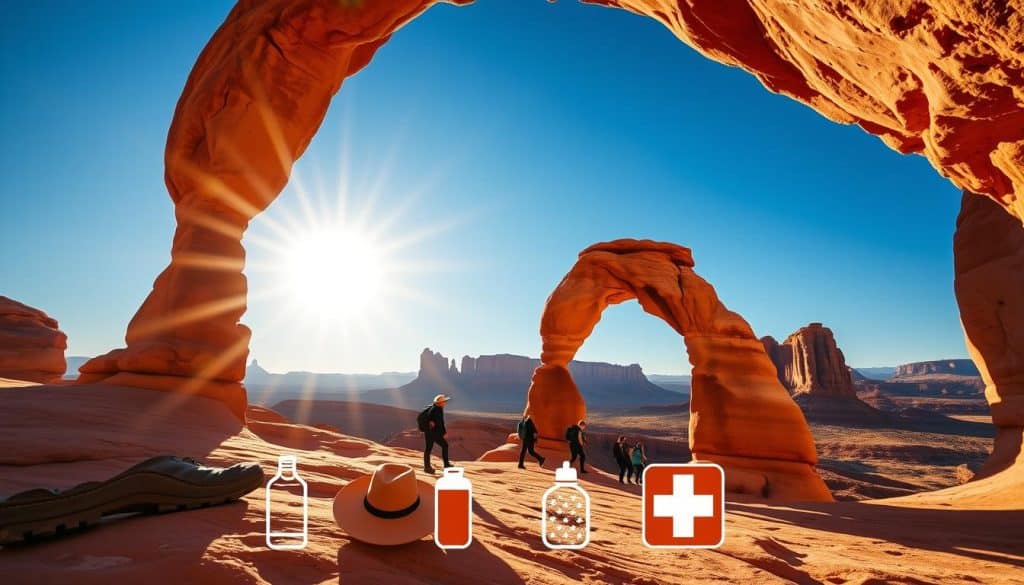
Safety items are very important. Take a first-aid kit, navigation tools, and enough water — one gallon per person each day is best. Bring snacks to stay energized on long walks. An emergency blanket keeps you warm if needed. Travel insurance offers extra safety for your trip.
Hiking Trails in Arches National Park
Exploring the hiking trails in Arches National Park is an unforgettable journey. With over 2,000 stunning rock formations, the park’s trails show off its unique landscapes. Whether you prefer leisurely walks or challenging paths, there’s something for everyone.
Overview of Popular Trails
The Delicate Arch trail is a famous 3-mile round trip and a park symbol. For those who prefer something shorter, the Windows Loop is 1 mile and family-friendly. The Devils Garden Trail is tougher, stretching 7.2 miles to Landscape Arch, the park’s longest. These trails offer memories amongst breathtaking geology. For more details, check out the Ultimate Guide to Arches National Park.
Accessibility of Trails for Different Skill Levels
Arches National Park trails are great for all skill levels. Beginners love the easy, 0.8-mile Double Arch trail. Intermediate hikers can tackle the 2-mile Broken Arch hike. Advanced hikers may brave the 4.2-mile Double O Arch trail or the tough 2-mile Fiery Furnace, needing a permit. There’s a trail for everyone, making hiking in the park accessible and fun.
Best Views and Hidden Gems
For amazing views, try the Park Avenue Trail at sunrise. The Courthouse Towers look stunning. The Fiery Furnace offers a maze of pathways for the adventurous, needing a permit. This hidden spot gives a memorable experience. Remember, many trails are open all year, but planning is key.
Ranger-Led Programs and Tours
Arches National Park offers a wide variety of ranger-led programs for all ages. These activities offer deep insights into the park’s interesting geology, ecology, and history. They make your visit more enjoyable by providing educational tours through Arches’ breathtaking landscapes.
Overview of Available Programs
The Fiery Furnace tours are a highlight among the ranger-led adventures. They are offered from spring to fall. Visitors can navigate through a complex of sandstone canyons on these tours. Each person pays $16 to experience this unique adventure.
These tours are open to anyone aged five and above. Kids under 12 must have an adult with them. Every hiker needs to carry water and wear proper hiking clothes. The journey challenges your physical abilities.
How to Sign Up for Tours
You can sign up for a tour on the National Park Service’s website, up to a week before. Since these tours are very popular, it’s best to book early. Remember, unexpected events can sometimes cancel the programs.
Educational Opportunities for All Ages
At Arches, education is key. The park has family-friendly events like the Rocky Mountain Speaker Series on the 1st and 3rd Sundays. There’s also RockyLAB on Wednesdays, Saturdays, and Sundays, and Track Scene Investigation every Saturday.
They even have winter activities like Ice Fishing sessions and Winter Explorer programs. This means there are various programs available all year round.
Arches has many ranger-led programs to choose from. These experiences teach you more about nature while providing fun. Don’t miss out on these adventures when you visit Arches National Park.
Geological Features of Arches National Park
Arches National Park is full of amazing geological features that formed over millions of years. It is a place where visitors can see unique rock shapes. These shapes help us understand the Earth’s geology.
Unique Rock Formations to Explore
The park has over 2,000 natural stone arches. These formations vary in size and shape. Some are wider than 300 feet.
Arches are known for their openings that must be at least three feet wide. This makes them visually stunning. Famous formations include the Delicate Arch and Landscape Arch. The collapse of Wall Arch shows nature’s constant change. The history of this area is fascinating, involving layers of sandstone formed from ancient sediments.
How Erosion Shaped the Landscape
Erosion is key in creating Arches NP’s beautiful arches and fins. Water, wind, and temperature change have worn down the softer rock layers over time. The Entrada Sandstone, which is very porous, lets water through, helping erosion. Meanwhile, the Carmel Formation underneath is less welcoming to water, adding to the park’s unique geology. With just 8-10 inches of rain a year, erosion continues to change the landscape, showing how nature always evolves.

| Geological Feature | Description | Significance |
|---|---|---|
| Natural Arches | Over 2,000 documented arches, with varying sizes | Showcases unique geological processes |
| Entrada Sandstone | Highly porous rock layer | Significant for water erosion |
| Carmel Formation | Softer, less porous layer beneath Entrada | Influences water absorption and erosion |
| Wall Arch | Notable arch that collapsed in 2008 | Illustrates the impermanence of geological features |
| Geological History | Spans roughly 65 million years | Provides context for current formations |
Wildlife in Arches National Park
When you explore Arches National Park, you step into a world full of unique animals. This park covers over 76,000 acres, making it a perfect home for many species. It’s an exciting place for anyone who loves to watch wildlife.
Common Species You Might Encounter
As you wander through the park, keep your eyes peeled for these animals:
- Mule Deer – They’re often spotted in open fields during the early morning and late evening.
- Desert Bighorn Sheep – These shy creatures can sometimes be seen on the rocky cliffs.
- Kangaroo Rats – Active at night, these little guys are important food for bigger birds.
- Desert Cottontails – With their fluffy tails, you can find them out at dusk and dawn.
- Golden Eagles – Their huge wings are really something to see as they fly above.
- Peregrine Falcons – They dive through the air super fast, hunting for their next meal.
- Western Collared Lizards – Brightly colored and fast, spotting them can be a fun challenge.
The best times for seeing these amazing creatures are during spring and fall.
Tips for Responsible Wildlife Watching
To make sure you and the animals both enjoy your visit, follow these tips:
- Keep your distance to avoid stressing them out.
- Never feed the animals. It’s bad for their health.
- Stick to the paths to keep their homes safe.
- Give yourself 2 to 3 hours for watching wildlife.
Photography Tips for Arches National Park
To take amazing pictures in Arches National Park, know the best times to shoot, ideal locations, and have the right gear. These tips are perfect whether you’re just starting or already a pro at photography.
Best Times and Locations for Photos
Sunrise and sunset offer the best light for photos, showcasing the park’s rocks in vivid colors. Great spots to capture these moments include:
- Delicate Arch: Famous for its shape, it’s perfect for sunset pictures that highlight its warm colors.
- Balanced Rock: This massive rock stands out against the sky, especially in the late afternoon.
- The Windows Section: Offers great views of North and South Windows, ideal for sunrise or sunset photos.
Utilize the “Rule of Thirds” to improve your photos. Imagine a 3 x 3 grid over your scene, then place important elements where the lines intersect. Make sure your main subject fills more than 10% of the frame to avoid empty spaces.
Equipment Suggestions for Optimal Shots
For top-notch photos, use a DSLR or mirrorless camera with a wide-angle lens. This setup helps capture the vast landscapes. Tripods are great for stable shots, needed for nighttime photography to capture the stars. Also, using filters can reduce sun glare and improve image depth.
Long exposure times, up to 30 seconds, work wonders in low light. To shoot the night sky, adjust your camera settings manually. Note that using artificial lights to brighten landscapes is mostly not allowed, except when camping with minimal impact.
Safety Tips for Visiting the Park
Understanding safety and preparation is key for a great visit to Arches National Park. Following park rules and being safe outdoors lets you enjoy the beauty safely. Here are important safety tips and rules to remember.
Guidelines for Hiking and Outdoor Activities
It’s vital to follow hiking rules for a secure park visit. Remember to:
- Stay on marked trails to protect nature and prevent accidents.
- Bring at least 2 liters of water to stay hydrated, especially for long hikes.
- Tell someone about your hiking plans before you go.
- Choose the right footwear; avoid smooth-soled shoes for rough paths.
- Skip hiking at noon when it’s hottest and the sun is strongest.
Navigating Weather and Natural Hazards
Being aware of weather changes is crucial for safety outdoors. Sudden shifts can lead to dangers like:
- Unexpected flash floods, especially after heavy rains.
- Slippery trails in winter; use traction devices for safety.
- Poor cell service in many spots, which makes getting help hard.
- Seeing black bears sometimes; always keep a safe distance.
Always check weather tips and put your and your friends’ safety first by knowing how to handle different natural dangers.
Nearby Attractions and Activities
Visiting Arches National Park? Don’t miss out on Moab and its surroundings. The area is full of Moab activities and attractions near the park. You’ll find breathtaking landscapes, fun outdoor adventures, and great recreational spots.
Exploring Moab and Surrounding Areas
Moab is the starting point for many adventures. You can go mountain biking on the renowned Slickrock Trail, covering 11 miles. Or, take a 4×4 vehicle for an off-roading tour on the 6.5-mile Hell’s Revenge Trail.
Looking for water fun? The Colorado River offers rafting tours, both half and full-day. For peace and calm, head to Ken’s Lake, just 10 miles south of Moab, to rent watersports gear. Wind down your day by experiencing Moab’s lively culture through its local shops and restaurants.
Other National Parks and Monuments
Moab is close to other amazing parks like Canyonlands and Dead Horse Point State Park. They’re easy to reach and offer amazing views. For a unique hike, try Canyonlands’ Needle District’s Joint Trail. It’s 4 miles long. Or the short trek to Dead Horse Point Overlook, only 200 feet, for stunning views.
| Attraction | Distance from Moab (miles) | Notable Features |
|---|---|---|
| Under Canvas Moab | 7 | Unique glamping experience |
| Dead Horse Point State Park | 23 | Panoramic views, hiking trails |
| Canyonlands National Park | 30 | Extensive views from Green River Overlook |
| Mesa Arch | 40 | Popular sunrise viewing spot |
Exploring the canyons and parks near Arches National Park adds unforgettable moments to your trip. You’ll be amazed by Utah’s splendid landscapes and outdoor activities.
Sustainability Practices to Follow
When you visit Arches National Park, following sustainability practices makes your trip better. It also keeps the park safe for future visitors. Being a responsible tourist means you know how your actions affect the environment. By choosing to act responsibly, you help save the park’s beautiful landscapes and wildlife.
Leave No Trace Principles
It’s crucial to follow the Leave No Trace principles to lessen your impact. Important actions include:
- Respecting wildlife: Stay away from animals to not disturb their natural habits.
- Staying on trails: Walk on marked paths to protect fragile areas.
- Packing out all waste: Carry trash bags to pick up all garbage and leftovers.
- Lighting fires responsibly: Only light fires in provided fire rings and make sure they’re fully put out.
By sticking to these rules, you travel in an eco-friendly way and keep the park healthy.
Eco-Friendly Transportation Options
Your choice of transport impacts your visit’s environment. Moab has several green choices for a better trip:
- Carpooling: Sharing a ride cuts down on harmful emissions.
- Local tour companies: Choose tours with hybrid cars to save fuel.
- Electric vehicle stations: Use Moab’s electric charge spots, supported by Rocky Mountain Power’s Plug-In Electric Vehicle Program.
The city’s work in setting up these chargers shows its dedication to being green. By using these green options, you help cut down on pollution. This moves us closer to big goals like reducing harmful gases and cleaning up the environment.
| Transportation Option | Benefits | Environmental Impact |
|---|---|---|
| Carpooling | Cost-effective and social | Reduces emissions from multiple vehicles |
| Local Tours | Guided exploration, supports local economy | Utilizes hybrid vehicles to lower carbon footprint |
| Electric Vehicle Charging | Convenient and fast | Lowers dependency on fossil fuels |
Taking part in these green practices not only makes your trip better. It also helps the larger effort to make tourism sustainable. Choose wisely and positively impact Arches National Park and its community.
Conclusion: Preparing for Your Adventure
Getting ready for your visit to Arches National Park makes the trip much more than just sightseeing. It’s best to go in spring (March–May) or fall (September–November) when it’s not too hot or cold. This makes it easier to enjoy your time outdoors. Finding a place to stay can be tricky, as campgrounds get full between March 1 and October 31. So, booking early is a smart move.
Final Thoughts on Planning Your Visit
Spending 2 to 3 days at the park lets you truly admire its beauty. The park has over 2,000 natural stone arches spread across 76,000 acres. There are many trails for all skill levels. For example, the Delicate Arch trail offers stunning views. Getting a timed entry pass ahead of time is a good idea. It keeps the park from getting too crowded, making your visit better.
Encouragement to Explore Responsibly
It’s important to explore Arches National Park in a way that doesn’t harm its ecosystem. Follow the Leave No Trace principles to respect the environment and other visitors. Make sure to drink plenty of water — at least one gallon per person each day. Trail conditions can quickly change due to the weather. By acting responsibly, you help preserve the park’s beauty for others in the future.
FAQ
What is the best time of year to visit Arches National Park?
The best times to see the park are in April, May, late September, and October. The weather is nice, and there aren’t too many people. Winter is also great if you like a quieter visit.
How can I get to Arches National Park?
You can drive to Arches National Park on U.S. Route 191, just north of Moab, Utah. Nearby airports include Canyonlands Regional Airport, Grand Junction Regional Airport, and Salt Lake City International Airport.
Are there any entrance fees to the park?
Yes, you need to pay for a vehicle pass that lasts seven days. If visiting more parks, the America the Beautiful pass for is worth it.
What are the popular hiking trails in Arches National Park?
Delicate Arch, Windows Loop, and Devils Garden Trail to Landscape Arch are top trails. They suit beginners to advanced hikers.
Can I camp within Arches National Park?
Yes, Devils Garden Campground has 51 sites for camping. It’s best to book ahead from March to October as it gets full.
What wildlife can I expect to see in the park?
Expect to see desert bighorn sheep, mule deer, and birds like golden eagles and red-tailed hawks in Arches.
Are there ranger-led programs available?
The park offers ranger-led hikes, astronomy programs, and talks. These activities make your visit more interesting.
What should I pack for hiking in Arches National Park?
Pack layers for sweating, good hiking boots, water, snacks, first aid and a camera to capture the views.
Is it safe to hike in Arches National Park?
Hiking is safe, but stick to rules. Stay on paths, have enough water, and watch the weather and flood risks.
Are there accommodations available in Moab?
Moab has hotels, motels, and camping places. Sorrel River Ranch and Gonzo Inn are among the great picks for all budgets.
How can I practice responsible wildlife watching in the park?
Watch animals from a distance, don’t feed them, and stick to trails to protect their home and your safety.
What are some hidden gems to explore in Arches National Park?
Check out Fiery Furnace with a permit for a cool maze of rocks. See the sunrise at Park Avenue Trail for amazing views.
What is the Leave No Trace principle?
It’s about reducing your impact on nature. Respect wildlife, stay on paths, and take your trash with you.